Breaking New Ground
Indonesia is preparing to launch the world’s first commercial 50% biodiesel blend program on July 1, 2026, a move that positions the Southeast Asian nation at the forefront of renewable fuel innovation. The B50 mandate, which requires diesel fuel to contain 50% palm oil-based biodiesel mixed with 50% conventional petroleum diesel, represents an unprecedented technical achievement. No other country has attempted such a high blending ratio in commercial distribution, leaving Indonesia to pioneer solutions without existing international benchmarks.
The acceleration of this program marks a dramatic reversal from earlier plans. In January 2026, authorities had shelved the B50 initiative for the year, citing technical limitations and funding constraints, opting instead to maintain the current B40 standard. However, escalating global energy markets and supply chain disruptions caused by the conflict in the Middle East prompted a rapid reassessment. President Prabowo Subianto confirmed the July 1 implementation during a business forum in Tokyo on March 30, stating, “We are going in a big way to biofuel. We will produce this year diesel oil from palm oil and now we are increasing from 40% to 50%.”
The urgency behind this policy shift stems from severe energy supply disruptions wrought by the US Israeli war on Iran. Crude oil prices surged above $100 per barrel, straining Indonesia’s import-dependent economy and ballooning the national energy subsidy bill. Finance Minister Purbaya Yudhi Sadewa estimated in early April that up to Rupiah 100 trillion ($5.9 billion) in additional energy subsidies would be needed this year due to the Iran war’s impact. By transitioning to B50, the government aims to reduce fossil diesel consumption by approximately 4 million kiloliters annually while generating projected savings of Rp 48 trillion ($2.8 billion) within the first six months of implementation.
Coordinating Minister for Economic Affairs Airlangga Hartarto announced that state energy firm Pertamina stands ready to execute the blending requirements. The policy aligns with President Prabowo’s broader vision of energy independence, utilizing Indonesia’s status as the world’s largest palm oil producer to anchor a domestic renewable energy strategy that reduces vulnerability to international oil market shocks.
Real-World Testing Across Transport Sectors
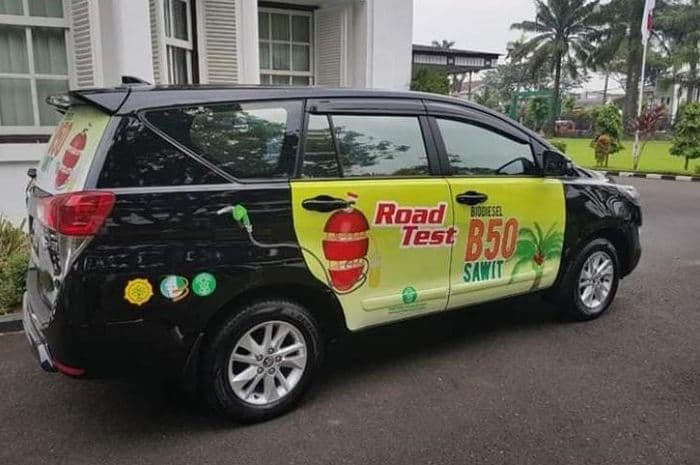
Before the nationwide rollout, extensive testing is underway to ensure engine compatibility and performance reliability. Eniya Listiyani Dewi, director general of renewable energy at the Ministry of Energy and Mineral Resources, explained that the country began developing biodiesel blending programs approximately 15 years ago and has successfully operated the B40 blend without major technical issues. The progression to B50 results from years of dedicated research and development.
“There are no technical references we can access. We are moving forward without an example to follow, and that is something we are proud of,” Eniya stated. She noted that multiple countries have already reached out to learn from Indonesia’s experience, though she declined to name the specific nations involved.
The testing regimen covers diverse applications across transportation and industrial sectors. Railway trials constitute the latest phase, beginning with diesel generators serving the Yogyakarta-Jakarta route. These generators will undergo 2,400 operating hours of testing before authorities proceed to locomotive trials on the Surabaya-Jakarta corridor, scheduled to run for six months. The final phase of railway testing is expected to conclude in October 2026.
Heru Kuswanto, infrastructure management director at state owned railway operator PT Kereta Api Indonesia (KAI), confirmed the company’s full support for the trials. He emphasized that testing occurs under actual operating conditions to generate authentic performance data.
The most important priorities are safety, security, and continuous technical evaluation to maintain the reliability of railway assets. We hope the program runs smoothly and delivers optimal benefits for the railway industry while supporting the national energy transition and sustainable, environmentally friendly transportation.
Beyond rail transport, comprehensive trials launched on December 9, 2025, encompass automotive vehicles, mining equipment, agricultural machinery, shipping applications, and stationary generators. Railway testing was specifically delayed until late March to avoid interference with the annual Eid al-Fitr passenger travel surge, which sees millions of Indonesians traveling to their home regions.
Ending Diesel Imports and Securing Energy Independence
Agriculture Minister Andi Amran Sulaiman announced that Indonesia will completely halt imports of subsidized low-grade diesel fuel, known locally as Solar, beginning July 1. This decision aligns with the B50 implementation date and represents a strategic move toward energy self-sufficiency. Indonesia currently imports approximately one million barrels of crude oil daily, with total annual import bills for crude oil, refined fuels, and liquefied petroleum gas reaching roughly Rp 500 trillion (around $30 billion).
In 2025, diesel imports are projected to reach 4.9 million kiloliters, accounting for roughly 10.6% of national demand. By replacing these imports with domestically produced palm oil biodiesel, Jakarta seeks to insulate its economy from global oil price volatility while supporting the domestic agricultural sector. Palm oil remains a cornerstone of the Indonesian economy, employing more than 16 million people directly and indirectly across cultivation, processing, and distribution activities.
The B50 mandate will increase annual biodiesel demand to approximately 19 million kiloliters, requiring between 17 million and 18 million metric tons of crude palm oil feedstock. Indonesia’s palm oil association, Gapki, projected that demand for palm oil as biodiesel feedstock would reach about 15 million metric tons this year under the previous B40 mandate, an increase of 2 million tons year over year. The jump to B50 will require substantial additional feedstock allocation, potentially reducing export availability.
The government has also implemented conservation measures to support the transition. Starting April 1, purchases of subsidized fuel will be limited to 50 liters per vehicle per day, with exemptions granted for public transportation operators. This measure aims to prevent hoarding and ensure adequate supply during the blend transition period.
Production Capacity Constraints and Technical Adaptations
Despite the ambitious timeline, questions remain regarding domestic production capacity. Indonesia’s installed biodiesel capacity stands at approximately 19.6 million kiloliters annually, though plants typically operate at only 85% efficiency due to routine maintenance downtime. Unggul Priyanto, a member of the National Energy Council’s Technology Stakeholder Committee, stated that capacity must expand to 24 million kiloliters to adequately cover maintenance periods and meet B50 demand.
Some industry observers suggest Indonesia may need to implement an intermediate B45 blend rather than jumping directly to B50 in 2026. A Singapore-based trader indicated that current production capabilities cannot fulfill pure B50 demand, suggesting the 45% blend might serve as a necessary transitional step. The 2026 biodiesel quota was set at 15.646 million kiloliters, only marginally higher than the 2025 mandate of 15.62 million kiloliters, raising concerns about supply adequacy for the higher blend requirement.
Technical adaptation extends beyond production facilities to end-use equipment. Vehicles and machinery operating on B50 may require additional filters and slightly higher fuel volumes compared to lower blends. Previous transitions experienced complaints regarding clogged filters and increased maintenance costs, particularly in the mining sector. The Indonesian Mining Association has urged the government to evaluate B40 implementation thoroughly before raising blend levels further, citing cost pressures on fuel-intensive extraction operations.
Input costs present another challenge. Methanol, a key ingredient in biodiesel production through the transesterification process, has seen prices surge due to the Middle East conflict. RHB Investment Bank analyst Hoe Lee Leng suggested the government may need to adjust biodiesel pricing formulas to incentivize producers amid rising input costs. Without pricing adjustments, producers might struggle to maintain margins while meeting the surge in demand.
Global Interest and Trade Implications
Indonesia’s B50 program has attracted significant international attention, with multiple countries approaching Jakarta to study the implementation model. This interest reflects growing global momentum toward biofuel adoption, as nations seek to reduce dependence on fossil fuels and enhance energy security. Thailand recently announced plans to increase its biofuel blend to 7%, while the United States unveiled expanded blending rules requiring record biofuel volumes in conventional diesel and gasoline.
The policy shift has immediate implications for global vegetable oil markets. Benchmark palm oil futures in Kuala Lumpur jumped as much as 1.9% following the B50 announcement, reaching their highest levels since 2024. CIMB Securities revised its 2026 average price forecast upward to 4,400 ringgit ($1,091) per ton from 4,000 ringgit, citing the structural increase in demand. Ivy Ng, head of Malaysia research and agribusiness at CIMB Securities, attributed the renewed push to concerns over global energy supply disruptions amid the US Israeli war with Iran, high crude oil prices pushing gasoil to trade at a premium to palm oil, and Indonesia’s efforts to strengthen energy security.
International trade dynamics complicate the picture. As the world’s largest palm oil exporter, diverting additional crude palm oil toward domestic biodiesel production tightens global supply availability. Major importers including India and China may face price pressures, potentially benefiting alternative suppliers such as Malaysia. Europe, which recently granted Indonesia a quota of up to one million tons of duty free crude palm oil imports, will monitor these developments closely for signs of supply constraint.
The shift also occurs against a backdrop of intensifying competition in bioenergy feedstocks. Australia has recently invested approximately Rp12 trillion ($725 million) in expanding canola and similar crops to challenge palm oil’s dominance as a bioenergy source. This investment signals that Indonesia’s palm oil leadership will face increasing competition as advanced economies develop alternative vegetable oils for renewable energy applications.
Comprehensive Biofuel Strategy Beyond Biodiesel
The B50 mandate forms part of a comprehensive national strategy extending beyond road and rail transport. By 2028, all diesel users must adopt the B50 blend, with subsidized diesel transitioning by 2027 and non-subsidized diesel following the subsequent year depending on production capacity. This staggered approach aims to balance ambition with infrastructure readiness and supply chain stability.
Indonesia is also expanding into other biofuel categories to diversify its renewable energy portfolio. The government plans to introduce ethanol blending into gasoline, starting with a 5% minimum mix in Java between 2026 and 2027, increasing to 10% by 2028. This initiative targets Indonesia’s largest fuel consumption market and utilizes domestically produced ethanol derived from cassava, sugarcane, and maize.
Additionally, a sustainable aviation fuel mandate will take effect in 2027, requiring flights departing from Jakarta’s Soekarno-Hatta International Airport and Bali’s I Gusti Ngurah Rai International Airport to use fuel containing at least 1% sustainable aviation fuel. This places Indonesia among a small group of emerging economies implementing cross sector biofuel mandates at commercial scale.
President Prabowo has also set ambitious targets for solar power capacity expansion, aiming for 100 gigawatts within the next three years. This multi-pronged approach reflects a determination to maximize domestic renewable resources across all energy sectors, reducing reliance on imported fossil fuels while supporting rural agricultural economies.
Quick Facts
- Indonesia will implement the world’s first B50 (50% biodiesel blend) mandate starting July 1, 2026
- The policy aims to eliminate diesel imports and reduce fossil fuel consumption by 4 million kiloliters annually
- Extensive testing is underway across vehicles, railways, mining equipment, and shipping applications
- The program is expected to save Rp 48 trillion ($2.8 billion) in the first six months of implementation
- Production capacity concerns suggest a possible B45 transitional blend may precede full B50 adoption
- Global palm oil prices have risen sharply in response to increased domestic demand expectations
- Multiple countries have approached Indonesia to study the B50 implementation model
- By 2028, all diesel users must transition to B50, with additional mandates for ethanol blending and sustainable aviation fuel