The Irony of the Korean Travel Boom
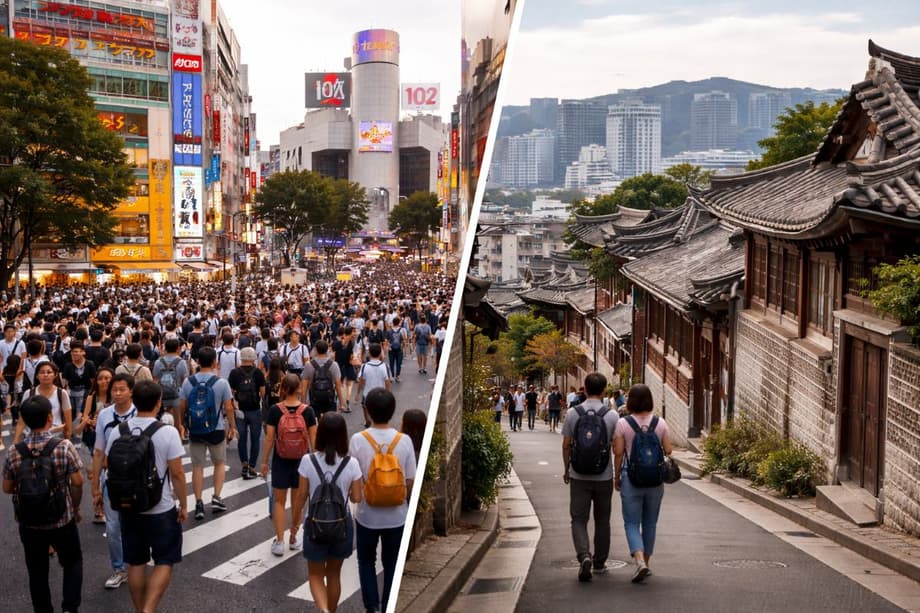
In a striking reversal of traditional tourism patterns, South Korea finds itself trapped in an economic paradox that few could have predicted. While South Korean travelers are breaking records by flooding into Japan in unprecedented numbers, their own nation is struggling to fill hotel rooms and restaurants with international visitors. This growing imbalance has evolved into what industry insiders now describe as a crisis more consequential than any sporting rivalry between the two Asian powers.
Recent data from Japan National Tourism Organization (JNTO) reveals that South Koreans became the largest source of foreign visitors to Japan in January 2026, with 1.18 million arrivals marking a 21.6 percent increase from the previous year. This represented the highest monthly total ever recorded for a single country visiting Japan. Yet simultaneously, South Korea’s own inbound tourism sector is stagnating, with businesses across Seoul and beyond reporting significant financial strain as international footfall fails to recover at expected rates.
The disparity highlights a fundamental shift in East Asian travel dynamics. As Japan welcomed over 42 million international visitors throughout 2025, South Korea has watched its competitive position erode despite the global post-pandemic travel resurgence. The phenomenon raises urgent questions about national tourism strategies, economic resilience, and the complex web of diplomatic relations reshaping where travelers choose to spend their money.
Japan’s First stumble in Four Years
Despite its overall dominance in regional tourism, Japan experienced an unexpected setback in January 2026 that sent ripples through the industry. For the first time since January 2022, during the height of COVID-19 restrictions, Japan recorded a year-over-year decline in foreign visitor numbers. Approximately 3.6 million international travelers entered the country, representing a 4.9 percent drop from January 2025.
The cause was immediately apparent and singular in nature. Chinese tourist arrivals plummeted by 60.7 percent, falling from 980,520 visitors in January 2025 to just 385,300. This collapse followed diplomatic tensions sparked by comments from Japanese Prime Minister Sanae Takaichi regarding Taiwan, which Beijing interpreted as provocative. The Chinese government responded by issuing travel advisories urging citizens to reconsider trips to Japan, creating an immediate and dramatic impact on booking patterns.
Shoji Imai, who manages a kimono rental shop in Tokyo’s Asakusa district, observed the shift firsthand. While Chinese visitors had previously dominated his customer base, he noted that travelers from Thailand, Singapore, and other Southeast Asian nations were quickly filling the void. “We still have customers from countries like Thailand and Singapore so overall sales haven’t changed much,” he explained, illustrating how Japan’s diversified tourism market helped buffer the shock.
The Lunar New Year timing also played a role in the statistical decline. In 2025, the holiday fell in late January, while in 2026 it shifted to mid-February, distorting year-over-year comparisons for the month. Nevertheless, the political dimension remained the dominant factor, with Chinese airlines offering free cancellations for Japan flights through October 2026, signaling that the downturn may persist.
Seoul’s Gain from Beijing’s Cold Shoulder
The diplomatic frost between China and Japan has created unexpected opportunities for South Korea, though not without complications. As Chinese travelers abandoned Japan itineraries, many redirected their attention toward alternative destinations, with South Korea positioned to capture a portion of this redirected demand. Industry projections suggested South Korea could welcome approximately 250,000 Chinese visitors during the 40-day Spring Festival travel window, a significant influx though insufficient to offset broader tourism challenges.
Data from the first eleven months of 2024 showed South Korea’s inbound tourism from mainland China had already surged by 109 percent compared to 2023, reaching 3.76 million visits. This rapid growth positioned China as the top source of visitors to South Korea, ahead of Japan’s 3.4 million visits during the same period. The trend appeared likely to accelerate as Chinese tourists sought alternatives to Japan while diplomatic tensions persisted.
However, this silver lining masks a more troubling reality. While Chinese visitor numbers to South Korea are rising from pandemic lows, they remain unevenly distributed and heavily concentrated in specific sectors. The broader international market, including traditional strongholds like Japan and Western nations, has not recovered proportionally. South Korea’s total inbound numbers continue to lag behind regional competitors, creating an unhealthy dependence on a single volatile market.
Masato Koike, senior economist at Sompo Institute Plus, warned that sustained declines in Chinese tourism to Japan could have substantial regional economic impacts. His analysis suggested that if current diplomatic tensions mirror the 2012 bilateral freeze, which required 15 months for recovery, the consequences would extend far beyond Japan’s borders, affecting supply chains, airline routes, and hotel investments across Northeast Asia.
The Korean Exodus to Japan
While international tourists debate whether to visit Seoul or Tokyo, South Koreans themselves have rendered a decisive verdict. The outbound tourism statistics reveal an extraordinary preference for Japan among Korean travelers, creating a one-way flow that exacerbates the economic imbalance between the nations.
During the first eleven months of 2024, South Koreans made 7.76 million visits to Japan, making it by far the most popular destination for Korean travelers. This figure dwarfed second-place Vietnam at 4.05 million visits and third-place China at 2.08 million. The data indicates that nearly twice as many Koreans visited Japan as all other destinations combined in the top five.
Several factors drive this exodus. The weak Japanese yen has made Japan exceptionally affordable for Korean travelers, with shopping, dining, and accommodation costs significantly lower than in previous years. Additionally, geographic proximity, cultural similarities, and well-established transportation links make Japan an accessible weekend destination rather than a major expedition. The weak yen phenomenon has persisted since 2019, with the currency losing approximately one-third of its value against the dollar and maintaining favorable rates against the Korean won.
The irony is not lost on South Korean business owners. While their compatriots flock to Osaka and Tokyo, spending an estimated 10.4 percent of total international visitor expenditures in Japan, Korean hotels and restaurants in Seoul’s Myeongdong district report occupancy rates well below pre-pandemic levels. The brain drain of tourism revenue represents a significant challenge for policymakers attempting to balance trade and cultural exchange.
Economic Consequences for South Korean Businesses
The tourism deficit has translated into tangible economic pain for South Korean enterprises. The hospitality sector, which contributes billions of dollars annually to the national economy, faces a crisis of confidence as revenue figures fail to meet projections. Hotels in metropolitan Seoul, traditionally dependent on international business travelers and leisure tourists, have reduced staff and operating hours to compensate for reduced demand.
Small businesses have absorbed disproportionate impacts. Family-owned restaurants in cultural districts like Bukchon Hanok Village and Insadong report that fewer international visitors are exploring traditional landmarks or sampling Korean culinary specialties. The reduction in foot traffic extends beyond accommodation to affect tour operators, transportation services, and retail outlets that previously catered to Japanese, Taiwanese, and Western tourists.
The Philippines has experienced similar patterns, with South Korean visitor numbers dropping 21 percent, prompting the Department of Tourism to launch aggressive marketing campaigns featuring discounted airfares and targeted promotions. This regional decline suggests the issue transcends the Korea-Japan dynamic, potentially reflecting broader economic pressures on South Korean households or shifting preferences in travel behavior among younger demographics.
Tourism Secretary Christina Garcia Frasco of the Philippines highlighted the strategic importance of South Korean travelers while acknowledging the challenges. “South Korea remains one of the Philippines’ most vital and valued tourism markets,” she stated, emphasizing collaborative efforts to reverse the downward trend through targeted airline partnerships and digital campaigns.
Japan’s Winning Formula
Japan’s sustained tourism success, despite the recent Chinese decline, stems from a multifaceted strategy that South Korea has struggled to replicate. The “Visit Japan” campaigns, maintained consistently over two decades, have built powerful brand recognition backed by strategic partnerships with global airlines and travel agencies. These efforts created a resilient infrastructure capable of withstanding individual market shocks.
The country’s appeal rests on a carefully balanced combination of traditional heritage and modern convenience. Historic temples and natural landscapes coexist with cutting-edge technology and efficient transportation networks, offering diverse experiences within compact geographic areas. This diversity allows Japan to market simultaneously to cultural tourists, food enthusiasts, outdoor adventurers, and urban explorers without appearing unfocused.
Government policy has reinforced these advantages. Streamlined visa processes for Southeast Asian nations, expanded duty-free shopping systems, and multilingual support services have reduced friction for international visitors. The upcoming Tokyo 2026 Winter Games promise to maintain momentum, positioning Japan as a global events destination capable of hosting major sporting competitions.
Yet Japan faces its own vulnerabilities. The nation recorded only 13 million outbound travelers in 2024, a 35.2 percent decline from 2019 levels and significantly trailing South Korea’s recovery pace. Passport ownership stands at merely 16.8 percent of the population, compared to 40 percent in South Korea, suggesting a domestic population increasingly disconnected from international travel. The government has responded by slashing passport fees, reducing ten-year passport costs from 16,000 yen to 9,000 yen, though experts question whether cost alone drives the insular tendencies.
Seoul’s Strategy for Revival
Recognizing the severity of the situation, South Korea’s Ministry of Culture, Sports, and Tourism (MCST) has launched comprehensive initiatives to reverse the tourism decline. The strategy focuses on diversification, targeting emerging markets while attempting to recapture traditional visitor bases through enhanced marketing and improved infrastructure.
Wellness tourism represents a priority sector, leveraging South Korea’s advanced medical facilities, traditional Korean medicine practices, and spa culture to attract health-conscious travelers. Eco-tourism initiatives highlight the nation’s mountain hiking trails, coastal regions, and Jeju Island’s natural attractions. Cultural tourism emphasizes UNESCO World Heritage sites including Changdeokgung Palace and the historic villages of Hahoe and Yangdong, alongside contemporary attractions like K-pop experiences and film location tours.
Visa policy reforms aim to reduce barriers for potential visitors from Southeast Asia, South Asia, and the Middle East. The government has expanded visa-waiver programs and streamlined application processes for frequent travelers. Marketing campaigns specifically target neighboring Asian countries, attempting to redirect travelers who might otherwise choose Japan or Thailand.
Industry analysts suggest that South Korea must address infrastructure limitations that hamper the visitor experience. While Seoul offers world-class amenities, secondary cities often lack English-language support, international-standard hotels, and efficient intercity connections. The concentration of tourism in the capital creates bottlenecks while leaving regional economic potential untapped.
What to Know
- South Koreans became the largest source of foreign visitors to Japan in January 2026 with 1.18 million arrivals, a 21.6 percent increase year-over-year.
- Japan experienced its first tourism decline in four years in January 2026, dropping 4.9 percent due to a 60.7 percent plunge in Chinese visitors following diplomatic tensions over Taiwan.
- South Korea’s inbound tourism has stagnated despite global post-pandemic recovery, creating economic strain for hospitality businesses in Seoul and beyond.
- China remained the top source of visitors to South Korea with 3.76 million visits (Jan-Nov 2024), up 109 percent from 2023, though this growth masks weakness in other markets.
- Japan welcomed over 42 million international visitors in 2025, while South Korea’s tourism sector struggles to match pre-pandemic performance levels.
- South Korean outbound travelers made 7.76 million visits to Japan during the first eleven months of 2024, representing the nation’s preferred foreign destination by a wide margin.
- The Philippines and other regional destinations have also experienced significant drops in South Korean visitors, with arrivals falling 21 percent in some markets.
- South Korea’s government is implementing visa reforms, wellness tourism promotion, and infrastructure investments to reverse the declining trend.