A 62-Article Bill Reaches China's Parliament
China's National People's Congress is considering a 62-article Law on Promoting Ethnic Unity and Progress that would turn years of pressure for cultural assimilation into binding national requirements. As of March 10, 2026, the draft is awaiting final deliberation at the annual parliamentary session in Beijing, with consequences for China's 55 officially recognized ethnic minorities.
Contents
- A 62-Article Bill Reaches China's Parliament
- What Beijing Says the Law Is For
- Xi's National Identity Doctrine Enters the Draft
- Mandarin Requirements Begin in Preschool
- Parents, Religious Groups and Everyday Beliefs
- Marriage Rights and Pressure for Integration
- Borderlands, Resources and Population Movement
- A Legal Reach Beyond China's Borders
- Autonomy Promises Face a Different Governing Model
- Delegates Praise Unity as Rights Advocates Warn of Erasure
- The Bottom Line
The proposed law would require Mandarin education from preschool, direct parents to teach children to love the Communist Party, restrict interference with marriage on ethnic or religious grounds, and assert jurisdiction over certain activities abroad. Its reach extends from classrooms and family homes to religious institutions, architecture, tourism and the internet.
Thousands of delegates have gathered in the Great Hall of the People for the Two Sessions, the annual meetings of the National People's Congress and the Chinese People's Political Consultative Conference. These meetings set the country's policy direction. Although the congress formally votes on legislation, Communist Party leaders settle major decisions beforehand, leaving delegates to approve the party's direction.
The bill has received unusual attention at the highest political level. The full Politburo reviewed it in August 2025, the first publicly disclosed involvement of that kind in legislation in nearly four decades. The Third Plenum Decision of 2024 had already called for the law to improve institutions and mechanisms for building a shared Chinese national identity.
The stakes reach across a country described as home to one fifth of the world's population. Officials present the proposal as a foundation for development and unity. Human rights organizations describe it as legal protection for repression, arguing that it would weaken the place of minority languages, religions and cultural practices.
What Beijing Says the Law Is For
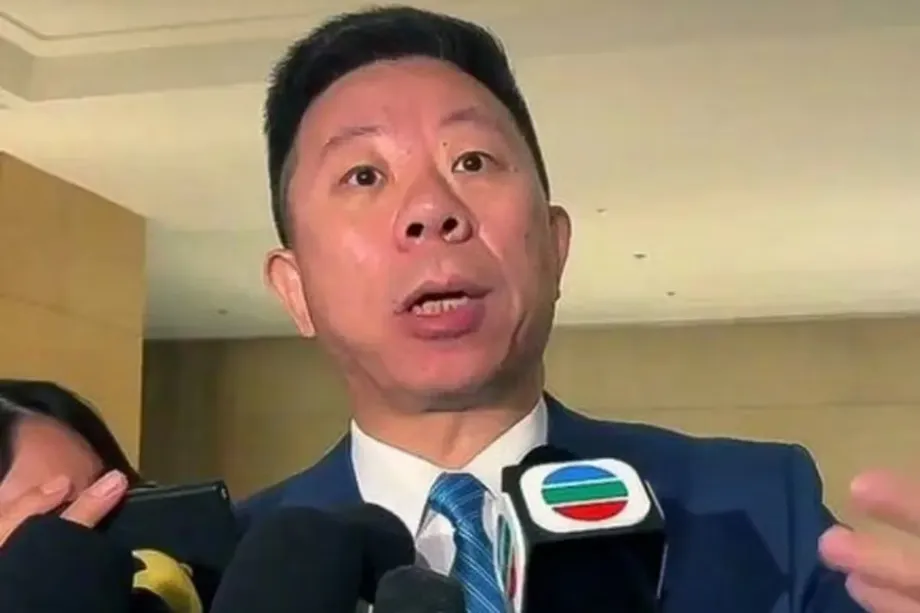
Lou Qinjiang, spokesperson for the National People's Congress session, defended the legislation at a news conference in Beijing. He described party leadership and closer integration of minority regions into national development as its central purposes.
It aims to ensure the party's comprehensive leadership over ethnic affairs, improve institutional mechanisms for strengthening a sense of a shared community for the Chinese nation and to support ethnic minority regions in better integrating into the country's overall development.
Beijing presents this approach as a continuation of Chinese history and a modernization of governance. The draft's preamble refers to the "correct path with Chinese characteristics for addressing ethnic issues." Human rights advocates see a break with earlier promises of cultural autonomy, meaning the ability of minority communities to retain some control over their languages, customs and local affairs.
The 1984 Law on Regional National Autonomy provided protections on paper for minority languages and customs, including regional autonomy where minorities lived in concentrated communities. The proposed legislation shifts the governing approach toward assimilation, the process through which distinct communities adopt the language and identity promoted by the dominant political order.
Uyghurs in Xinjiang, Tibetans on the high plateau and Mongolians in northern China have already experienced restrictions on mosque attendance, monastery closures and the replacement of education in their languages with Mandarin curricula in state schools. The draft would give a broader statutory foundation to the direction of those policies.
The policy and legislative sequence stretches across several years:
- 1984: The Law on Regional National Autonomy established formal protections for minority autonomy, languages and customs.
- 2021: Xi Jinping used a national tree metaphor to explain the relationship between shared Chinese culture and minority cultures.
- 2024: The Third Plenum Decision explicitly called for legislation to strengthen a shared sense of the Chinese nation.
- August 2025: The full Politburo reviewed the draft.
- March 2026: The 62-article proposal reached final deliberation during the Two Sessions.
Xi's National Identity Doctrine Enters the Draft
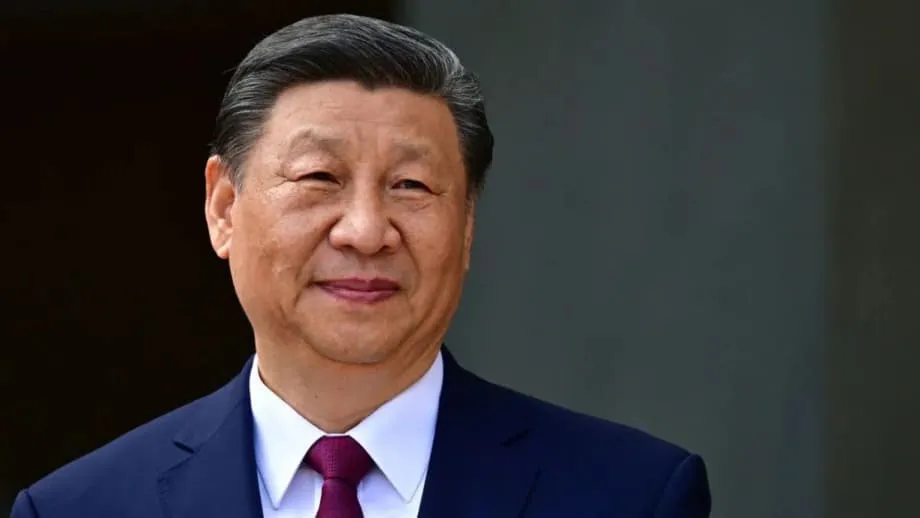
Xi Jinping has personally driven the ideological shift behind the legislation. The draft implements his "Important Thinking on Improving and Strengthening Ethnic Work," a doctrine containing twelve requirements known as the "Twelve Musts." These include building a strong sense of community for the Chinese nation, creating a shared spiritual home and promoting extensive "interactions, interchanges, and intermingling" among ethnic groups.
The document also invokes Xi's instruction to "correctly grasp" the "Four Pairs of Relationships." This framework places a shared national culture above the separate traditions of minority communities. In practice, the proposed hierarchy gives priority to a national identity centered on Han culture.
Xi explained that relationship in a speech in 2021. He compared the shared Zhonghua culture to the trunk of a tree, with minority cultures as its branches and leaves.
Only when the roots are deep and the trunk is strong can the branches and leaves flourish.
The draft carries this vision into legal requirements. Its treatment of diversity is closely connected to security: ethnic regions would be responsible for safeguarding borders, resources, energy and food supplies. Minority communities would therefore be governed through requirements that connect cultural integration with the protection of national strategic interests.
Mandarin Requirements Begin in Preschool
Article 15 contains some of the proposal's most direct requirements for daily life. It makes Mandarin Chinese the mandatory language of education beginning in preschool and requires children to "basically master" the national common language by the end of compulsory education, typically at age 15.
The 1984 autonomy law allowed greater flexibility over when pupils began learning Mandarin and guaranteed minorities freedom to use and develop their languages. It also required government agencies in minority areas to use local languages in official business. Under the new proposal, Mandarin versions would take precedence when documents appear in several languages.
Schools that historically recruited minority students and used textbooks in their native languages would have to prioritize curricula that weave national unity into every subject. The Campaign for Uyghurs, an advocacy organization based in Washington, warned that the legislation would remove entitlement to education in minority languages across schools and universities.
Uyghurs, Tibetans, and Mongolians will no longer be entitled to use their native languages for subjects in schools and universities.
Maya Wang, associate Asia director at Human Rights Watch, said the draft would mobilize institutions and society around Communist Party authority at the expense of rights.
The Chinese government's draft law on promoting ethnic unity seeks to mobilize the bureaucracy and society to unite people under Chinese Communist Party leadership at the expense of human rights.
Tibetan monasteries have traditionally served as centers of religion and education. The framework described in the proposal would require everyone under 18 to learn Mandarin in facilities run by the state and prevent them from studying Buddhist texts, cutting a central route through which Tibetan literacy has passed between generations.
Language policy would also shape public surroundings. Authorities would be directed to "establish and highlight Chinese cultural symbols" in public facilities, buildings and tourist sites. Where place names or signs use both Mandarin and minority scripts, Chinese characters would receive more prominent display.
Parents, Religious Groups and Everyday Beliefs
Article 20 places explicit responsibilities on parents and guardians. They would have to "educate and guide minors to love the Chinese Communist Party" and teach that all ethnic groups belong to one family. They would also be prohibited from teaching "concepts detrimental to ethnic unity and progress."
Those requirements would bring the transmission of identity inside families within the reach of ethnic unity rules. Cultural knowledge or religious beliefs stressing a distinct ethnic identity could face punishment when authorities judge them harmful to national unity. The provision gives political authorities a role in deciding which lessons parents may pass to their children.
Article 12 requires the state to organize education encouraging all ethnic groups to adopt "correct views" of history, nation, culture and religion. Enterprises, public institutions and religious organizations would also be required to promote party ideology, narrowing the space for religious leadership independent of the party.
The draft calls for the "transformation of customs and habits" to secure "civilization and progress" in marriage and family life. That wording reflects the party's longstanding presentation of minority traditions as backward in comparison with Han modernity. The proposed rules connect political loyalty with decisions previously rooted in family, faith and community practice.
Marriage Rights and Pressure for Integration
Article 40 prohibits any person or organization from interfering with freedom to marry on the basis of religion or ethnicity. Officials present the provision as protection against discrimination. Analysts also interpret it as a way to prevent religious leaders or family elders from opposing marriages between people from different ethnic groups.
Aaron Glasserman, a University of Pennsylvania researcher who studies Chinese ethnic policy, explained how the rule could change the behavior of local officials. He described an official who might previously have accommodated community opposition to a marriage to avoid trouble.
You can imagine this official; their number one priority is to have as few problems as possible so they can get promoted or, at least, not fired. This official might quietly massage the situation so that pressure is put so that the marriage does not go through. This law is making it harder for that informal process to play out and making it more likely that people will not allow the imam or the priest or the parents to say you are not allowed to marry that person.
Glasserman's example concerns marriage, but it also explains the draft's wider bureaucratic effect. A national legal requirement would reduce the ability of local officials to quietly accommodate religious or community resistance, including opposition to marriages between Han Chinese men and minority women.
Xinjiang's "becoming family" initiative illustrates why state involvement in private life has caused alarm. Under that program, minority households had to host party cadres in their homes, sometimes sharing beds. Women reported rape and sexual abuse associated with such arrangements. Human rights concerns about the new legislation include the risk that requirements to transform customs could give legal cover to invasive programs while exposing traditional practices to punishment.
Borderlands, Resources and Population Movement
Article 34 assigns ethnic regions the "mission and responsibility" of safeguarding border security, resource and energy security, food security and ecological security. The territories involved include the homelands of Tibetans, Uyghurs and Mongolians, with extensive borders, valuable mineral deposits, agricultural land and trade routes connecting China with Central Asia and beyond.
Mao Zedong, the founder of Communist China, observed that the Han population was large while minority nationalities occupied vast territories rich in resources. The China Power Project, a research initiative, has cited that observation to explain the continuing importance of these regions to national development.
Beijing has encouraged Han migration to Tibet and Xinjiang through government incentives. Regional capitals including Lhasa and Urumqi have experienced substantial arrivals of Han residents and culture, changing their ethnic composition and reducing the dominance of indigenous cultural life.
The proposal would extend integration through movement between regions, employment transfers and student exchanges. Article 22 calls for "inter-embedded community environments," where people from different ethnic groups live, study, work and enjoy activities together. Such arrangements would reduce the geographic separation through which distinct communities have maintained their languages and traditions.
Officials justify these policies partly by referring to violence, including the Tibetan uprising in Lhasa in 2008 and the Urumqi riots in 2009. Beijing says 22 people died in the Tibetan unrest; Tibetan exile groups put the toll at around 200. Authorities also cite terrorist attacks by Uyghur separatists, including an incident in 2013 in which a car carrying explosives was driven toward Tiananmen Square.
Critics argue that treating distinct cultural identities as security threats would close peaceful routes for expressing them and could deepen tensions. The draft connects the administration of these communities to national security while making their integration a responsibility across education, employment and residential life.
A Legal Reach Beyond China's Borders
Article 61 asserts jurisdiction over foreign organizations and individuals who "commit acts targeting the PRC that undermine ethnic unity and progress or create ethnic division." This would extend the proposed framework beyond conduct inside China and into activities by people and organizations abroad.
Article 17 directs authorities to promote the law's ideology through exchanges with foreign universities, civil society organizations and think tanks. The document also addresses "Taiwan compatriots" and overseas Chinese, calling on them to strengthen their understanding that they belong to the Chinese nation regardless of citizenship or where they live.
Chinese authorities have already pursued people over speech overseas, harassed diaspora communities by threatening relatives in China, and pressed foreign institutions to use Mandarin names such as "Xizang" instead of "Tibet." In July 2025, authorities arrested a Chinese student for the serious offense of "inciting separatism" after the student spoke out for Tibetan rights while studying abroad.
The proposed law would provide a statutory rationale for actions framed by Beijing as defending ethnic unity. For diaspora communities, its reach connects cultural advocacy overseas with potential consequences involving Chinese authorities and family members at home.
Autonomy Promises Face a Different Governing Model
Human rights advocates argue that the proposed requirements conflict with China's international obligations and domestic guarantees. They cite the International Convention on the Elimination of All Forms of Racial Discrimination, which the account of those objections dates China's ratification to 2001, and its protection of freedom of thought, conscience and religion.
The domestic conflict centers on protections associated with the 1984 Law on Regional National Autonomy and China's constitution. The older framework promised autonomy and language rights to minorities living in concentrated communities. The new draft gives priority to national unity through detailed obligations governing language, education, religion and family life.
Legislative monitoring has described the policy shift as a move from "first generation" ethnic policies to "second generation" reforms. The first model allowed autonomy on paper within a state dominated by the Han majority. The second seeks closer integration through legal requirements that reduce the institutional space for separate identities.
Preschool Mandarin instruction and prohibitions on conduct judged harmful to unity show how that shift would work. Broad constitutional promises would sit alongside specific duties requiring national integration in daily life. Human rights organizations argue that those duties would hollow out protections previously available to minority communities.
As of March 10, the proposal is still at the final deliberation stage. No specific date for the final vote is given. The immediate next step is parliamentary approval during the March session.
Delegates Praise Unity as Rights Advocates Warn of Erasure
Zoya Baqit, a Kazakh National People's Congress deputy from Xinjiang's Altay prefecture and a staff member at the regional museum, called the proposed law a "foundational guide" for cultural workers. She linked her support to childhood experiences of contact between communities.
We celebrated each other's festivals, visited one another, and shared traditional food.
Yershat Tursonbay, governor of Ili Kazak autonomous prefecture and another National People's Congress deputy, said stronger rule of law could improve governance in regions with several ethnic groups. He argued that clearer legal frameworks could help settle disputes through institutions rather than conflict.
Those positions reflect the official argument that national integration can support common prosperity while respecting differences. Tibetan exile communities describe the bill as another phase in an accelerating campaign of Sinicisation, meaning the reshaping of distinct cultures around Chinese national identity and Han cultural norms.
Yalkun Uluyol, a China researcher at Human Rights Watch, described the draft as extending the party's ideological direction throughout public and private life.
It formalises an ideological framework related to a 'common consciousness of the Chinese nation' across education, religion, history, culture, tourism, mass media and the internet and directs that this ideology be integrated into urban and rural planning and economic development.
Uyghurs, Tibetans, Mongolians and other minorities would face a national framework that joins language policy, family duties, religious oversight and security requirements. The central disagreement is concrete: Beijing describes integration as the basis of unity and development, while human rights organizations argue that the proposed rules would turn pressure to assimilate into enforceable law and leave cultural differences little room beyond decorative expression.
The Bottom Line
- The 62-article Law on Promoting Ethnic Unity and Progress is awaiting final deliberation during China's March 2026 parliamentary session.
- Article 15 requires Mandarin education from preschool and basic mastery by the end of compulsory schooling, typically at age 15.
- Parents would have to teach loyalty to the Communist Party and avoid concepts judged harmful to ethnic unity.
- Article 40 prohibits interference with marriage on ethnic or religious grounds, limiting the ability of families and religious leaders to oppose such marriages.
- Articles 22 and 34 connect closer community integration with responsibilities involving borders, resources, energy, food and ecology.
- Article 61 asserts jurisdiction over certain activities by foreign organizations and individuals.
- Officials present the bill as a route to unity and development; human rights groups warn that it would formalize forced assimilation and weaken minority cultural protections.