Record Departures, Strained Businesses at Home
South Korean visitors made 1.18 million arrivals in Japan in January 2026, an increase of 21.6 percent from a year earlier, according to the Japan National Tourism Organization (JNTO). South Korea was Japan's largest source of international visitors that month, and its total was the highest monthly figure ever recorded for a single country visiting Japan.
Contents
- Record Departures, Strained Businesses at Home
- Why Japan's January Arrivals Fell
- How Japan's Businesses Are Absorbing the Shock
- China Gives South Korea an Opening
- Why South Koreans Keep Choosing Japan
- Where Korean Businesses Feel the Pressure
- The Philippines Also Seeks Korean Travellers
- Japan's Strengths and Its Own Travel Weakness
- South Korea's Plans to Attract More Visitors
- What to Know
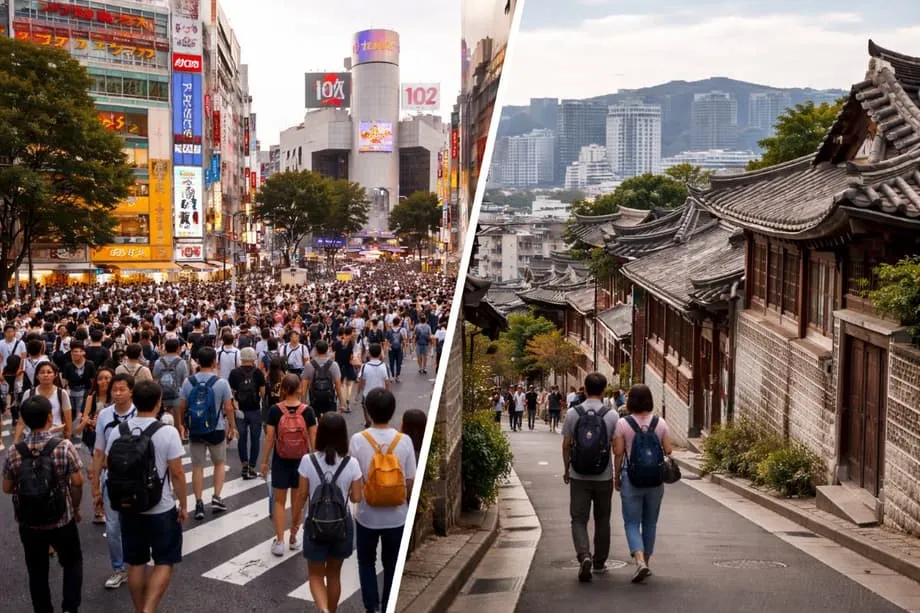
South Korea's own tourism businesses face a much less comfortable picture. Hotels and restaurants in Seoul and elsewhere have reported financial strain as international visitor traffic fails to recover at the pace they expected. The contrast has become an economic concern: South Koreans are spending heavily on trips abroad while businesses at home struggle to attract enough overseas customers.
Japan welcomed more than 42 million international visitors during 2025. South Korea, meanwhile, has struggled to keep pace with regional competitors despite the recovery in global travel after COVID-19 restrictions. Industry insiders describe the imbalance as a crisis with consequences extending well beyond the familiar sporting rivalry between the two countries.
The problem involves two different flows of people and money. Inbound tourism means visitors arriving from abroad and spending in the destination country. Outbound tourism means residents travelling overseas, where much of their holiday spending benefits foreign businesses. Strong outbound demand can coexist with weak business conditions at home.
As of March 10, 2026, South Korea's challenge is also being shaped by diplomatic tensions between China and Japan, a weak Japanese yen and changing travel preferences across Asia. Chinese travellers are turning toward alternatives to Japan, giving South Korea an opening. Yet rising arrivals from China have not brought an equally strong recovery across all visitor markets or all parts of the Korean tourism economy.
Why Japan's January Arrivals Fell
Japan received approximately 3.6 million international visitors in January 2026, down 4.9 percent from January 2025. It was the first annual decline in monthly foreign arrivals since January 2022, when COVID-19 restrictions were still disrupting international travel.
Chinese arrivals accounted for the main weakness. Their number fell from 980,520 in January 2025 to 385,300 in January 2026, a decline of 60.7 percent. The fall followed comments about Taiwan by Japanese Prime Minister Sanae Takaichi that Beijing interpreted as provocative. China's government responded with travel advisories urging citizens to reconsider trips to Japan, affecting booking patterns.
The Lunar New Year calendar also influenced the comparison. The holiday fell in late January in 2025 but moved to mid-February in 2026. Some holiday travel therefore shifted out of January, making the comparison between the two January totals less straightforward. Diplomatic tensions nevertheless remained the dominant factor in the Chinese decline.
Chinese airlines offered free cancellations for flights to Japan through October 2026. That extended period gave travellers flexibility to abandon bookings and suggested that disruption could continue beyond the immediate holiday season.
The main dates show how the travel calendar and political tensions overlapped:
- January 2022: Japan recorded the previous annual decline in monthly international arrivals during COVID-19 restrictions.
- Late January 2025: Lunar New Year travel fell within the month used as the comparison for January 2026.
- January 2026: Japan's total arrivals fell 4.9 percent, while South Korean arrivals rose 21.6 percent.
- Mid-February 2026: Lunar New Year shifted into February.
- October 2026: Chinese airlines' free cancellation arrangements for Japan flights extended through this month.
Japan's January figures show the competing forces plainly. A record flow from South Korea helped support demand, but the steep loss of Chinese visitors was large enough to pull the total down.
How Japan's Businesses Are Absorbing the Shock
Shoji Imai, who manages a kimono rental shop in Tokyo's Asakusa district, described a change in his customer base. Chinese visitors had previously dominated, but travellers from Thailand, Singapore and other Southeast Asian countries were helping fill the gap.
Imai said the continued arrival of customers from other countries had supported his shop's sales:
We still have customers from countries like Thailand and Singapore so overall sales haven't changed much,
His experience illustrates the value of attracting visitors from several markets. A business with customers from many countries has more possible sources of demand when travel from one country falls. Japan's broader mix of visitors has helped cushion the Chinese downturn, even as national arrivals declined.
Masato Koike, senior economist at Sompo Institute Plus, warned that a sustained decline in Chinese tourism could have substantial economic effects across the region. His analysis used the 2012 freeze in relations between China and Japan as a comparison. Recovery from that disruption took 15 months.
If the current tensions follow a similar pattern, the effects could spread beyond shops and hotels in Japan. Airline routes depend on passenger demand, hotel investment depends on expected occupancy, and supply chains serve the businesses that travellers use. Changes in tourism can therefore affect decisions across Northeast Asia.
China Gives South Korea an Opening
South Korea has become one possible alternative for Chinese travellers dropping Japan from their itineraries. Industry projections suggested that approximately 250,000 Chinese visitors could arrive during the Spring Festival travel window lasting 40 days. That would provide welcome business, although it was expected to be insufficient to offset South Korea's wider tourism difficulties.
Chinese travel to South Korea had already risen sharply before the latest tensions. During the first 11 months of 2024, mainland Chinese visitors made 3.76 million visits, up 109 percent from the same period in 2023. China was South Korea's largest visitor market, ahead of Japan's 3.4 million visits.
The 109 percent increase means Chinese arrivals more than doubled from the previous year's level. Much of that growth came as travel recovered from pandemic lows. Continued tension between Beijing and Tokyo appeared likely to give Chinese travellers further reason to consider South Korea.
South Korean businesses, however, have experienced that recovery unevenly. Chinese visitors remain concentrated in particular places and sectors, while the broader international market, including traditional visitor sources such as Japan and Western countries, has not recovered proportionally.
South Korea's total inbound visitor numbers also continue to trail regional competitors. The resulting reliance on a single large market leaves businesses exposed to changes in that market's travel demand. Japan's sudden loss of Chinese arrivals shows how quickly a diplomatic dispute can affect bookings, even in a country with a large tourism industry.
Why South Koreans Keep Choosing Japan
South Koreans made 7.76 million visits to Japan during the first 11 months of 2024. Vietnam followed with 4.05 million visits, and China with 2.08 million. Japan was by far the leading overseas destination, with the figures indicating nearly twice as many Korean visits as the other destinations combined in the top five.
The direct comparison with Vietnam is particularly striking: 7.76 million visits to Japan against 4.05 million to Vietnam put Japan close to twice the second destination's total. The January 2026 record suggests that Japan's attraction continued to draw large numbers of Korean travellers.
The weak yen is a major reason. Japan's currency has lost approximately one third of its value against the US dollar since 2019 and has maintained favourable rates against the Korean won. For Korean visitors, that has made shopping, meals and accommodation more affordable than in earlier years.
Geography also helps. Japan is close enough for a weekend trip, supported by established transport links and cultural similarities that make travel feel accessible. A visit to Osaka or Tokyo can be a short break rather than a lengthy expedition.
South Korean travellers account for an estimated 10.4 percent of total international visitor spending in Japan. Korean business owners see that spending alongside weaker conditions at home, including occupancy in Seoul's Myeongdong district reported to be well below levels before the pandemic. Money spent overseas creates a difficult balancing task for policymakers seeking both economic benefits and cultural exchange.
Where Korean Businesses Feel the Pressure
Hotels in metropolitan Seoul have reduced staffing and operating hours as revenue falls short of projections. Many traditionally relied on both international business travellers and holidaymakers. The hospitality sector contributes billions of dollars annually to South Korea's economy, so weaker demand affects a substantial network of businesses.
Family restaurants in Bukchon Hanok Village and Insadong report fewer international visitors exploring traditional landmarks or trying Korean culinary specialities. Smaller businesses have absorbed a disproportionate share of the strain because a reduction in passing customers directly affects daily sales.
Tour operators, transport services and retailers are also affected. Many previously served Japanese, Taiwanese and Western visitors, linking their earnings to a broader recovery than the rebound in Chinese arrivals alone can provide. A visitor's spending normally moves through several businesses, from accommodation to meals, transport and shopping.
The financial pressure has also weakened confidence. Hotels and restaurants that expected international demand to return more strongly are now adjusting costs while waiting for sufficient customers. The gap between expectations and actual revenue helps explain why the tourism industry can feel under stress even when one visitor market is growing rapidly.
The Philippines Also Seeks Korean Travellers
The Philippines has experienced a 21 percent drop in South Korean visitors. Its Department of Tourism has responded with marketing campaigns, discounted airfares and targeted promotions intended to bring travellers back.
Christina Garcia Frasco, the Philippines' tourism secretary, described South Korea's importance to the country's visitor economy:
South Korea remains one of the Philippines' most vital and valued tourism markets,
Frasco highlighted cooperation through airline partnerships and digital campaigns as part of efforts to reverse the decline. The response shows that destinations elsewhere in Asia are competing to retain Korean visitors while Japan attracts record numbers.
The Philippine decline suggests that changing travel patterns extend beyond the relationship between South Korea and Japan. Broader financial pressures on Korean households or changing preferences among younger travellers are possible explanations. Strong demand for Japan can exist alongside weaker demand for other destinations when travellers change where they spend rather than simply stop travelling.
Japan's Strengths and Its Own Travel Weakness
Japan's tourism success rests partly on the continuity of its Visit Japan campaigns over two decades. Partnerships with international airlines and travel agencies have supported recognition of the country as a destination and helped build a tourism network capable of absorbing disruption in an individual market.
Historic temples and natural scenery sit alongside modern technology and efficient transport. That combination allows Japan to appeal to visitors interested in culture, food, outdoor activities and cities, often within compact areas. Its range of experiences gives different groups reasons to visit.
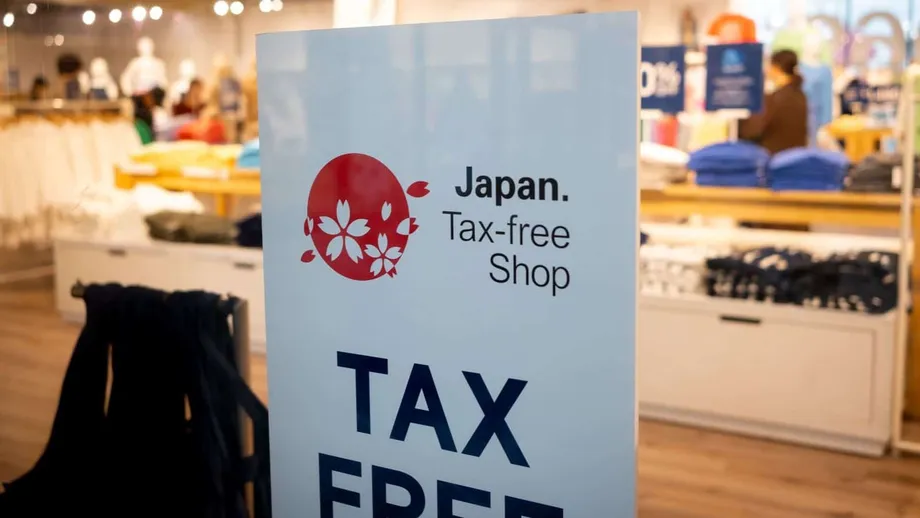
Government measures have also reduced practical obstacles. Simpler visa procedures for Southeast Asian countries, expanded shopping arrangements that exempt eligible purchases from tax, and services in several languages have made travel easier. The anticipated Tokyo 2026 Winter Games were presented as another prospective boost to Japan's position as a destination for major sporting events.
Japan's residents, however, have been slower to return to overseas travel. The country recorded only 13 million outbound travellers in 2024, a decline of 35.2 percent from 2019 and a substantially weaker recovery than South Korea's.
Passport ownership stands at 16.8 percent of Japan's population, compared with 40 percent in South Korea. Japan has responded by reducing the cost of a passport valid for 10 years from 16,000 yen to 9,000 yen. Whether price alone explains the reluctance to travel abroad remains uncertain.
Japan therefore faces a different imbalance from South Korea. Large numbers of foreign visitors support its domestic tourism businesses, while comparatively few Japanese residents travel overseas. South Korea's strong appetite for foreign holidays sits beside continuing pressure on businesses seeking international customers.
South Korea's Plans to Attract More Visitors
South Korea's Ministry of Culture, Sports, and Tourism (MCST) has launched initiatives aimed at reviving inbound tourism. Its strategy seeks a wider range of visitor markets while trying to regain traditional customers through marketing and improvements to tourism infrastructure.
Wellness tourism is a priority. The programme draws on advanced medical facilities, traditional Korean medicine and spa culture to attract travellers interested in health and wellbeing. Tourism centred on nature promotes mountain walking routes, coastal areas and Jeju Island.
Cultural promotion combines historic and contemporary attractions. UNESCO World Heritage sites include Changdeokgung Palace and the historic villages of Hahoe and Yangdong. K-pop experiences and visits to film locations offer another route to attracting people whose interest in South Korea begins with its entertainment industry.
Visa reforms seek to make entry easier for visitors from Southeast Asia, South Asia and the Middle East. South Korea has expanded programmes allowing entry without a visa and simplified applications for frequent travellers. Campaigns aimed at neighbouring Asian countries also seek visitors who might otherwise choose Japan or Thailand.
Industry analysts point to practical weaknesses outside Seoul. The capital offers services and facilities of an international standard, but secondary cities often lack sufficient support in English, suitable hotels and efficient connections between cities. Those gaps can limit how far overseas visitors travel within the country.
Heavy concentration in Seoul creates pressure in the capital while leaving potential tourism income in other regions untapped. Attracting more visitors is therefore only part of the task. South Korea also needs those visitors to reach a wider range of destinations and businesses if the recovery is to ease the strain beyond a few busy locations.
What to Know
- South Korean arrivals in Japan reached a monthly record of 1.18 million in January 2026, up 21.6 percent from a year earlier.
- Japan's total international arrivals fell 4.9 percent to approximately 3.6 million, its first annual monthly decline since January 2022.
- Chinese arrivals in Japan fell 60.7 percent following tensions over Taiwan and Chinese travel advisories. Lunar New Year also shifted from January to February.
- Japan welcomed more than 42 million international visitors in 2025, while Korean hospitality businesses continued to report pressure from an uneven inbound recovery.
- Mainland Chinese visitors made 3.76 million visits to South Korea in the first 11 months of 2024, up 109 percent. Japanese visitors made 3.4 million visits.
- South Koreans made 7.76 million visits to Japan during that period, compared with 4.05 million to Vietnam and 2.08 million to China.
- The Philippines recorded a 21 percent decline in South Korean visitors and responded with airfare promotions, airline partnerships and digital marketing.
- South Korea's response combines visa reforms, wellness and cultural tourism promotion, and efforts to improve tourism infrastructure beyond Seoul.