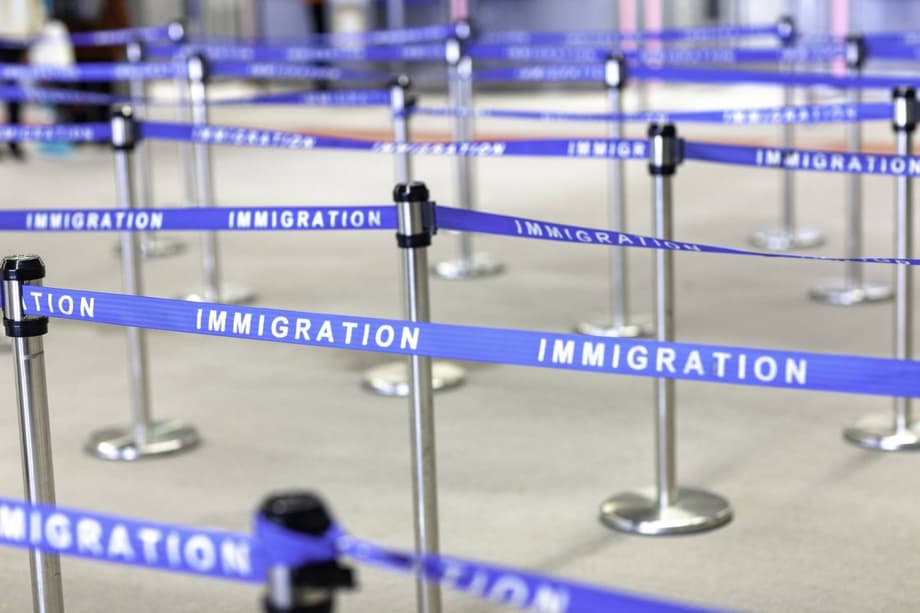
A stark snapshot of life in Japan
A new national survey by Japan’s Immigration Services Agency (ISA) has found that 47 percent of foreign residents have experienced some form of discrimination in everyday life. The figure underscores the gap between the country’s growing reliance on foreign workers and the social climate those workers encounter. The survey was conducted between October and November 2025 and reached 20,000 foreign residents and special permanent residents who were 18 years old or older. It received 8,874 valid responses. While the result is 0.8 percentage point lower than the previous year, it still means that nearly one in two foreign residents report unfair treatment simply because they are not Japanese.
- A stark snapshot of life in Japan
- What the survey found
- Where discrimination shows up
- Saitama: a city of welcome and worry
- Mie Prefecture: when government hiring itself becomes a flashpoint
- Burial, belief, and belonging: when religious practice meets local opposition
- Labor policy and the gap between recruitment and protection
- Public opinion and the politics of higher fees
- What can change?
- The bottom line
Japan’s foreign population has reached record levels as the government tries to offset a shrinking workforce and an aging society. At the same time, local polls show that many foreign residents appreciate the safety and stability of life in Japan. The challenge for policymakers is that positive feelings can coexist with experiences of exclusion, prejudice, and institutional barriers. The ISA survey, the latest in a series that began years earlier, is one of the most comprehensive attempts to measure that tension.
What the survey found
According to the ISA report, 47 percent of respondents said they had experienced discrimination in their daily lives, while 53 percent said they had not. The share reporting no discrimination fell by 0.8 percentage point from the previous year. Although the drop is small, it suggests the problem is not improving and remains widespread. The survey did not ask about a single type of incident; instead it invited respondents to reflect on a range of experiences, including derogatory remarks, refusal of housing, unequal pay, and barriers to public services.
The survey is part of a broader effort to understand how well Japan is integrating foreign residents. Previous government surveys have produced similar results. A landmark justice ministry poll in 2017 found that nearly one third of foreign residents had faced derogatory remarks and about 40 percent of those who had searched for housing had been turned away because of their nationality. The persistence of these numbers suggests that policy changes, while significant, have not yet produced a decisive shift in everyday behavior.
Where discrimination shows up
Housing discrimination remains one of the most common problems. In the 2017 survey, four in ten foreign residents who had looked for a home in the previous five years said they had been refused because they were foreigners. Some reported seeing real estate notices that explicitly stated ‘foreigners not accepted.’ Landlords often cite language difficulties, fear of rent defaults, or cultural misunderstandings. Civil rights groups say these excuses can mask racial bias and create a dual market in which foreign residents must rely on specialized agents, company housing, or informal networks.
The workplace is another site of unequal treatment. In the 2017 survey, one in four people who had applied for a job said they were denied employment because of their foreign status. One in five believed they were paid less than Japanese colleagues for similar work. More recent data suggest that gap remains significant. Reports in 2024 indicated that the average salary of foreign workers was 28 percent lower than that of Japanese workers. Unequal pay, unpaid overtime, and hazardous assignments are particularly widespread among participants in the Technical Intern Training Program, which has been criticized by the United States State Department and United Nations human rights bodies as a channel for labor exploitation and human trafficking.
Service refusal also occurs in retail and other settings. Foreign residents have reported being turned away by barbers, convenience stores, and landlords. These incidents may seem isolated, but they contribute to a climate in which foreign residents feel they are accepted only as workers or consumers, not as neighbors.
Saitama: a city of welcome and worry
Not all signs are negative. A prefectural survey in Saitama, a residential area north of Tokyo, found that more than 90 percent of foreign residents were satisfied with life there. The survey, conducted from November to December 2025 with 1,064 valid responses, found that 49 percent were ‘satisfied’ and 43 percent were ‘somewhat satisfied.’ The main attractions were public safety, the ease of living, and the ability to understand Japanese culture and customs. A combined 84 percent hoped to continue living in the prefecture for at least two more years, and nearly 60 percent said they wanted to live there permanently.
Yet the same survey revealed a sharp undercurrent of concern. Among the 5 percent of respondents who were unsatisfied or somewhat unsatisfied, 39 percent cited ‘discrimination against foreigners’ as the main cause. The most requested services included expanded multilingual information, Japanese language learning assistance, more comprehensive welfare packages, and a specialized campaign to eliminate discriminatory views. The comments showed a split in opinion: some respondents called for stronger Japanese language training, while others asked for stricter rules to ensure all residents obey local laws. As of June 2025, Saitama had 277,209 foreign residents, about 3.8 percent of its population.
We will be taking full advantage of these findings in designing and developing dedicated programs for citizens from abroad, especially Japanese language training.
A representative of Saitama’s international affairs division made the statement after the survey was released. The prefecture has been conducting these polls since 2013 to understand the views and needs of foreign residents.
Mie Prefecture: when government hiring itself becomes a flashpoint
The national survey results arrive at the same time as a controversy in Mie Prefecture, where Governor Katsuyuki Ichimi has proposed reinstating a Japanese nationality requirement for many prefectural jobs. Mie abolished the nationality condition for general administrative positions in fiscal 1999, following a trend begun in the 1970s to reduce discrimination against ethnic Koreans and other foreign residents seeking public employment. Today, 12 prefectures have removed the nationality requirement, although restrictions remain for jobs involving the exercise of public authority, such as granting licenses or conducting inspections.
Ichimi argues that prefectural workers handle the personal information of residents and sensitive data about dignitaries, infrastructure, and agriculture. He has pointed to changes in the international situation, suggesting that foreign staff could be pressured by their home countries to leak confidential information. The prefecture inserted a detailed question into its annual ‘survey of 10,000 Mie residents,’ asking voters whether hiring foreign nationals should ‘continue,’ ‘not continue,’ or if they ‘don’t know.’ The question warns that confidentiality obligations could be violated because some countries require citizens to cooperate with information gathering by their governments.
Mayors across the prefecture and human rights groups have strongly objected. Iga Mayor Toshinao Inamori submitted a written request to remove the question, arguing that it ‘undermines multicultural coexistence and could encourage discrimination or hate speech.’ Nabari Mayor Hiroyuki Kitagawa, who also chairs a committee studying ordinances against discrimination, said the question could lead residents to internalize the idea that ‘foreign staff are dangerous.’ Yokkaichi Mayor Tomohiro Mori said his city, which has hired foreign workers since fiscal 2002, has no intention of changing its policy. Aichi Governor Hideaki Omura also criticized the plan, noting that his prefecture has not experienced information leaks because it educates all workers about information management.
It belittles foreign employees already working for the prefecture and deeply injures their dignity.
Iga Mayor Toshinao Inamori used those words in January 2026 to explain why he wanted the survey question removed. Commentators also called the plan a move against inclusion and said Ichimi should retract it.
Critics also note the survey’s questionable legitimacy. The 2025 ‘survey of 10,000 residents’ received responses from only 4,592 people, or 45.9 percent of those contacted, and response rates have been falling. The sample is a small fraction of Mie’s roughly 1.7 million residents. Using it to justify a major reversal of employment policy raises concerns about transparency and democratic accountability.
Burial, belief, and belonging: when religious practice meets local opposition
Discrimination is not limited to the job or housing market. It also appears in the most intimate moments of life and death. For Muslim residents, Japan’s near universal practice of cremation creates a painful conflict. Islamic tradition requires burial of the body, usually within 24 hours, with the body facing Mecca. Cremation is forbidden. Yet more than 99 percent of deaths in Japan are handled by cremation, and fewer than a dozen cemeteries nationwide currently accept Muslim burials. No Muslim burial site exists west of the Chugoku region, leaving families in Kansai and Kyushu with few choices.
In response, the central government began surveying 129 prefectures and major cities in January 2026 about cemetery regulations and capacity for non cremation burial. The survey reflects growing official awareness of the issue, but it is framed largely as a matter of foreign resident policy rather than religious accommodation. Some observers say that framing shapes whether local communities will accept solutions.
Local opposition has already stalled several projects. In Hiji Town, Oita Prefecture, a local Islamic association had secured municipal land, capped the number of plots, and conducted groundwater testing. A candidate opposing the cemetery won the 2024 mayoral election and then halted the land sale. In Sakuragawa City, Ibaraki Prefecture, a Buddhist affiliated organization withdrew its application for a burial site after residents complained about inadequate consultation. Opposition in some cases included racist rhetoric and misinformation, such as unfounded claims about water contamination. Some commentators even suggested Muslim residents should return deceased relatives to their countries of origin, ignoring the fact that many Muslims in Japan are long term residents or citizens.
There are also efforts to find solutions. Miyagi Prefecture Governor Murai Yoshihiro has proposed an earth burial cemetery for foreign residents, though it has drawn hundreds of complaints. A Kyoto temple run cemetery has quietly begun offering a limited number of Muslim burial plots. These cases show that progress is possible, but uneven.
Labor policy and the gap between recruitment and protection
Japan’s foreign resident policy has been driven by economic necessity. The working age population has been shrinking for years, and labor shortages have consistently exceeded 3 million people. The number of foreign workers reached roughly 2.3 million by the end of 2024, nearly triple the level of a decade earlier. Many work in caregiving, construction, food processing, and other sectors facing acute shortages.
Yet the legal framework often treats these workers as temporary labor rather than future neighbors. The Technical Intern Training Program, officially designed to transfer skills, has become a main source of low wage labor. Trainees are frequently bound to a single employer, barred from changing jobs, and housed in company dormitories. According to a health ministry inspection, 73.2 percent of companies employing technical interns had violated labor laws. The program is scheduled to be replaced by a training to employment system in 2027, but critics see the change as rebranding rather than reform.
The Specified Skilled Worker visa system also has limits. The lower tier Specified Skilled Worker (i) visa is valid for up to five years and does not allow workers to bring family members. Time spent in this status does not count toward permanent residency. The higher tier Specified Skilled Worker (ii) visa does allow a path to permanent residency, but the requirements are strict and few have qualified. This structure has led critics to describe Japan’s approach as one of using labor without offering the security that encourages long term settlement and social integration.
Conditions can be harsh for those who fall out of status. Immigration detention has been criticized for prolonged confinement, lack of medical care, and violent enforcement. The 2021 death of a Sri Lankan woman at an immigration detention center in Nagoya, after her requests for medical treatment were reportedly denied, drew international condemnation and sparked protests in Japan.
Public opinion and the politics of higher fees
Against this backdrop, the Japanese government has also moved to increase the financial burden on foreign residents. A revised immigration control and refugee recognition law enacted in May 2026 will raise fees for residence procedures. Fees for changing or renewing residence status will rise from a flat 6,000 yen to a range of 10,000 yen to 75,000 yen, and the fee for permanent residence applications will jump from 10,000 yen to 200,000 yen. The changes are scheduled to take effect in October 2026.
A national opinion poll conducted in July 2026 found that 56.0 percent of respondents supported the fee increases, while only 20.8 percent opposed them. The gap suggests that many Japanese voters view foreign residents as a fiscal burden rather than as taxpayers and community members. Higher fees may make it harder for low wage workers to renew their status or apply for permanent residency, potentially reinforcing the very instability that the government says it wants to reduce.
What can change?
Japan has taken steps to address discrimination. A hate speech law was introduced in 2016, though it lacks penalties and has been criticized as weak. The government has funded Japanese language education and multilingual consultation services. Some local governments have adopted ordinances against discrimination and expanded support for foreign residents. National surveys like the ISA poll are themselves a sign that officials recognize the problem.
Yet the available evidence suggests that legal changes and public awareness campaigns have not yet changed daily life for many foreign residents. The coexistence of high satisfaction and persistent discrimination shows that Japan can be a welcoming place while still failing to guarantee equal treatment. Closing that gap will require more than policy announcements. It will require changes in workplace practices, housing market norms, public service access, and the attitudes of ordinary citizens.
The bottom line
- Forty-seven percent of foreign residents in Japan report experiencing discrimination, only slightly down from the previous year, according to a 2025 Immigration Services Agency survey of 8,874 respondents.
- Housing, employment, and service refusal remain common forms of discrimination, with past surveys showing 40 percent of foreign renters were turned away and recent reports of a 28 percent wage gap.
- A Saitama prefectural survey found more than 90 percent life satisfaction among foreign residents, but discrimination was the leading complaint among those who were unhappy.
- Mie Prefecture is considering reinstating a nationality requirement for many prefectural jobs, drawing protests from local mayors and human rights groups who say the survey question itself encourages prejudice.
- Muslim burial sites face local opposition across Japan, leaving few practical options for Islamic families despite a nationwide government cemetery survey.
- Foreign worker visas often emphasize short term labor over settlement, while new residence fees set to take effect in October 2026 have majority public support.