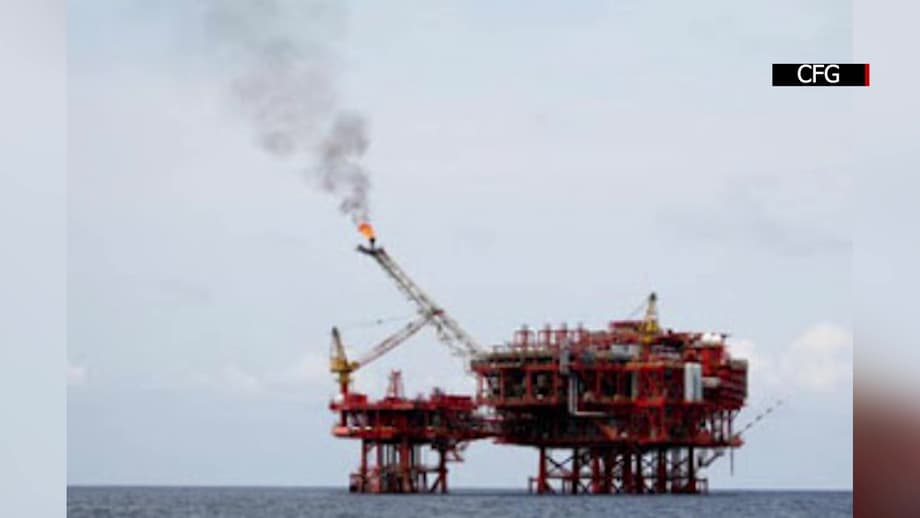
Massive Gas Discovery in Tanintharyi and Ayeyarwady
The Myanmar military regime has announced the discovery of four new offshore gas fields that collectively hold an estimated 109 trillion cubic feet of natural gas, a find that could reshape the country’s economy while sharpening global debate over energy financing. The regime’s Ministry of Information revealed that the largest deposit lies in the Tanintharyi deep sea zone and holds approximately 95 trillion cubic feet at 90 percent probability. An additional discovery in the Ayeyarwady region contains up to 14 trillion cubic feet at 100 percent probability. The announcement, made on Monday, arrives at a critical moment for a regime struggling to secure foreign currency amid a collapsing kyat, armed resistance across large parts of the country, and some of the most severe international sanctions imposed on any Asian state in recent years. Natural gas has historically represented roughly half of Myanmar’s foreign currency earnings and the single largest source of revenue for the government, making these new fields a potentially transformative asset for a military administration desperate for hard currency. The regime has presented the finds as evidence of its economic stewardship, claiming that new energy development will support electricity generation, fertilizer production, and industrial manufacturing. However, critics view the announcement as a thinly veiled attempt to lure foreign investors and partners into a sector that has become synonymous with human rights abuses and international legal risk.
- Massive Gas Discovery in Tanintharyi and Ayeyarwady
- Block M15 and a Legacy Canadian Contract
- New Venture with Thai-Backed Gulf Petroleum
- International Sanctions Tighten Around Moge
- Revenue Flows Through UK Overseas Territories
- Corporate Exodus and Those Who Remained
- Geopolitical Stakes and Military Funding
- The Essentials
While the Ministry of Information did not name the specific blocks, the announcement almost certainly includes Block M15 in the Tanintharyi field, where an estimated 94.6 trillion cubic feet were discovered last December. That block alone spans more than 13,000 square kilometers near Kadan Island off the southern Tanintharyi coast in the Andaman Sea. If the estimates prove accurate, Block M15 could rank among the largest natural gas reserves found anywhere in the world in recent decades. The regime has historically relied on offshore gas exports to fund its operations, with the lion’s share of revenue flowing through Myanma Oil and Gas Enterprise, a state energy company that is now a principal target of international financial restrictions. Despite the military’s claims that these new projects will benefit ordinary citizens, gas revenues from existing fields have long been routed through opaque state accounts that are not subject to public scrutiny or democratic oversight. Under the military regime, those funds are widely believed to finance the purchase of military hardware, including attack aircraft and advanced missile systems used against civilian populations.
Block M15 and a Legacy Canadian Contract
The story of Block M15 stretches back to Myanmar’s brief political opening more than a decade ago. The Singapore-based Canadian Foresight Group won the bidding for the block and signed a production sharing contract with the regime’s Myanma Oil and Gas Enterprise on March 30, 2015, during the administration of former President Thein Sein. The company is led by Canadian citizen Songning Shen, and has maintained its interest despite the seismic political shifts that have occurred since. In 2017, CFG prepared an internal report that projected the block could generate revenue equivalent to 40 percent of Myanmar’s total foreign currency earnings at the time. Based on market prices prevailing in that period, the company estimated that Block M15’s gas reserves were worth nearly $280 billion, a staggering figure that illustrates the transformative potential of these waters. The contract predates the current military junta but places the firm in direct contractual relationship with MOGE, the same entity now sanctioned by the European Union and the United States for its role in funding the regime’s atrocities. When contacted by The Irrawaddy for information about the new gas projects, the Ministry of Electricity and Energy and the Ayeyarwady and Tanintharyi regional administrations offered no response. The silence underscores the opacity surrounding energy deals in Myanmar, where contract terms, revenue splits, and environmental assessments remain largely hidden from public view.
The inclusion of Block M15 in the regime’s announcement highlights how long term energy investments can outlast political transitions and become entangled with successive governments. Contracts signed during the quasi civilian period between 2011 and 2021 have been inherited by the military, which has shown little hesitation in using state enterprises to consolidate its grip on power. The Canadian Foresight Group’s continued presence in the Tanintharyi zone illustrates a broader pattern where foreign investors, particularly those incorporated in third countries, maintain operations despite worsening reputational and legal risks. In a country where natural resource wealth has historically fueled corruption and conflict, the emergence of another massive offshore field without transparent regulatory oversight raises alarms among human rights advocates and energy analysts.
New Venture with Thai-Backed Gulf Petroleum
Even as the regime trumpets new geological discoveries, it has been signing new commercial agreements to extract and sell offshore gas. In late May 2025, MOGE and Thailand’s Gulf Petroleum Myanmar signed a production sharing contract for the Min Ye Thu project at Block M10 in the Mottama Gulf, marking the first such agreement for offshore natural gas production since the 2021 coup. This project became Myanmar’s seventh major gas venture, joining the established Yadana, Yetagun, Zawtika, and Shwe fields alongside two smaller operations. Gulf Petroleum Myanmar expects to begin commercial extraction at Block M10 by 2028, a timeline that assumes the junta will still control the territory and institutions necessary for export. GPM is a subsidiary of Thailand’s Northern Gulf Petroleum, which has partnered with prominent regime crony Kyaw Kyaw Hlaing and his SMART Group of Companies. SMART Group was established under a previous military dictatorship specifically to serve the military controlled petroleum industry, and its continued involvement underscores the fusion of commercial energy development with the regime’s patronage networks. Kyaw Kyaw Hlaing currently serves as chairman of Gulf Petroleum Myanmar, cementing the direct link between the new offshore project and the military’s inner circle of business allies.
The Yetagun gas project, which GPM took over in 2022 following the exit of Malaysian state-owned oil giant Petronas, provides another window into the regime’s strategy of replacing departing investors with partners less vulnerable to public pressure. Rights watchdog Justice For Myanmar revealed that GPM’s parent company, Northern Gulf Petroleum, likely funnels payments to the regime through a network of shell companies registered in Bermuda, the British Virgin Islands, and Singapore. These opaque corporate structures make it difficult for investigators to trace exactly how much money reaches the junta and whether any flows violate the patchwork of international sanctions imposed since the coup. The regime has defended the Min Ye Thu project as a boost to foreign exchange earnings and domestic energy supplies, but critics note that gas production in Myanmar overwhelmingly favors export markets and military-linked industrial consumers rather than households. Around 80 percent of gas from major projects is typically exported to neighboring Thailand and China, while the domestic population continues to suffer from regular electricity shortages and soaring power prices.
International Sanctions Tighten Around Moge
The regime’s energy ambitions exist in a tightening vise of international sanctions. Myanma Oil and Gas Enterprise, the state company that controls all offshore production sharing contracts and joint ventures, has been designated by the European Union since early 2022 for providing the junta with substantial resources used to commit atrocities against its own people. The United States followed suit in late 2023, and both Switzerland and Canada added MOGE to their sanctions lists in March 2025. Despite these designations, the sanctions remain unevenly applied and riddled with jurisdictional gaps. The European Union prohibits European companies from providing technical assistance that directly or indirectly benefits MOGE, a measure that has forced some firms to halt operations. However, the United States and United Kingdom have conspicuously stopped short of imposing the same comprehensive prohibitions on their own companies, creating a legal gray area where contractors can continue servicing gas fields without explicit penalties. The UN High Commissioner for Human Rights, Volker Turk, has publicly urged the international community to ban arms sales to Myanmar and impose targeted sanctions, including a ban on jet fuel, to better protect the population. At the 58th session of the United Nations Human Rights Council in Geneva in February 2025, Turk emphasized that cutting the junta’s access to energy revenue would directly degrade its capacity to carry out widespread atrocities.
Within the United States, the Biden administration had struggled with contradictory impulses, seeking to pressure the junta while preserving strategic relations with Thailand, a major buyer of Myanmar’s gas. The US Department of State warned that doing business with MOGE risks money laundering, corruption, and serious human rights violations, yet the Department of Commerce simultaneously described the oil and gas sector as a best prospect industry with opportunities for US investors. In December 2024, the US House passed the National Defense Authorization Act, which included a section authorizing the president to impose sanctions on MOGE but did not mandate the action. Democratic senators including Jeff Merkley, Cory Booker, and Dianne Feinstein wrote to the Treasury urging the administration to stem the junta’s brutality by blocking MOGE revenue flows. The regime has proven adept at circumventing these restrictions by using corporate structures that place payments beyond the reach of Western regulators. In June 2021, the UK sanctioned the State Administration Council, the junta’s ruling body, but has never directly designated MOGE itself, creating confusion about whether UK sanctions automatically apply to the state energy company. The junta compounded this legal ambiguity in July 2024 by dissolving the SAC and replacing it with the State Security and Peace Commission, a new body run by the same generals but not explicitly covered by existing sanctions, a move Justice For Myanmar called a dangerous gap in the international restrictions.
Revenue Flows Through UK Overseas Territories
Some of the most lucrative financial channels sustaining the regime run through the United Kingdom’s overseas territories, where opaque corporate registrations have allowed hundreds of millions of dollars to flow to the junta since the 2021 coup. Finance Uncovered and Justice For Myanmar revealed that two joint venture pipeline operators incorporated in the Cayman Islands and Bermuda transport gas from Myanmar’s largest offshore projects in partnership with MOGE. Bermuda-registered Moattama Gas Transportation Company serves the Yadana field, while Andaman Transportation Limited, based in the Cayman Islands, handles the Zawtika field. Together, these two entities paid out more than $570 million in dividends and income taxes to the civilian government between 2018 and early 2020, and analysis of PTT annual reports indicates they generated more than $754 million in pipeline fee revenues between 2021 and 2024. MOGE holds a minority stake in both operators, meaning its share may have approached $239 million in pipeline fees alone over that period, exclusive of additional tax payments. The leaked financial statements suggest that even after international oil companies began withdrawing, these infrastructure ventures continued to generate substantial cash flows for a regime desperate for foreign currency to import weapons and jet fuel. In April 2024, Justice For Myanmar filed legal complaints to the governors of Bermuda and the Cayman Islands urging investigations into possible sanctions breaches. Both offices acknowledged receipt of the complaints but declined to confirm whether any investigations had been launched. The UK Foreign Office has stated that its overseas territories are committed to robust sanctions enforcement, yet critics from across the British political spectrum have called for more decisive action. Labour peer Margaret Hodge described the situation as an outrage, while Conservative MP Andrew Mitchell said the territories had long avoided transparency reforms.
The use of Bermuda and the Cayman Islands is not limited to pipeline operators. Justice For Myanmar’s investigations into Gulf Petroleum Myanmar’s parent company revealed a similar pattern of shell companies spanning the British Virgin Islands, Singapore, and other low disclosure jurisdictions. These networks allow the regime to move money, sign contracts, and procure services without triggering the compliance alarms of Western financial institutions. Legal experts note that the patchwork of sanctions creates severe legal ambiguity for any firm with operations in the EU or the United States that touches Myanmar’s gas revenues, even if payments are routed through nominally independent entities registered in offshore havens. The failure of the United States to fully harmonize its sanctions approach with the EU has allowed this financial architecture to persist, enabling US oil and gas service firms to continue business while the State Department warns against the exact same conduct.
Corporate Exodus and Those Who Remained
The 2021 coup triggered a dramatic exodus of global energy giants from Myanmar. France’s TotalEnergies, Australia’s Woodside, and US firm Chevron all withdrew from the country, citing security concerns and the deteriorating human rights situation. Both TotalEnergies and Chevron officially abandoned their interests in the Yadana project, Myanmar’s largest gas asset, though Chevron sold its 41.1 percent stake to Et Martem Holdings, a subsidiary of Canadian firm MTI Energy. These departures represented a watershed moment for the industry, demonstrating that even long term investors with deep sunk costs could no longer justify association with the military regime. However, the withdrawal of major operators did not stop the gas from flowing. Instead, it created opportunities for less scrutinized partners and service contractors to step in or expand their roles. South Korea’s Posco International has not only remained in Myanmar but continued pouring hundreds of millions of dollars into the Shwe gas project, which the UN Special Rapporteur on human rights identified as the most profitable venture for the regime in recent years. According to the rapporteur, Shwe provided over half a billion dollars per year to the junta in the two years following the coup, helping fund a $1 billion spending spree on arms that included fighter jets, attack helicopters, and advanced missile systems. Posco has defended its presence by arguing that suspending operations would reduce national power generation and harm ordinary citizens, yet evidence suggests that the vast majority of Shwe gas is exported to China while domestic electricity shortages have worsened sharply since 2021.
Meanwhile, leaked tax documents obtained by the transparency group Distributed Denial of Secrets and analyzed by Justice For Myanmar, Finance Uncovered, and The Guardian revealed that US and British oil service contractors continued to profit handsomely after the coup. Halliburton’s Singapore-based subsidiary reported $6.3 million in profits before tax during the year to September 2021, covering eight months of junta rule. Baker Hughes reported $2.64 million in profits before tax for the six months to March 2022. Diamond Offshore Drilling reported $37 million in fees to Myanmar’s tax authority during the year to September 2021 and another $24.2 million through March 2022. Schlumberger Logelco, the Panama-based subsidiary of the world’s largest offshore drilling company, earned $51.7 million in the same initial period and was still owed $200,000 by the junta’s energy ministry as late as September 2022. These companies provided essential drilling, maintenance, and logistical support that kept the fields operational, indirectly ensuring that MOGE could continue collecting royalties and taxes that bankroll the military’s campaign of terror. Yadanar Maung, spokesperson for Justice For Myanmar, has repeatedly condemned the ongoing involvement of international service providers in the country’s energy sector.
Oilfield service companies in Myanmar have blood on their hands for operating in an industry that bankrolls the illegal Myanmar military junta, as it wages a campaign of terror against the people. These companies have breached their international human rights responsibilities and may be complicit in the junta’s war crimes and crimes against humanity by servicing oil and gas projects that fund the junta’s atrocities.
While Baker Hughes claimed its contracts predated the coup and were completed in early 2022, Halliburton, Schlumberger, and Diamond Offshore did not respond to requests for comment. Legal experts from EarthRights International have warned that any firm supporting joint ventures with MOGE risks complicity in war crimes, particularly if those companies have an EU presence where direct sanctions on MOGE are in force.
Geopolitical Stakes and Military Funding
The regime’s push to develop new gas fields is occurring against a backdrop of deepening isolation punctuated by strategic alliances with fellow pariah states. In early March 2025, coup leader General Min Aung Hlaing traveled to the Russian Federation and Belarus, his fourth visit to Russia since the coup and his first foreign trip since an Argentine court issued an arrest warrant for him on charges of genocide against the Rohingya. During the visit, he met with President Vladimir Putin and signed ten agreements, including a memorandum of understanding for the construction of a small-scale nuclear power plant in Myanmar. The trip signaled Moscow’s continued willingness to provide diplomatic cover, military hardware, and now civilian nuclear technology to the isolated junta. The regime also announced that Russia and Belarus had encouraged its plans to hold elections in December 2025 or January 2026, a timeline dismissed by pro-democracy forces as a sham designed to legitimize military rule. These alliances are financed in part by the gas revenues that the regime is so desperate to expand. The United Nations Special Rapporteur has documented how offshore gas earnings have funded the junta’s purchases of weapons from Russia and China, creating a self-reinforcing cycle where natural resource extraction fuels military repression and diplomatic defiance.
Thailand’s role in this ecosystem remains equally consequential. As the primary buyer of Myanmar’s offshore gas and a partner in multiple pipeline companies, Bangkok has consistently resisted cutting energy ties with its neighbor, complicating American efforts to impose a comprehensive sanctions regime. Washington’s reluctance to fully sanction MOGE has been attributed in part to a desire to avoid disrupting Thailand’s energy security and to maintain good relations with a key strategic partner in Southeast Asia. The result is an inconsistent policy landscape where the US sanctions individual officials but not the enterprise itself, where the EU prohibits technical assistance but the UK leaves its overseas territories as operational conduits, and where the regime signs new production contracts faster than Western legislatures can pass restrictive measures. In this environment, the announcement of four new gas fields is less a geological milestone than a political signal. It tells the world that the military intends to keep drilling, keep signing contracts, and keep converting the country’s subsea wealth into the foreign currency it needs to survive, regardless of the human cost or the legal risks now facing any foreign firm that helps it.
The Essentials
- The Myanmar military regime announced the discovery of four new offshore gas fields with an estimated combined 109 trillion cubic feet of natural gas in the Tanintharyi and Ayeyarwady regions.
- The largest deposit, likely encompassing Block M15, holds an estimated 95 trillion cubic feet and was first awarded to the Canadian Foresight Group during the Thein Sein administration in 2015.
- In late May 2025, the regime signed a new production sharing contract with Thailand’s Gulf Petroleum Myanmar for the Min Ye Thu project, the first offshore gas deal since the 2021 coup and the country’s seventh major venture.
- Myanma Oil and Gas Enterprise remains the regime’s single largest source of foreign currency but has been sanctioned by the EU, United States, Switzerland, and Canada for financing military atrocities.
- Revenue flows through pipeline operators registered in Bermuda and the Cayman Islands have allowed hundreds of millions of dollars to reach the junta despite international sanctions.
- While Western giants like Chevron and TotalEnergies have departed, companies including South Korea’s Posco International and various US oil service firms have continued operations that generate revenue for the regime.
- The regime’s energy revenues are widely believed to fund arms purchases, including fighter jets and missile systems, while the domestic population faces worsening electricity shortages and economic collapse.
- Canada and Switzerland added MOGE to their sanctions lists in March 2025, but the US and UK have stopped short of comprehensive prohibitions, leaving gaps in the international sanctions regime.