A New Era of Competition Dawns in Northeast Asia
For decades, South Korea built its economic miracle on being faster, smarter, and more advanced than its rivals. Its semiconductors, smartphones, automobiles, and displays became global benchmarks of quality and reliability that consumers from Berlin to Bangkok recognized immediately. Yet a dramatic reversal is reshaping this narrative in ways that few strategists in Seoul anticipated just five years ago. Recent industry forecasts now show that China is ahead of South Korea in steel, general machinery, secondary batteries, displays, automobiles, and parts. What makes this shift deeply alarming for Seoul is not merely the loss of market share in select sectors, but the realization that China is transitioning from a fast follower into a global rule maker with the power to define industrial standards for the coming generation.
- A New Era of Competition Dawns in Northeast Asia
- From Catch Up to Rule Setter: How China Flipped the Script
- The Last Fortress: Semiconductors Under Siege
- The Talent Gap: A Numbers Game Seoul Cannot Win
- Walking the Tightrope: Security Alliances Versus Economic Reality
- Beyond Rivalry: Searching for a New Model of Interdependence
- What the Lee Xi Summit Could Decide
- What to Know
During a recent forum in Beijing jointly hosted by Renmin University and the South Korean embassy, experts warned that the rapid technological gains and aggressive pricing from China are eroding the profitable industrial partnerships that once bound the two economies together. Seo Bong kyo, head of Samsung Global Research China, delivered a stark message to attendees. He argued that industries in each country must carefully evaluate their core strengths to build a cooperative, interdependent global supply chain rather than simply engage in direct competition. His remarks, published in an event summary by the Chinese organizer, underscored growing urgency among business leaders in Seoul.
Seo also identified a potential lifeline for Korean firms navigating this turbulence. He noted that the Chinese push to expand domestic demand offers a new opening for South Korean companies to enter high value markets, provided they adapt their strategies to a landscape where Beijing no longer needs Seoul technology as much as Seoul needs consumers in Beijing. China emerged as the top outbound travel destination for South Koreans in the first quarter of this year, according to Yonhap News Agency, signaling renewed warmth in interpersonal ties following the prominent visit of President Lee Jae Myung in January. Economic ties have slowly recovered from the downturn that followed the 2017 deployment of the Terminal High Altitude Area Defence battery known as THAAD.
From Catch Up to Rule Setter: How China Flipped the Script
When Beijing unveiled its Made in China 2025 initiative in 2015, the goal was largely about closing gaps. The plan aimed to transform the manufacturing base of the country from low cost assembly into a global technology powerhouse. After 2020, escalating trade tensions with Washington accelerated this mission dramatically. Beijing poured state subsidies, tax breaks, and investment into technological independence, using a population of 1.4 billion as both a testing ground and a scaling engine that allowed domestic champions to refine products faster than foreign rivals.
The results are now visible across multiple sectors. BYD has surpassed Tesla as the largest electric vehicle maker by sales. CATL commands the top share of the global battery market, supplying major automakers worldwide. DJI controls roughly 70 percent of the global drone market. Huawei continues to dominate 5G network equipment despite years of American sanctions. These successes rest on a foundation of immense capital and an enormous pool of skilled engineers that few nations can match.
Yet the most consequential change is the pivot of China from self sufficiency to standard setting. Under initiatives described as China Standards 2035, Chinese enterprises are competing in 5G, artificial intelligence, and the Internet of Things not only through price and volume, but by defining technical frameworks themselves. Kim Heung kyu, director of the institute for United States and China policy at Ajou University, captured the significance of this evolution.
The premise has already changed; it is no longer about whether China can catch up. China is now seeking to define global standards in future industries.
For South Korea, this represents a fundamentally different kind of threat. Losing market share is painful, but losing influence over the rules of the game risks lasting marginalization. Whoever controls the standards wields enduring power over supply chains, licensing, and compatibility. Seoul now faces a rival that is not just cheaper, but increasingly setting the terms on which the industries of tomorrow will operate.
The Last Fortress: Semiconductors Under Siege
Semiconductors have long been viewed as the impenetrable economic fortress of South Korea. Memory chips, particularly high bandwidth memory, remain the crown jewel of Korean technology exports and account for most of the remaining trade surplus of Seoul with Beijing. However, even this stronghold is showing cracks under sustained Chinese pressure and the relentless cost competition that now defines the sector.
Industry data reveals that China has been catching up rapidly in legacy chip products and general purpose segments. While Korea maintains a clear edge in advanced memory, Chinese foundries such as SMIC and Hua Hong have already reached the 7 nanometer node, roughly equivalent to capabilities Taiwan Semiconductor Manufacturing Company offered around 2019. This technical milestone allowed Huawei to reclaim the top position in the 5G smartphone market of China in 2025. The performance gap has narrowed to the point where the primary drawback is merely higher silicon consumption per device, not meaningful speed or efficiency deficits that would deter domestic buyers.
The broader foundry landscape adds pressure. According to Yole Group, the global semiconductor foundry industry reached an estimated $402 billion in 2026. While TSMC holds roughly 95 percent of the leading edge 3 nanometer market, Samsung primarily supplies 7 nanometer and 5 nanometer wafers to third parties. The early deployment of 2 nanometer technology by Samsung for its internal smartphone division suggests it remains competitive, but the dominance of TSMC in the most lucrative advanced segment leaves Korean foundries fighting for position in a crowded field. The Federation of Korean Industries projects that by 2030, South Korea could lag behind Chinese rivals even in sectors like semiconductors and electronics where it currently clings to a slender lead.
The Talent Gap: A Numbers Game Seoul Cannot Win
Beyond factories and fabrication plants, a quiet but consequential crisis is unfolding in classrooms and laboratories across the nation. China produces between 3.5 million and 4 million STEM graduates annually, a scale that dwarfs the roughly 140,000 graduates that South Korea produces each year. Beijing has also aggressively recruited overseas researchers back home through government incentives, creating a continuous cycle of innovation capacity that compounds its industrial momentum and makes the talent gap ever harder to close.
South Korea faces the opposite trajectory. It holds the lowest fertility rate among OECD countries, and its workforce is aging rapidly. Perhaps more troubling for the tech sector, the brightest students in Korea are increasingly abandoning science and engineering in favor of medical careers, drawn by higher income security and social status. A December report by the Korea Chamber of Commerce and Industry projected that the nation will face a shortage of at least 580,000 talented professionals in advanced fields such as artificial intelligence and big data by 2029. The report attributed the shortfall to a shrinking population of children of school age caused by low birth rates, combined with a sharp decline in the inflow of highly skilled STEM professionals. It called for urgent steps to ease the concentration of students in medical schools, expand the pool of STEM graduates, and attract more overseas professionals.
This demographic and educational squeeze threatens to undermine the industrial strategy of Seoul regardless of how much capital the government deploys. The administration of Lee Jae Myung has already announced plans to pour billions of dollars into semiconductors, batteries, biotechnology, and artificial intelligence. State investment is effectively a given in this race. The harder question is whether Korea can cultivate or attract the human capital to make that spending translate into lasting competitiveness.
Walking the Tightrope: Security Alliances Versus Economic Reality
The technological rivalry does not unfold in a vacuum. South Korea sits at the center of a geopolitical vise, squeezed between its military alliance with the United States and its economic dependence on China. Relations between Beijing and Seoul only recently began recovering from the downturn triggered by the 2017 deployment of the Terminal High Altitude Area Defence battery known as THAAD. The visit of President Lee Jae Myung to Beijing in January signaled a warming trend, with China emerging as the top outbound travel destination for South Koreans in the first quarter.
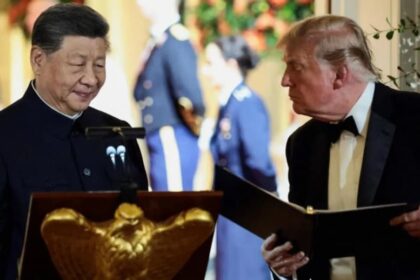
However, the shifting posture of Washington complicates every economic calculation. The return of Donald Trump to the White House has injected fresh uncertainty into the alliance. The transactional approach of the former president has reopened talks on sharing the financial burden and raised questions about the reliability of American extended nuclear deterrence. Trump has even suggested that the United States could be well served withdrawing troops from the Korean Peninsula, a notion that strikes at the foundation of the security architecture of Seoul.
Simultaneously, Washington is pushing South Korea to join a more assertive strategy for the wider Pacific region aimed at countering Beijing. Yet Seoul remains deeply cautious. There is no alternative production base or market that can replicate the firmly established industrial ecosystem, price competitiveness, and massive domestic demand of China. Korean chipmakers and battery giants operate in a world where American export controls restrict their China business while Chinese consumer demand remains indispensable to their bottom line.
Cooperation with China remains indispensable. Korean companies need to penetrate more deeply into China’s domestic market. Even though China is rapidly catching up in technology, cooperation with China is still essential for Korea.
Professor Jin Furong of Incheon National University, an expert in the Chinese economy, emphasized that collaboration can be expanded into consumer goods, services, tourism, and health care, areas where political sensitivities are lower and complementarities remain strong. She added that there is no alternative production base or market that can replace the industrial ecosystem and massive domestic demand of China.
Beyond Rivalry: Searching for a New Model of Interdependence
The Beijing forum offered a rare space for both sides to acknowledge that the old playbook is obsolete. For years, South Korean firms supplied premium components to Chinese manufacturers, creating a comfortable division of labor. Today, Chinese companies often match or exceed Korean quality at lower prices, leaving little room for traditional component exports. The solution proposed by speakers was a deliberate pivot toward interdependent ecosystems in high growth sectors such as batteries and artificial intelligence.
This vision requires more than corporate goodwill. Delegates called for advancing negotiations toward an upgraded trade agreement that could clarify rules of origin, reduce barriers in services, and protect investments in emerging technologies. Such legal architecture is essential because supply chains are no longer simple bilateral pipelines; they are sprawling networks where Chinese components flow through ASEAN assembly plants before reaching Korean factories, and vice versa. The Korea International Trade Association found that between 2019 and 2024, China surpassed both Korea and Japan in machinery, chemicals, automobiles, and steel, underscoring how quickly the center of industrial gravity has shifted.
Jin Furong suggested that Korean strategy should not focus solely on staying ahead of China, but on understanding China deeply enough to win within its hypercompetitive market and collaborate with Chinese partners. That requires far deeper business intelligence and cultural fluency than many Korean conglomerates currently possess. The vision of interdependence from Seo Bong kyo acknowledges a difficult truth: South Korea cannot decouple from China without severing its own economic lifeline, yet it cannot rely on outdated competitive advantages to survive the next decade.
What the Lee Xi Summit Could Decide
Attention is now turning toward an upcoming summit between President Lee Jae Myung and Chinese President Xi Jinping. Analysts expect economic cooperation to top the agenda, with Seoul seeking breathing room to develop high value industries alongside rather than in opposition to Beijing. The meeting represents a critical opportunity to institutionalize the interdependence model that forum speakers advocated.
Success would mean securing guarantees for Korean firms operating in the expanding domestic demand sectors of China, establishing joint research frameworks in batteries and AI, and insulating commercial ties from geopolitical turbulence. Failure could accelerate the drift toward purely competitive rivalry that both economies stand to lose. Kim Heung kyu believes the summit should center on designing cooperation that gives Korea and neighboring countries space to develop advanced industries without being squeezed between American technology restrictions and Chinese market dominance.
For South Korea, the challenge is existential and immediate. It must secure its place in American led supply chains for advanced semiconductors while preserving access to the Chinese consumer base that provides the revenue to fund that security. It must invest billions in AI and batteries while training a workforce that is currently shrinking and drifting toward medicine. And it must do all of this while negotiating with an ally in Washington whose commitment to the peninsula may depend on the next tweet or tariff announcement.
What to Know
- China now leads South Korea in steel, machinery, batteries, displays, and autos, with Korean firms projected to fall behind in all major export sectors by 2030.
- Beijing has shifted from catching up technologically to setting global standards through initiatives such as China Standards 2035, threatening lasting Korean influence.
- Semiconductors remain the strongest defense of South Korea, particularly in memory chips, but Chinese foundries have already reached the 7 nanometer node.
- South Korea faces a projected shortage of 580,000 advanced technology professionals by 2029 amid demographic decline and student preference for medical careers over engineering.
- The transactional approach of the Trump administration to alliances has renewed anxieties in Seoul about US security commitments, complicating the economic balancing act with China.
- Experts urge both nations to build interdependent ecosystems in batteries and AI, while upgrading their trade agreement to reflect new competitive realities.
- An upcoming summit between Presidents Lee Jae Myung and Xi Jinping is expected to shape the future framework of bilateral economic cooperation.