A Controversial Alliance in Washington
The Myanmar military junta has enlisted Roger Stone, a veteran Republican operative and longtime confidant of President Donald Trump, to help repair diplomatic standing in Washington. Recent filings under the United States Foreign Agents Registration Act reveal that Stone receives $50,000 per month to provide public affairs services to the Ministry of Information of Myanmar through the lobbying firm DCI Group. The engagement stems from a broader $3 million contract that Naypyidaw signed with the firm based in Washington in July 2025 in a desperate bid to escape international isolation. The move marks one of the most brazen attempts by the embattled regime to rebrand itself since the military seized power from the elected government of Aung San Suu Kyi on February 1, 2021. That coup triggered a civil war, crushed civil liberties, and transformed Myanmar into a pariah state subject to sweeping sanctions from Western governments. By bringing Stone into the fold, the generals appear to be gambling that unique access to the Trump administration can unlock doors that have remained firmly closed to a government accused of systematic atrocities.
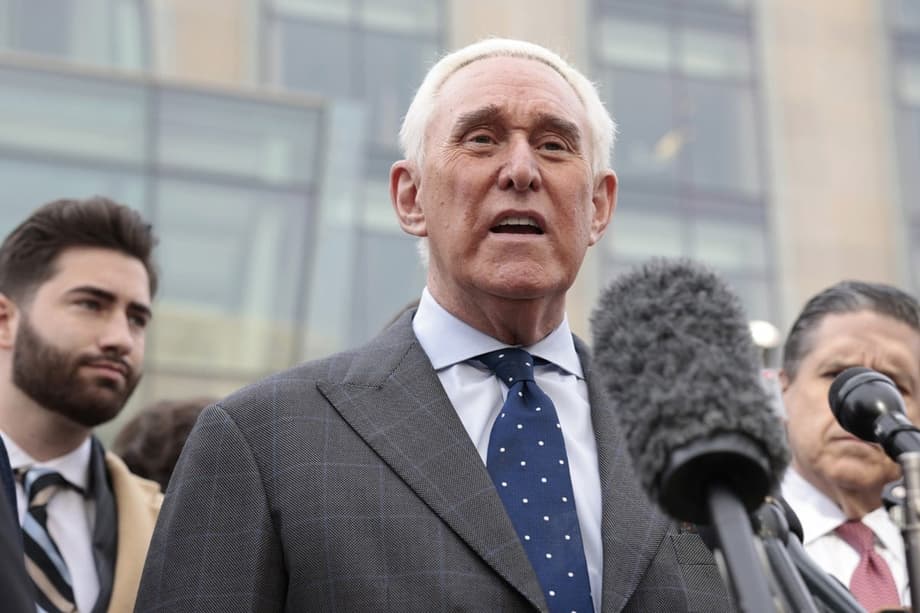
Stone, now 73, is no stranger to political controversy. He has cultivated a relationship spanning four decades with Trump, serving variously as an adviser, confidant, and strategist throughout the political career of the president. In 2019, Stone was convicted of obstructing a congressional investigation into whether the Trump campaign colluded with Russia during the 2016 election. He received a prison sentence of 40 months, but he never served time after Trump granted him clemency in 2020. His appointment by Myanmar comes at a moment when the junta is trying to present a new face to the world after years of bloodshed and economic ruin. The regime recently staged tightly controlled elections that delivered a predictable victory for military allies while excluding the National League for Democracy party of Suu Kyi. Shortly afterward, coup leader Min Aung Hlaing shed his uniform and had himself appointed president, a maneuver critics describe as a civilian fig leaf for continued military domination.
The Contract and Its Objectives
Disclosures submitted to the Department of Justice show that DCI Group registered work for Myanmar last year and has now brought Stone on as a consultant to intensify outreach efforts. The stated mission is explicit: rebuild relations between the Republic of the Union of Myanmar and the United States, with a sharp focus on trade, natural resources, and humanitarian relief. The generals hope that Stone, known as a firebrand conservative activist, can soften the American posture toward a government that most of the Western world has shunned.
The choice of DCI Group carries historical weight. The same firm was hired by military intelligence in Myanmar back in 2002, when the generals sought to whitewash their image in Washington and pose as moderate reformers. That earlier campaign helped lay the groundwork for a decade of diplomatic engagement that culminated in visits by Secretary of State Hillary Clinton and President Barack Obama, who became the first sitting American president to visit Myanmar in 2012. At the time, Obama praised the reforms in the country as remarkable, and President Thein Sein visited the White House the following year. Yet that entire era of hope is now viewed by many activists as a mirage built inside a military cage, one that collapsed completely when the army retook full control in 2021.
The Foreign Agents Registration Act, originally enacted in 1938 to combat foreign propaganda campaigns, requires anyone representing foreign interests before the United States government to disclose activities and compensation. By filing these documents, DCI Group and Stone have made their arrangement with the junta a matter of public record. The disclosures show that the contract runs through the Ministry of Information, an organ deeply tied to the military propaganda apparatus, rather than a civilian trade ministry. That detail signals that Naypyidaw views this primarily as an information war aimed at political elites in Washington, not a routine commercial negotiation.
Outrage from Activists and Human Rights Defenders
News of the engagement by Stone was met with fierce condemnation from Myanmar activists and international rights groups. Justice for Myanmar, a civil society organization that tracks military abuses, issued a blistering statement accusing DCI Group and Stone of profiting from a heavily sanctioned junta that is committing war crimes and crimes against humanity with total impunity. The group noted that Stone joined the contract with international criminals and that his work benefits enterprises in the natural resource sector owned by the state that the military has illegally seized. Those enterprises, according to the activists, help fund widening attacks against schools, churches, monasteries, and hospitals across the country.
Justice for Myanmar, a civil society group that monitors military abuses, accused Stone and DCI Group of joining a contract with international criminals that funds repression. The organization issued a statement saying exactly what is at stake.
Roger Stone has joined this contract with international criminals, which benefits natural resource enterprises owned by the state and sanctioned by the United States that the junta has illegally seized and is using to fund its widening attacks against schools, churches, monasteries and hospitals.
The allegations of systematic abuse are not merely rhetorical. The Independent Investigative Mechanism for Myanmar, a United Nations body established by the Human Rights Council, warned in 2024 that substantial evidence exists of war crimes and crimes against humanity committed by the Myanmar military since the coup. United Nations figures indicate that more than 7,700 civilians have been killed since the 2021 takeover, while tens of thousands have been arrested. In March 2026 alone, over 450 people died in air and drone strikes, marking the highest monthly death toll since resistance to the coup began, according to conflict monitors. The military has defended its operations by claiming they are targeted at terrorists intent on destabilizing the country, but independent monitors say the violence is widespread and indiscriminate.
A Familiar Playbook of Deception
Myanmar generals have deployed image consultants and managed political transitions before, and the current lobbying push fits a familiar pattern. After the military killed thousands of protesters demanding democracy during the 1988 uprising, it faced severe Western isolation. In response, the generals launched Visit Myanmar Year in 1996, selling tourism and cultural heritage while forced labor, political imprisonment, and abuses in ethnic areas continued out of sight. The regime also produced propaganda aimed at foreign audiences, including books that defended military rule and recast foreign criticism as hostility toward Myanmar itself. The underlying strategy has always been to present just enough cosmetic change to make the hope of reform believable while the army retains real power behind the scenes.
The decade between 2011 and 2021 illustrated this trap vividly. Although the National League for Democracy won a landslide victory in 2015 and formed a government, the military continued to control the Defense, Home Affairs, and Border Affairs ministries, along with a constitutional veto through an unelected bloc of soldiers in parliament. Daw Aung San Suu Kyi had to swear to uphold the 2008 constitution that preserved military power just to enter parliament. Even during this transition that critics call a mirage, conflict raged. The Kachin war resumed in 2011, northern Shan State saw repeated heavy clashes, and Rakhine State burned. In 2017, a campaign of scorched earth against the Rohingya drove more than 700,000 people into Bangladesh. A survey by Doctors Without Borders showed that at least 6,700 Rohingya were killed in the first month alone. The mask finally fell on February 1, 2021, when the military seized power again in a move that was not a break from the system but the system openly reasserting itself.
Soe Thane, a key minister under Thein Sein and widely viewed by diplomats as a reformer, revealed the illusion in stark terms after the coup. In a book about the years of the National League for Democracy, he called the takeover by Min Aung Hlaing a very smart move and said the independence of Myanmar was restored that day. When men tied to the military speak the language of reform, Washington should listen for the handcuffs behind the words.
Why Analysts Expect Limited Success
Despite the lucrative contract, few observers believe Stone can deliver a genuine breakthrough for the junta. Hunter Marston, director for Southeast Asia at the Lowy Institute in Sydney, noted that it remains unclear whether Myanmar authorities solicited Stone personally or whether DCI hired him specifically because of his strong rapport with Trump. Either way, the structural obstacles to normalization are immense. The United States has imposed layers of sanctions targeting the top brass of Myanmar and their associates, both in response to the coup and because of the alleged genocide against the Rohingya Muslim minority, a case now before the International Court of Justice.
Even in areas where Washington might see strategic interest, the junta may not be able to deliver. Much of the rare earth wealth in Myanmar lies in conflict zones outside reliable military control. Discussions about securing those resources have reportedly had to include proposals involving the Kachin Independence Army, precisely because the military has lost large parts of the mining territory near the border. If Washington wants help fighting transnational cybercrime, Min Aung Hlaing is an even worse partner. The United States Treasury has designated the Karen National Army and its leader, Saw Chit Thu, for facilitating cyber scams, human trafficking, and smuggling. Treasury says the group provides security at scam compounds and leases land to criminal organizations, yet Saw Chit Thu remains embedded in the border order aligned with the junta and has previously received honors from Min Aung Hlaing himself.
The China question further complicates any flirtation with the generals. In 2021, the junta hired lobbyist Ari Ben-Menashe, who holds Israeli and Canadian citizenship, to sell the fiction that the generals wanted to pivot toward the West and away from Beijing. That story was implausible then and is less credible now. Min Aung Hlaing relies heavily on Beijing for diplomatic cover, weapons, and political survival. Myanmar may sit in the backyard of China, but that does not mean the United States should embrace a failing dictator to compete with Beijing. A weak, brutal, and internationally toxic regime is not a reliable partner. It does not control the country well enough or command sufficient legitimacy to end the conflict it unleashed.
What to Know
- The Myanmar military junta is paying Roger Stone $50,000 per month through DCI Group to lobby the Trump administration, as part of a $3 million contract signed in July 2025.
- Stone, a longtime Trump confidant who received clemency from the president after a 2019 conviction, is tasked with rebuilding ties focusing on trade, natural resources, and humanitarian relief.
- Human rights groups accuse Stone and DCI Group of profiting from a sanctioned regime that is committing war crimes and crimes against humanity with impunity.
- The junta recently held widely condemned elections and appointed coup leader Min Aung Hlaing as president in an effort to legitimize continued military rule.
- Despite the high-profile lobbying hire, analysts say major breakthroughs are unlikely because of sanctions, battlefield losses, and the inability of the regime to deliver on trade or security promises.