A New Chapter in Korean Space Exploration
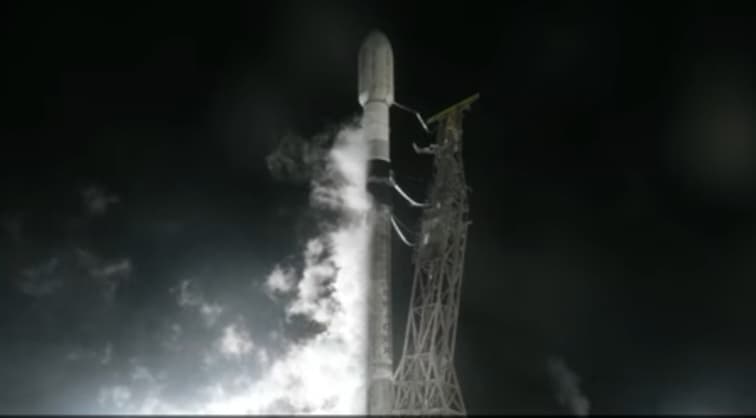
On Sunday, May 3, 2026, a SpaceX Falcon 9 rocket pierced the night sky above California’s Vandenberg Space Force Base, carrying with it a payload that represents both a technological breakthrough and a geopolitical lesson. Among the 45 satellites nestled in the rocket’s fairing was South Korea’s CAS500-2, an Earth observation spacecraft that had waited nearly four years for its journey to space after international sanctions disrupted its original launch plans. The successful deployment marked not just the culmination of a delayed mission, but the beginning of what Korean officials are calling a new era in private space development.
The Compact Advanced Satellite 500-2, developed by Korea Aerospace Industries (KAI), successfully separated from the Falcon 9 upper stage approximately 60 minutes after liftoff, entering a sun synchronous orbit at an altitude of 498 kilometers (309 miles). Fifteen minutes later, the 534-kilogram spacecraft established its first communication link with a ground station in Svalbard, Norway, confirming that the satellite was healthy and ready for its four-month commissioning phase. This achievement makes CAS500-2 the first mid-sized Earth observation satellite developed entirely by a Korean private company without direct government research institute leadership.
The launch represents a significant milestone in South Korea’s space ambitions, transitioning from state-led programs to private sector innovation. Unlike earlier Korean satellites developed through partnerships with the Korea Aerospace Research Institute (KARI), this spacecraft was designed and manufactured independently by KAI, which absorbed core technologies from previous collaborations to establish domestic capabilities. The mission validates years of technology transfer efforts and positions South Korea to enter the competitive global satellite export market.
How Geopolitics Grounded a Space Mission
The story of CAS500-2 illustrates how earthly conflicts can reach into the cosmos. Originally scheduled for launch in 2022 aboard a Russian Soyuz rocket, the satellite found itself stranded on the ground when Russia invaded Ukraine in February of that year. International sanctions and deteriorating diplomatic relations forced South Korea to cancel the contract and search for alternative launch arrangements, beginning a four-year odyssey of storage, renegotiation, and eventual reassignment to a commercial American provider.
This delay created an unusual sequence in the CAS500 program. While CAS500-2 sat in storage awaiting new launch arrangements, its successor CAS500-3 actually reached orbit first, launching in November 2025 aboard South Korea’s domestically developed Nuri rocket. The program’s first satellite, CAS500-1, had successfully launched on a Russian Soyuz in March 2021 before the war disrupted international partnerships. The reversal of numerical order reflects the chaos that terrestrial politics can impose on carefully planned space schedules.
The transition from a dedicated Russian launch to a SpaceX rideshare mission reflects broader shifts in the global launch market. Where government agencies once dominated access to space, commercial providers like SpaceX have filled gaps left by disrupted international cooperation. The four-year delay, while frustrating for scientists and engineers, ultimately demonstrated the resilience of modern space programs in adapting to geopolitical realities. Additional schedule shifts occurred when SpaceX changed plans for a joint launch with another satellite, forcing CAS500-2 onto a separate flight, further extending its wait.
Technical Capabilities and Domestic Innovation
CAS500-2 carries the Advanced Earth Imaging Sensor System (AEISS-C), capable of capturing panchromatic imagery at 0.5-meter resolution and color imagery at 2.0-meter resolution. These specifications place it in the high-resolution observation class, able to distinguish objects as small as 1.6 feet in black-and-white mode. Such capabilities make it suitable for detailed environmental monitoring, urban planning, and rapid response to natural disasters including typhoons, floods, and wildfires.
The satellite’s technical specifications demonstrate substantial domestic engineering achievement. Eighty-six percent of the satellite platform and 98 percent of the payload technology were developed in South Korea, underscoring the country’s growing technological independence in space systems. The spacecraft weighs 534 kilograms (1,177 pounds) and operates at an altitude where it can efficiently capture imagery while maintaining stable orbital parameters.
Following a four-month on-orbit testing and calibration period, CAS500-2 will begin full operational missions in the second half of 2026, working alongside CAS500-1 to provide comprehensive coverage for national land management. The satellite will support cartography, agricultural observation, and disaster monitoring, providing government agencies with timely imagery for critical decision making. The domestic development of such capabilities reduces reliance on foreign satellite data and enhances national security by ensuring independent access to high-resolution Earth observation.
The Rideshare Revolution
The launch highlighted the growing prominence of rideshare missions in modern space access. Alongside CAS500-2, the Falcon 9 carried 44 additional satellites from operators across six continents, demonstrating how shared launches have democratized access to space for countries, universities, and companies that might otherwise struggle to afford dedicated launches. This mission architecture represents a fundamental shift from the traditional model where small satellite operators waited years for primary payload opportunities.
SpaceX’s SmallSat Rideshare Program enables this model by offering ESPA-class payload opportunities for as low as $300,000 per mission for payloads up to 50 kilograms. The commercial approach has transformed how smaller satellites reach orbit, replacing uncertainty with scheduled, frequent launch opportunities. Sunday’s mission was not part of SpaceX’s dedicated Transporter or Bandwagon series but rather a traditional rideshare with CAS500-2 as the primary payload, followed by dozens of secondary deployments over the subsequent hour and a half.
The diversity of payloads reflected the global nature of modern space activity. Planet Labs deployed three Pelican satellites, next-generation imaging spacecraft featuring on-orbit edge computing for near real time object detection. Italian company Argotec contributed seven Hawk for Earth Observation satellites for the IRIDE constellation, a multi-billion euro Italian government initiative. Loft Orbital provided six spacecraft for EarthDaily Analytics, expanding a constellation designed to provide calibrated, analysis-ready data optimized for artificial intelligence applications rather than traditional point-and-shoot imagery.
International Partners and Educational Milestones
The mission marked significant achievements for international partners, particularly Canadian institutions. Vancouver-based EarthDaily Analytics saw its constellation grow to seven operational satellites with the deployment of six additional units, bringing the company closer to full commercial operations. The company has strategically differentiated itself by focusing on consistent, measurement-quality data rather than high-resolution targeted imagery, generating standardized datasets tailored for machine learning applications.
Perhaps most notably for educational outreach, the University of Calgary celebrated the launch of FrontierSat, the institution’s first student-built satellite. Developed by the undergraduate CalgaryToSpace team independently of the Canadian Space Agency’s primary CubeSat program, the 3U CubeSat carries a Mini Plasma Imager to study STEVE (Strong Thermal Emission Velocity Enhancement), a subauroral atmospheric phenomenon. The satellite’s journey to the launch site became a logistical adventure when late-stage customs complications forced the student team to undertake a four-day overland road trip to deliver the hardware directly to Vandenberg.
Other significant payloads included two synthetic aperture radar satellites from Finland’s ICEYE, two direct-to-cell telecommunications satellites from Lynk Global, and GalaxEye’s Mission Drishti, billed as India’s largest privately built Earth observation satellite, combining radar and optical imaging capabilities. Indian startup GalaxEye made its orbital debut with this mission, while True Anomaly launched its fourth Jackal autonomous orbital vehicle, designed for space security and rendezvous operations.
Booster Recovery and Operational Details
The Falcon 9 first stage booster, designated B1071, completed its 33rd successful flight, landing back at Vandenberg’s Landing Zone 4 approximately 7.5 minutes after liftoff. This return to base landing, while routine for SpaceX, produced sonic booms audible across Santa Barbara, San Luis Obispo, and Ventura counties, prompting local advisories for residents. The recovery marked the 33rd flight for this particular booster, placing it just one flight shy of SpaceX’s reuse record.
Sunday’s launch was SpaceX’s 54th of the year, demonstrating the company’s rapid launch cadence. A brief one-minute hold was called during the countdown due to potential conjunction risks with other objects in orbit, but the mission otherwise proceeded without issue. The launch also carried symbolic significance for international relations. Space Launch Delta 30, the U.S. Space Force unit overseeing Vandenberg operations, emphasized in a pre-launch statement that the mission reflects the strength of the United States-Republic of Korea alliance.
The booster used for this mission previously launched the SARah-1 satellite for Germany, NASA’s Surface Water and Ocean Topography mission, multiple National Reconnaissance Office payloads, and 20 Starlink missions. This extensive flight history demonstrates the cost-effectiveness and reliability that reusable rockets bring to the launch market, enabling more frequent access to space for scientific and commercial payloads alike.
Opening the Private Space Era
Beyond its immediate scientific value, CAS500-2 carries substantial economic implications for South Korea’s aerospace sector. The successful launch validates KAI’s capability to independently produce competitive medium-class satellite platforms, potentially opening export markets for Korean space technology. Officials have identified Saudi Arabia, Peru, and Indonesia as priority targets for satellite exports, often in conjunction with existing aerospace and defense deals.
The successful launch of CAS500-2 is a major milestone that officially opens the ‘new space’ era in Korea.
KASA Administrator Oh Tae-seok made this declaration following the launch, emphasizing that the mission strengthens the country’s satellite technology competitiveness by independently securing high-precision imagery capabilities. If commercial pipelines materialize, they would mark a fundamental transition of Korea’s space industry from a government-funded research enterprise into a revenue-generating export sector worth hundreds of millions of dollars.
The CAS500 program ultimately aims to deploy five satellites in low Earth orbit. With CAS500-1, CAS500-2, and CAS500-3 now in orbit, attention turns to CAS500-4 and CAS500-5, which comprise Phase 2 of the program. These satellites will complete the constellation envisioned to provide comprehensive Earth observation capabilities for both domestic needs and international customers, cementing South Korea’s position as a mid-sized satellite manufacturing power.
What to Know
- CAS500-2 launched May 3, 2026, aboard a SpaceX Falcon 9 from Vandenberg Space Force Base, after a four-year delay caused by the Russia-Ukraine war
- The 534-kilogram satellite was developed by Korea Aerospace Industries as South Korea’s first privately built mid-sized Earth observation satellite
- It carries high-resolution optical sensors capable of 0.5-meter panchromatic and 2.0-meter color imagery
- The mission carried 44 additional rideshare payloads including satellites from Planet Labs, Argotec, EarthDaily Analytics, and the University of Calgary
- The satellite will undergo four months of on-orbit testing before beginning disaster monitoring and agricultural observation missions
- South Korea aims to export the satellite platform to countries including Saudi Arabia, Peru, and Indonesia