A New Era of Consumer Choice in Jakarta
Compact electric vehicles bearing Chinese nameplates now navigate the congested arteries of the Indonesian capital with increasing regularity. In shopping malls across the archipelago, young Indonesians queue for bubble tea at Mixue outlets or gather around bubbling hot pots at Haidilao restaurants. Pharmacies stock cosmetics from brands like Skintific, while smartphones from Xiaomi and Oppo dominate the hands of commuters on Jakarta streets. This transformation has occurred with striking speed, altering the commercial landscape of Southeast Asia’s largest economy.
Kavin Hibrizy Pradipto Eska, a 20-year-old university student, recently traveled hours from his campus to attend a motor show in northern Jakarta specifically to admire the latest Chinese automotive displays. His sentiments reflect a broader generational shift.
China is just, like, the future for me,
he explained, noting his intention to purchase a Chery Tiggo hybrid once he begins earning an income. The vehicle appeals to him because it costs roughly half the price of comparable foreign alternatives while offering what he describes as a cute design aesthetic. This enthusiasm surprises even Kavin himself, as he once associated Chinese products with inferior quality.
The rapid proliferation of Chinese brands across Indonesia represents more than a simple commercial trend. It signals a fundamental reordering of consumer preferences among the world’s fourth most populous nation, where the median age hovers between 28 and 30 years. This demographic cohort, digital-native and price-conscious, has proven particularly receptive to Chinese investment and innovation at a moment when traditional Western brands face unprecedented scrutiny.
Contemporary Jakarta presents a stark contrast to the commercial environment of just five years ago, when American fast food chains and Japanese automotive brands dominated the consumer landscape without serious challengers.
Automotive Dominance Through Electrification
The most visible symbol of the commercial ascent appears on the nation roadways. Electric vehicle sales have surged dramatically, with Chinese manufacturers commanding approximately 90 percent of the battery electric vehicle segment. Data from the Indonesian Automotive Industry Association reveals that Chinese car sales increased 153 percent year-on-year during the first quarter of 2025, even as the overall market contracted by nearly 5 percent. This growth translates to market share expansion from 3.83 percent to 10 percent within a single year.
BYD, the Shenzhen-based automotive giant, has emerged as the dominant force, capturing 29.7 percent of battery electric vehicle sales through the second quarter of 2025, closely trailing SAIC which holds 31.6 percent. The company Denza 9 luxury minivan has achieved particular success, selling 2,524 units in initial months and earning the nickname Alphard killer for challenging Toyota dominance in the luxury multi-purpose vehicle category. Other Chinese brands including Chery, Geely, Wuling, Neta, and Jaecoo have established substantial presences, often leveraging local production facilities to benefit from government incentives.
The Indonesian government has actively enabled this transition through substantial policy support. Tax incentives reduce value-added duties on electric vehicles to just 2 percent, compared with 40 percent for traditional internal combustion engines. Additionally, investment commitments totaling $1.3 billion from BYD and local production initiatives by Chery in Bekasi demonstrate deepening industrial integration. However, infrastructure limitations persist. As of April 2024, Indonesia possessed only 1,380 charging stations, with 656 concentrated on the island of Java, leaving vast regions of the archipelago underserved.
Beyond the Factory Floor Stereotype
For decades, Chinese manufactured goods carried a reputation for mass production of inexpensive, low-quality items. Eski Badillah, a 35-year-old remedial loan officer who repossesses motorcycles from delinquent borrowers, recalls the attitudes of two decades past.
Before, like 20 years ago, people would say: ‘Oh, what is this? It is made in China.’ We probably would laugh at it, the idea of a car or motorcycle from China,
he recounted while seated outside a Mixue location in a residential Jakarta neighborhood. His professional exposure to Chinese electric motorcycles has fundamentally altered his perspective.
These days, that has changed. The image of Chinese brands has become more positive.
This rehabilitation of brand perception extends beyond automotive sectors. Chinese consumer electronics have demonstrated remarkable durability over extended periods. Dwi Soejatmoko, a 42-year-old Indonesian entrepreneur, purchased a Changhong television set two decades ago based purely on affordability. The appliance continues functioning today, having outlasted his initial expectations. Such experiences have gradually eroded skepticism regarding Chinese manufacturing quality.
The transformation reflects the broader economic evolution of China from the world’s factory to a technology powerhouse. In Indonesia, this shift manifests through products that emphasize innovation rather than mere cost reduction. Bramantya Adji Pratama, a 27-year-old bank officer, praised Chinese automotive engineering while dining at Haidilao, noting that Chinese cars offer the most innovative features. The restaurant itself exemplifies this service-oriented approach, offering theatrical noodle-pulling performances, complimentary massages, and manicures for waiting customers across twelve Indonesian locations.
Tea, Technology, and TikTok Commerce
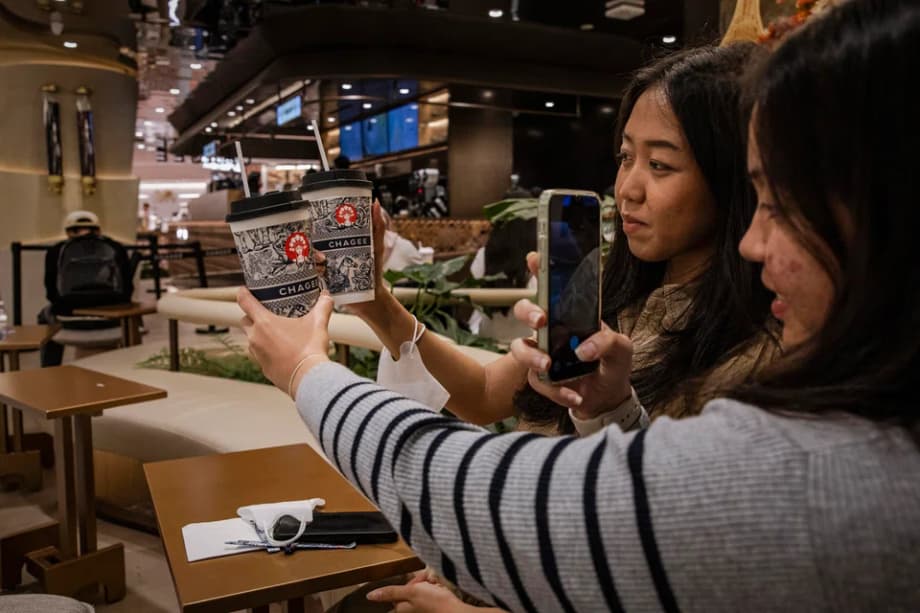
The expansion of Chinese commercial interests extends into food service, cosmetics, and digital retail platforms with equal force. Mixue Bingcheng, the ice cream and tea chain founded in China, operates more than 2,600 outlets throughout Indonesia, representing the company largest overseas presence. Competitors including Cotti Coffee, Shuyi Grass Jelly, and Chagee have established substantial networks, frequently localizing their supply chains to achieve cost control while maintaining food safety standards. This localization includes critical adaptations for the Muslim majority population, including obtaining halal certification from the Indonesian Ulema Council following initial controversies regarding ingredients.
Chinese cultural influence reinforces these commercial inroads. Indonesia has become one of the largest global markets for TikTok livestream shopping function, with beauty brands like Skintific utilizing hours-long digital demonstrations to showcase products, answer consumer questions, and offer real-time discounts. Lutfiah, a 29-year-old consumer, discovered the brand through social media influencers, illustrating how digital-native marketing strategies penetrate Indonesian consumer consciousness.
How I see China and Chinese people has changed because of some of the products I use,
she acknowledged.
Cultural consumption patterns have shifted accordingly. While South Korean pop music and drama maintained dominance over Indonesian youth culture a decade ago, programming from China has recently overtaken this position according to Tauhid Ahmad, an economist at the Institute for Development Economics and Finance in Jakarta. He notes that many young Indonesians lack awareness of historical tensions between the nations, including anti-Chinese riots that erupted in previous decades.
They do not know about the past. They believe that China is good because it is a rich country and they have good technology.
Geopolitical Currents and Consumer Activism
The rise of Chinese brands has occurred concurrently with significant challenges facing American companies operating in Indonesia. Boycott campaigns targeting McDonald’s, Starbucks, and Kentucky Fried Chicken have spread extensively across social media platforms, driven by Muslim consumers protesting United States support for Israel military actions in Gaza. While the intensity of these campaigns has moderated since the conflict escalation in 2023, many consumers continue avoiding these brands as expressions of political solidarity.
This boycott movement has created commercial opportunities that Chinese brands have readily exploited. Arina Shafiqah, a student who frequents Chinese tea outlets like Chagee, explicitly cited her avoidance of McDonald’s and Starbucks as related to Palestinian solidarity.
I have no issue with Chinese outlets or brands. It is nothing to do with the country but rather the quality of goods,
she explained. Similar sentiments appear widespread among Indonesian youth, who view Chinese commercial offerings as politically neutral alternatives to Western brands associated with controversial foreign policies.
The commercial reorientation extends to the Chinatown district of Glodok in Jakarta, historically associated with wholesale trade of inexpensive commodities. The area now attracts young Indonesians seeking distinctive coffee shops and food stalls set against restored heritage architecture. Restu Ramadhani Putri, a 24-year-old visitor, discovered the neighborhood through TikTok videos showcasing infrastructure projects in China including vast highway networks and high-speed rail systems.
In the past, if we bought something from China, we would say, ‘Ugh, it is from China.’ Now it is like, ‘Wow, China is really cool.’
Investment Flows and Resource Dependencies
The commercial penetration rests upon a foundation of substantial resource extraction and investment relationships. China functions as the largest investor in Indonesia and primary purchaser of critical natural resources including nickel, which serves as a crucial component for electric vehicle batteries. This relationship creates complex dependencies, as Indonesian nickel ore undergoes processing for export to Chinese manufacturing facilities, though recent investments aim to increase domestic downstream processing capabilities.
Recent developments illustrate this deepening integration. Chinese companies have committed $100 million to coconut processing facilities across several Indonesian cities, shifting the trade dynamic from raw commodity export to value-added manufacturing. This investment responds to growing Chinese demand for coconut-based ingredients in beverages, exemplified by Luckin Coffee exclusive partnership with Banggai Kepulauan regency government to secure supply chains. Such arrangements generate employment opportunities while raising concerns regarding the role of Indonesia as a raw material supplier rather than advanced manufacturer.
However, this economic integration generates friction. Local Indonesian manufacturers express concern regarding the rapid proliferation of Chinese retail franchises that offer products at price points difficult for domestic competitors to match. The textile industry has experienced particular pressure, prompting the government to announce potential 200 percent import duties on Chinese textile products, a move that induces anxiety among automotive and other sector exporters regarding potential retaliatory measures or policy shifts.
Infrastructure Limitations and Market Challenges
Despite remarkable sales growth, the expansion faces substantial operational challenges. The electric vehicle sector particularly illustrates these limitations. Survey data indicates that 71.2 percent of Indonesian consumers consider locating public charging stations difficult, a concern validated by the uneven geographic distribution of existing infrastructure. Furthermore, 62 percent of potential buyers express anxiety regarding high maintenance costs and limited driving ranges, misconceptions that persist despite improving battery technologies.
Environmental concerns accompany this industrial expansion. The extraction of nickel resources has proceeded without standardized environmental and labor regulations, raising sustainability questions that could eventually impact brand perceptions. Additionally, Indonesia lacks clear regulatory frameworks for processing battery waste, creating potential future environmental liabilities as early-generation electric vehicles reach end-of-life cycles. The concentration of battery and drivetrain technology sourcing from China also creates supply chain vulnerabilities that could affect market stability should geopolitical tensions disrupt trade relationships.
Quality perception challenges persist despite overall improvements. Jongkie Sugiarto, co-chairman of the Indonesian Automotive Association, acknowledges that while Chinese brands have gained ground, Japanese manufacturers retain consumer trust built over decades of reliable performance.
Chinese brands will not overtake the dominance of Japanese ones soon, as Japanese ones have proven to be reliable and solid. Chinese manufacturers need to work on establishing comparable durability reputations.
What to Know
- Chinese automotive brands achieved a 153 percent sales increase in Indonesia during the first quarter of 2025, capturing 10 percent of the total market while the overall industry contracted.
- Battery electric vehicles from Chinese manufacturers now represent approximately 90 percent of Indonesia EV market, with BYD and SAIC commanding over 60 percent of segment sales combined.
- Mixue Bingcheng operates more than 2,600 stores across Indonesia, while competitor beverage brands including Cotti Coffee and Chagee have established significant retail networks utilizing localized supply chains.
- Boycott campaigns targeting American brands including McDonald’s and Starbucks, linked to US support for Israel in the Gaza conflict, have accelerated consumer migration toward Chinese alternatives among young Muslim Indonesians.
- Indonesia young, digitally connected population increasingly views Chinese products as technologically advanced rather than merely inexpensive, though challenges regarding charging infrastructure and long-term durability perceptions persist.
- China functions as Indonesia largest foreign investor and primary trading partner for natural resources including nickel and coconuts, creating complex economic dependencies alongside commercial opportunities.