A New Chapter in Wildlife Diplomacy
On April 29, 2026, zoo officials from Indonesia and Japan gathered at Surabaya Zoo in East Java to formalize an agreement that bridges conservation science with international relations. The five year renewable deal establishes a breeding loan program that will send a pair of Komodo dragons to iZoo in Kawazu, Shizuoka Prefecture, marking the first time in decades that Indonesia has lent these endangered reptiles to a foreign nation. The ceremony took place against the backdrop of President Prabowo Subianto’s state visit to Japan, underscoring how environmental cooperation has become a tool of modern diplomacy.
The exchange represents more than a simple transfer of animals between institutions. Indonesian Forestry Minister Raja Juli Antoni and Shizuoka Prefecture Governor Yasutomo Suzuki had signed a Memorandum of Understanding on March 28 in Japan, laying the groundwork for this partnership. The agreement falls under what officials describe as Green Diplomacy, a strategy that uses conservation initiatives to strengthen bilateral ties while promoting global biodiversity protection.
Tsuyoshi Shirawa, director of iZoo, expressed enthusiasm about the cultural significance of the arrangement during the April 29 signing ceremony. The agreement includes specific provisions for animal welfare, transportation protocols, and monitoring procedures that comply with the Convention on International Trade in Endangered Species of Wild Fauna and Flora (CITES). All parties stress that the transfer follows international standards designed to protect the welfare of these rare reptiles.
Understanding the Komodo Dragon
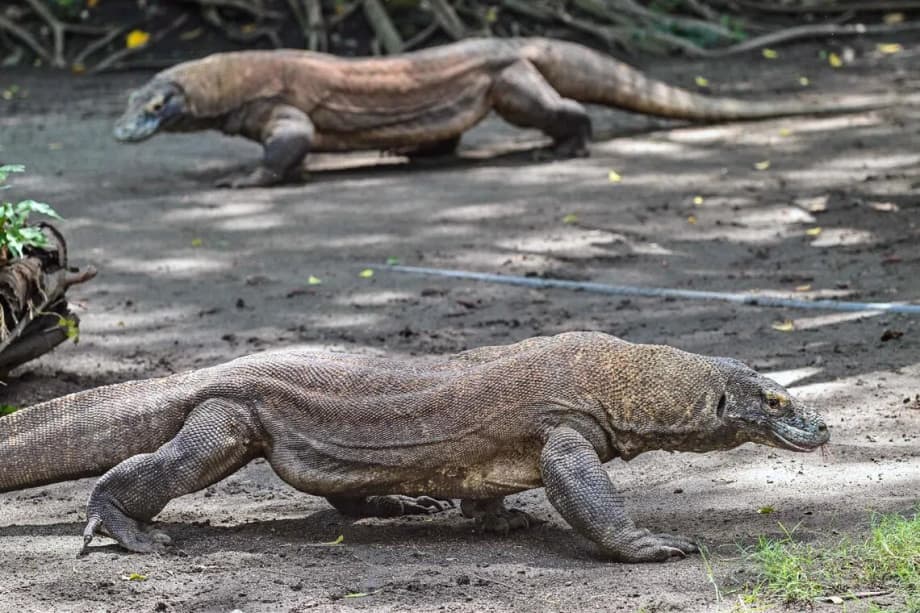
The Komodo dragon (Varanus komodoensis) stands as the world’s largest living lizard, a prehistoric-looking predator that captures the imagination of biologists and tourists alike. These formidable reptiles can grow up to three meters in length and weigh more than 70 kilograms, possessing a venomous bite capable of killing prey much larger than themselves. Their yellow forked tongues and armored scales make them instantly recognizable, while their ability to detect blood from nearly 10 kilometers away demonstrates remarkable evolutionary adaptation.
Wild populations exist exclusively within Indonesia, specifically on Komodo Island, Rinca Island, Flores Island, and surrounding islets. The International Union for Conservation of Nature (IUCN) currently lists the species as endangered, a status upgraded from vulnerable in 2021. According to government data, approximately 3,000 to 3,458 individual dragons remain in the wild, though habitat destruction and human activity continue to threaten their survival.
These apex predators possess several biological characteristics that make them particularly vulnerable to environmental changes. As carnivores that rely on stealth and power to hunt deer, wild boar, and water buffalo, they require extensive territories to find sufficient prey. Rising temperatures and altered rainfall patterns affect both the dragons directly and the ecosystems supporting their prey base. Scientists have documented instances of Komodo dragons displaying parthenogenesis, a form of asexual reproduction where females produce viable offspring without mating, though genetic diversity remains essential for long term population health.
Climate change poses an existential threat to these animals. Scientific research indicates that rising sea levels could devastate low lying habitats, particularly since Komodo dragons cannot survive at elevations above 700 meters. Their habitat on Flores Island has already shrunk by more than 40 percent between 1970 and 2000. In some regions, human hunters deplete the dragons’ natural prey, while agricultural expansion and development fragment their territories. Some animals fall victim to poaching for the illegal pet trade or illicit zoo acquisitions.
The Reciprocal Arrangement
The breeding loan program involves a carefully negotiated exchange of species between the two nations. Indonesia will provide one male and one female Komodo dragon to iZoo, a facility that houses over 400 species and 2,000 animals, making it Japan’s largest reptile and amphibian focused zoo. In return, Surabaya Zoo will receive a diverse collection of wildlife from Japan, including a pair of red pandas, a pair of giraffes, four Aldabra giant tortoises, and two female Japanese macaques, also known as snow monkeys.
Indonesian officials confirmed that the transfer will proceed only after the completion of a technical agreement between the participating zoos, scheduled for finalization in the coming weeks. Japanese media outlet TV Shizuoka reported that the Komodo dragons could arrive as early as June 2026, though conservation official Ahmad Munawir indicated that exact timelines depend on the completion of logistical preparations.
The arrangement draws inspiration from historical precedents set during the administration of President Soeharto, who between 1967 and 1998 lent Komodo dragons to several countries including Singapore, Thailand, Malaysia, the United States, and Spain. In 1977, Soeharto specifically sent Komodo dragons to Japan as a symbolic gesture of friendship between the two nations. The current program revives this tradition of using wildlife exchange to cement diplomatic bonds, though modern protocols incorporate stricter scientific and ethical standards than those applied in previous decades.
Concerns from Conservation Critics
Not all observers support the international transfer of these endangered reptiles. People for the Ethical Treatment of Animals (PETA) has strongly criticized the agreement, arguing that wild animals should not serve as diplomatic tools. The organization contends that captive breeding programs distract from the urgent need to protect natural habitats where these species face immediate threats from climate change and human encroachment.
“Shipping these highly intelligent animals overseas for captive breeding only reinforces the dangerous myth that conservation can happen behind zoo walls, while any offspring born there would be condemned to a lifetime of confinement. True conservation protects Komodo dragons where they belong, in their natural habitats, not by exporting them for political optics or public relations gains.”
PETA Asia President Jason Baker issued this statement as part of a broader campaign against the commercialization of endangered species. The organization argues that captive conservation, which occurs outside natural habitats, cannot replace the protection of wild populations in their native environments. They point to the limited genetic diversity in captive populations and the psychological stress that confinement places on animals adapted to roam vast territories.
Similar criticism has emerged from other quarters, with some conservation biologists questioning whether the resources required for international transport and captive maintenance might be better invested in protecting the dragons’ dwindling wild habitats on Flores and Komodo islands. These critics note that while breeding loans generate media attention and diplomatic goodwill, they rarely produce measurable benefits for wild population recovery.
Indonesias Conservation Strategy
Indonesian authorities defend the program as a component of a comprehensive conservation approach that includes both wild habitat and captive elements. Forestry Minister Raja Juli Antoni describes the initiative as reflecting Indonesia’s long term commitment to safeguarding global biodiversity heritage. Officials stress that conservation of dragons in their natural habitat remains the primary priority, with the breeding loan serving as a complementary educational and research tool.
Ahmad Munawir, a conservation official at the Forestry Ministry, explained that the program aims to increase Japanese tourism to Komodo National Park, a UNESCO World Heritage site. By showcasing Komodo dragons in Japanese zoos, officials hope to inspire visitors to travel to Indonesia to witness the animals in their natural habitat. This tourism revenue could fund additional protection efforts for wild populations while raising global awareness about the species’ precarious status.
The agreement aligns with Indonesia’s broader strategy to position itself as a leader in global biodiversity conservation while developing its ecotourism sector. Komodo National Park, located within the Lesser Sunda Islands, generates significant revenue for local communities and conservation programs. By creating awareness in Japan through the presence of live animals in zoological settings, Indonesian authorities anticipate increased visitor numbers to the archipelago. This approach mirrors successful conservation financing models used by other nations, where international interest in charismatic species translates directly into funding for protected area management and anti poaching patrols.
The Ministry stresses that all stages of the process, including animal care, transport, and supervision, will follow strict international standards. The program complies with CITES regulations, which permit such transfers for non commercial breeding and conservation education purposes. Surabaya Zoo has established a track record of successful captive breeding, having produced dozens of Komodo dragons in recent years within enclosures designed to mimic natural conditions.
“This collaboration goes beyond a simple exchange of animals. It is part of Green Diplomacy and reflects Indonesia’s long term commitment to safeguarding the world’s biodiversity. The breeding loan program holds strategic value in strengthening public education and raising global awareness of the importance of conservation.”
Minister Raja Juli Antoni provided this context in an official statement following the March 28 signing ceremony, framing the exchange within broader environmental diplomacy objectives.
Looking Back to Move Forward
The current agreement revives a practice that lay dormant for nearly five decades. During the 1970s, Indonesia regularly lent Komodo dragons to allied nations as tokens of friendship and cooperation. The 1977 transfer to Japan established a precedent for using these rare reptiles as instruments of soft power, a strategy that the current administration under President Prabowo Subianto now seeks to modernize. Those earlier transfers operated under less stringent scientific protocols and without the comprehensive institutional frameworks that characterize contemporary zoological partnerships.
Today’s program differs from its predecessors in significant ways. Modern zoological science provides better understanding of Komodo dragon biology, behavior, and welfare requirements. Veterinary protocols have advanced considerably since the 1970s, with improved knowledge of the bacterial infections and parasites that can afflict captive reptiles. Transportation logistics now incorporate containers with sophisticated climate control systems and rapid transit options that reduce travel stress. The partnership between Surabaya Zoo and iZoo also includes provisions for scientific research and staff exchanges that were absent from earlier informal lending arrangements. Both institutions plan collaborative studies on reptile nutrition, disease management, and breeding biology that could benefit conservation efforts for other endangered species beyond Komodo dragons. These research components add scientific value that previous diplomatic gifts lacked.
The Essentials
- Indonesia has agreed to lend a breeding pair of Komodo dragons to iZoo in Shizuoka Prefecture, Japan, under a five year renewable agreement.
- In exchange, Surabaya Zoo will receive red pandas, giraffes, Aldabra giant tortoises, and Japanese macaques from Japan.
- The deal represents the first Komodo dragon loan from Indonesia in decades, reviving a practice last seen during the 1970s.
- Animal rights organization PETA has criticized the transfer, arguing that true conservation requires protecting wild habitats rather than exporting animals for captive breeding.
- Indonesian officials defend the program as Green Diplomacy that promotes conservation education and tourism to Komodo National Park.
- The Komodo dragon is classified as endangered by the IUCN, with only about 3,000 to 3,400 individuals remaining in the wild, threatened by climate change and habitat loss.
- The transfer complies with CITES regulations and is expected to occur as early as June 2026 following the completion of technical zoo agreements.