The Technical Trap: Why Zero Percent Breaks Everything
Prime Minister Sanae Takaichi faces an unexpected technical obstacle that threatens to derail her signature campaign promise. The Japanese government is now considering an unusual workaround: implementing a 1% consumption tax on food and beverages instead of the promised 0% rate. This adjustment, discussed at the National Council on Social Security in April 2026, aims to bypass severe technical limitations in retail computer systems while still delivering relief to consumers struggling with rising prices.
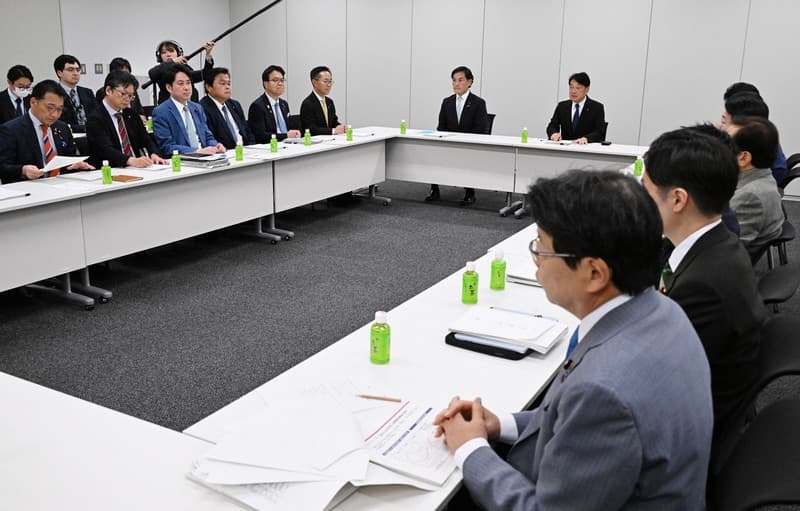
The proposal emerged from a working level meeting on April 8, when point of sale system manufacturers revealed a critical timeline constraint. According to participants at the cross party forum, developers explained that setting the tax rate at anything other than zero would reduce system modification time from approximately one year to just three months. This revelation sent shockwaves through the Liberal Democratic Party, where senior officials had previously accepted the one year timeline as unavoidable. One high ranking LDP member admitted surprise at the discovery, indicating the technical nuances of tax implementation had not been fully understood by policymakers until this briefing.
The issue highlights the collision between political rhetoric and technical reality in modern governance. Takaichi’s promise to eliminate the food tax seemed straightforward during campaign season, appealing to voters facing inflationary pressure. However, the implementation requires coordinating thousands of software systems across the nation’s retail infrastructure, revealing gaps between legislative intent and executable technology.
The consumption tax reduction represents one of Takaichi’s most visible policy commitments, making the technical constraints particularly embarrassing for an administration that prides itself on administrative competence. The prime minister positioned the measure as essential relief for households watching their grocery bills climb, so delays threaten both economic wellbeing and political credibility.
Inside the POS System Architecture
To understand why 1% works while 0% fails, one must examine how point of sale information management systems function. These computerized networks handle sales transactions, inventory tracking, and tax calculations for retailers ranging from small corner stores to massive supermarket chains. Every POS system currently operating in Japan was designed with a fundamental assumption: all goods carry some tax burden, even if minimal.
Modifying the current 8% food tax rate to 1% requires simple parameter adjustments within existing software frameworks. Programmers can alter rate tables without touching core calculation engines. However, programming a true zero rate demands entirely new system architecture. Software engineers must rebuild core components to handle genuine tax exempt status, a feature never contemplated when these systems were originally coded decades ago during the initial implementation of Japan’s consumption tax.
The mathematical challenge extends beyond simple programming preferences. Zero represents a problematic value in computer arithmetic, particularly regarding division operations. When software calculates percentages, distributes costs across multiple items, or performs statistical analysis on sales data, division by zero creates undefined mathematical results that can crash entire systems or corrupt transaction databases. This is not merely a theoretical concern; it is a fundamental constraint of digital logic that cannot be overridden by legislative will.
A representative from a major POS manufacturer confirmed that implementing 0% would require comprehensive safety checks to prevent accidental division by zero errors throughout millions of lines of legacy code. One industry observer familiar with retail software development highlighted the complexity involved in safety verification. If the design assumes a 0% consumption tax rate, engineers must verify that no instruction inadvertently attempts to divide numbers by zero anywhere in the system. This validation process adds significant time to development schedules, whereas any non zero rate eliminates these mathematical risks entirely.
Race Against the Fiscal Calendar
The technical distinction between 0% and 1% carries profound political consequences due to strict timeline constraints. During a January 2026 press conference announcing her intention to dissolve the House of Representatives, Takaichi positioned the consumption tax cut as her “cherished goal” and a primary defense against inflation eroding household budgets. She explicitly committed to eliminating the tax on food and beverages for two years, telling voters these items “will not be subject to consumption tax.”
At subsequent party leaders debates, Takaichi sharpened her timeline, declaring her intention to implement the cuts “within the fiscal year.” In Japan, the fiscal year ends March 31, 2027, creating a hard deadline that now appears increasingly difficult to meet. Even under optimal legislative conditions, with the tax law revision bill passing through the extraordinary Diet session in autumn 2026, the timeline remains tight.
If system modifications require a full year from the autumn legislation, the tax reduction would not begin until autumn 2027, six months after Takaichi’s promised deadline. This delay poses substantial political risks for the administration, which currently maintains high approval ratings. Voters experiencing continued price pressures might view the delay as bureaucratic incompetence or political betrayal, particularly when the measure directly affects daily grocery expenses. The gap between promise and delivery could undermine trust in government commitments to address cost of living concerns.
A senior administration official acknowledged the tension between ideals and execution, stating that while the basic policy remains 0%, the speed advantages of 1% make it a viable alternative if Takaichi prioritizes rapid implementation over perfect adherence to the original pledge. This admission signals potential flexibility within the administration, though it risks accusations of backtracking.
Coalition Flexibility Meets Party Resistance
Reactions to the 1% proposal reveal sharp divisions within the ruling coalition and governing party. Fumitake Fujita, co leader of Nippon Ishin (the Japan Innovation Party) which forms a coalition with the LDP, demonstrated pragmatic flexibility during an April 15 press conference. Fujita suggested the rate does not absolutely need to be zero, provided the policy achieves its philosophical goal of lowering public financial burdens.
I don’t think it absolutely has to be zero. If it matches the policy philosophy of lowering the burden on the public, various assumptions are possible.
However, this practical stance clashes with the LDP’s campaign commitments and voter expectations. During the January press conference, Takaichi explicitly promised zero taxation, making any non zero rate vulnerable to attacks as a broken promise or betrayal of trust. One senior LDP official expressed strong opposition to the 1% compromise, insisting that the party promised the public a zero tax rate and internal discussions still support maintaining that commitment regardless of technical obstacles.
Itsunori Onodera, chairperson of the LDP’s Research Commission on the Tax System, offered a cautious middle perspective that acknowledges both sides. Speaking to reporters on April 15, Onodera acknowledged hearing the claim that 1% would accelerate implementation, but warned that the government must align with the slowest participants in the system transition.
There was a comment that ‘1% would shorten the process,’ but in the end, if we do not align with the place that takes the longest, there will be major confusion. I want to discuss this after properly confirming it.
Onodera’s statement highlights the risk that even the 1% solution might not deliver the promised speed if regional retailers or small developers cannot keep pace with national chains. The coalition dynamics complicate Takaichi’s decision. While Nippon Ishin’s flexibility provides political cover for a pragmatic solution, LDP hardliners view any deviation from 0% as unnecessary weakness. The prime minister must weigh the benefits of delivering timely tax relief against the costs of appearing to abandon a core campaign promise within months of taking office.
Beyond the Tax Rate: Customization Challenges
Even adopting the 1% rate does not guarantee smooth implementation due to the fragmented nature of Japan’s retail technology ecosystem. Major nationwide retailers, including supermarket chains and convenience stores, operate highly customized POS systems integrated with proprietary services such as point cards, loyalty programs, and inventory management. These tailored systems require individual case by case handling rather than universal software patches, extending modification timelines beyond standard estimates.
Regional disparities present additional complications that could delay the rollout regardless of the chosen rate. Small and midsize system developers serve local retailers with proprietary POS solutions tailored to specific prefectures or communities. Many of these smaller developers face severe engineer shortages, limiting their capacity to implement changes as rapidly as larger firms serving national chains. The heterogeneous nature of Japan’s retail technology landscape means the 1% solution, while technically simpler than 0%, still faces practical obstacles that could delay nationwide implementation.
These technical constraints highlight the complexity of tax policy implementation in a highly digitized economy. What appears as a simple legislative change requires coordinated software updates across thousands of independent systems, each with unique configurations and technical debt accumulated over decades of operation. The transition demands not just coding changes but extensive testing to ensure that accounting, inventory, and reporting functions continue accurately under new parameters.
Retail industry experts note that the coordination challenge extends beyond software to staff training and customer communication. Cashiers must understand transitional procedures, and consumers need clear explanation of why some receipts show 1% while others might temporarily still show 8% during the transition period. These human factors add layers of complexity to the technical rollout.
Consumption Tax Policy in Context
The debate over food taxation sits within broader discussions about Japan’s consumption tax structure and economic fairness. Currently, food and beverages face an 8% consumption tax rate, lower than the standard 10% applied to most goods and services. This reduced rate acknowledges the essential nature of food purchases and their disproportionate impact on lower income households who spend larger percentages of their budgets on groceries.
International comparisons suggest Japan remains an outlier in taxing food at all. Many developed nations completely exempt essential groceries from value added taxes or sales taxes, recognizing that taxing food effectively reduces real wages for the poorest citizens. Takaichi’s proposal to eliminate the food tax entirely, even temporarily, aligns Japan with these global standards, though the 1% compromise would maintain some fiscal mechanism while reducing the burden.
The temporary nature of the proposed cut, limited to two years, reflects concerns about government revenue. Japan faces massive public debt and aging population costs, making permanent tax elimination fiscally challenging. However, critics argue that temporary cuts create administrative complexity for limited consumer benefit, while supporters maintain that immediate relief matters more than perfect policy architecture. The 1% compromise might offer a middle path, providing nearly complete relief while preserving the tax infrastructure for future restoration.
The Bottom Line
- Japan’s government is considering a 1% consumption tax on food instead of the promised 0% rate to avoid technical delays in retail computer systems.
- Point of sale systems designed with the assumption that all goods are taxed cannot easily process 0% rates, requiring entirely new software architecture and extensive safety checks for division by zero errors.
- The 1% rate would allow system modifications in approximately three months compared to one year for 0%, potentially meeting Prime Minister Takaichi’s March 2027 deadline.
- Takaichi explicitly promised zero taxation during her January 2026 campaign, creating political risks if the government adopts the 1% compromise.
- The proposal has generated mixed reactions, with coalition partner Nippon Ishin showing flexibility while senior LDP officials resist breaking the campaign commitment.
- Implementation challenges persist even with 1%, including customized systems at major retailers and engineer shortages at regional software developers.