The Malaysian Calculus: Chasing Prosperity Across the Causeway
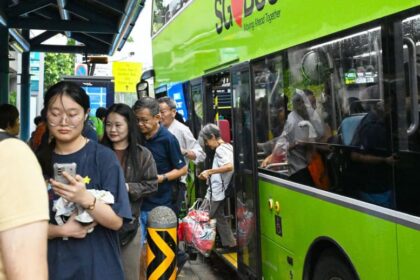
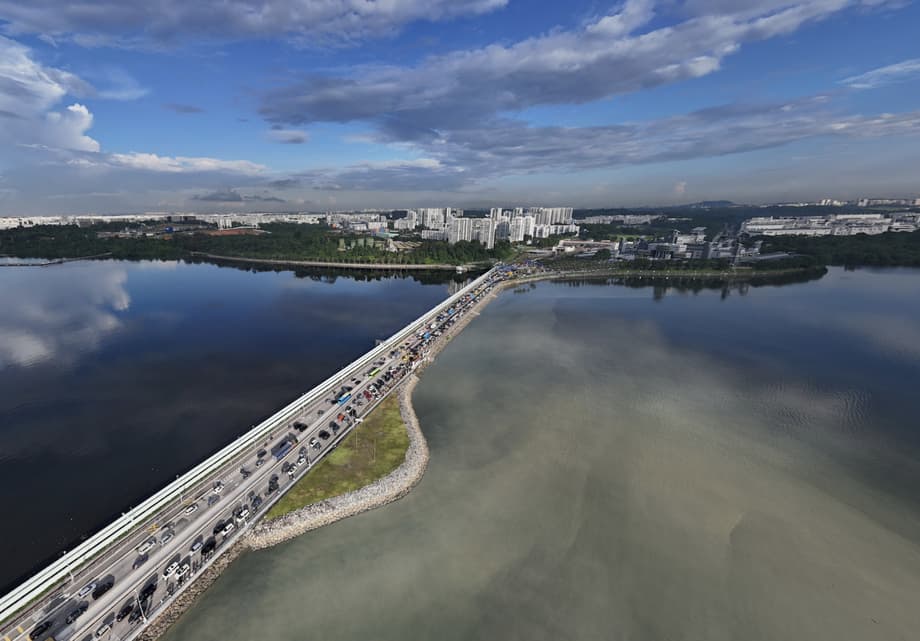
Every morning, thousands of Malaysians cross the Johor-Singapore Causeway before dawn, joining the daily procession of motorcycles, buses, and cars that transform the narrow strait into one of the world’s busiest land crossings. They are drawn by a simple economic equation that has defined this border region for decades: Singaporean salaries, often three times what they might earn at home, converted into Malaysian ringgit to support families, pay mortgages, and build savings. Yet the question that haunts many, as one Reddit user recently articulated, remains constant: “Is it really worth it?”
For single professionals without family commitments, the answer often appears straightforward. Online forums buzz with advice urging young Malaysians to seize Singapore opportunities while they can. “To all single people in Malaysia, if you have the chance to work in Singapore, please go for it,” one user wrote, capturing a sentiment that drives a steady stream of young graduates northward. The mathematics are compelling. Singapore’s median monthly income exceeds S$5,700 (approximately RM18,200 at current rates), while Malaysia’s median formal sector wage hovers around RM3,000. For a software engineer, the disparity grows sharper: positions in Singapore’s tech hubs can pay S$6,125 or more, more than double equivalent roles in Malaysia’s emerging tech centers like Kulai.
But the reality of life as a cross-border worker complicates this arithmetic. Recent fluctuations in the currency markets have introduced new variables into these calculations. When the Malaysian ringgit strengthened to around 3.20 against the Singapore dollar in late 2024, Malaysian workers like tour executive Loo Yong Tat felt an immediate pinch. Converting S$2,000 that once yielded RM6,800 suddenly returned around RM400 less. “I’ve felt what it was like when it was 2.25, 2.44 between 2000 and 2010,” noted Facebook user Shahril Umf in a Malaysia-Singapore Border Crossers group. “Only after 2020, we started seeing the rate reach up to 3.00.”
Despite the stronger ringgit, the exodus shows little sign of reversing. As of 2022, Singapore hosts the largest Malaysian diaspora community globally, with 1.13 million out of 1.86 million overseas Malaysians calling the city-state home. The reasons extend beyond exchange rates. Recruitment consultant Shawn Moo, who purchased a house in Johor Bahru but continues working in Singapore, points to persistent cost pressures in southern Malaysia. “In Johor Bahru for instance, it is very expensive to eat outside food. Just a curry noodle in a cafe will cost from RM10 to RM25,” he explained. For many, the calculation involves not just immediate purchasing power but long-term career trajectory and exposure to multinational firms that rarely locate their regional headquarters in Malaysian cities.
The psychological toll, however, remains significant. Online discussions frequently highlight the downsides: punishing working hours that stretch late into the evening, rental costs that consume large portions of supposedly higher salaries, and the emotional strain of separation from family and familiar cultural surroundings. What begins as a simple economic decision often evolves into a complex balancing act between ambition and sacrifice, with mental health and personal relationships bearing unquantifiable costs.
Singapore’s Policy Response: Tightening the Screws
While Malaysians calculate whether the move north makes sense, Singaporeans are increasingly questioning whether the system works for them at all. The city-state’s foreign workforce has swelled to approximately 1.91 million, concentrated heavily in construction, marine shipyards, and domestic work. This influx has triggered growing resentment among local workers who perceive intensifying competition for positions at every level of the employment ladder.
Online sentiment reflects palpable frustration. “They basically just destroy the job market here and don’t contribute anything to SG society,” one user complained in a recent discussion thread, echoing a narrative that foreign workers take opportunities from locals without adding commensurate value. This perception, rooted in economic insecurity rather than statistical reality, has pressured the government to act.
“By regularly updating the qualifying salaries based on the set wage benchmarks, we ensure a level-playing field for locals.”
Manpower Minister Tan See Leng announced last month that Singapore would raise the salary threshold for Employment Pass (EP) holders from S$5,000 to S$5,600 monthly, with financial services positions requiring S$6,200. These changes, effective from next year, represent the latest in a series of calibrated adjustments designed to filter foreign talent toward genuinely high-skill roles while ostensibly protecting local employment opportunities. The timing is politically significant. Singapore’s ruling People’s Action Party faces a general election due by 2025, with Lawrence Wong set to lead the ticket as Prime Minister Lee Hsien Loong steps down after two decades. Foreign worker issues proved electorally sensitive in 2011, when public discontent over competition and infrastructure pressure contributed to reduced vote margins.
The government has simultaneously deployed the Complementarity Assessment Framework (COMPASS), introduced in September 2023, which evaluates EP applications based on diversity criteria and local workforce ratios. Early results indicate the framework is shifting hiring patterns: firms overly reliant on workers from single nationalities have dropped by 7%, while firms with high dependence on foreign labor generally declined by 15%. These changes have reportedly created approximately 4,000 additional professional, managerial, executive, and technical (PMET) positions for locals.
Yet the government maintains that the relationship between foreign and local employment is not zero-sum. Minister Tan has consistently argued that the notion that removing one foreign worker creates one local job is “overly simplistic.” The administration’s position holds that a well-calibrated foreign workforce anchors multinational corporations in Singapore, ultimately generating broader employment opportunities for citizens. This economic logic confronts visceral local anxieties about cultural encroachment and resource competition, particularly regarding housing costs and educational placements.
Data Versus Perception: Who Really Takes Which Jobs?
Official data from Singapore’s Ministry of Manpower presents a more nuanced picture than the public narrative suggests. In the most comprehensive PMET employment breakdown released to date, the ministry’s figures reveal that no major industry exceeds a 25% foreign workforce share among professional roles. The most lucrative sectors remain overwhelmingly dominated by local residents.
In financial services, the highest-paying industry, less than 15% of PMET positions are held by foreign pass holders. Healthcare and social services show similar local dominance. Even in information and communications, which accounts for roughly one in seven professional job openings, foreigners comprise less than 25% of the workforce. The industries showing higher foreign employment ratios, between 40% and 50%, are precisely those that struggle to attract local workers: food and beverage services, construction, and administrative support roles characterized by lower wages and less desirable working conditions.
Economic analysis suggests that far from being cheaper alternatives, foreign professionals often cost employers significantly more than locals when accounting for relocation expenses, housing allowances for private condominiums (foreigners cannot purchase subsidized HDB flats), and the absence of family support networks. Permanent residents, who constitute a substantial portion of the “local” employment figures, face identical CPF (Central Provident Fund) obligations as citizens, eliminating the cost advantage sometimes attributed to foreign workers.
Professor Walter Theseira, a labor economist at Singapore University for Social Sciences, notes that the EP system originally targeted highly-skilled workers filling specific gaps but gradually expanded into middle-market positions. “This was perceived by local workers to be unwelcome competition for jobs that many skilled locals could do, so the government responded by re-calibrating the EP again upwards,” he observed. The policy shift aims to redirect foreign hiring toward senior and niche positions requiring specialized expertise in artificial intelligence, advanced engineering, and healthcare, while encouraging firms to develop local talent pipelines for mid-level roles.
Malaysia’s Structural Predicament: The Missing Middle
While Singapore adjusts its foreign worker policies, Malaysia confronts a more existential labor market challenge. The nation finds itself compressed between three distinct regional models: Vietnam’s low-cost manufacturing advantage, Singapore’s high-skill financial and tech hub status, and South Korea’s innovation-driven industrial economy. This positioning has created what economists call a “missing middle” problem that drives the brain drain toward Singapore.
Malaysia’s median monthly wage of approximately RM3,000 sits uncomfortably between Vietnam’s much lower labor costs and Singapore’s premium compensation structure. More troublingly, the quality of jobs has stagnated. While the country produces roughly 300,000 graduates annually, recent data indicates that the share of skilled jobs in the economy has fallen from 45% in 2018 to just 27% in 2024. The majority of new employment creation occurs in semi-skilled occupations, leaving an estimated two million tertiary-educated Malaysians working in positions that underutilize their qualifications.
This structural mismatch explains why salary stagnation persists despite GDP growth. As graduates accept semi-skilled roles, downward wage competition intensifies, trapping median incomes near the RM3,000 threshold. The upper tier of high-income professional positions remains too thin to elevate the overall wage structure. For ambitious young Malaysians burdened with education loans and urban living costs, delayed career progression translates directly into delayed life milestones: marriage, home ownership, and financial independence.
The Edge Malaysia’s analysis suggests that multinational firms seeking large-scale, cost-efficient production increasingly favor Vietnam, while those requiring frontier technology and advanced services gravitate toward Singapore and Korea. Malaysia risks being relegated to semi-skilled, mid-value activities facing price pressure from below and technological displacement from above. As Noor Azlan Ghazali of the Malaysian Inclusive Development and Advancement Institute observes, whether graduation photographs mark the beginning of upward mobility or quiet disappointment depends on how Malaysia responds to this regional reality.
A New Economic Frontier: The Johor-Singapore Special Economic Zone
Amid these tensions, both nations are attempting to reframe their economic relationship through the Johor-Singapore Special Economic Zone (JS-SEZ), launched in January 2025. This ambitious initiative aims to create a seamless ecosystem combining Singapore’s high-value sectors, including semiconductor production and biotechnology, with Johor’s lower operating costs and expanding industrial base. The zone encompasses 3,500 square kilometers across nine flagship developments, targeting 50 projects within five years and 100 by 2035, with a projected creation of 20,000 skilled jobs.
Malaysia has introduced substantial incentives to attract investment, including a 15% corporate tax rate for targeted industries and equivalent income tax rates for “knowledge workers” such as engineers and technicians. The Johor Bahru-Singapore Rapid Transit System, expected to become operational by late 2026, will facilitate cross-border talent mobility, potentially allowing Malaysians to access Singapore-level salaries while maintaining residence in Johor.
However, significant obstacles remain. Infrastructure development follows a “build-as-they-invest” approach that may delay progress until investor commitments solidify. Corporate concerns persist regarding bureaucratic efficiency and the zone’s ability to maintain consistent policy direction through potential political transitions. Success requires resolving the fundamental friction between Singapore’s stringent regulatory environment and Malaysia’s more flexible but sometimes unpredictable business climate.
The zone represents an implicit acknowledgment that pure competition between the neighbors serves neither side optimally. By creating a framework where Singapore’s multinational headquarters can coordinate with Johor’s manufacturing and logistics capabilities, the initiative aims to capture value that currently flows entirely to Singapore or bypasses the region entirely for Vietnam or Indonesia.
The Essentials
- Singapore has raised Employment Pass salary thresholds to S$5,600 (S$6,200 for finance) effective next year, tightening access for mid-level foreign professionals while aiming to preserve high-skill immigration
- Ministry of Manpower data reveals that foreigners hold less than 25% of PMET roles across all major industries, with finance and healthcare showing less than 15% foreign employment
- Approximately 1.13 million Malaysians currently work in Singapore, drawn by salary multiples of three to one over Malaysian equivalents, despite recent ringgit appreciation reducing the exchange advantage
- Malaysia faces structural “missing middle” challenges, with skilled job creation dropping from 45% to 27% of new positions since 2018, driving graduate underemployment and brain drain
- The Johor-Singapore Special Economic Zone launched in January 2025 aims to create 20,000 skilled jobs through cross-border economic integration, with special tax rates and improved transport links
- Job competition in Singapore has intensified, with jobseeker numbers growing 11% while postings increased only 3%, creating the toughest labor market conditions since the post-pandemic hiring boom