The Global Energy Artery Severs
The world is facing an energy catastrophe not seen since the 1970s oil shocks. Fatih Birol, executive director of the International Energy Agency, issued a chilling assessment that the current situation is “very severe” and potentially more damaging than the 1973 embargo and 1979 Iranian Revolution combined. The crisis represents what Birol described as “two oil crises and one gas crash put all together.”
At the center of this storm sits the Strait of Hormuz, a narrow 40 kilometer waterway between Oman and Iran that normally channels roughly one fifth of global oil consumption and significant liquefied natural gas shipments. Since the United States and Israel launched strikes against Iran in late February, Tehran has effectively blockaded this vital passage, creating what analysts call a “soft closure.” Tanker traffic has plummeted from approximately 80 vessels daily to just two, while hundreds of ships wait on either side. Shipping companies now face exceptional insurance costs or unofficial transit fees running into millions of dollars to pass through.
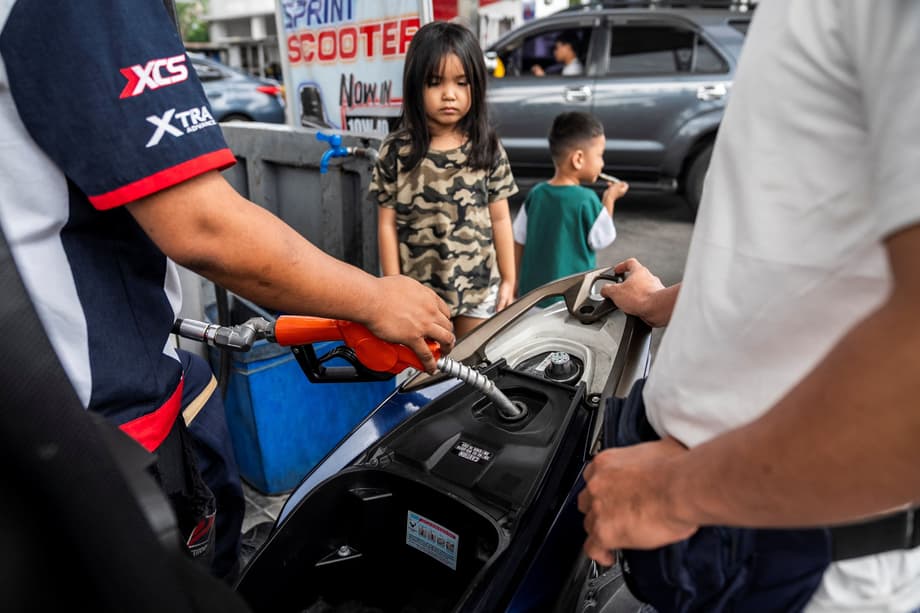
The immediate impact has been stark. In the Philippines, which imports 98 percent of its oil from the Gulf, President Ferdinand Marcos declared a state of national energy emergency, the first such declaration globally since the war began. Marcos promised a continuous flow of oil in a televised address, announcing the procurement of one million barrels to supplement the country’s current 45 day supply. The declaration empowers his government to directly purchase fuel, prioritize essential goods distribution, and implement extraordinary conservation measures including compressed workweeks for civil servants.
Energy research firm Wood Mackenzie predicted that if the war continues, Brent oil prices could climb as high as $150 per barrel in coming months, warning that an average price of $125 this year would trigger a global recession. Already, prices have surged approximately 40 percent since the conflict began, with Brent crude trading above $100 per barrel.
The Blockade and the Battle for Hormuz
The military situation in the strait remains volatile and complex. The United States has deployed A-10 Warthog ground attack aircraft and Apache gunships to target Iranian fast attack boats and drones along the southern flank. According to Israeli media reports, the White House has informed allies that the campaign to reopen the waterway could take “several weeks,” not days.
The blockade is not absolute. Iran has adopted a selective strategy, allowing passage for vessels from friendly nations while blocking those from enemy nations including the United States and Israel. Iranian Foreign Minister Abbas Araghchi confirmed that China, Russia, Pakistan, Iraq, and India have received safe passage for their vessels, with at least two Indian tankers having transited recently. This creates a fractured maritime landscape where some economies maintain limited supply lines while others face complete cutoff.
Complicating matters further, the United States appears to be quietly allowing some Iranian tankers to transit the strait to alleviate global supply shortages. Treasury Secretary Scott Bessent acknowledged that Iranian ships have been getting out already, and Washington has let that happen to supply the rest of the world. This contradictory approach highlights the dilemma facing the United States: maintaining military pressure on Iran while preventing a complete collapse of global energy markets.
The infrastructure damage extends beyond shipping lanes. The IEA reports that at least 40 critical energy assets across the region have been severely damaged. Even if diplomatic negotiations reopened the strait immediately, the physical capacity to extract and process oil and gas has been compromised by strikes on facilities including Qatar’s Ras Laffan and Mesaieed industrial cities, which forced the world’s largest LNG exporter to halt production.
Nations in Crisis Mode
Across Asia, governments are implementing emergency measures that range from conservation campaigns to industrial rationing. South Korea, which imports 84 percent of its energy and relies on the Middle East for 70 percent of its oil and 20 percent of its natural gas, faces unique vulnerabilities. As an energy island with an isolated grid surrounded by sea and the closed North Korean border, Seoul cannot draw emergency power from neighbors. President Lee Jae-myung, who took office in June with a progressive agenda focused on inclusive growth and renewable transition, now finds his priorities in direct conflict. His administration has advised citizens to take shorter showers and charge phones during daylight hours to conserve electricity, while considering limits on naphtha exports, a petroleum by product critical to plastics manufacturing.
The crisis has forced Lee to restart nuclear reactors ahead of schedule and consider increased coal generation, backtracking on his renewable energy commitments. His government holds only about 3.5 million tons of LNG reserves, enough for roughly two to four weeks of stable demand. With net oil imports representing 2.7 percent of GDP, South Korea ranks among the most vulnerable economies to the current account shocks.
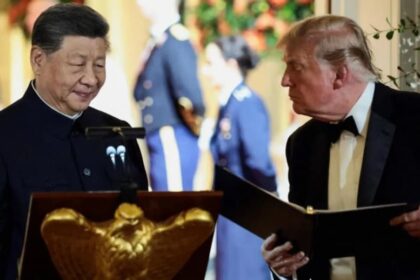
Japan has begun its largest ever release of emergency oil reserves, drawing down approximately 45 days worth from its strategic stockpile of 254 days. The government has urged calm after citizens began hoarding toilet paper amid panic over potential consumer goods shortages. Japanese Prime Minister Sanae Takaichi is expected to discuss purchasing more American LNG and restarting additional nuclear plants when she meets with President Trump later this month.
China appears best positioned to weather the storm, though not immune. As the world’s largest oil importer, Beijing has spent years building strategic reserves estimated at between 900 million and 1.4 billion barrels, providing nearly three months of import cover. With more than 46 million barrels of Iranian crude currently floating in tankers along the South China Sea, and with Russia supplying nearly one fifth of its energy imports via pipeline routes unaffected by the Middle East conflict, China maintains alternative supply channels. The country has also banned fuel exports from its refineries to safeguard domestic inventory, while its massive renewable energy sector and electric vehicle adoption provide buffers against oil price volatility.
Economic Shockwaves Beyond the Pump
The energy crisis is cascading through manufacturing and agriculture sectors across the continent. In South Korea and Japan, naphtha shortages are forcing production cuts at petrochemical companies, threatening the supply chain for plastics used in appliances from washing machines to automobiles. The shortage poses particular risks to South Korea’s semiconductor giants Samsung and SK Hynix, which together supply a dominant share of global memory chips underpinning artificial intelligence and cloud infrastructure.
Thai farmer Theerasin, working the rice fields outside Bangkok, expressed concerns about the upcoming planting season. He told media outlets that if fuel uncertainty continues, he will abandon planting his next crop in May.
“We are the producers. Simply put, being at the start of the chain, the production side gets hit first. Fuel is the critical factor. We can not plow or break the soil manually, we can not use people to harvest by hand anymore, and we can not manually scoop water into the fields. Everything requires machinery.”
His dilemma echoes across developing Asia, where diesel powered irrigation and harvesting equipment has replaced manual labor. The fertilizer crisis may prove more consequential than oil price spikes. The blockade has disrupted natural gas supplies essential for nitrogen based fertilizer production. With planting seasons approaching in Africa and Central Asia, shortages threaten agricultural productivity and food security. Even temporary hunger episodes can permanently damage child cognitive and physical development, creating intergenerational poverty traps.
Geopolitical Fault Lines
The war is reshaping global alliances and perceptions of reliability. While the United States presses allies to join military efforts to secure the strait, Japan has stated it is not considering maritime security operations, while Australia, Britain, Germany, Italy and Greece have ruled out sending naval vessels. The European Union is instead doubling down on long term clean energy strategies to reduce consumption.
The crisis has highlighted China’s position as a potentially more stable partner for energy importing nations. Beijing’s decades of investment in strategic reserves, renewable energy infrastructure, and relationships with sanctioned suppliers like Iran and Russia now provide tangible benefits that Washington cannot match. As one energy economics researcher noted, China is fortunate that 25 years ago it began its investment in renewable energy and it is now reaping the benefits.
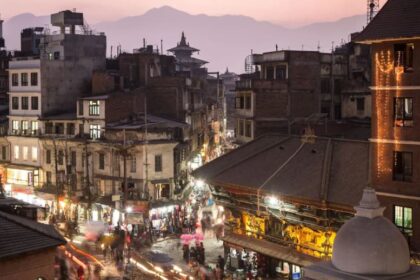
For millions of families in the Philippines, Nepal, and Bangladesh, the conflict threatens not just energy supplies but livelihoods. These nations depend on remittances from migrant workers in Saudi Arabia, Qatar, and the UAE, with remittance to GDP ratios exceeding 25 percent in Nepal and the Philippines. With Gulf economies under blockade pressure and migrant workers comprising the majority of collateral damage casualties, this financial lifeline is at risk.
The Developing World Braces for Impact
South Asia faces the most acute physical shortages. Bangladesh, which imports 25 percent of its electricity generating gas from Qatar, has closed all universities to conserve power as it anticipates a crisis that will worsen as summer temperatures rise. The country faces a structural gas deficit exceeding 1,300 million cubic feet daily. Pakistan has already raised state controlled energy prices by 20 percent, while businesses prepare to run expensive diesel generators that will worsen air quality in already polluted cities.
India, despite receiving exemptions for oil shipments from Iran, struggles with domestic liquefied petroleum gas shortages. The government has absorbed more than half of global price increases to shield poor households, but restaurants and hotels are already shortening hours or removing energy intensive dishes from menus. With limited storage capacity, analysts warn that fertilizer factories and small industries will feel supply pinches within weeks.
Future Threats and Long term Scars
The crisis shows potential for further escalation. Iran has threatened to extend disruptions to the Bab al Mandab Strait, which connects the Red Sea to the Suez Canal and carries more than one tenth of global seaborne trade. Such a move would compound the Hormuz blockade and potentially sever Europe Asia maritime connections entirely.
Even if hostilities cease soon, the economic damage will persist for months or years. Halts in production, destruction of energy infrastructure, and depleted strategic reserves require long recovery periods. Airlines across Vietnam, the Philippines, Australia, and the Pacific have already suspended or reduced flights, while the IEA recommends demand curbing measures including avoiding air travel, switching to electric stoves, and working from home.
The coordinated release of 400 million barrels from international strategic reserves provides only temporary relief. As Fatih Birol emphasized, these stockpiles are finite bridges, not permanent solutions. The longer the Strait of Hormuz remains impassable, the greater the inflationary impulse and the deeper the global recession risks become.
Key Points
- The Philippines became the first nation to declare a state of national energy emergency, implementing compressed workweeks and seeking one million barrels of emergency oil supplies.
- The Strait of Hormuz blockade has reduced daily tanker traffic from approximately 80 vessels to just two, while Iran selectively allows passage for ships from India, China, Russia, Pakistan, and Iraq.
- The International Energy Agency warns the crisis exceeds the 1973 and 1979 oil shocks combined, with at least 40 critical energy assets severely damaged across the region.
- South Korea faces acute vulnerabilities as an energy island with isolated electricity grids, restarting nuclear reactors and considering naphtha export limits to preserve supplies.
- Japan has initiated its largest ever strategic oil reserve release, drawing down 45 days of supplies from its 254 day stockpile.
- China maintains relative stability through 900 million to 1.4 billion barrel reserves, Russian pipeline imports, and renewable energy infrastructure covering over half its installed capacity.
- Fertilizer shortages threaten agricultural productivity across Africa and Asia, with potential for widespread hunger and long term developmental impacts on children.
- The United States estimates reopening the strait will take “several weeks” of military operations using A-10 Warthogs and Apache helicopters to clear Iranian fast attack boats.
- Developing nations including Bangladesh and Pakistan face immediate electricity shortages, with Bangladesh closing universities and Pakistan raising energy prices by 20 percent.
- Analysts predict Brent crude could reach $150 per barrel if the war continues, with sustained prices above $125 triggering global recession.