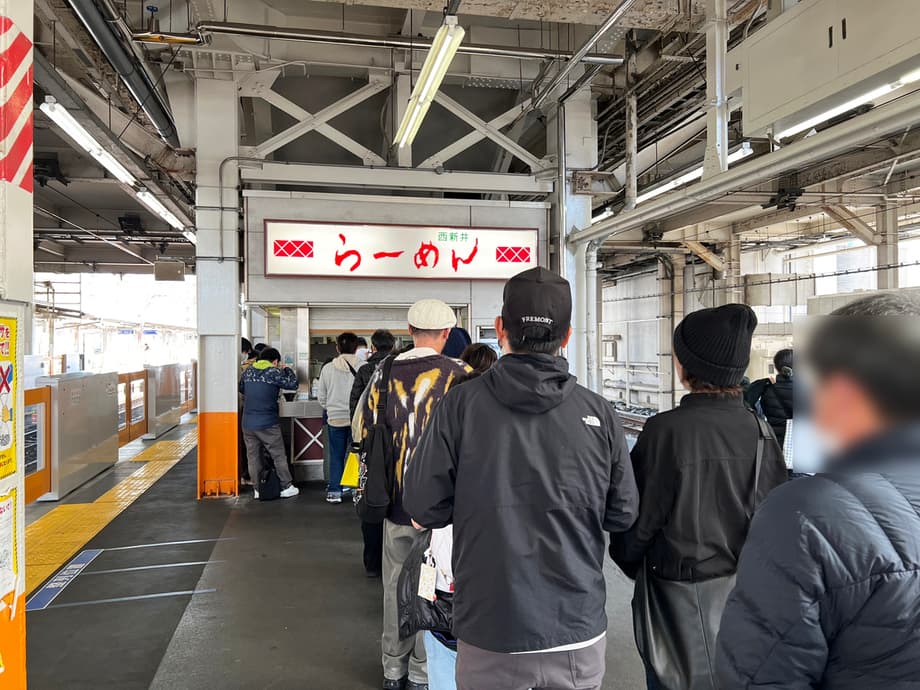
A Culinary Institution Disappears
The constant rumble of arriving trains mingles with the transient swirl of passengers rushing to catch departing locomotives. Above this mechanical symphony, the rich, savory aroma of soy sauce broth has hung in the air for over five decades. For 56 years, this precise sensory combination defined the daily experience at Nishiarai Station in Tokyo’s Adachi Ward. Nishiarai Ramen, a humble standing noodle shop located on Platforms 3 and 4 of the Tobu Skytree Line, has served as a temporal anchor to Japan’s Showa era since 1969. On March 31, 2026, this unique establishment will serve its final bowl, closing a chapter in Tokyo’s culinary and cultural history that began when the world watched the Apollo 11 moon landing.
The closure announcement has triggered an outpouring of nostalgia from commuters, food enthusiasts, and historians who recognize the stand as more than a simple food vendor. Operating daily from 8:00 AM to 8:30 PM without holidays, the restaurant has maintained a consistency that modern Tokyo increasingly struggles to preserve. Visitors during the shop’s final weeks encountered queues stretching for nearly an hour, a final pilgrimage for those seeking to capture one last slurp of noodles accompanied by the distinctive clatter of passing trains.
Located just 27 meters from the station’s main exit, the stand has occupied its platform position since the early years of the Showa period’s later decades, outlasting countless trends in Japan’s fast-moving food culture. While many visitors came for sustenance during their commutes, others sought the intangible quality of eating in a space where the boundary between public transit and private comfort blurred into a uniquely Tokyo experience.
The Romance of Platform Dining
Standing noodle shops, known in Japanese as tachigui establishments, represent a distinct category within the country’s dining culture. Unlike conventional restaurants where patrons sit for extended meals, these vendors cater to the rhythms of urban life, serving customers who remain on their feet, eat quickly, and continue their journeys. While platform-based soba shops have existed throughout Japan’s railway network for generations, ramen restaurants in such locations remain exceptionally rare, making Nishiarai Ramen a singular destination.
The experience of eating at the stand defies modern expectations of comfort and convenience. Customers line up shoulder to shoulder on the narrow platform, balancing hot bowls of soup as express trains rumble past within meters of the counter. This proximity to the tracks creates a dining atmosphere that oscillates between excitement and meditation, where the vibration of passing locomotives travels through the concrete into the soles of one’s feet while steam from the broth rises to meet the face.
The physical constraints of the platform, barely wider than the counter itself, necessitated a communal intimacy rare in contemporary Tokyo. Strangers stood elbow to elbow, united temporarily by the steam rising from their bowls and the shared vibration of passing express trains. This arrangement fostered brief connections between people who might otherwise never interact, creating micro-communities of diners bound by circumstance and appetite.
This type of dining space reflects the Showa era’s pragmatic approach to urban density, a period stretching from 1926 to 1989 when Japan rebuilt and redefined itself following World War II. During these decades, efficiency and functionality often took precedence over spaciousness, giving birth to culinary traditions that transformed physical constraints into aesthetic virtues. The platform stand embodies this philosophy, converting the transient nature of train stations into an integral part of the meal rather than merely a backdrop.
Modern Tokyo has gradually moved away from such arrangements, favoring sanitized food courts and segregated retail spaces over integrated platform commerce. The disappearance of Nishiarai Ramen signals not merely the loss of a single restaurant, but the erosion of a specific relationship between public infrastructure and daily sustenance that marked mid-20th century Japanese cities.
The Final Days and Farewell Message
As word of the closure spread through social media and local news, the platform witnessed an unprecedented influx of visitors seeking to pay their final respects to the establishment. Recent weekends saw the narrow waiting space crowded with customers willing to stand in line for approximately sixty minutes, a significant investment of time for what typically serves as a quick commuter meal. This surge of interest suggests that many shared the recognition that something irreplaceable was slipping away with the relentless progression of the Reiwa era, which began in 2019.
The shop posted a farewell message that acknowledged the deep connection between the location and its patrons. The sign captured the emotional weight of the moment while offering a promise of continuity.
“Thank you, Nishiarai Platform. To everyone who has eaten here, alongside the sound of trains, Nishiarai Ramen will be closing on 31 March. We won’t forget those who have stopped by, even if just for a short time. Thank you very much for the past 56 years. Although this location will be closing, the flavour will live on at our second branch in front of the station. Next time, please take a seat there and eat slowly. One final bowl. And from then on, at the station-front store.”
This message highlights the distinction between the physical space and the culinary tradition, reassuring customers that the recipes would survive while acknowledging that the specific atmosphere of the platform location could not be replicated. The invitation to “eat slowly” at the new location carries particular poignancy, as it contrasts with the rushed, standing nature of the original experience that commuters have known since 1969.
Many visitors reported feeling emotional during their final visits, some noting that their eyes grew blurry with tears as they received their last bowls of Char Siu Ramen. The sense of participating in a collective goodbye permeated the queue, transforming routine dining into a ritual of remembrance for a version of Tokyo that younger generations may never experience firsthand.
What Made the Bowls Special
Despite its modest appearance and unconventional location, Nishiarai Ramen maintained standards that rivaled traditional sit-down establishments. The menu centered on Tokyo-style shoyu ramen, a soy sauce-based soup that represents one of the foundational flavors of Japanese noodle culture. The simplicity of the offering, a hallmark of old-school Tokyo ramen shops, belied the complexity of the broth, which delivered a depth of flavor that surprised first-time visitors expecting merely convenient station food.
The Char Siu Ramen, priced at 850 yen (approximately $5.39 USD), provided a hearty meal that balanced economic accessibility with quality ingredients. The dish featured straight noodles sourced from Tsurushiko, a Japanese restaurant chain renowned for producing chewy noodles made from wheat and potato starch. These noodles maintained their texture even in the hot broth, providing a satisfying resistance that complemented the soup’s savory profile.
The char siu, or braised pork, contributed a salted richness that permeated the entire dish, creating a balanced flavor profile that explained the shop’s longevity across five decades. Unlike contemporary ramen trends that often emphasize heavy, rich tonkotsu broths or elaborate toppings, Nishiarai Ramen maintained a lighter, more traditional aesthetic that prioritized clean soy sauce notes and properly cooked noodles over spectacle.
This commitment to consistency meant that a bowl purchased in 2026 tasted essentially as it would have in 1986, providing a direct sensory link to Tokyo’s culinary past. In a city where restaurants often chase novelty and viral fame, the platform stand’s dedication to unchanging quality served as a differentiator that built loyalty across generations of commuters and food enthusiasts.
The physical act of eating on the platform also enhanced the perception of flavor. The steam from the trains, the ambient noise, and the necessity of balancing while standing created a heightened state of awareness that made each bite more memorable than it might have been in a conventional seating arrangement.
A Vanishing Showa-Era Tradition
The closure of Nishiarai Ramen reflects broader transformations affecting Tokyo’s urban landscape as the city continues to modernize and standardize its public spaces. The Showa era, which encompassed the period from 1926 to 1989, produced a distinctive architectural and cultural aesthetic that prioritized community accessibility over corporate polish. Train stations during these decades often hosted small vendors, standing bars, and quick-service restaurants that created vibrant, chaotic environments where commerce and transit intermingled freely.
Contemporary development trends favor separation and specialization, removing food service from platform areas to designated retail zones or commercial facilities. While similar establishments such as the Platinum Fish Cafe in Akihabara offer train-adjacent dining experiences, these locations typically occupy renovated historical spaces or purpose-built terraces rather than functioning operational platforms. The Platinum Fish Cafe, situated at the former Manseibashi Station where trains still pass through the abandoned structure, provides a curated experience that attracts enthusiasts but differs fundamentally from the utilitarian convenience of Nishiarai Ramen.
The comparison with other train-adjacent dining highlights what makes Nishiarai’s closure particularly acute. While establishments like the Platinum Fish Cafe offer views of passing Chuo-Sobu line trains from a glassed terrace, they function as destinations requiring deliberate visits rather than spontaneous stops during commutes. These newer establishments charge between 800 and 1000 yen for lunch plates that prioritize the viewing experience, whereas Nishiarai priced its ramen at 850 yen as practical sustenance rather than entertainment.
Standing soba shops continue to operate on various platforms throughout Japan, but the ramen variant remains exceptionally rare, making this closure particularly significant for culinary historians. The distinction matters because ramen carries different cultural associations than soba, representing post-war reconstruction and working-class sustenance rather than traditional Japanese refinement. Losing a platform ramen shop eliminates a specific node of post-war urban history.
As Adachi Ward and the broader Tokyo metropolitan area continue redevelopment projects aimed at increasing efficiency and safety, such idiosyncratic establishments face pressure to conform to modern standards that leave little room for the improvisational charm of 1960s infrastructure reuse. The disappearance of these spaces accelerates as the Reiwa era progresses, taking with them the tactile memories of how Tokyo functioned before the era of automated gates and climate-controlled commercial complexes.
The Next Chapter
For devotees mourning the platform location, consolation exists in the form of Nishiarai Ramen’s second branch, located at the front of the station rather than on the platform itself. This establishment will continue serving the same recipes, preserving the flavor profile that sustained the business through 56 years of operation. The transition allows the culinary tradition to survive even as the specific atmospheric conditions of the platform version fade into memory.
However, visitors to the new location note that despite signage acknowledging the platform history, the vibe differs substantially from the original. Sitting at a table to eat slowly, as the farewell sign suggested, fundamentally alters the relationship between the diner, the food, and the environment. The trains remain visible and audible from the station-front location, but the removal of the platform’s immediacy, the shared standing space, and the genuine integration with the transit experience creates a different category of meal.
The continuation serves as a compromise between preservation and progress, acknowledging that while the taste of the noodles can be maintained, the context that shaped their meaning cannot be moved or replicated. As Tokyo advances further into the 21st century, such compromises may become increasingly common, preserving flavors while losing the spaces that gave them historical resonance.
Key Points
- Nishiarai Ramen will close its platform location on March 31, 2026, after 56 years of operation since 1969
- The standing ramen shop is located on Platforms 3 and 4 of the Tobu Skytree Line at Nishiarai Station in Tokyo’s Adachi Ward
- Final days have drawn crowds with waits up to one hour as customers seek one last experience
- The shop will continue operating at a second branch located at the front of the station
- The closure represents the loss of rare Showa-era platform dining culture as Tokyo modernizes
- The restaurant served traditional Tokyo-style soy sauce ramen with noodles from Tsurushiko for 850 yen