Paper Makers Say Supplies Are Secure
Japan's household paper industry is urging shoppers to buy normally as fears over the closure of the Strait of Hormuz spread from oil markets to supermarket aisles. As of March 16, 2026, the Japan Household Paper Industry Association says there are no problems obtaining raw materials, making toilet paper or supplying it to stores, even as social media posts encourage people to stock up.
Contents
- Paper Makers Say Supplies Are Secure
- Online Warnings Revive an Old Fear
- How the 1973 Panic Took Hold
- Where Japan's Toilet Paper Comes From
- An Oil Disruption Larger Than the 1973 Shock
- Japan Turns to Emergency Oil Reserves
- A Pattern Repeated in 2011 and 2020
- Why Full Warehouses Can Mean Empty Shelves
- Asia Responds to Real Fuel Constraints
- The Bottom Line
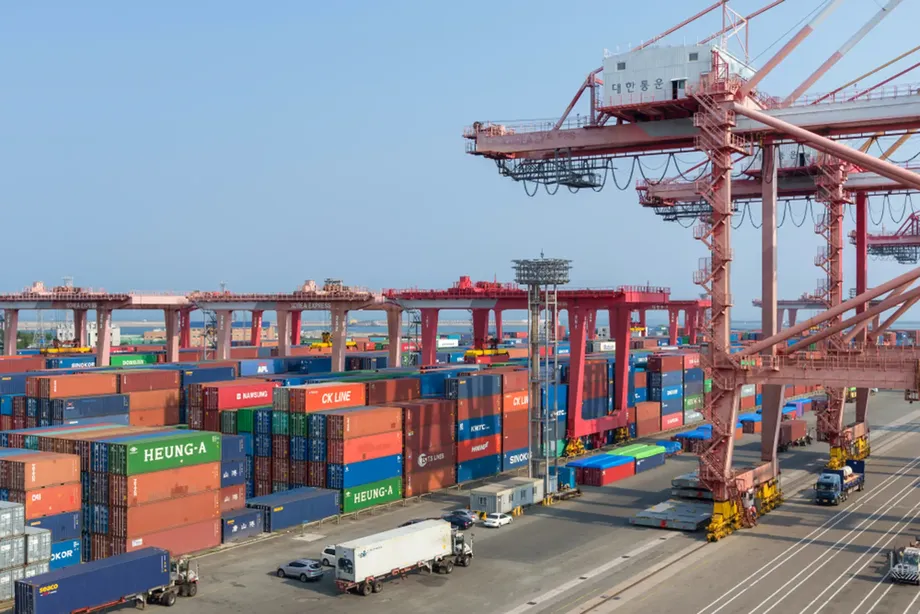
The association represents 41 companies that manufacture household hygiene products, including toilet paper and tissues. Its reassurance comes as military operations in the Middle East disrupt a shipping passage that normally carries roughly 20 million barrels of oil a day between Iran and Oman. Crude prices have climbed above $100 a barrel, and supplies heading to Asia have effectively halted.
The Japan Household Paper Industry Association issued an urgent statement addressing fears that the oil crisis would interrupt household paper supplies:
There are no problems with sourcing raw materials, manufacturing or supply. Please rest assured.
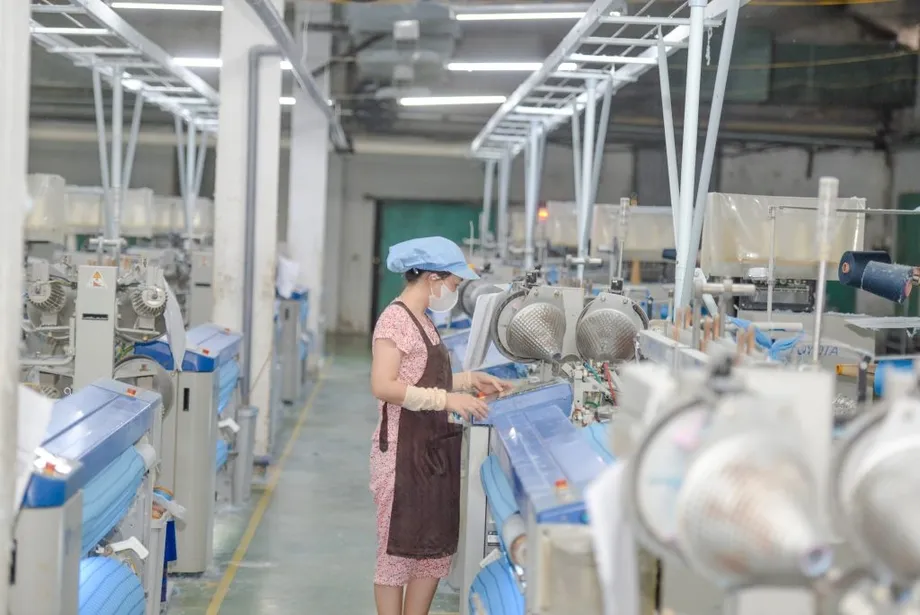
Morio Ishizuka, the association's executive managing director, said panic purchasing poses the greatest threat to stable supplies. He urged consumers to maintain their usual buying patterns and avoid spreading anxiety through speculative social media posts. Manufacturing facilities continue operating at full capacity, with no interruptions anticipated.
Japan faces genuine pressure on its energy supplies because it obtains more than 90% of its crude oil from Gulf countries. Toilet paper has a different supply chain: approximately 60% of its raw materials come from paper recycled within Japan, while the remaining 40% is imported pulp from North America, South America and Southeast Asia. None of those raw materials comes from the Middle East.
The immediate concern for household paper makers is therefore a sudden rush of purchases. Stores can temporarily run out when many households buy far more than usual at the same time, even while factories keep producing and warehouses have stock.
Online Warnings Revive an Old Fear
Social media platforms have filled with warnings about impending toilet paper shortages. Some users have urged others to buy supplies before prices rise or shelves empty, connecting higher oil prices with the possibility of losing access to an everyday necessity.
One user on X expressed that anxiety in a post about the rise in oil prices:
We'd better buy toilet paper before the price skyrockets due to the surge in oil prices, or we're in big trouble.
Another post warned that panic buying could itself empty shelves temporarily, regardless of how much paper was available in the wider supply chain. Posts comparing the current crisis with the oil shock of half a century ago have also attracted substantial attention.
The Strait of Hormuz closure has blocked tankers carrying crude oil to refineries across Asia. Those refineries turn crude into usable fuels, so interrupted deliveries create real concerns about energy availability and cost. Japanese consumers are responding to that disruption through memories of a different crisis, the toilet paper panic of 1973.
Japan's current paper supply remains unaffected, according to the industry association. The connection spreading online is rooted in the country's experience of the first oil shock, when a message about conserving paper became a rumor that paper would disappear.
How the 1973 Panic Took Hold
Yasuhiro Nakasone, then Japan's Minister of International Trade and Industry, called on citizens to conserve paper products during the first oil shock in 1973. His advisory came amid rising oil prices and concerns about supply.
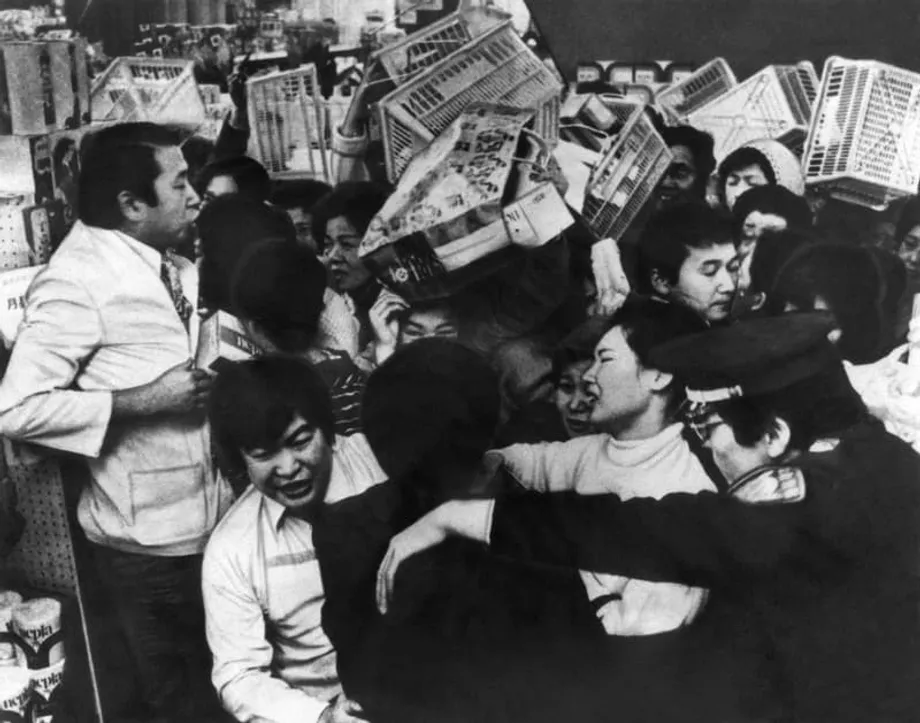
The conservation message spread through word of mouth and rapidly changed into rumors that "paper will run out." People lined up outside supermarkets across Japan, and frantic crowds bought toilet rolls by the cartload. Manufacturers maintained normal production, yet the surge in purchases created the shortage shoppers feared.
The episode, sometimes called the "durumari toilet paper disturbance," became a case study in behavioral economics, the study of how people's decisions are influenced by emotions and the behavior of others. It showed how quickly information can travel through social networks before anyone checks whether it is accurate.
The memory has passed down through generations, including people who did not experience the original panic. A commentator on Japanese online forums described the continuing association between an energy crisis and household paper:
The mentality linking oil shocks to toilet paper still hasn't changed,
The United States experienced a similar panic in late 1973. Congressman Harold V. Froelich of Wisconsin issued a press warning about possible government paper shortages. Comedian Johnny Carson subsequently joked about the issue on his television program, helping turn concern into widespread hoarding.
Millions of Americans stockpiled toilet paper for four months. Artificial scarcity persisted until February 1974. As in Japan, consumer purchasing behavior created shortages even though the underlying concern was different from a broad collapse in household paper supplies.
Where Japan's Toilet Paper Comes From
Ishizuka said approximately 60% of the raw materials used for Japan's toilet paper comes from domestically recycled paper, specifically collected printed materials and waste paper. The remaining 40% consists of pulp imported from North America, South America and Southeast Asia. Pulp is the fibrous material used to make paper.
Japan's modern toilet paper supply chain differs from the vulnerabilities associated with dependence on imports in 1973. Domestic recycling provides most of the material, while imported pulp comes from regions outside the Middle East.
Petroleum based chemicals are used as additives during manufacturing. Industry representatives nevertheless describe the effect of deteriorating conditions in the Middle East on toilet paper production as extremely limited. Distribution networks report no shortages at retail sites, and manufacturers have sufficient inventory to meet normal demand.
Pulp production relies primarily on timber resources from stable regions. Japan's recycling infrastructure operates domestically, while containers carrying imported pulp rarely pass through the Strait of Hormuz. Those shipments instead cross the Pacific or travel from nearby Asian sources.
Decades of sourcing decisions have insulated the industry from dependence on Middle East oil for its raw materials. Oil and toilet paper therefore face different risks: crude shipments are caught at a single vulnerable passage, while paper production draws on domestic recycling and supplies from several regions.
An Oil Disruption Larger Than the 1973 Shock
The International Energy Agency has identified the Strait of Hormuz closure as causing the largest disruption to global oil markets in history. Oil supply is expected to fall by approximately 8 million barrels a day, about 8% of global consumption.
The roughly 20 million barrels that normally move through the strait each day describe the usual traffic through the passage. The projected decline of 8 million barrels a day describes the expected loss to global supply. Both figures show why the closure has become a major concern for countries buying oil from the Gulf.
The 1973 Arab oil embargo removed about 4.5 million barrels a day from the market and caused prices to quadruple. The current expected loss of 8 million barrels a day is about 1.8 times that earlier disruption, using those two figures.
Japan is especially exposed because Gulf countries supply more than 90% of its crude oil needs. The closure interrupts the route used to bring that oil to Asian refineries, making the energy crisis a practical concern for businesses and households even while toilet paper production continues.
The government has focused its communications on separating real energy constraints, which call for conservation, from unfounded fears about consumer goods, which can worsen when shoppers rush to stockpile.
Japan Turns to Emergency Oil Reserves
Prime Minister Takaichi Sanae announced the release of approximately 80 million barrels from Japan's strategic reserves, equivalent to about 45 days of consumption. Strategic reserves are stocks of oil kept for emergencies when ordinary deliveries are interrupted.
Japan established its reserve system following the trauma of 1973. Its stocks currently amount to an estimated eight months of normal operations, giving the country a buffer while supplies through the Strait of Hormuz remain disrupted.
The 1973 embargo also pushed Japan to seek a wider range of energy sources. The current release is its largest drawdown in history and forms part of the first coordinated international response since Russia's invasion of Ukraine in 2022.
The International Energy Agency authorized a collective release of 400 million barrels from the emergency reserves of its member countries. The United States committed to releasing 172 million barrels over four months.
Pavel Molchanov, an analyst at Raymond James, connected the current response with preparations made after the earlier oil shocks:
One of the lessons from the 1970s, of course, is everybody needs to have emergency stockpiles for exactly the kind of crisis we have today,
Japan's reserves leave it in a comparatively stable position, although a prolonged conflict could extend beyond the protection offered by current stockpiles. Emergency releases provide oil while normal shipments are interrupted; their usefulness depends in part on how long that interruption lasts.
A Pattern Repeated in 2011 and 2020
The Great East Japan Earthquake and tsunami in 2011 triggered another rush to buy toilet paper. The massive earthquake and tsunami devastated coastal communities in Tohoku, and anxiety about daily necessities spread into consumer purchasing.
Japan saw a similar surge during the initial outbreak of COVID-19 in February 2020. Social media warnings about disrupted supplies caused shelves to empty within hours, despite manufacturers maintaining normal production schedules.
The Japanese government responded during the 2020 shortages by publishing photographs of warehouses stacked high with toilet paper. The photographs showed that supplies existed and needed time to reach stores, an effort to interrupt the cycle in which empty shelves encouraged still more buying.
The history of these episodes shows how the same purchasing pattern has returned during different emergencies:
- 1973: Nakasone's call to conserve paper during the first oil shock spread into shortage rumors and queues at Japanese supermarkets.
- Late 1973 to February 1974: A warning by Froelich and a joke by Carson helped drive four months of toilet paper hoarding in the United States.
- 2011: The Great East Japan Earthquake and tsunami prompted another buying spree in Japan.
- February 2020: COVID-19 supply rumors emptied Japanese shelves within hours while factories continued normal production.
- March 16, 2026: Japan's household paper industry is reassuring consumers as the Hormuz disruption revives memories of earlier panics.
Why Full Warehouses Can Mean Empty Shelves
Manufacturers and delivery networks can accommodate ordinary changes in demand. A simultaneous wave of unusually large purchases places a different strain on the system. If thousands of consumers buy six months of supplies in one week, deliveries organized around normal consumption cannot replenish every shop quickly enough.
Empty shelves then appear to confirm the original rumor. Other shoppers see the gaps and decide to buy more themselves, creating further pressure on stores. The resulting bottleneck is a problem of getting stock to the right place quickly enough, even when factories and warehouses continue holding supplies.
Analysts have identified that mechanism repeatedly in consumer panics: anxiety leads to excessive buying, excessive buying causes temporary distribution problems, and those problems feed the anxiety. Social media can speed up that cycle by circulating alarming claims faster than traditional news cycles can moderate them.
The pattern extends beyond Japan. In 2020, Venezuela's government occupied a toilet paper factory after panic buying induced shortages. Rumor, hoarding and subsequent scarcity have appeared across cultures when people perceive a threat to everyday necessities.
Marketing professor Steuart Britt described the mechanism as the "did-you-hear-that syndrome," in which the desire to be first with information overrides critical evaluation of whether it is valid.
Ishizuka's advice addresses the purchasing pressure directly. Buying the usual amount allows existing production and distribution to serve normal demand, while speculative posts and unusually large purchases can turn anxiety into a temporary problem at the checkout.
Asia Responds to Real Fuel Constraints
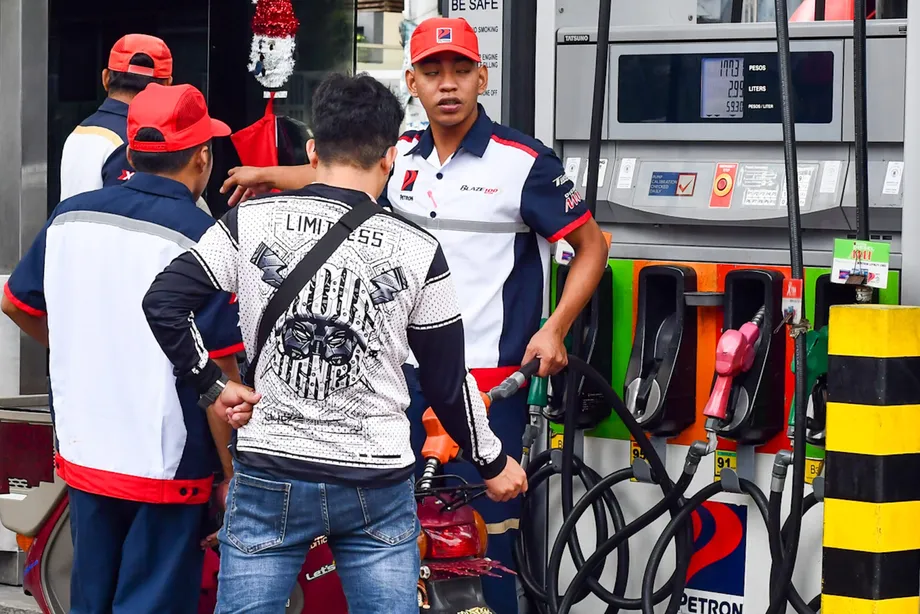
South Korea has introduced caps on domestic oil prices for the first time in three decades. The Philippines has implemented a workweek of four days for government employees to reduce energy consumption, while Vietnam and Thailand have imposed policies for working from home.
India faces acute shortages of liquefied petroleum gas, or LPG, used for cooking. Those shortages have forced restaurants to close entirely, despite emergency measures that increased domestic LPG production by 25%.
Bangladesh and Myanmar have introduced fuel rationing to manage dwindling supplies. Rationing limits access to available fuel so that stocks can be spread across users while deliveries remain under pressure.
Japan's extensive reserves give it more protection than countries already restricting fuel use, but the disruption has also renewed discussion about where it obtains its energy. Parliamentarian Suzuki Muneo suggested diversifying supplies toward Russia's Vladivostok, arguing that shipments could reach Japan within half a day compared with the longer routes from the Middle East.
Japan retains strategic investments in Russian oil and gas projects in Sakhalin, viewing them as essential to energy security despite international sanctions imposed after Russia's 2022 invasion of Ukraine.
The regional responses show the practical cost of interrupted oil deliveries, from changes in working schedules to restaurant closures and rationing. Japan's household paper makers are asking consumers to keep that energy disruption separate from the supply of toilet paper, whose materials come from domestic recycling and suppliers outside the Middle East.
The Bottom Line
- Japan's household paper association, representing 41 companies, says raw material sourcing, manufacturing and supply remain secure.
- Factories are operating at full capacity, with no interruptions anticipated and sufficient inventory for normal demand.
- Approximately 60% of toilet paper materials comes from domestic recycling and 40% from imported pulp, with none sourced from the Middle East.
- The Hormuz closure has interrupted a passage normally carrying roughly 20 million barrels of oil daily. Crude prices have risen above $100 a barrel.
- The International Energy Agency expects global oil supply to fall by about 8 million barrels a day, roughly 8% of consumption.
- Japan obtains more than 90% of its crude from Gulf countries and has announced a reserve release of approximately 80 million barrels, about 45 days of consumption.
- Japan's reserves cover an estimated eight months of normal operations. The international emergency release totals 400 million barrels.
- Panics in 1973, 2011 and 2020 show how unusually large purchases can empty shops even while manufacturers keep producing.
- Industry officials urge shoppers to buy normal amounts and avoid spreading speculative shortage claims.