A Final Bowl Beside the Tracks
Nishiarai Ramen will serve its last bowl on the platforms of Tokyo's Nishiarai Station on March 31, 2026, ending 56 years of standing meals beside arriving and departing trains. The shop opened in 1969, the year of the Apollo 11 moon landing, and has remained a fixture on Platforms 3 and 4 of the Tobu Skytree Line in Adachi Ward.
Contents
- A Final Bowl Beside the Tracks
- Why a Platform Ramen Shop Is Unusual
- The Final Weeks Become a Farewell
- The Shop's Message to Its Customers
- What Is in the Bowl?
- A Small Counter With a Long History
- How Tokyo's Station Dining Is Changing
- Train Views Are Not the Same as Platform Dining
- The Flavor Continues in Front of the Station
- Key Points
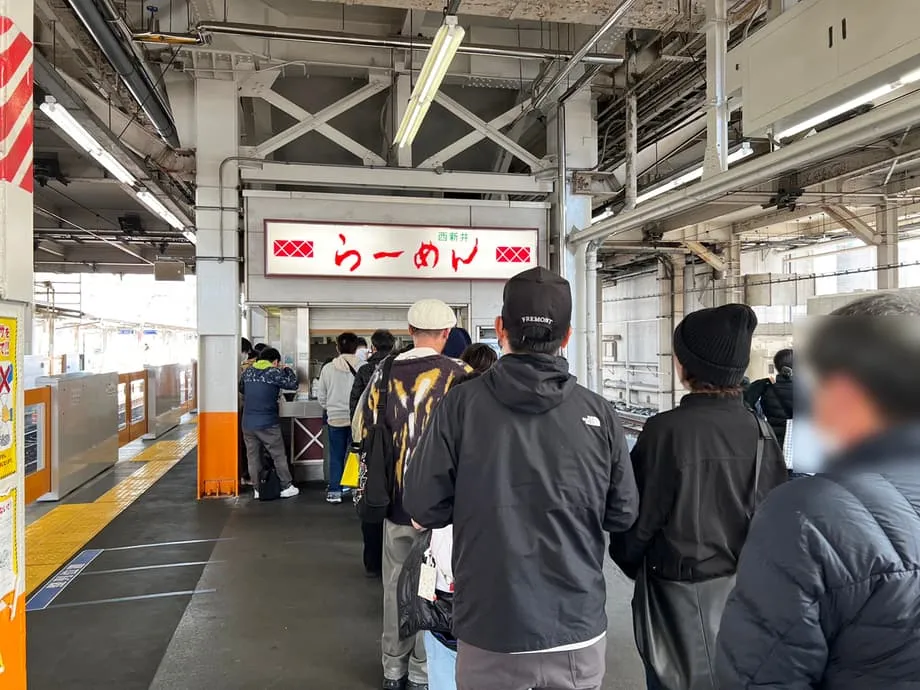
As of March 16, the approaching closure has brought commuters, food enthusiasts and people interested in the city's history to a place where soy sauce broth and railway noise have accompanied each other for more than five decades. Recent weekend queues have lasted nearly an hour, turning a stop designed for a quick meal into a much longer farewell.
The platform shop operates every day from 8:00 AM to 8:30 PM, without holidays. Located just 27 meters from the station's main exit, it has offered a dependable meal in the middle of a journey, surviving changing restaurant fashions and generations of passengers.
The business itself will continue. A second branch in front of the station will keep serving the same recipes after the platform location closes. Customers will still be able to order Nishiarai Ramen, but they will eat in a different setting, seated rather than standing beside an operational railway.
The loss is therefore both practical and personal. A familiar commuter stop is disappearing, along with an unusually close connection between public transport and everyday dining. For regular customers, the sound of passing trains has been as much a part of the experience as the noodles and broth.
Why a Platform Ramen Shop Is Unusual
Nishiarai Ramen belongs to a style of dining known as tachigui, meaning establishments where customers stand to eat. These shops fit meals around the movement of urban life: diners arrive, finish their food quickly and carry on with their journeys.
Standing soba shops have existed on railway platforms across Japan for generations. Ramen shops in the same setting are exceptionally rare, which has made Nishiarai a destination for people seeking more than a convenient bowl of noodles. Soba and ramen also carry different cultural associations. In this account of Tokyo's food history, soba is associated with traditional Japanese refinement, while ramen recalls reconstruction after World War II and sustenance for working people.
The platform leaves little room for the separation expected in a conventional restaurant. Customers stand shoulder to shoulder near the counter, with hot bowls in front of them and express trains passing within meters. The narrow space, barely wider than the counter itself, brings strangers into close proximity.
Passing trains send vibrations through the concrete and into diners' feet. Steam rises from the broth while the railway continues operating around the meal. Noise, movement and the need to remain standing give the experience a mixture of excitement and quiet concentration.
For a few minutes, people who might otherwise pass without speaking share the same small space, the same sounds and the same task of eating before continuing their day. Those brief connections are part of what customers will lose when the platform counter closes.
The Final Weeks Become a Farewell
News of the March 31 closure has spread through social media and local coverage, drawing visitors eager for one last meal in the original location. The recent weekend wait of approximately 60 minutes is a striking change for a business built around speed and convenience.
Customers have described emotional final visits, including eyes becoming blurry with tears when receiving their last bowls of Char Siu Ramen. The queue has become a shared act of remembrance, bringing together people whose memories of the shop may span very different periods of their lives.
Nishiarai Ramen's place in Tokyo's daily routine helps explain that response. A shop open every day, with the same familiar food and the same railway setting, can become a dependable part of a commute. Its disappearance removes a small point of continuity in a city that changes quickly.
The farewell also reaches beyond regular passengers. Food enthusiasts and historians see the stand as a surviving part of a version of Tokyo that younger generations may never experience directly. Visitors are coming for the noodles, but also for the opportunity to eat in a working station where the railway is part of the meal.
The Shop's Message to Its Customers
Nishiarai Ramen has posted a farewell message thanking its customers and the platform that has been its home. The business acknowledges the brief encounters that sustained it and directs diners toward its branch in front of the station:
Thank you, Nishiarai Platform. To everyone who has eaten here, alongside the sound of trains, Nishiarai Ramen will be closing on 31 March. We won't forget those who have stopped by, even if just for a short time. Thank you very much for the past 56 years. Although this location will be closing, the flavour will live on at our second branch in front of the station. Next time, please take a seat there and eat slowly. One final bowl. And from then on, at the station-front store.
The invitation to sit and eat slowly marks a change in the relationship between the shop and its customers. The platform stand has served people on the move since 1969. The continuing branch offers the same culinary tradition with a different pace and a seat.
The message also captures the two parts of the farewell: gratitude for a particular place and reassurance that the food will remain available. Recipes can continue at another counter, while the atmosphere created by the platform, its narrow standing space and passing trains belongs to the original location.
What Is in the Bowl?
Nishiarai Ramen's menu centers on Tokyo style shoyu ramen. Shoyu means soy sauce, the seasoning that gives this foundational style of Japanese noodle soup its familiar savory character. The menu's simplicity reflects an older approach to Tokyo ramen, with broth, noodles and toppings doing the work without elaborate presentation.
The Char Siu Ramen costs 850 yen, approximately $5.39. Char siu is braised pork, and its salted richness contributes to the flavor of the whole bowl. The meal combines an accessible price with ingredients that have helped the shop maintain a loyal following.
The straight noodles come from Tsurushiko, a Japanese restaurant chain known for chewy noodles made with wheat and potato starch. They retain their texture in the hot broth, giving diners a firm bite alongside the savory soup.
The broth has a depth of flavor that has surprised visitors expecting little more than convenient station food. Despite its modest appearance and unusual location, the stand has maintained standards comparable with conventional restaurants where customers sit to eat.
Nishiarai's style is lighter than contemporary ramen built around heavy, rich tonkotsu broth or elaborate toppings. Tonkotsu is a pork bone broth. Here, the focus remains on clean soy sauce flavors, properly cooked noodles and the richness supplied by the pork.
Consistency has been central to the shop's appeal. A bowl bought in 2026 has tasted essentially as it would have in 1986, creating a sensory connection across four decades. While other restaurants pursue new trends or attention online, Nishiarai's familiar taste has supported loyalty among successive generations of commuters and ramen enthusiasts.
The platform setting contributes to how customers experience that food. Steam, surrounding noise, passing trains and the need to balance while standing sharpen attention to the meal. The same bowl served in a quieter room would arrive without those physical sensations.
A Small Counter With a Long History
Nishiarai Ramen opened during the later decades of the Showa era, which lasted from 1926 to 1989. That period included Japan's rebuilding and transformation after World War II, when urban growth made efficient use of limited space a central concern.
The platform stand reflects that practical approach. Rather than treating a station only as a place to board trains, it made room for a hot meal within the journey itself. Limited space became part of the dining style: customers stood close together, ate quickly and returned to the flow of passengers.
Train stations during those decades often accommodated small vendors, standing bars and restaurants serving quick meals. Commerce and transport occupied the same busy spaces, creating environments that were lively, crowded and closely connected to everyday needs.
Nishiarai's 1969 opening and its scheduled closure in 2026 place that history within a simple timeline:
- 1926 to 1989: The Showa era spans Japan's rebuilding after World War II and the development of the urban culture reflected in the platform stand.
- 1969: Nishiarai Ramen opens at Nishiarai Station, in the same year as the Apollo 11 moon landing.
- 2019: The Reiwa era begins, the period in which customers are now saying goodbye to the platform shop.
- March 16, 2026: The platform location remains open, with recent weekend queues lasting nearly an hour.
- March 31, 2026: The platform shop is scheduled to serve its final bowls. The branch in front of the station will continue.
The stand has outlasted countless changes in Tokyo's food culture. Its longevity has made it a link to the way the city functioned before automated ticket gates and commercial complexes with controlled indoor temperatures became familiar features of station life.
How Tokyo's Station Dining Is Changing
Tokyo's newer commercial spaces increasingly separate eating from the platforms themselves. Food courts and designated retail areas provide a different kind of convenience, placing restaurants in spaces devoted to shopping and dining rather than directly beside working tracks.
The original platform arrangement joined public infrastructure with a small measure of personal comfort. A passenger could turn part of a journey into a meal without leaving the railway environment. Nishiarai's closure removes one of the rare places where that connection survives in the form of ramen.
Redevelopment in Adachi Ward and across the Tokyo metropolitan area places greater weight on efficiency and safety. Small establishments occupying older infrastructure face pressure to fit modern standards, leaving less room for the improvised arrangements associated with the 1960s. No specific reason for Nishiarai Ramen's closure has been given.
The change has a cultural cost as well as a practical one. The platform counter's crowded space and lack of separation were central to its character. Moving the same food into a designated restaurant area preserves a recipe while changing the conditions in which people encounter it.
Standing soba shops still operate on platforms elsewhere in Japan, so this form of dining continues. Nishiarai's departure is especially keenly felt because ramen in such a location is so unusual. It removes a particular piece of Tokyo's history of inexpensive meals for people moving through the city.
Train Views Are Not the Same as Platform Dining
The Platinum Fish Cafe in Akihabara offers another way to eat close to trains. It occupies the former Manseibashi Station, where trains still pass through the disused station structure, and customers can watch them from a terrace enclosed in glass.
The cafe's setting provides views of passing Chuo-Sobu line trains, using a historic railway space as a dining destination. Lunch plates cost between 800 and 1,000 yen. Nishiarai's Char Siu Ramen, at 850 yen, falls within that price range, but the two meals serve different purposes.
Platinum Fish Cafe attracts people making a deliberate visit for the setting and the view. Nishiarai has functioned as practical sustenance during a commute, with the train service operating immediately beside the counter rather than becoming an attraction viewed from a separate terrace.
Renovated historical locations and terraces built for dining can keep railways within sight and hearing. They offer a curated experience, while Nishiarai's platform stand remains woven into the ordinary operation of a station. That everyday role is what makes its final weeks more than the closing of a restaurant with an unusual view.
The Flavor Continues in Front of the Station
Nishiarai Ramen's second branch offers customers a place to return after March 31. It will continue the recipes and flavor that have sustained the business through 56 years, keeping the food available even as the original platform location disappears.
Visitors to the branch have noted a different atmosphere despite signage acknowledging the platform shop's history. Sitting at a table changes the pace of a meal and the relationship between the diner and the surroundings. The invitation in the farewell message to eat slowly describes that change directly.
Trains remain visible and audible from the location in front of the station. The immediate proximity of the operational platform, the shared standing space and the sense of eating within the movement of passengers are missing from the new arrangement.
The continuing branch is a compromise between preserving a culinary tradition and accepting a change of place. Customers can keep ordering familiar noodles and broth, but the physical setting that helped give those flavors their meaning cannot be relocated with the menu.
For Tokyo, the March 31 farewell marks the disappearance of a small but distinctive part of everyday life. For Nishiarai's customers, the next chapter is more concrete: one final bowl on the platform, followed by future meals in front of the station.
Key Points
- Nishiarai Ramen will close its location on Platforms 3 and 4 of the Tobu Skytree Line at Nishiarai Station on March 31, 2026.
- The shop opened in 1969 and is saying farewell after 56 years in Tokyo's Adachi Ward.
- It operates daily from 8:00 AM to 8:30 PM without holidays, and recent weekend queues have lasted nearly an hour.
- Its 850 yen Char Siu Ramen features soy sauce broth, braised pork and straight noodles from Tsurushiko.
- The second branch in front of the station will continue serving the same recipes in a setting where customers can sit.
- The closure removes a rare platform ramen shop associated with the practical urban dining culture of the Showa era.