When Distant Conflicts Hit Home
Though New Delhi sits roughly 2,500 kilometers from Tehran, the war raging across West Asia has already breached Indian borders through a different vector: the economy. The conflict between the United States, Israel, and Iran has effectively closed the Strait of Hormuz, the narrow maritime chokepoint through which nearly half of India’s crude oil imports flow. This disruption is triggering a cascade of economic consequences that stretch from the petrol pump to the dinner plate, from stock market indices to wedding catering bills.
- When Distant Conflicts Hit Home
- The Hormuz Chokepoint and Energy Security
- The Kitchen Crisis: LPG Shortages and Food Economy
- Market Reactions and Currency Pressures
- Sector by Sector: Beyond the Gas Pump
- Government Response and Mitigation Measures
- Regional Context: India’s Resilience Compared to Neighbors
- Economic Outlook and Lingering Risks
- Key Points
The arithmetic of the common Indian household is changing rapidly. Brent crude prices surged over 25% to reach $117 per barrel on March 9, marking a 50% jump since hostilities began. Analysts at DBS Bank project that prices could hover between $100 and $150 per barrel if shipping through the Strait remains significantly disrupted. For a nation that imports more than 89% of its crude requirements, with approximately 2.6 million barrels per day passing through the Hormuz chokepoint, the vulnerability is acute and immediate.
Madan Sabnavis, Chief Economist at Bank of Baroda, captures the domestic reality with precision. He identifies gas supply as the primary concern, noting that higher restaurant prices will affect the middle class directly as eateries struggle with fuel availability. This observation signals a broader truth: the West Asia conflict does not merely alter geography or augment history; it manifests in the monthly budgets of millions of families.
The Hormuz Chokepoint and Energy Security
The Strait of Hormuz functions as a vital artery for global energy trade, handling roughly 20% of the world’s oil shipments. For India specifically, the numbers reveal deep dependency. In 2025, India imported crude oil and petroleum products worth approximately $70 billion from West Asia, with $50.8 billion comprising crude oil alone, accounting for 48.7% of total crude imports. The region also supplied 68.4% of India’s liquefied natural gas (LNG) imports, valued at $9.2 billion, and 46.9% of liquefied petroleum gas (LPG) imports totaling $13.9 billion.
India’s domestic reserves offer limited cushion. Current crude stockpiles cover less than 30 days of consumption, while LPG reserves stretch only about two weeks. This thin buffer means that supply disruptions translate quickly into price pressures and availability crises. The vulnerability has already materialized in concrete ways: Qatar’s Petronet LNG suspended LNG deliveries to GAIL from March 4, 2026, citing restrictions on vessel movement through contested waters.
The composition of India’s energy imports creates specific chokepoints. Natural gas serves as a critical input for fertilizer manufacturing plants, gas-fired power stations, and city gas distribution networks that supply compressed natural gas (CNG) for vehicles and piped natural gas for household cooking. When these flows constrict, the effects ripple across multiple economic sectors simultaneously.
Aditi Nayar, Chief Economist at ICRA, quantifies the inflationary risks with specific metrics. She estimates that for every 10% increase in crude oil prices, the Wholesale Price Index (WPI) rises by 80 to 100 basis points, while the Consumer Price Index (CPI) increases by 40 to 60 basis points, assuming full transmission into retail fuel prices. A sustained price increase could pose significant upside risks to ICRA’s FY27 WPI inflation forecast of 2.7% and CPI projection of 4.0%, depending on how completely these costs pass through to consumers at the petrol pump and LPG distributor.
The Kitchen Crisis: LPG Shortages and Food Economy
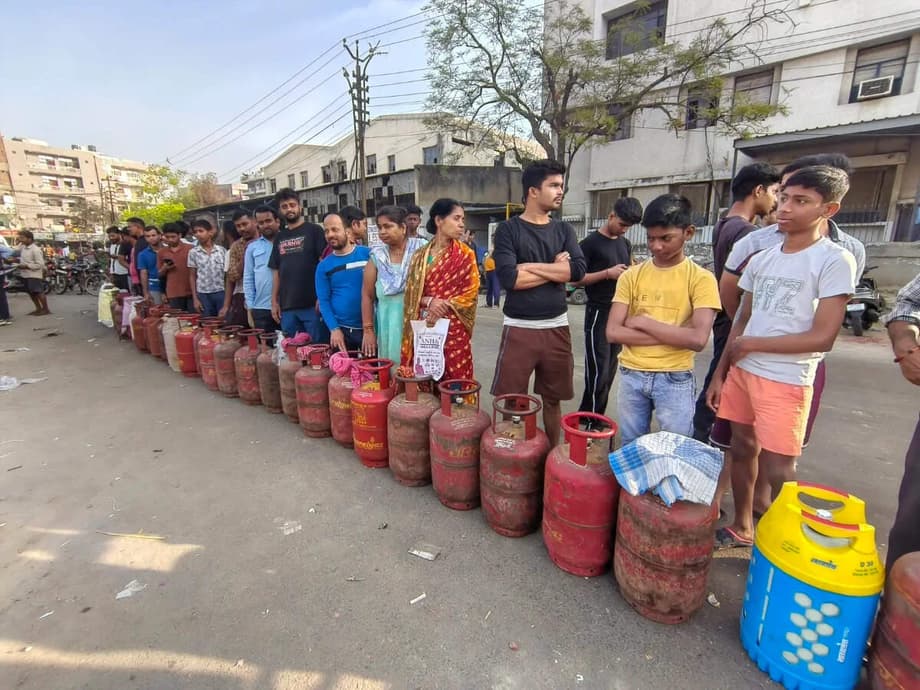
Perhaps the most visible domestic impact of the West Asia war has been the sudden scarcity of commercial LPG cylinders, which has thrown India’s food service industry into disarray. The National Restaurant Association of India (NRAI), representing 500,000 members, issued urgent advisories on March 10, recommending shorter operating hours and the suspension of menu items requiring long simmering or deep frying. The association also urged members to use lids while cooking to conserve every possible gram of gas.
In Bengaluru, the Bangalore Hotels Association warned that establishments might shut operations entirely from Tuesday onwards after commercial LPG cylinder supplies stopped abruptly. P C Rao, honorary president of the association, noted that only about 10% of hotels and restaurants in the city received LPG deliveries on Monday, threatening food services for thousands who depend on hotels for daily meals. Mumbai reported similar conditions, with the Indian Hotel and Restaurant Association (AHAR) indicating that over half the city’s hotels could close within days if supplies do not resume.
“Hotels in Bengaluru may shut operations from Tuesday after commercial LPG cylinder supply stopped abruptly,” the Bangalore Hotels Association stated, highlighting the immediate existential threat to small and medium food businesses.
The crisis has forced operational adaptations across the food economy. Coimbatore’s Annapoorna restaurant announced a limited menu focusing only on essential items, with certain products available only during specific time slots. JM Financial research notes that supply disruptions could significantly affect India’s quick-service restaurant sector, forcing chains like McDonald’s, Domino’s Pizza, and KFC to contend with rising costs, weaker sales, and potential menu changes if LPG shortages persist.
Gig economy workers have also raised alarms. Delivery partners operating through platforms such as Swiggy and Zomato report that fuel shortages and rising LPG prices are squeezing their earnings. Share prices for Eternal Ltd. and Swiggy Ltd. declined over 4% on March 12, reflecting investor concerns about the operational viability of food delivery networks under continued fuel stress.
Household consumers face parallel pressures. Oil marketing companies increased the price of 14.2 kg non-subsidized LPG cylinders by Rs 60 across major cities effective March 7, pushing Delhi rates to Rs 913. To prevent hoarding, authorities extended the minimum waiting period for booking domestic LPG refills from 21 days to 25 days, though officials emphasize that typical households consume only six to seven cylinders annually, requiring refills every 50 to 55 days.
Market Reactions and Currency Pressures
Domestic financial markets reacted sharply to the oil shock. On March 9, the Indian rupee plummeted to an all-time low of 92.33 against the US dollar, while the Sensex and Nifty indices dropped nearly 3%, hitting their lowest levels in 11 months. The benchmark indices continued their downward trajectory in subsequent sessions, with the Sensex falling more than 500 additional points and the Nifty slipping below the 23,700 mark.
The currency depreciation amplifies import costs across the board. As the rupee weakens, every dollar-denominated barrel of crude becomes more expensive in local currency terms, creating a feedback loop that exacerbates inflationary pressures. Rating agency Moody’s has warned that costly energy imports will weaken the rupee further, raise inflation, worsen the current account balance, and complicate monetary and fiscal policy if they trigger expanded subsidies.
ICRA projects that if oil prices average $100 per barrel for the 2026/27 financial year, India’s current account deficit could widen to 1.9% to 2.2% of GDP, up from a projected 0.7% to 0.8%. Elara Securities estimates that the federal government’s annual expenditure could rise by Rs 3.6 trillion ($39 billion) under the same oil price scenario, potentially pushing the fertilizer subsidy bill up by Rs 200 billion alone.
State Bank of India research presents a grimmer scenario for prolonged high prices. If oil holds near $100 per barrel through the next financial year, GDP growth could fall to 6.6% from projections above 7%, with inflation rising to 4.1%. Should prices reach $130 per barrel, growth could plummet to 6%, according to the bank’s analysis.
Sector by Sector: Beyond the Gas Pump
The West Asia conflict’s economic tentacles extend far beyond direct energy consumers. India’s agricultural sector faces significant risks through fertilizer supply chains. Approximately one-third of globally traded urea passes through the Strait of Hormuz, as the Persian Gulf supplies cheap natural gas essential for ammonia production. India imported $3.7 billion worth of fertilizers from West Asia in 2025, with mixed fertilizers (NPK) accounting for $2.2 billion and nitrogen fertilizers totaling $1.5 billion. Disruptions could delay nitrogen-based fertilizer deliveries, reduce crop yields, and push up government subsidy bills.
The diamond industry, concentrated in Surat, Gujarat, represents another vulnerable node. India imported rough diamonds worth $6.8 billion from West Asia in 2025, comprising 40.6% of total imports. These stones are processed in Indian cutting and polishing centers before export to global markets. Flight cancellations in early March already delayed shipments by two to three days, according to ICRA. Prolonged conflict could result in significant business losses given the region’s importance as a demand center.
Industrial manufacturing faces input shortages across multiple categories. India imported $1.2 billion of polyethylene polymers (35.6% of total imports) from West Asia, critical for packaging, plastic piping, and agricultural irrigation films. The construction sector relies on $483 million worth of limestone (68.5% of imports) and $129 million of gypsum (62.1% of imports) from the region, essential for cement production. Steelmakers depend on $190 million in direct reduced iron (59.1% of imports) and $869 million in copper wire (50.7% of imports), used in power transmission and renewable energy infrastructure.
Aviation faces a perfect storm of rising costs and operational disruptions. Jet fuel accounts for 30% to 40% of Indian airlines’ expenses. Kinjal Shah of ICRA notes that prolonged conflict could push the industry’s projected net losses beyond the already estimated Rs 17,000 to 18,000 crore for FY2026. Approximately 2,600 flight cancellations occurred between February 28 and March 8, representing roughly 45% of international flights, while rerouted flights burn additional fuel avoiding West Asian airspace.
Pharmaceutical manufacturers report that medicine prices could rise sharply following a roughly 30% increase in the cost of active pharmaceutical ingredients (APIs) over the past two weeks. Container ship shortages have disrupted raw material movement from China, the largest API supplier to Indian drugmakers, forcing importers to pass costs directly to manufacturers and eventually consumers.
FMCG companies are considering reducing pack sizes or raising prices to cope with higher input costs linked to crude oil derivatives used in plastic packaging. This phenomenon, often called shrinkflation, means consumers may pay the same price for smaller quantities of detergents, paints, and plastic household goods.
Government Response and Mitigation Measures
New Delhi has activated multiple policy levers to cushion the economic impact. On March 10, the Centre issued a gazette notification revising the priority framework for allocating domestically produced natural gas. LPG production now sits at the highest priority level, alongside CNG and piped cooking gas, ensuring these sectors receive full supply before allocation to other users. The fertilizer sector holds second priority, guaranteed at least 70% of average demand, while tea plantations and manufacturing units fall to third priority, limited to 80% of previous consumption.
The government invoked the Essential Commodities Act, 1955, to control production, supply, and distribution of petroleum products and natural gas. This legal tool enables authorities to deter hoarding, manage distribution, and secure vital fuel supplies during the crisis. Authorities have also directed oil refiners to maximize production of C3 and C4 hydrocarbon streams (propane, butane, propylene, and butenes) for channeling into the LPG pool, with output reserved exclusively for domestic consumers.
Diplomatically, External Affairs Minister S. Jaishankar has engaged with counterparts in Russia, the European Union, and West Asian nations to stabilize energy flows and protect Indian interests. Prime Minister Narendra Modi convened a high-level review meeting with Petroleum Minister Hardeep Singh Puri to assess supply disruptions and contingency planning. The government has secured alternative LPG supply agreements with the United States, Algeria, Norway, and Canada, though deliveries face extended transit times.
On the trade front, India has broadened its crude supply base from 27 to 40 supplier countries across six continents, reducing dependence on any single maritime chokepoint. Russian crude purchases have increased to compensate for Middle Eastern supply disruptions, with Russia remaining India’s largest crude supplier in February 2026. The US granted India a 30-day waiver for Russian oil purchases to help stabilize global supply, though Indian officials maintain they require no external approval for procurement decisions.
Officials have resisted calls to release strategic petroleum reserves, arguing these stocks are meant only for supply disruptions, not price management. India currently holds over 250 million barrels of crude oil and refined products, providing roughly seven to eight weeks of system-wide buffer. Despite global crude reaching $120 per barrel, the government has indicated no immediate plans to raise retail petrol and diesel prices, suggesting oil marketing companies may absorb costs temporarily.
Regional Context: India’s Resilience Compared to Neighbors
While India grapples with supply constraints and inflationary pressures, the contrast with neighboring Pakistan highlights New Delhi’s relative economic resilience. Islamabad has descended into acute crisis, with petrol prices surging to Pakistani Rupee 321.17 per litre and high-speed diesel reaching Rs 335.86 per litre, representing a 17% jump in recent weeks. Pakistan’s government has imposed emergency austerity measures including four-day workweeks for government employees, 50% work-from-home rotations, school closures, and 25% salary cuts for legislators.
The Pakistani crisis underscores the vulnerability of economies with limited foreign exchange reserves and heavy import dependence. India’s larger strategic reserves, diversified supplier base, and stronger fiscal position have allowed it to avoid immediate retail price shocks, even as both nations face the same global oil market disruption. While Pakistan scrambles to secure 28 days of fuel stocks, India’s multi-week buffer and alternative sourcing arrangements provide greater stability.
Economic Outlook and Lingering Risks
Despite immediate mitigation efforts, economists warn of sustained risks if the conflict prolongs. The Reserve Bank of India has maintained an inflation target of 4%, with actual CPI inflation running at 2.75% in January, providing some headroom before policy responses become necessary. However, a sustained $100 per barrel oil price environment could add 40 to 60 basis points to inflation, potentially pushing rates toward the upper end of the central bank’s comfort band.
Fiscal pressures present the most significant long-term risk. If oil prices remain elevated, the government faces unpalatable choices: either allow retail fuel prices to rise, squeezing household budgets and political capital, or maintain price controls, expanding the fiscal deficit and straining oil company balance sheets. Finance Minister Nirmala Sitharaman has indicated that a 10% rise in crude oil prices typically leads to only about 30 basis points of inflation increase, suggesting confidence in the current buffer mechanisms.
Political opposition has seized on the economic stress. Congress leader Rahul Gandhi accused Prime Minister Modi of avoiding parliamentary debate on the economic consequences, alleging the government was reluctant to address impacts on ordinary citizens. He linked the conflict to falling stock markets, rising LPG prices, and global crude spikes, claiming the Prime Minister was compromised and unable to protect Indian interests.
The coming months will test India’s energy diplomacy and economic management. With summer approaching and air conditioning demand set to peak, power generation requirements will strain gas supplies further. The wedding season, typically fueling demand for catering and transport, faces disruption as commercial gas shortages force menu reductions and event scaling. For the average household, the distant war in West Asia has already arrived in the form of longer queues at gas agencies, higher restaurant bills, and uncertain fuel bills.
Key Points
- The West Asia war has effectively closed the Strait of Hormuz, threatening 48.7% of India’s crude imports and 68.4% of LNG supplies.
- Brent crude prices surged 50% since the conflict began, reaching $117 per barrel on March 9, with analysts projecting potential spikes to $100-$150 per barrel.
- Commercial LPG shortages have forced restaurants across Mumbai, Bengaluru, and Chennai to consider closures, while household cylinder prices rose by Rs 60 to Rs 913 in Delhi.
- The Indian rupee hit an all-time low of 92.33 against the dollar, while the Sensex and Nifty dropped 3% to 11-month lows on March 9.
- The government invoked the Essential Commodities Act and prioritized domestic LPG production, while securing alternative supplies from the US, Algeria, Norway, and Canada.
- Every 10% increase in crude prices could raise WPI inflation by 80-100 basis points and CPI by 40-60 basis points, threatening the 4% inflation target.
- Sectors facing severe disruption include agriculture (fertilizers), aviation (cancellations and fuel costs), diamonds (rough stone imports), and pharmaceuticals (API costs).
- India maintains approximately 30 days of crude reserves and has diversified suppliers from 27 to 40 countries to reduce chokepoint vulnerability.