From Scooters to Electric Taxis: A Country on the Move
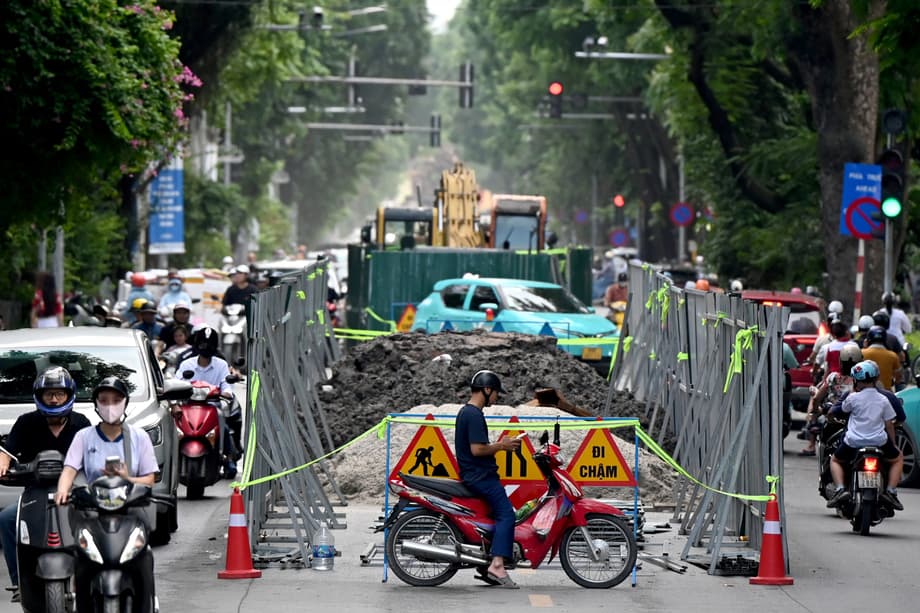
Ho Chi Minh City is no longer defined only by the rivers of motorcycles that once flooded its streets. Today, cyan colored electric taxis glide past glass fronted coffee shops, luxury hotels, and flagship stores that sit almost shoulder to shoulder with plastic stool eateries where workers eat lunch for a few dollars. The shift is more than cosmetic. It signals an economy that is growing rapidly and diversifying fast.
- From Scooters to Electric Taxis: A Country on the Move
- Big Targets, Bigger Bills: The 10 Percent Growth Goal
- How Vietnam Got Here: Doi Moi and the China Plus One Dividend
- Walking a Geopolitical Tightrope
- The Trillion Dollar Question: Can Vietnam Pay for It?
- The Supply Side Squeeze: Workers, Power, and Talent
- Consumers: Aspirational, Cautious, and Digital First
- Can the Boom Last? The Growth vs. Stability Trade Off
- Key Points
Vietnam has become one of the most talked about emerging markets in Asia. In 2025, gross domestic product expanded by 8 percent, nearly double the average for Southeast Asia. In the first quarter of 2026, growth accelerated further to 7.83 percent year on year, powered by industry, construction, and services. Exports to the United States surged 24.2 percent to $33.9 billion, while total exports reached $122.93 billion. The economy has crossed a symbolic threshold: the World Bank reclassified Vietnam as an upper middle income country on July 1, 2026, after gross national income per capita rose to $4,970 from $4,490 in 2024.
Michael Piro, co-CEO of Indochina Capital and an investor in industrial real estate, has seen the transformation up close.
“You license a project in six months, you build it in 12. It is so easy. I have never seen, in my 20-year career, an opportunity like this.”
The optimism has spread to financial markets. The VN-Index has risen sharply, and in September 2026 FTSE Russell will upgrade Vietnam to secondary emerging market status, potentially unlocking billions of dollars in passive fund flows. Yet the same day the World Bank raised the income flag, MSCI left Vietnam off its upgrade watch list, signaling that capital market access remains a work in progress.
Big Targets, Bigger Bills: The 10 Percent Growth Goal
Hanoi is not satisfied with 8 percent. The government wants the economy to grow by 10 percent annually by 2030 and to reach high income status by 2045. That would require gross national income per capita to nearly triple from around $4,500 to $14,000, a leap only 27 economies have managed since 1990, according to the World Bank.
The political leadership has framed the goal as both an economic and a political imperative. Resolution 68, the most consequential reform package of the current period, elevates the private sector from merely “important” to the “most important driving force” of the economy. It honors entrepreneurs as “new warriors on the economic front” and calls for 2 million private enterprises by 2030, double the current number, plus 20 large globally competitive private companies modeled on South Korea’s chaebol.
Behind the targets lies an infrastructure shopping list that would strain far richer countries. A $67 billion high speed railway would cut the Hanoi to Ho Chi Minh City journey from 30 hours to five. Airports are slated to receive $25 billion by 2030, including a long delayed replacement for the overcrowded Tan Son Nhat International Airport. Viettel, a telecoms conglomerate owned by the military, broke ground in January on Vietnam’s first semiconductor fabrication plant, with plans to produce 32 nanometer chips by 2027. An international financial center is proposed for both Ho Chi Minh City and Da Nang, creating a regulatory island for banks and investors to access global capital.
The plan is backed by unusual political focus. General Secretary To Lam, who also became president in April 2025, now holds both of Vietnam’s most powerful posts. Yap Kwong Weng, CEO of Vietnam SuperPort, a logistics hub in the north, says the clarity helps investors.
“We are seeing a transition where leaders are being given more permanent positions, which helps make policy formulation and execution more secure. For a business like ours, especially from an investor perspective, political stability and consistent policy implementation are extremely important.”
How Vietnam Got Here: Doi Moi and the China Plus One Dividend
Modern Vietnam’s economic story began with a crisis. After reunification in 1976, the Communist Party built a centrally planned economy with nationalized firms and collective farms. By the mid-1980s, hyperinflation and collapsing Soviet aid forced a rethink. In 1986, General Secretary Nguyen Van Linh launched Doi Moi, or renovation, allowing private ownership, foreign investment, and a stock market. The United States lifted its trade embargo in 1994, and Vietnam joined the World Trade Organization in 2007.
Chris Freund, founder of Mekong Capital, remembers the early days as a frontier in every sense. “The private sector was not really investable at that point,” he says. “The people you partnered with had no personal stake in the long term success of the business.” By the mid-2000s, the mood had shifted. “There was a pervasive sense of optimism around the WTO,” recalls Piro. “Back then, the whole market was in its infancy.”
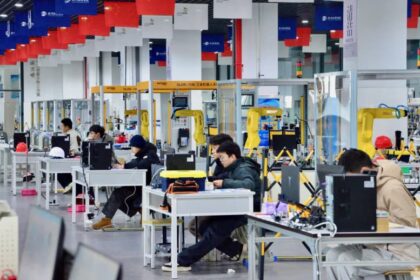
Since then, Vietnam has become the biggest winner of the “China plus one” strategy, in which multinationals move part of their supply chain out of China to avoid tariffs or build resilience. Samsung, Apple, Nintendo, and a host of other foreign companies have invested billions in Vietnamese factories producing laptops, televisions, headphones, and game consoles. Roughly 80 percent of Vietnam’s exports now come from foreign direct investment.
Yet the boom has a hidden weakness. Much of the manufacturing is owned by foreign firms, and many suppliers are backed by Chinese money. Alberto Vettoretti, a top ASEAN executive for Ascentium, notes that Chinese investors, including those from Hong Kong, mainland China, and Taiwan, are number one in project volume. At Indochina Capital’s industrial parks, around 70 percent of tenants are mainland Chinese manufacturers and another 20 percent are Taiwanese.
That means the export success does not automatically translate into broad domestic wealth. Piro is blunt:
“Much of it is not creating wealth for Vietnamese people. It is foreign owned businesses conducting foreign business, so it is not the core engine of what is driving wealth for ordinary Vietnamese.”
The domestic private sector also remains small. About 97 percent of registered firms are micro or small enterprises, and medium sized companies are rare, a gap analysts call the “missing middle.” Without a stronger homegrown corporate base, Vietnam risks remaining an assembly hub rather than a creator of high value goods.
Walking a Geopolitical Tightrope
Vietnam has long prided itself on “bamboo diplomacy,” a phrase coined by former General Secretary Nguyen Phu Trong to describe a foreign policy with strong roots, a sturdy trunk, and flexible branches. The metaphor captures Hanoi’s ability to maintain warm ties with Washington, Beijing, and Moscow at the same time.
In March 2026, then Prime Minister Pham Minh Chinh traveled to Moscow to secure support for nuclear power plants and railways. A month later, To Lam made China his first foreign trip after becoming president, returning with rail and aircraft deals. The United States remains Vietnam’s most important customer, buying more than $190 billion of Vietnamese goods each year. In October 2025, Washington agreed to impose a 20 percent tariff on Vietnamese goods, far below the 46 percent threatened on “Liberation Day” in April 2025 and roughly in line with other ASEAN economies.
The truce is fragile. The same agreement includes a 40 percent tariff on goods deemed to have been transshipped from China, a provision that could hit products assembled in Vietnam from Chinese components. The Office of the United States Trade Representative has also launched Section 301 investigations into Vietnam, accusing it of industrial overcapacity and weak intellectual property protection. If the United States and China force countries to choose sides in a deeper decoupling, bamboo may snap under pressure.
“Vietnam has done quite a lot of things right, no matter how you look at it,” says Alberto Vettoretti. “The question is whether it can keep all sides happy when the geopolitical temperature rises.”
The Trillion Dollar Question: Can Vietnam Pay for It?
Ambitious infrastructure plans require ambitious financing. Most outside analysts estimate Vietnam needs $160 billion in infrastructure investment by 2030. Jens Lottner, CEO of Techcombank, one of Vietnam’s largest private banks, puts the financing gap at $200 billion, on top of total investment needs of $1.1 trillion.
The local banking system simply cannot carry the load alone. “There is no way all these infrastructure investments can be financed by the local banking systems,” Lottner says. “Vietnam’s capacity to generate deposits just is not big enough.” The country will need foreign capital, but institutional investors remain cautious about a market with capital controls, limited exit options, and a still developing financial infrastructure.
Capital market access is the clearest example of the gap between ambition and readiness. The World Bank upgrade recognizes economic growth, but MSCI still classifies Vietnam as a frontier market, not an emerging one. In its June 2026 review, MSCI cited foreign ownership limits, unequal rights for foreign investors, foreign exchange rules, settlement and clearing procedures, disclosure, securities lending, and short selling as unresolved issues. The VN-Index has climbed more than 35 percent over the past 12 months, but the rally has been concentrated in a handful of large cap stocks, including Vingroup linked names. Excluding four Vingroup related stocks, the index would be lower than at the end of 2025.
The proposed international financial center in Ho Chi Minh City and Da Nang is meant to address some of these constraints, but the project is in its early stages and few executives fully understand how it will operate. The government is also counting on public private partnerships. The 2026-2030 plan calls for public investment to nearly triple compared with the previous five years, with stronger partnerships to bring in private money. Yet the World Bank warns that public resources alone will not be enough and that the focus must shift from faster disbursement to higher impact through better project selection, stronger preparation, and efficient procurement.
“It is not difficult to get money into Vietnam,” Piro says. “It is getting money out.”
The Supply Side Squeeze: Workers, Power, and Talent
Even if the money is found, Vietnam may not have enough of the right inputs to put it to work. The construction and manufacturing boom is already causing labor shortages and pushing wages higher across the country. Low value manufacturing, such as garments, is already drifting to cheaper neighbors like Cambodia and Bangladesh. Electronics suppliers that want to relocate near Samsung sometimes find they cannot afford the labor costs or find enough workers.
Demographics make the problem harder. Vietnam became an aging society in 2015, and the United Nations projects that more than a quarter of the population will be over 60 by 2050, similar to Germany or Hong Kong today. That gives Hanoi a narrow window to build wealth before the workforce shrinks.
“Time really is our scarcest resource,” Lottner says. Once a population ages, sustained high growth becomes much harder.
Energy is another constraint. Vietnam’s power grid already suffers from rolling outages, especially in the north. After the outbreak of hostilities in the Middle East, domestic fuel prices jumped. Inflation reached 5.8 percent, breaking through the central bank’s ceiling and raising the prospect of interest rate hikes that could slow growth. Most electricity still comes from fossil fuels, and the renewable build out will take years to reach targets. That threatens Vietnam’s pitch to chipmakers, data center operators, and high end manufacturers, all of whom need reliable, competitively priced power.
Then there is talent. Vietnamese factories often lag Chinese or Korean counterparts in efficiency. Freund identifies management as the number one issue. “There is still a shortage of really great management talent,” he says. “Good companies are able to attract and retain people. For an average company, however, it is a real struggle.” Without a deeper pool of executives who can run businesses at global scale, moving up the value chain will remain difficult.
“When we ask clients what level of efficiency they can get out of Vietnamese factories versus Chinese or Korean factories, Vietnam, with some exceptions, is still lower,” Vettoretti says. “So the question becomes: How do you drive more efficiency? How do you provide the training needed to reach that level?”
Consumers: Aspirational, Cautious, and Digital First
Domestic demand is one of Vietnam’s brightest spots. The middle class is projected to reach 26 percent of the population by 2026, up from 13 percent in 2023, adding more than 25 million consumers with rising disposable incomes. Retail sales grew 12.1 percent year on year between January and April 2026, and urban incomes are rising faster than rural ones. Vietnamese consumers spend heavily on education, healthcare, housing, and increasingly on travel and premium brands.
Yet the mood is not entirely exuberant. Inflation, household debt, and global uncertainty have made shoppers more cautious. Consumers are cutting non essential purchases, saving more, and hunting for value online. NielsenIQ data shows 72 percent of Vietnamese consumers prefer online shopping, while 26 percent are reducing unnecessary expenses. The rise of e-commerce is reshaping retail, but it also reflects pressure on household budgets.
Melissa Cyrill, a consumer research analyst, says the consumer market is maturing fast.
“Vietnam’s pursuit of developed economy status by 2050 is reshaping its consumer landscape. A fast-expanding middle class is redefining spending priorities and expectations, creating vast opportunities for companies that deliver high quality products and services aligned with their evolving needs.”
For Vietnam, the challenge is to turn consumer confidence into durable domestic demand without relying on credit fueled spending that could destabilize the economy.
Can the Boom Last? The Growth vs. Stability Trade Off
The gap between official ambition and independent forecasts is wide. The World Bank expects growth of 6.8 percent in 2026, the OECD forecasts 6.2 percent, and HSBC predicts 6.5 percent. The Asian Development Bank, the International Monetary Fund, and the ASEAN+3 Macroeconomic Research Office are more optimistic, with forecasts around 7 percent. Domestic institutions such as Dragon Capital are more bullish, projecting 10 percent, but even their models require credit growth of 16 to 20 percent, fiscal deficits of 4 to 5 percent of GDP, and export growth above 12 percent annually.
That recipe creates a dilemma. High credit, high spending, and high investment are the same ingredients that can overheat the economy, inflate asset bubbles, and reignite bad debt. Between 2007 and 2010, bank lending surged by more than 30 percent a year, peaking above 50 percent in 2007. The result was inflation of more than 18 percent in 2008 and 2011 and a mountain of non performing loans. The State Bank of Vietnam is trying to avoid a repeat, targeting 15 percent credit growth in 2026 after 19 percent in 2025, even as the government pushes for faster expansion.
Mariam J. Sherman, World Bank Division Director for Vietnam, Cambodia, and Laos, says the next chapter will be defined by the quality of growth, not only the speed.
“While the drivers that helped Vietnam reach upper middle income status remain important, sustaining future growth will increasingly depend on productivity, innovation, stronger domestic enterprises, and the ability to generate greater value across the economy.”
She points to a widening gap between foreign invested and domestic firms, a financial sector still dominated by banks, and the need for infrastructure financing beyond public budgets. The 2045 vision is possible, she argues, but it requires coordinated reforms across every level of government and a steady commitment to adapt.
Key Points
- Vietnam grew 8 percent in 2025 and 7.83 percent in the first quarter of 2026, and the World Bank reclassified it as an upper middle income country in July 2026.
- Hanoi aims for 10 percent annual growth by 2030 and high income status by 2045, backed by Resolution 68’s push for private enterprise and massive infrastructure spending.
- Foreign direct investment dominates exports, especially electronics, but domestic firms remain small and the country faces a “missing middle” of medium sized companies.
- The United States agreed to a 20 percent tariff, but a 40 percent transshipment penalty and Section 301 investigations leave Vietnam exposed to trade policy shocks.
- Vietnam needs an estimated $160 billion to $200 billion in infrastructure financing by 2030, but capital controls, shallow capital markets, and foreign investor access limits complicate funding.
- Labor shortages, rapid aging, energy constraints, and a shortage of management talent threaten Vietnam’s ability to move up the value chain.
- Domestic consumption is expanding with a fast growing middle class, though inflation and household debt are making consumers more cautious.
- Independent forecasts for 2026 cluster between 6.2 and 7 percent, well below the official 10 percent target, highlighting the tension between growth and macroeconomic stability.