A 138 Year Legacy Faces Its Greatest Challenge
Yoshiko Kodama never imagined that a conflict thousands of kilometers away would threaten the institution the Kodama family has preserved for nearly a century and a half. For 138 years, the family has operated a traditional public bathhouse in the mountainous city of Nagano, Japan. The business has withstood multiple world wars, the reign of five emperors, and three devastating earthquakes. Today, however, the operator who is 87 years old confronts a crisis that no previous generation faced: soaring oil prices driven by the war in Iran. Heating the water that flows through her faucets requires as much as 2,000 liters of heavy oil each month. The price spike has left Kodama uncertain whether she can keep open a business that was already struggling to survive.
Kodama is not alone. Across Japan, operators of sento, the traditional public bathhouses that have served as neighborhood social anchors for centuries, are facing an existential threat from energy costs that have spiraled out of control since the conflict erupted. What happens in these small, steam filled rooms reflects a much larger story about global supply chains, energy vulnerability, and the survival of community institutions in an age of geopolitical turbulence.
The conflict, which began with United States and Israeli airstrikes against Iran, has triggered a de facto blockade of the Strait of Hormuz, a narrow waterway through which much of the oil flowing around the world passes. Japan relies on the Middle East for approximately 90 percent of its oil supplies. When the strait became effectively closed, the shock waves traveled quickly across the globe, driving crude prices to their highest levels since 2008. In March, the price of Arab light crude from Saudi Arabia, which accounts for more than half of Japanese imports, soared to $126.28 per barrel. That represents an 84 percent increase from the previous month and has strained industries from steel manufacturing to agriculture.
The Unique Pressures Facing Traditional Bathhouses
While major corporations can sometimes absorb price shocks or pivot to alternative energy sources, sento operators occupy a far more precarious position. These businesses run by families typically operate on thin margins, serving local residents for a few dollars per visit. Many are decades or even generations old, with aging infrastructure and declining customer bases that long predate the current crisis.
The business model itself has become increasingly fragile. The rise of private baths in modern homes and competition from upscale spas have steadily eroded demand. A chronic shortage of young successors willing to take over operations requiring much labor has accelerated the industry decline. According to industry data, the number of sento has dropped dramatically over the past several decades. Those that remain often serve elderly residents who lack bathing facilities at home or who come for the social connection these spaces provide.
Now, fuel costs have added an unbearable weight. Heavy oil is the primary fuel used to heat the large volumes of water that sento require. Some operators report that fuel expenses have increased by more than 600,000 yen annually since the conflict began. In Shizuoka Prefecture, the regulatory upper limit on bath fees is set at 520 yen, yet operators say they need to charge at least 650 yen just to reflect the surge in fuel expenses. Because local governments cap prices to keep public bathing accessible, owners cannot legally raise admission enough to cover costs. They are forced to swallow losses with each customer who walks through the door. The regulations were designed to protect residents with low incomes, but during a global supply crisis they have become a financial trap for proprietors.
Voices From the Edge
The human toll of this economic squeeze is visible in communities from northern Honshu to central Japan. In Aichi Prefecture, Ikesu Onsen in Tsushima has been forced to delay its opening time by one hour since late March because of unstable fuel oil supplies. Monthly deliveries have been halved from about one tonne, causing daily attendance to plummet to around ten customers at the facility, which has operated for 97 years.
Atsuko Matsui, the operator who is 57 years old, described the situation as devastating.
“It is a major blow. If we are told by the supplier ‘this amount at this price’, we have no choice but to accept it.”
That sentiment of helplessness echoes across the industry. In Aomori Prefecture, Katsuragi Onsen, which opened in 1968 and regularly welcomed more than 200 people a day, posted a notice announcing it will close permanently on May 31. The message, shared on social media, explained that the burden of fuel costs and equipment maintenance had simply become too heavy. The operator explained that the price of heavy oil has risen every week, making continuation impossible.
In Gifu Prefecture, Ikeda Onsen Honkan, which is run by the town government, suspended operations on April 3 after struggling to secure enough heavy oil to heat its waters. The facility requires about 1,400 liters of heavy oil daily to raise the spring water temperature from around 30 degrees Celsius. Historically, the town procured fuel through public tenders each month, but many bidders withdrew from the latest round because of rising tensions and supply uncertainty. The town now has no clear solution for securing oil next month, and the reopening date remains uncertain.
For regular customers, these closures represent more than an inconvenience. One male patron in his 80s who visited Ikeda Onsen about twice a week expressed shock at the closure. He noted that he usually chats with other regulars in the hot spring. Shintaro Katsuno of the Ikeda Town planning division acknowledged the difficulty of the decision.
“We made the decision to close with a heavy heart. We hope to resume operations as soon as possible.”
The Energy Crisis Hits Beyond Bathhouses
The crisis at Japanese bathhouses illustrates a broader national vulnerability. The archipelago imports over 90 percent of its crude oil, with the vast majority flowing through the Strait of Hormuz. When that passage closed, Japanese energy security fell apart with remarkable speed. The effects have rippled through the entire economy.
JFE Steel, the second largest steelmaker in the country, shut down one of five power generation facilities in Hiroshima Prefecture on March 19 due to heavy oil shortages. While the company reported that steelmaking operations continued normally, the shutdown signaled how deeply the supply crisis has cut. Petrochemical firms have reduced output, and Mitsubishi Chemical announced price increases of at least 70 yen per kilogram for products used in construction and automobiles. Refinery runs across Japan dropped below 70 percent by the middle of March, the lowest level in months.
The government has responded by tapping emergency oil stockpiles for a record release and introducing gasoline subsidies to cushion the blow for consumers. Prices at the pump still spiked to more than 190 yen per liter. The budget for these subsidies is expected to run out by the end of May, raising questions about what happens when that support expires. Officials have discussed purchasing oil from sources outside the Gulf region, including the United States, and increasing power generation using coal to bridge the gap.
A Cultural Institution at Risk
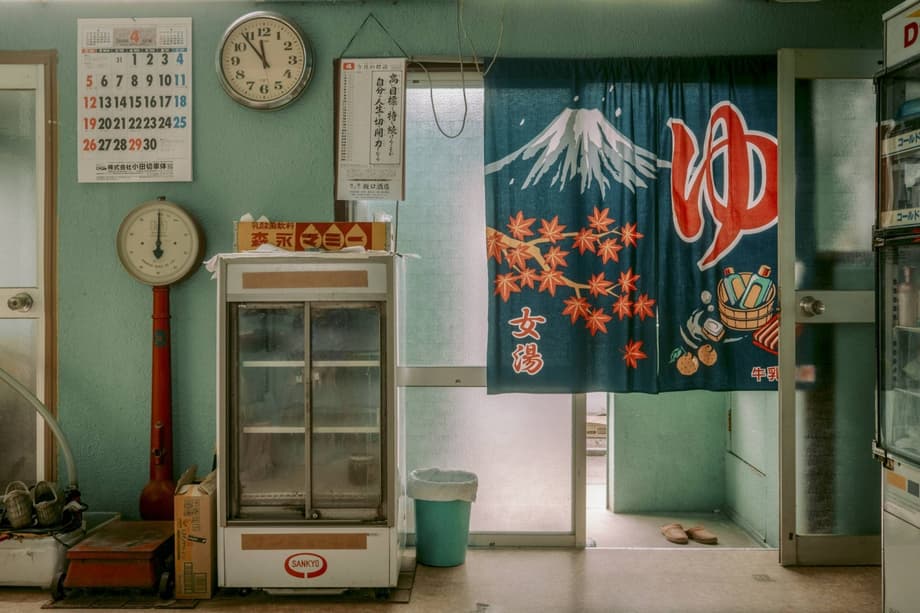
To understand why the loss of sento matters, one must look beyond economics. For nearly a millennium, these public bathhouses have functioned as vital social anchors in Japanese communities. Visitors enter through indigo curtains adorned with the character “yu,” meaning hot water. Inside, they scrub down before soaking in shared tubs, engaging in the kind of casual neighborhood conversation that has largely disappeared from modern urban life.
Sento remain particularly important for elderly residents who live alone or in older homes without modern bathing facilities. For this demographic, the local bathhouse is not merely a place to get clean. It is a lifeline that prevents isolation, maintains physical health, and preserves a sense of community belonging. As the Japanese population ages and social isolation becomes an increasingly recognized public health concern, the role of these institutions has only grown more critical.
Yet the current crisis threatens to accelerate their disappearance. Each closure erodes the social fabric of a neighborhood, removing a gathering place that cannot be replaced by a private home bath or a commercial spa. The steam rooms and communal tubs that have survived wars, earthquakes, and generational change may finally succumb to the pressure of global oil markets. Neighborhood elders who once gathered daily now face the prospect of losing one of their last opportunities for regular social interaction.
Searching for Solutions
Government intervention has so far focused on macroeconomic stabilization rather than relief aimed at specific industries. While subsidies and strategic reserve releases have provided temporary breathing room, small operators like sento owners say the assistance does not reach them quickly enough or directly enough to matter. Many are running out of time.
The crisis has also reignited debate over Japanese energy strategy for the long term. Ryosuke Tsugaru, a senior managing executive officer at JERA, the top power generator in Japan, told Reuters that the supply crunch may revive support for nuclear power. Tokyo Electric Power Company restarted its first reactor following the 2011 Fukushima Daiichi accident just weeks before the current crisis intensified, a move that now appears prescient to some energy planners. Whether nuclear power can offer relief in the immediate future for small businesses dependent on heavy oil remains doubtful, however.
For now, operators are left to improvise. Some have reduced operating hours or limited the number of customers they can serve. Others have appealed to local communities for support while waiting for fuel prices to stabilize. Kodama in Nagano continues to heat her water and open her doors, though each day brings new uncertainty. The war in Iran rages on far from her mountain city, yet its effects flow through her pipes with every liter of fuel she burns.
Key Points
- The Iran war and subsequent Strait of Hormuz blockade have caused oil prices to surge, threatening traditional Japanese sento bathhouses with closure.
- Japan imports roughly 90 percent of its oil from the Middle East, making the economy highly vulnerable to disruptions in the region.
- Many sento operators cannot raise admission prices due to local government rate caps, forcing them to absorb unsustainable fuel cost increases.
- Multiple bathhouses across Japan, including facilities in Aomori, Aichi, and Gifu prefectures, have already closed or announced imminent shutdowns.
- Beyond economics, sento serve as critical social hubs for elderly and isolated residents, making their loss a community tragedy as well as a business failure.
- The Japanese government has released emergency oil reserves and introduced fuel subsidies, though the budget for such measures is expected to deplete by the end of May.