A Strategic Outpost at the Roof of the World
In March 2026, China announced the establishment of Cenling County in the Xinjiang Uygur Autonomous Region, carving out this new administrative unit from Taxkorgan Tajik Autonomous County. Located near the Karakoram mountain range, Cenling sits at the confluence of three critical borders: China, Afghanistan, and the disputed region of Pakistan occupied Kashmir. This move represents the third such administrative creation in Xinjiang within just over a year, following the establishment of He’an and Hekang counties in December 2024. While officials in Beijing frame the decision as routine governance consolidation, regional analysts recognize it as a significant geopolitical signal with far reaching implications for security, trade, and regional power dynamics.
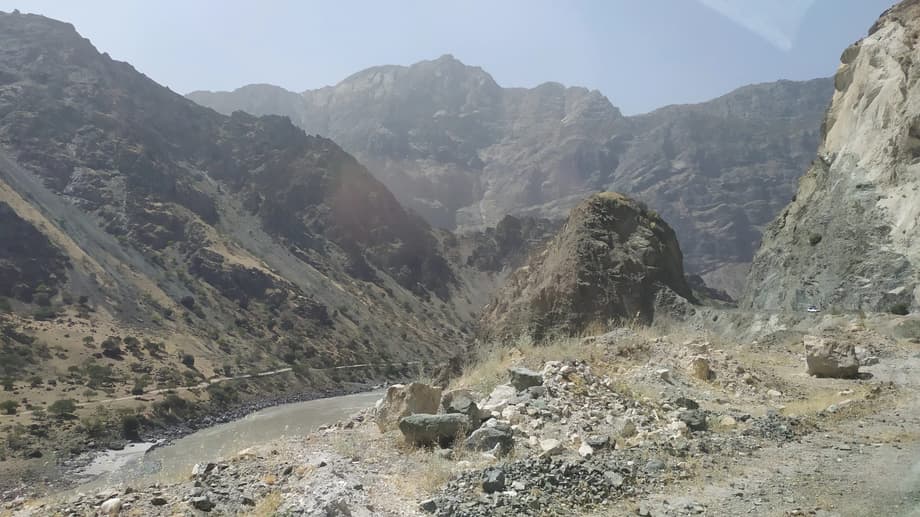
The new county falls under the jurisdiction of Kashgar prefecture, a historic Silk Road hub that now serves as the starting point for the controversial $60 billion China Pakistan Economic Corridor. Cenling’s proximity to the Wakhan Corridor, a narrow 74 kilometer strip of Afghan territory that touches China’s westernmost point, makes it particularly significant. This rugged high altitude passage has remained largely dormant as a trade route for nearly a century, yet it represents the only direct land border between Afghanistan and China. The timing and location of this administrative change suggest Beijing is preparing for a potential transformation in how Central Asia connects to South Asia, with profound consequences for regional stability and economic integration.
Administrative Consolidation on China’s Western Frontier
The establishment of Cenling County fits into a broader pattern of Beijing consolidating control over its frontier regions. In December 2024, Chinese authorities created He’an County and Hekang County in Xinjiang, administrative units that either border or encompass portions of the disputed Aksai Chin region with India. These successive moves indicate a systematic effort to strengthen governance structures in areas that have historically been treated as geopolitical peripheries but are now increasingly central to China’s strategic calculations.
Lin Minwang, a professor at the Institute of International Studies at Shanghai based Fudan University, explained the broader significance of these administrative changes.
At a broader level, the decision signals China’s emphasis on its borderlands.
He noted that the move reflects a deeper recognition of the strategic importance of this region. The creation of new counties serves multiple functions: establishing permanent governance infrastructure, facilitating resource allocation for development projects, and creating administrative frameworks capable of managing cross border trade and security coordination.
Yun Sun, a senior fellow at the Stimson Centre in Washington, offered additional perspective on the governance implications. She described the new county as representing a drive toward a stronger local government structure for effective governance and control.
It helps to strengthen the stabilisation efforts by the government in the frontier region, which is traditionally more subject to ethnic turbulence and potential infiltration of foreign militants from Central Asia.
By embedding state institutions deeper into these remote border areas, Beijing aims to extend its administrative reach into territories that have historically operated with significant autonomy.
Reviving the Wakhan Road
The concept of reconnecting Afghanistan and China through the Wakhan Corridor has circulated among policymakers for decades, yet has remained unrealized due to security concerns and the challenging topography of the Pamir Mountains. In 2009, the Afghan government, reportedly at the behest of the United States, requested permission from Beijing to construct a road through this corridor to create a safer trade route bypassing the volatile Pakistan Afghanistan border. Although Chinese officials agreed to conduct a feasibility study at that time, the project stalled amid concerns about regional instability.
Since the Taliban returned to power in Afghanistan in 2021, the regime has elevated the Wakhan Road to national priority status. Afghan officials in Badakhshan province, where the corridor is situated, have publicly stated that China’s ambassador assured them the Chinese government will approve the road project. The Taliban have promoted this potential route as a pathway connecting China with the Middle East, which could generate significant economic benefits for the landlocked nation. If completed, the road would mark the first direct land connection between Afghanistan and China in nearly a century, fundamentally altering regional trade patterns.
The establishment of Cenling County appears to lay the political and logistical groundwork for this long discussed infrastructure project. By formalizing governance structures in this sensitive border region, China is positioning itself to regulate cross border movement, manage security risks, and support future construction activities. This represents a shift from years of limited moves beyond rhetoric, suggesting Beijing is now taking the project seriously as part of its broader Belt and Road Initiative. The county would serve as an administrative hub for managing the flow of goods and people across a border that has historically seen minimal official traffic.
Counterterrorism and Militant Threats
While economic opportunities drive much of the interest in the Wakhan Road, security concerns dominate Beijing’s risk calculations. Chinese officials have consistently expressed worries about the East Turkestan Islamic Movement and other militant groups using the Wakhan Corridor as a route to enter Xinjiang from Afghanistan. The rugged, high altitude terrain of the corridor offers numerous hiding places and infiltration routes that challenge even sophisticated surveillance systems.
Islamic State Khorasan Province and various drug trafficking networks operating in Afghanistan pose additional threats to any infrastructure development in the region. Attacks on Chinese targets in Afghanistan, Tajikistan, and Pakistan have demonstrated the vulnerability of Belt and Road projects to asymmetric threats. Although Afghan authorities have made significant achievements in curbing opium cultivation, shifts in cultivation toward Badakhshan province raise concerns about how increased connectivity could enable illicit trafficking rather than legitimate commerce.
Beijing has consistently underscored that security is the foundation and prerequisite of development. Chinese calls for joint patrols and expanded counterterrorism cooperation in the Wakhan Corridor reflect this position. For the Wakhan Road to become viable, Afghanistan will need to demonstrate sustained capacity to address militant and criminal threats while ensuring the protection of foreign investments. Regional organizations such as the Shanghai Cooperation Organization and the Collective Security Treaty Organization provide frameworks for counterterrorism cooperation, though the Moscow Format Consultations remain the only regular institutionalized regional mechanism that consistently includes the Taliban government.
Economic Integration and Regional Connectivity
Beyond immediate security concerns, the establishment of Cenling County signals China’s long term vision for Central Asia as a hub of international engagement and economic growth. This vision aligns with broader regional trends toward connectivity and cooperation. In March 2025, Kyrgyzstan, Uzbekistan, and Tajikistan finalized border delimitation agreements and elevated bilateral relationships, reducing barriers to regional collaboration that have persisted since the Soviet collapse.
Uzbekistan’s President Shavket Mirziyoyev has been particularly vocal about Afghanistan’s potential role in regional development.
For sustainable development in Central Asia, it is important to restore Afghanistan’s internal transport links and expand its transit capabilities.
The Trans Afghan railway, TAPI gas pipeline extending 25 kilometers into Afghan territory with plans to reach Herat by end of 2026, and CASA 1000 energy project operational by summer 2027 all point toward a gradual shift in Afghanistan’s status from a barrier to a transit node within the region.
Trade between Afghanistan and Central Asian states reached approximately $2.7 billion in 2025, with Afghan ambitions to expand this to $10 billion within three to four years. However, severe trade imbalances persist, underscoring Afghanistan’s need for diversified export routes and markets. For example, Afghanistan’s trade imbalance with Kazakhstan stands at approximately 10 to 1, with only $55 million of the $565 million trade volume being exports from Afghanistan. A direct road link to China through the Wakhan Corridor would provide Afghanistan with access to Chinese markets while offering Beijing an alternative overland route that bypasses potential choke points in Pakistan and maritime vulnerabilities in the Persian Gulf and Red Sea.
Regional Tensions and Diplomatic Reactions
The administrative reorganization in Xinjiang has not occurred without controversy. India lodged formal protests with China following the creation of He’an and Hekang counties in 2024, asserting that parts of their jurisdiction fall within India’s Union Territory of Ladakh. He’an County includes portions of the disputed Aksai Chin plateau, which has remained under Chinese control since the 1962 war between China and India and continues to serve as a focal point of border disputes between the nuclear armed neighbors.
Cenling County’s proximity to Pakistan occupied Kashmir adds another layer of complexity to regional diplomacy. The China Pakistan Economic Corridor, which passes through this disputed territory, has drawn consistent opposition from India. By establishing new administrative units near these contested areas, Beijing is effectively consolidating its territorial claims while creating institutional frameworks for managing future development projects that India views as violations of its sovereignty.
Despite these tensions, Central Asian states have generally welcomed increased Chinese engagement with Afghanistan. The regional consensus recognizes that sustainable security and development remain closely tied to stability in Afghanistan. Recent trilateral initiatives involving Uzbekistan, Kyrgyzstan, and Afghanistan to establish joint trade and transit working groups demonstrate efforts to integrate Afghanistan into regional economic networks regardless of the Taliban’s unrecognized diplomatic status.
Challenges on the Path to Connectivity
Significant obstacles remain before the Wakhan Road can transition from ambitious planning to operational reality. The corridor’s extreme elevation, harsh weather conditions, and remote location present formidable engineering challenges that would require substantial investment and technical expertise. More critically, the security situation in Afghanistan remains volatile despite Taliban assertions of control.
The viability of any cross border infrastructure depends heavily on robust coordination between Afghanistan, China, Pakistan, and other Central Asian states. Without sustained security cooperation, the Wakhan Road risks becoming a conduit for instability rather than development. Militant groups could target construction crews, disrupt supply chains, or utilize the route for moving weapons and personnel across borders.
China’s cautious approach reflects these risks. While the establishment of Cenling County indicates strategic intent, no formal agreement for the Wakhan Road has been announced, and the high elevation road remains years from completion. Beijing appears to be pursuing incremental confidence building measures, using administrative consolidation as a signal of commitment while waiting for security conditions to improve. This approach balances China’s desire for economic expansion with its overriding priority of preventing instability from spilling into Xinjiang.
Key Points
- China established Cenling County in Xinjiang in March 2026, the third new county in the region in just over a year, following He’an and Hekang counties created in December 2024.
- The county sits near the Wakhan Corridor, the only direct land border between Afghanistan and China, and is administered by Kashgar prefecture, a historic Silk Road hub.
- Beijing frames the move as governance consolidation, but analysts see it as preparation for the long discussed Wakhan Road, which would reconnect Afghanistan and China for the first time in nearly a century.
- Security concerns drive much of the caution, with Chinese officials worried about Uyghur militants and groups like Islamic State Khorasan Province using the corridor to enter Xinjiang.
- The establishment aligns with the Belt and Road Initiative and reflects growing Central Asian regional integration, including border settlements between Kyrgyzstan, Uzbekistan, and Tajikistan in March 2025.
- India has protested similar administrative changes, claiming portions of the new counties fall within its territory in Ladakh, particularly the disputed Aksai Chin region.
- Trade between Afghanistan and Central Asia reached $2.7 billion in 2025, with potential to grow significantly if new transport links materialize, though security risks remain the primary constraint.