Cultural Cleansing in Kutkai
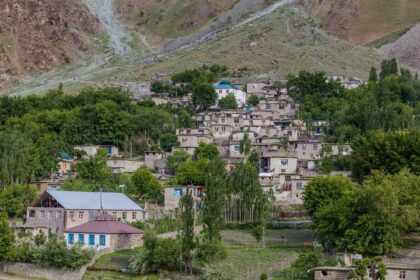
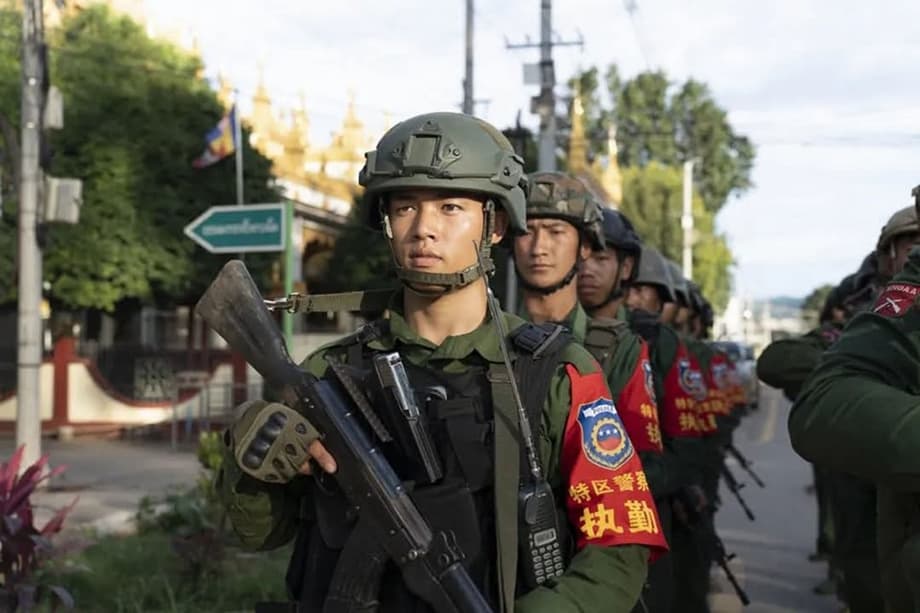
In the mountain villages of northern Shan State’s Kutkai Township, a quiet but systematic cultural transformation is underway that locals describe as nothing less than the erasure of their ethnic identity. Over the past several weeks, the Myanmar National Democratic Alliance Army (MNDAA), a Chinese-speaking armed group that seized this strategic town in March, has launched a visible campaign to replace Ta’ang cultural markers with Chinese symbols.
Residents report that MNDAA troops have whitewashed village signs in more than a dozen communities, methodically removing Ta’ang language text and the distinctive Ta’ang flag logos that have marked these settlements for generations. In their place, the armed group has installed new signs written only in Chinese and Burmese characters, effectively erasing the indigenous language from public spaces.
The assault on Ta’ang identity extends beyond signage. In early April, MNDAA officials summoned village elders from over 17 Ta’ang-majority communities and issued strict prohibitions against displaying the Ta’ang national flag or using Ta’ang language in any official capacity. Educational institutions have also come under pressure, with the group reportedly suspending operations at more than 300 schools administered by the Ta’ang Land Education Council. Sources indicate the MNDAA is now preparing to implement compulsory Chinese-language instruction in village classrooms.
A Ta’ang resident of Kutkai, speaking anonymously due to fears of retaliation, conveyed the helplessness felt by local communities. “The MNDAA are forcing us to use Chinese without even consulting village committees. They act like they own the villages now. It is painful to see our traditions erased, but we have no power to resist.”
The transformation of Kutkai represents the latest front in a broader pattern of cultural change sweeping across northern Shan State’s border regions. Located along the Mandalay-Muse highway (AH14), one of Myanmar’s most critical trade arteries linking the interior to China’s Yunnan Province, Kutkai has become a focal point for both military and cultural contestation. Its strategic location explains why control of the township has become so hotly disputed between ethnic armed groups vying for dominance over lucrative border trade routes.
From Brotherhood to Bitter Rivals
The current cultural tensions in Kutkai emerge against a backdrop of shattered military alliances. The MNDAA and the Ta’ang National Liberation Army (TNLA) were once close partners within the Three Brotherhood Alliance, a military coalition that launched Operation 1027 in late 2023. This coordinated offensive seized vast swaths of northern Shan State from Myanmar’s military junta, including the capture of 23 towns and over 400 military bases within two months.
However, the alliance has fractured dramatically over territorial disputes. The TNLA initially administered Kutkai after capturing it during Operation 1027 in January 2024, controlling the western portion of the town while MNDAA forces maintained positions on the eastern side of the main Union Highway. Relations deteriorated steadily over the past two years amid sporadic disputes over administration and resource control.
The situation reached a breaking point in mid-February when TNLA troops removed MNDAA-installed CCTV cameras along the highway and stormed an MNDAA office. By late February, both sides had deployed hundreds of fighters around key villages, with the MNDAA digging trenches and forward positions while the TNLA placed its forces on full defensive readiness.
In March 2026, the MNDAA launched a successful assault on Kutkai, ejecting the TNLA from the town and seizing complete control. The attack came just one day after Chinese special envoy Deng Xijun met with junta foreign minister Than Swe in Naypyitaw to discuss border cooperation, highlighting the complex diplomatic alignments at play. China, which had previously pressured both groups to halt offensives against the junta, remained silent as the MNDAA captured the Ta’ang-majority town.
Following the seizure, TNLA spokeswoman Lway Yyay Oo urged the MNDAA to respect Ta’ang communities, identity, and culture, and to allow TNLA troops freedom of movement in Ta’ang areas. The appeal has gone largely unheeded as the MNDAA consolidates its administrative grip.
A Pattern of Sinicization
The cultural transformation underway in Kutkai mirrors a broader pattern of Sinicization already advanced in other MNDAA-controlled territories. In Hsenwi, a historic Shan town captured during Operation 1027 and now known by its Chinese name “Mupang” (木邦), residents say their community has become unrecognizable.
Hsenwi once served as the cultural heartland of the Shan saophas, the hereditary feudal rulers of the region. The town’s historic Haw, or palace, stands as a symbol of Shan aristocratic heritage. Yet under MNDAA administration since April 2025, the group has banned Shan- and English-only signage, requiring all businesses to display Chinese as the primary language. Even the entrance to the historic Haw now bears Chinese inscriptions.
Chinese entrepreneurs have flooded into the town, opening grocery stores, hardware shops, and restaurants. Vehicles bearing Chinese license plates have become a daily sight. The Chinese yuan is increasingly used in daily transactions, replacing Myanmar kyats. Local businesses have faced pressure to add Chinese-language signs, while Chinese investors reportedly rent houses and farmland at inflated prices, often enabled by the MNDAA.
If Burmanization meant forcing non-Burmans to adopt a Burman identity, Sinicization reshapes non-Chinese people into a Chinese identity. In Hsenwi today, the MNDAA is pushing Shan people toward Chinese assimilation.
Sai Wansai, a Shan political analyst, offered this assessment to Shan News, drawing a sharp distinction between decades of Burmanization policies imposed by Myanmar’s central government and the new cultural pressure emanating from the border. For decades, ethnic communities resisted assimilation into Burman culture. Now, northern Shan State faces a new form of cultural pressure that threatens to dissolve indigenous identities into a Chinese framework.
The MNDAA has also begun issuing Special Region (1) local identification cards and household registration documents, charging residents between 20,000 and 25,000 kyats per card. While these IDs allow travel into China via border gates, many residents fear the registration system could expose them to arrest in junta-controlled areas where the documents lack recognition, or make them targets for forced recruitment.
Beijing’s Strategic Silence
The cultural shifts occurring in northern Shan State unfold against a backdrop of intense Chinese diplomatic pressure. Beijing has played a decisive role in shaping the military dynamics of the region, intervening multiple times to force ethnic armed groups to cease offensives against Myanmar’s military junta.
In late 2024 and early 2025, China blocked fuel, food, and internet supplies to TNLA territory and brokered peace talks that compelled the group to sign a truce with the regime. This intervention effectively saved the junta from collapse after it lost its Northeastern Command in Lashio and dozens of towns during Operation 1027. Chinese Foreign Minister Wang Yi has made three visits to Myanmar since the 2021 coup, most recently in April 2026, conferring diplomatic legitimacy on the regime even as much of the international community maintains sanctions and isolation.
Yet Beijing has maintained complete silence regarding the MNDAA’s cultural policies in Ta’ang and Shan territories. The juxtaposition is striking: while China pressures military groups to stop fighting the junta for the sake of “border stability,” it raises no objections to the systematic replacement of indigenous languages and symbols with Chinese characters and cultural markers.
The economic motivations for this stance are substantial. The MNDAA now controls nearly all major trade corridors linking northern Shan to Yunnan Province, including the Chinshwehaw route seized during Operation 1027. China is accelerating construction of the Dali-Ruili railway, a strategic line that will eventually connect to a planned Muse-Mandalay railway, giving Beijing direct overland access to the Indian Ocean via the China-Myanmar Economic Corridor (CMEC). This 1,700-kilometer route would allow China to bypass the contested Strait of Malacca.
With MNDAA control over key nodes like Hsenwi, Kunlong, and Kutkai, the Kokang force has positioned itself as the gatekeeper for China’s Belt and Road Initiative ambitions in Myanmar. This economic influence appears to buy the MNDAA considerable leeway to pursue its cultural and administrative agenda without Chinese criticism.
Voices of Resistance
The erasure of Ta’ang identity has prompted strong condemnation from civil society organizations. The Ta’ang Civil Society Network (TCSN), representing six organizations, issued a statement condemning the MNDAA’s actions as a violation of international human rights law.
They are essentially destroying the cultural identity of an entire people. This breaches human rights and international norms. It also undermines the federal principle of peaceful coexistence among diverse ethnic groups and will only fuel further conflict. They must restore the original Ta’ang signs and symbols, and they owe the villagers an apology.
Mai Karng Hao, spokesman for the TCSN, delivered this message to The Irrawaddy, pointing to the forced nature of the changes and the lack of consultation with village committees or community consent. The suspension of Ta’ang-language education particularly stings for a community that has long struggled to preserve its linguistic heritage against decades of Burmanization policies imposed by Myanmar’s central government.
For many Ta’ang residents, the current situation represents a cruel irony. Having resisted assimilation into Burman culture for generations, they now face a new form of cultural domination from a Chinese-speaking armed group backed by a powerful neighboring state. The transformation threatens to sever younger generations from their linguistic and cultural roots, particularly as Chinese-language instruction replaces indigenous curricula.
The situation also raises alarms for the broader Shan State political landscape. The Shan State Progress Party/Shan State Army (SSPP/SSA), another major ethnic organization, has condemned what it termed “narrow nationalism and expansionism” by the MNDAA. However, with the TNLA weakened by military setbacks and diplomatic isolation following its recent decision to congratulate junta chief Min Aung Hlaing on his presidency, resistance to MNDAA expansion appears fragmented.
The Essentials
- The MNDAA has replaced Ta’ang-language village signs with Chinese characters in more than a dozen villages in Kutkai Township, northern Shan State
- The armed group seized Kutkai from its former ally, the Ta’ang National Liberation Army (TNLA), in March 2026 after a territorial dispute fractured their military alliance
- MNDAA officials have banned the Ta’ang national flag and suspended over 300 Ta’ang-run schools while preparing to introduce compulsory Chinese-language lessons
- Similar patterns of Sinicization have transformed Hsenwi (now called “Mupang”), where Chinese signage dominates, the yuan circulates widely, and historic Shan heritage sites bear Chinese inscriptions
- China has maintained diplomatic silence on the cultural erasure despite pressuring both groups to halt military offensives against Myanmar’s junta
- The MNDAA controls key trade corridors linking northern Shan to China, positioning the group as a critical partner for Beijing’s Belt and Road Initiative and access to the Indian Ocean