Ending Decades of Restraint
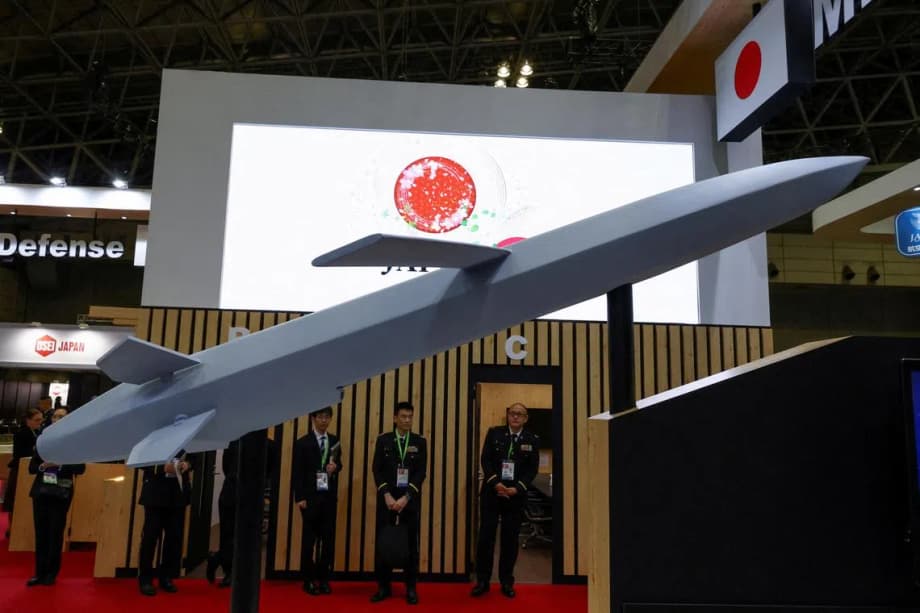
On April 21, the Japanese government approved the most significant transformation of its defense export regulations since the postwar era, eliminating long-standing prohibitions that had restricted military sales to a narrow range of nonlethal equipment for nearly half a century. The cabinet of Prime Minister Sanae Takaichi endorsed reforms that scrap the five category system limiting exports to rescue, transport, warning, surveillance and minesweeping gear, opening the pathway for Japanese manufacturers to sell lethal weapons systems including warships, missiles and fighter jets to allied nations across the world.
The revision represents a fundamental departure from the pacifist constraints that have shaped Japanese security policy since World War II. For decades, Tokyo maintained a voluntary blanket ban on lethal arms exports, a stance rooted in Article 9 of the constitution and the commitment of the country to peaceful resolution of international disputes. The new framework authorizes exports to seventeen countries holding defense equipment and technology transfer agreements with Japan, including Australia, the United States, Britain and the Philippines.
Prime Minister Takaichi emphasized that the changes respond to an increasingly challenging security environment where unilateral defense has become insufficient.
“No single country can now protect its own peace and security alone, and partner countries that support each other in terms of defence equipment are necessary.”
Chief Cabinet Secretary Minoru Kihara reinforced this position, stating that these decisions address accelerating changes in the security landscape surrounding Japan while ensuring national security and contributing to regional stability.
The policy shift arrives as conflicts in Ukraine and the Middle East strain American weapons production capabilities, creating supply gaps that Japanese defense contractors are now positioned to fill. Simultaneously, allies across Europe and Asia are actively diversifying their procurement sources amid uncertainty regarding the long term security commitments of Washington under President Donald Trump.
Under the revised guidelines, defense equipment will now be classified based on lethal capability rather than arbitrary categories, with ministers and officials assessing each proposed sale individually. While Japan retains three core principles committing to strict screening, controls on transfers to third countries and a general prohibition on sales to nations engaged in conflict, the government indicated that exceptions may be granted when deemed essential for national security.
From Pacifism to Partnership
The journey of Japan toward becoming a global arms supplier began with incremental steps away from its postwar pacifist stance. The original blanket ban on weapons exports emerged in 1976, building upon earlier restrictions established in 1967 that prohibited sales to communist countries, nations subject to United Nations arms embargoes, and countries involved in international conflicts. For decades, these constraints confined Japanese defense manufacturers to domestic production exclusively for the Japan Self Defense Forces.
In 2014, the government introduced limited exceptions allowing exports of nonlethal military equipment falling within five specific categories. This permitted the transfer of rescue helicopters, transport vehicles and minesweeping technology but maintained strict prohibitions on weapons systems designed for combat operations. The latest overhaul eliminates these categorical restrictions entirely, establishing instead a review process administered on a case by case basis by the National Security Council.
Defense equipment will now be sorted into two classifications based on lethal capability. Recipients must pledge to use equipment consistently with the United Nations Charter, and parliament will be notified of export decisions after approval by the National Security Council rather than before, a procedural change that opposition parties have criticized as reducing legislative oversight.
The seventeen eligible nations represent the closest security partners of Japan, comprising countries that have signed formal defense equipment and technology transfer agreements requiring strict safeguards on weapons handling and technological knowledge protection. Beyond the initial list, nations without such arrangements may still receive nonlethal equipment under the revised framework.
The First Customers
Military planners across the Asia Pacific are already preparing procurement proposals to take advantage of the new export capabilities of Japan. The Philippines stands poised to become an early beneficiary, with Japanese officials confirming that Manila is exploring the acquisition of used Japanese warships and TC 90 surveillance aircraft. These transfers would significantly enhance the presence of the Philippine Navy in the South China Sea, where territorial disputes with China continue to escalate.
Philippine Defense Secretary Gilberto Teodoro welcomed the policy transformation, emphasizing the strategic value of Japanese defense technology.
“The Department of National Defense welcomes the results of the Review of the Three Principles on Transfer of Defense Equipment and Technology and its Implementation Guidelines. This will allow the Philippines to access defense articles of the highest quality and supportability that will strengthen domestic resilience and contribute to regional stability through deterrence.”
The Philippines occupies a critical position in what military strategists term the First Island Chain, a geographic arc stretching from the southwestern islands of Japan through Taiwan and down to Malaysia that constrains Chinese naval access to the western Pacific. Strengthening the maritime capabilities of the Philippines complements the defense posture of Japan while reinforcing collective deterrence against the expanding regional influence of Beijing.
Australia has already finalized substantial procurement agreements with Tokyo, signing contracts last week for three upgraded Mogami class frigates from Mitsubishi Heavy Industries with joint production of eight additional vessels. Valued at approximately $7 billion, this deal establishes the framework for what Australian Defense Minister Richard Marles described as a seamless defense industrial base between the two nations. The agreement was structured under existing joint development provisions, but the new export rules will facilitate future transactions and potential coproduction for third party sales.
New Zealand is considering following the lead of Australia by acquiring a version of the Mogami class frigate for its navy, though Wellington must first sign the partnership agreement required for finished weaponry. Indonesia has also expressed interest in Japanese defense systems, while Poland and other European nations are exploring opportunities to modernize their forces using Japanese technology.
Global Reaction and Geopolitical Tremors
The policy announcement triggered swift reactions across the international community, revealing the deepening fault lines in Asia Pacific security dynamics. China immediately condemned the reforms, with Foreign Ministry spokesperson Guo Jiakun expressing deep concern about the strategic trajectory of Tokyo.
“China is deeply concerned about this. The international community, including China, will remain highly vigilant and resolutely resist any reckless actions by Japan towards a new form of militarism.”
The criticism of Beijing reflects deteriorating bilateral relations since Prime Minister Takaichi stated in November that a Chinese attack on Taiwan threatening the survival of Japan could trigger a military response. Diplomats from China have employed increasingly aggressive rhetoric against the administration of Takaichi, including coercive measures intended to discredit her reform program, though these efforts may have inadvertently strengthened her domestic political position.
Conversely, the traditional allies of Japan welcomed the export liberalization as a strengthening of collective defense capabilities. United States Ambassador to Japan George Glass characterized the change as a historic step that would enhance the defense capabilities of countries collaborating with the alliance between Japan and the US while strengthening collective capacity to maintain regional peace.
German Ambassador to Tokyo Petra Sigmund similarly praised the reforms, noting that they create opportunities for deeper cooperation with the aim of enhancing global stability. The positive responses from Washington and Berlin underscore the alignment between the export initiative of Japan and broader Western efforts to maintain deterrence against authoritarian expansion while diversifying defense supply chains strained by concurrent conflicts in Eastern Europe and the Middle East.
Reviving the Defense Industrial Base
Beyond geopolitical strategy, the export overhaul addresses pressing economic imperatives within the defense manufacturing sector of Japan. For decades, contractors such as Mitsubishi Heavy Industries, Kawasaki Heavy Industries and Mitsubishi Electric have produced advanced submarines, fighter aircraft and missile systems almost exclusively for the Japan Self Defense Forces. This dependency on a single customer created inefficient production runs, inflated per unit costs and limited manufacturing capacity that would prove inadequate during a prolonged military crisis.
Jeffrey Hornung, an expert on Japanese security policy at the Rand Corporation, explained that the domestic only market has driven up costs and operational inefficiencies throughout the industry.
“By expanding the markets, they hope to benefit from economies of scale and pump some new life into the industrial base of Japan, especially with many of the smaller companies.”
Increased export volumes should reduce unit costs for domestic procurement while establishing surge capacity that Japan could mobilize during emergencies. The prospect of steady international orders has already prompted major contractors to expand their export departments, anticipating sustained business relationships requiring routine maintenance and technical support that would strengthen ties with buyer nations.
Heigo Sato, a defense issues specialist at Takushoku University, noted that establishing systems for smooth weapons and ammunition exchange between allies during peacetime improves combat readiness and increases the likelihood of receiving assistance during unexpected conflicts. This two way exchange transforms the arms trade from a simple commercial transaction into a mechanism for mutual security guarantees.
Tokyo is simultaneously pursuing unprecedented military modernization, increasing defense spending to 2 percent of gross domestic product with further rises anticipated in the 2026 security strategy update. Japan is developing a next generation fighter jet with Britain and Italy for deployment in the middle of the 2030s, a project designed to share development costs while gaining access to cutting edge technology. The export reforms complement these efforts by ensuring that the defense industry of Japan can sustain the production capacity necessary to support both domestic rearmament and allied procurement needs.
Constitutional Crossroads
Despite the strategic rationale, the export reforms have generated substantial domestic opposition reflecting enduring attachment to pacifist principles. A March survey conducted by national broadcaster NHK revealed that 53 percent of Japanese respondents opposed easing lethal arms export restrictions, while only 32 percent supported the change. Critics accuse Prime Minister Takaichi of eroding the proud history of the nation regarding staunch pacifism and violating the spirit of Article 9, which renounces war as a sovereign right.
Veteran peace activist Koji Sugihara warned that the policy shift represents a historic turning point with potential diplomatic consequences.
“People do not want products manufactured in Japan to be used to kill people in foreign countries. The pacifist reputation of Japan has historically aided its diplomatic and business relations.”
Opposition parties have challenged the procedural aspects of the new export system, particularly the authority of the National Security Council to approve exports with only notification to parliament after the fact. Demonstrators have staged rallies across the nation expressing concern that the hawkish worldview of Takaichi and open support for President Trump could drag Japan into foreign conflicts.
Prime Minister Takaichi has sought to reassure the public that the reforms do not represent an abandonment of pacifist values.
“There is absolutely no change in our commitment to upholding the path and fundamental principles we have followed as a peace loving nation for over 80 years since the war. Under the new system, we will strategically promote equipment transfers while making even more rigorous and cautious judgments on whether transfers are permissible.”
Export recipients will be strictly limited to countries that pledge to use equipment in a manner consistent with the United Nations Charter, and sales to nations engaged in active conflict remain prohibited except under extraordinary national security circumstances.
The Strategic Calculus
The timing of the export liberalization of Japan reflects converging global pressures reshaping Asia Pacific security architecture. Wars in Ukraine and the Middle East have depleted American weapons stockpiles and strained production capacity, creating opportunities for Japanese manufacturers to enter markets traditionally dominated by US suppliers. Simultaneously, allies from Europe to Southeast Asia are seeking alternative procurement channels amid uncertainty regarding the durability of American security guarantees under the Trump administration.
The policy aligns with the broader strategic positioning of Japan as a counterweight to Chinese regional influence. Tokyo has deepened security cooperation with Manila through agreements facilitating troop access and military supply exchanges, while expanding its military attache network and official security assistance throughout Southeast Asia and Pacific island nations. The establishment of a Pacific Defense Planning Office under Defense Minister Shinjiro Koizumi demonstrates the appreciation of Tokyo for the risks posed by Chinese activity in regions straddling vital sea lanes connecting north to south between Japan and Australia.
The expanding security remit of Japan now encompasses the Ministry of Economy, Trade and Industry and the Japan Bank for International Cooperation, reflecting the fusion of economic and defense policy in contemporary strategic competition. The export reforms represent merely one component of the comprehensive security reforms of Takaichi, with further announcements expected regarding updates to the National Security Strategy, National Defence Strategy and Defence Build Up Program.
As Japan prepares for the upcoming visit of Prime Minister Takaichi to Australia marking the 50th anniversary of the Basic Treaty of Friendship and Cooperation, the export overhaul provides concrete substance to the special strategic partnership between the two nations. The visit, expected in late April or early May, will likely focus on economic security while potentially elevating bilateral relations toward a formal alliance structure reminiscent of the celebrated historical bonds between Japanese and American leaders.
What to Know
- Japan approved the largest overhaul of defense export rules since World War II on April 21, removing restrictions that limited exports to five nonlethal categories since 2014
- The reforms allow export of lethal weapons including warships, missiles and fighter jets to seventeen countries with defense agreements, including Australia, the US, Britain and the Philippines
- Prime Minister Sanae Takaichi stated the changes are necessary because no single country can protect its own peace and security alone in the current environment
- The Philippines is expected to be among the first buyers, potentially acquiring used Japanese warships and surveillance aircraft to bolster South China Sea patrols
- Australia has already signed a $7 billion agreement for eleven Mogami class frigates from Mitsubishi Heavy Industries
- China strongly condemned the policy shift, warning against reckless actions toward a new form of militarism
- The US and Germany welcomed the change as a historic step strengthening collective defense and global stability
- Japan retains three core principles: strict screening, controls on third party transfers and a ban on sales to countries involved in conflict, though exceptions are possible for national security
- Domestic opposition remains significant, with 53 percent of Japanese citizens opposing the move according to an NHK poll
- The reforms aim to revitalize the defense industrial base of Japan through economies of scale, reducing costs for domestic procurement while building surge capacity for potential crises