A Royal Kitchen Where History Still Simmers
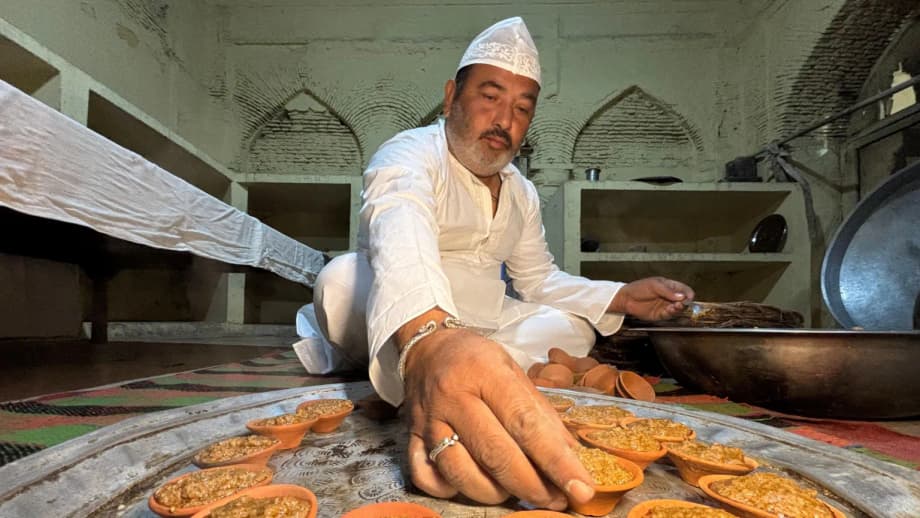
In the heart of Lucknow, within the shadowed corridors of Chota Imambara, a remarkable institution continues to defy the passage of time. While most historical monuments stand as silent witnesses to bygone eras, the Shahi Bawarchi Khana, or royal kitchen, remains vibrantly alive. Built nearly two centuries ago by Nawab Muhammad Ali Shah, the third ruler of Awadh, this kitchen never ceased its primary function: feeding the hungry. Today, as restoration workers carefully scrape away decades of decay to reveal the original lime mortar beneath, the cauldrons continue to bubble with the same traditional recipes that once nourished royalty and commoners alike. The kitchen represents a rare living heritage site where conservation efforts proceed while the very activity being preserved continues uninterrupted. This unique situation presents both challenges and opportunities for the Archaeological Survey of India, which must balance structural safety with the kitchen’s ongoing social function. The aroma of slow-cooked stews and freshly baked bread still wafts through the ancient chambers, creating an atmosphere where the past and present merge in the most tangible way possible: through the universal language of food.
The structure itself tells a story of architectural vision and social responsibility. Muhammad Ali Shah constructed not one but two identical kitchens flanking the main Imambara complex, a design choice that reflected the Awadhi aesthetic obsession with symmetry while serving a practical purpose. This twin configuration allows the trust to rotate operations, maintaining the tradition of continuous service even while conservation work proceeds in one chamber. The kitchen stands as a physical manifestation of the nawab’s will, which explicitly dictated not just the types of dishes to be prepared but their precise weights and quality standards. These specifications, documented in the original endowment papers, continue to guide the kitchen operations today, creating a direct line of continuity that spans 186 years. Unlike many heritage sites that exist as frozen tableaux, this kitchen adapts to contemporary needs while maintaining its core mission of community service.
From Nawab’s Vision to Enduring Institution
The origins of this culinary institution trace back to 1839, when Muhammad Ali Shah established the endowment that would secure its future. The nawab transferred 3.6 million rupees, an astronomical sum for that era, to the East India Company with specific conditions attached. The funds were entrusted to the British trading enterprise with the understanding that the company would maintain the monuments built by the Awadh nawabs, while the interest generated would perpetually fund the kitchen’s operations. This arrangement reflected a sophisticated understanding of financial stewardship and long-term planning, ensuring that charitable works would outlast political changes. After India gained independence in 1947, these funds were transferred to a local bank, where they continue to generate the interest that sustains the kitchen today. The Hussainabad Trust, a state government-monitored body, now manages these resources, preserving both the financial mechanism and the social mission established nearly two centuries ago.
The historical significance of this endowment extends beyond mere monetary value. It represents a contractual obligation between temporal power and spiritual duty, binding successive governments to honor the commitments made by the former rulers. Muhammad Ali Shah explicitly intended the kitchen to serve as a bridge between the royal household and the general public, particularly during religious observances. The will specified elaborate menus for different occasions, with particular attention to the fasting months of Ramadan and the mourning period of Muharram. During these times, the kitchen was to provide sustenance not just to the elite but to widows, orphans, and those unable to provide for themselves. This inclusive approach to charity broke down social barriers, creating a space where the privileged and the needy shared the same meals prepared according to the same exacting standards.
Restoration With Authenticity
When the Archaeological Survey of India began conservation work last October, they faced a unique challenge: how to preserve a building that was literally crumbling while keeping it functional. Plaster had peeled from cracked walls, exposing the underlying brickwork, and sections of the floor showed signs of imminent collapse. Local residents, concerned about the deterioration of this vital community resource, petitioned the ASI to intervene. Superintending Archaeologist Aftab Hussain explains that the restoration goes beyond simple structural reinforcement. The team is committed to returning the kitchen to its original condition, using materials and techniques that would be recognizable to the original builders. This approach requires sourcing specific traditional components and employing skilled craftsmen capable of working with methods from the era before industrialization.
The restoration team is utilizing slaked lime as the base material, soaking it for a full month before mixing it with an unusual combination of organic and mineral additives. The recipe includes wood apple pulp, black gram, natural gum known locally as gond, jaggery syrup, and red brick dust. This indigenous mortar, widely used during the Mughal era, provides both structural integrity and breathability that modern cement cannot replicate. The workers are also employing lakhauri bricks, thin burnt clay bricks characteristic of Awadhi architecture, to maintain the structure’s authentic form. These materials allow the building to respond naturally to temperature and humidity changes, preventing the moisture buildup that causes contemporary cement repairs to fail. The meticulous process is expected to conclude by the end of March, though the twin kitchen design ensures that religious feeding obligations continue uninterrupted throughout the renovation period.
Feeding Thousands: The Modern Operation
Despite its historical origins, the Shahi Bawarchi Khana operates with surprising efficiency to meet contemporary demand. During the holy month of Ramadan, the kitchen distributes approximately 700 coupons daily to the poor, widows, and others unable to provide for themselves. Cooked food travels to 16 nearby mosques, serving both the needy and the faithful who gather for evening prayers. The meals follow Lucknow’s rich culinary tradition, featuring meat curries, flatbreads, kebabs, fruits, and sweets. Murtaza Hussain Raju, the kitchen manager, maintains strict adherence to the portion sizes and quality standards recorded in the former ruler’s will. Every dish is weighed and inspected to ensure compliance with the nawab’s original specifications, creating a direct link between contemporary recipients and the royal patron who established this charity nearly two centuries ago.
The scale of operations intensifies dramatically during Muharram, the month of mourning in the Shia Islamic calendar. For the first nine days, the menu shifts to simpler vegetarian fare, including sweet flatbread, lentils, and potato curry. The remaining days see the addition of richer meat curries and kebabs. According to recent reports, the kitchen prepares an astonishing 20,000 servings of tabarruk, or blessed food, daily during this period. These meals reach various imambaras, mausoleums, and karbalas across Lucknow, distributed among those attending religious gatherings. The operation requires 60 workers laboring around the clock, cooking over wood fires using pure desi ghee. The daily consumption includes 14 quintals of flour and 11 quintals of potatoes, with a total budget of 47 lakh rupees allocated for the entire Muharram arrangement. Additionally, tabarruk reaches 325 royal families who maintain connections to the former kingdom of Awadh, preserving a network of aristocratic obligation that parallels the kitchen’s public charity.
Awadhi Cuisine Beyond Borders
The traditions maintained at Chota Imambara represent just one node in a broader network of Awadhi culinary preservation that extends far beyond Lucknow. In Kolkata, Manzilat Fatima, a descendant of Nawab Wajid Ali Shah, operates a restaurant serving authentic royal cuisine to a city that first encountered Awadhi food when the deposed nawab was exiled there in 1856. Wajid Ali Shah brought his entire culinary entourage to Metiabruz, effectively transplanting the royal kitchens of Lucknow to the banks of the Hooghly River. Fatima, the great-great-granddaughter of Wajid Ali Shah and Begum Hazrat Mahal, learned her craft through oral transmission from her grandmother and mother, having never received a single written recipe. Her work illustrates how the culinary techniques refined in these royal kitchens survived through matrilineal knowledge transfer, adapting to new environments while maintaining their essential character.
Similar preservation efforts occur at Mahmudabad House, located approximately 50 kilometers from Lucknow, where the Qila maintains culinary traditions dating back to the 16th century. Head chef Afzal Ahmed Qureishi learned his craft through observation and imitation under his grandfather Hazaari sahab, who served the Raja of Mahmudabad. Some techniques, such as the preparation of kaanta gali machli, where fish bones are rendered edible while the flesh remains soft, remain closely guarded secrets passed down through generations of cooks. These parallel traditions demonstrate that the Chota Imambara kitchen is not an isolated relic but part of a living cultural ecosystem. The emphasis on subtle flavor profiles, the use of yogurt and cultured dairy to balance spices, and the aristocratic attention to presentation connect these disparate locations through a shared gastronomic philosophy that values refinement over excess.
Voices of Continuity
For those with direct lineage to the former rulers, the restoration carries profound personal significance. Yasir Abbas, a descendant of Muhammad Ali Shah, describes the work as essential for upholding traditions that have endured for generations and define Awadhi culture. He emphasizes the moral obligation to honor the king’s will, which established this practice of serving food as a permanent feature of the religious landscape. This sentiment echoes through the community of regular visitors who have grown up with the kitchen as a fixture in their spiritual lives. Syed Haider Raza, an 80-year-old resident who has visited the Chota Imambara since childhood, recalls the massive vessels and abundant food of earlier decades with nostalgic clarity. He notes that the spirit of the place remains unchanged despite the passage of time, maintaining that the food continues to carry the blessing of its royal founder.
“The spirit of the place is still the same. It feels as if the food is still being sent by Muhammad Ali Shah.”
Historian Roshan Taqui provides crucial context for understanding the kitchen’s place within Awadhi architectural and social history. He notes that the twin kitchen design specifically facilitated the massive scale of cooking required during major religious observances while maintaining the aesthetic symmetry characteristic of the region’s buildings. This architectural feature has proven invaluable during the current restoration, allowing the kitchen to maintain its charitable functions while workers stabilize the structure. The design choice reflects a broader pattern in Awadhi planning, where beauty and utility were never considered separate concerns but rather complementary aspects of a unified vision for public welfare.
The Essentials
- The Shahi Bawarchi Khana at Chota Imambara in Lucknow dates to 1839, built by Nawab Muhammad Ali Shah of Awadh
- The kitchen continues to serve meals during Ramadan and Muharram, funded by interest from the nawab’s original endowment of 3.6 million rupees
- The Archaeological Survey of India is restoring the structure using traditional materials including lime mortar, wood apple pulp, and lakhauri bricks
- During Muharram, the kitchen prepares 20,000 servings of food daily, distributed to religious sites and 325 royal families
- The twin kitchen design allows operations to continue while restoration work proceeds in one facility
- Menus and portion sizes follow specifications recorded in the nawab’s will, maintained by the Hussainabad Trust
- Similar royal culinary traditions survive at Mahmudabad House and in Kolkata through descendants of the Awadh royal family