Spring Arrives Early in the Capital
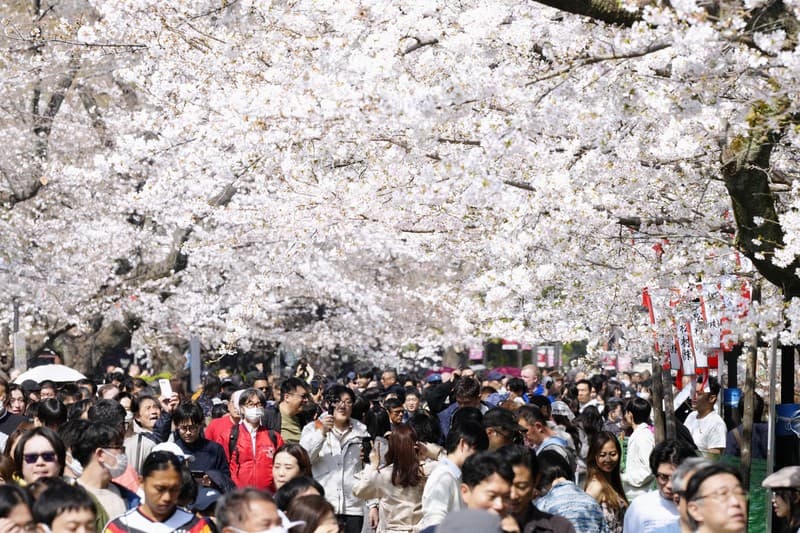
The Japan Meteorological Agency announced on March 28 that cherry blossoms have reached full bloom in central Tokyo, marking the official arrival of peak hanami season three days earlier than the historical average. The declaration came after observers confirmed that blossoms on the designated sample Somei Yoshino tree at Yasukuni Shrine in Chiyoda Ward had opened to the required 80 percent threshold, signaling that the capital’s most iconic spring spectacle is now at its height.
- Spring Arrives Early in the Capital
- The Science Behind the Early Bloom
- National Bloom Status and Regional Comparisons
- Premier Viewing Locations Across the Capital
- Rare Access: The Imperial Palace Inui Street Opening
- Festival Calendar and Cultural Celebrations
- Planning Your Hanami Experience
- The Bottom Line
This year’s peak bloom arrived two days earlier than in 2025, when full bloom was declared on March 30. The season began with first blooms spotted on March 19, just over a week before the full declaration. According to the meteorological agency, temperatures in nearby Kitanomaru Park climbed to 19.6 degrees Celsius shortly after 3 p.m. on Saturday, providing the warmth needed to push the blossoms to their peak.
The Science Behind the Early Bloom
Cherry blossom timing depends on complex temperature patterns that begin influencing the trees months before visible flowering occurs. According to the Japan Meteorological Corporation’s tenth forecast released on March 26, Tokyo’s Somei Yoshino variety followed a trajectory shaped by autumn and winter dormancy periods followed by spring growth stages. The buds, formed during the preceding summer, require specific cold temperatures between minus 5 and 15 degrees Celsius to break dormancy, after which warmer spring temperatures accelerate growth toward flowering.
This year, cumulative temperature data showed Tokyo reaching full bloom on March 28, three days ahead of the March 31 average date. The forecast data revealed similar early patterns across much of Japan, with Nagoya reaching full bloom on March 27 (six days early), Kyoto expected around March 31 (four days early), and Osaka anticipated to peak on April 1 (three days early). Only southern regions like Fukuoka showed slightly delayed flowering compared to averages, while northern cities including Sendai and Sapporo remain weeks away from their expected peaks in early April and late April respectively.
National Bloom Status and Regional Comparisons
Japan’s 2026 cherry blossom season commenced on March 16 when the first blooms opened in Kochi City on Shikoku Island, followed by Nagoya on March 17 and Tokyo on March 19. The progression of sakura across the archipelago follows a predictable northward pattern known as the sakura zensen (cherry blossom front), though climate variations create yearly differences in timing.
According to the Japan Meteorological Agency, most sample trees in the Kanto-Koshin central to eastern region, the Tokai central region, and western Japan have already flowered. Private weather service Weathernews Inc. predicts that many parts of eastern and western Japan will see cherry blossoms peak within the coming week. In the Kansai region, Osaka recorded its first blooms on March 26, with Kyoto and Nara beginning on March 23 and 24 respectively. Full bloom is expected in these western cities around March 31, giving residents and visitors approximately a two-week window from first bloom to enjoy the flowers before they wither.
Premier Viewing Locations Across the Capital
Tokyo offers dozens of locations to experience the transient beauty of Somei Yoshino blossoms, ranging from historic parks to modern urban developments. Ueno Park stands as one of the city’s most celebrated hanami destinations, featuring approximately 1,000 cherry trees lining its central avenue. The park has drawn crowds since the Edo period, earning mention in haiku by the renowned poet Matsuo Basho. This year, 800 paper lanterns illuminate the main avenue from 17:00 to 23:00 through April 5, creating a festive atmosphere that lasts from early morning (5:00 a.m. opening) until 11:00 p.m.
Shinjuku Gyoen presents a more curated experience with roughly 1,300 sakura trees representing over 65 varieties. Because the park cultivates early, standard, and late-blooming species, visitors can enjoy hanami both before and after the Somei Yoshino peak. The spacious grounds require an entrance fee of 500 yen for adults, and visitors should note that advanced reservations are mandatory for entry on March 28-29 and April 4-5 between 10:00 and 16:00 during the peak season.
Chidorigafuchi Moat, located just north of the Imperial Palace, offers a 700-meter-long tunnel of cherry trees along the waterway. The Chiyoda Cherry Blossom Festival runs from March 26 through April 6, featuring nighttime illuminations from 17:00 to 20:00 or 21:00 depending on the day. Visitors can rent boats to paddle beneath the overhanging branches, with some reservations available in advance to avoid lengthy queues.
Rare Access: The Imperial Palace Inui Street Opening
A special highlight of the 2026 season is the rare public opening of Inui Street within the Tokyo Imperial Palace grounds. This 750-meter tree-lined avenue, typically closed to visitors, has been opened for a limited nine-day window from late March through early April. The Imperial Household Agency permits access to this inner-grounds route only twice annually, during cherry blossom season and again in autumn for fall foliage.
Hundreds of visitors queued early on the first day to walk the picturesque stretch, where carefully maintained cherry trees form a delicate canopy against stone walls and traditional lamp posts. The contrast between the historic palace setting and the modern Tokyo skyline creates a uniquely serene viewing experience distinct from the city’s more crowded public parks. Entry remains free during this period, though security checks are in place and authorities may temporarily pause admission if crowds become excessive. Visitors must follow designated routes, and activities like picnicking are prohibited to preserve the site.
Festival Calendar and Cultural Celebrations
The arrival of full bloom triggers dozens of festivals across Tokyo, transforming neighborhoods into centers of cultural celebration. The Nakameguro Cherry Blossom Festival, organized by the local shopping street promotion association, concentrates activities at Goryuten Playground on March 28-29. The event features live music, brass band parades, dance performances, and food vendors along the Meguro River, where over 800 yoshino cherry trees create a cascading tunnel of blossoms. Pink lanterns illuminate the riverbanks from 17:00 to 20:00 for 15 days following the opening bloom.
Along the Sumida River, the Bokutei Sakura-matsuri Festival celebrates the more than 600 cherry trees originally planted by the eighth Tokugawa shogun Yoshimune during the Edo period. The kilometer-long sakura boulevard between Azumabashi Bridge and Sakurabashi Bridge offers prime views of Tokyo Skytree framed by pink blossoms. Local neighborhood associations operate food stalls, while traditional geigi teahouses and yakatabune boat charters offer alternative perspectives on the riverside blooms.
In Nihonbashi, the SAKURA FES NIHONBASHI runs from mid-March through early April, illuminating historic buildings like the Mitsui Main Building in soft pink light. The festival includes the “Nihonbashi Parfes” outdoor dessert event and “Sakura Yatai” market featuring 25 legacy restaurants serving limited-edition street food. Other notable events include the Koganei Cherry Blossom Festival in western Tokyo, which features over 1,400 trees and traditional taiko drumming performances on March 28-29.
Planning Your Hanami Experience
Visitors planning to participate in hanami traditions should prepare for significant crowds, particularly on weekends when popular parks like Ueno and Shinjuku Gyoen attract hundreds of thousands of people daily. Many locations, including Chidorigafuchi and Meguro River, offer yozakura (nighttime illumination) viewing, creating ethereal scenes as lights reflect off petals and water surfaces. However, these evening events often become extremely congested, and visitors should remain mindful of residential neighborhoods by keeping noise levels low and properly disposing of trash.
Practical considerations include checking specific entry requirements, as some venues like Shinjuku Gyoen require advance reservations during peak dates. Weather conditions can shift quickly during spring, with rain potentially shortening the viewing period once full bloom arrives. The flowers typically remain at peak for only a few days before petals begin falling, creating sakura snow that itself becomes part of the seasonal aesthetic but signals the approaching end of the season.
The Bottom Line
- Tokyo’s cherry blossoms reached official full bloom on March 28, 2026, three days earlier than average and two days earlier than 2025.
- The Japan Meteorological Agency confirmed the bloom status at the designated Somei Yoshino sample tree at Yasukuni Shrine.
- First blooms appeared on March 19, with temperatures reaching 19.6 degrees Celsius on March 28 to trigger peak flowering.
- Western Japan cities including Kyoto and Osaka expect full bloom around March 31, while northern regions will see blooms in April.
- The rare opening of Inui Street at the Imperial Palace offers a unique nine-day window to view blossoms within normally restricted grounds.
- Major festivals including Ueno Sakura Matsuri, Chiyoda Cherry Blossom Festival, and Nakameguro Cherry Blossom Festival run through early April with evening illuminations.
- Visitors should check reservation requirements for popular spots like Shinjuku Gyoen and expect heavy crowds during the brief peak viewing period.