A Milestone in Orbital Servicing
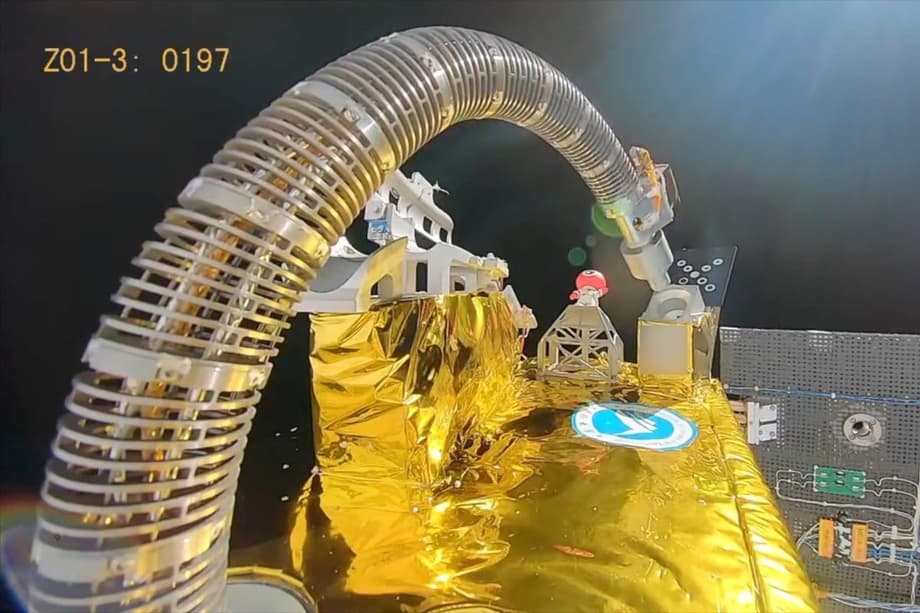
A Chinese commercial satellite has successfully completed a landmark refueling demonstration in low Earth orbit, using a flexible robotic arm inspired by octopus tentacles to simulate the transfer of fuel between spacecraft. The Hukeda-2 satellite, also designated Yuxing-3 06, carried out the test after launching from the Jiuquan Satellite Launch Centre in northwestern China, marking a major step toward practical in-orbit servicing capabilities that could extend satellite lifespans and reduce the accumulation of orbital debris. State broadcaster CCTV reported on Tuesday that the demonstration satellite used its specialized arm to perform compliance control and refueling tests, validating a sequence of operations critical to future space maintenance services.
The successful experiment validates technologies that could fundamentally alter how spacecraft operate throughout their missions. Instead of abandoning satellites when fuel supplies run low, operators could potentially refuel them, extending operational lifespans by two to three times while greatly reducing the costs and resource requirements associated with manufacturing and launching replacement hardware. This shift from a disposable launch and discard model to sustainable orbital servicing represents a major evolution in the commercial space economy, potentially saving satellite operators millions of dollars per spacecraft while minimizing the environmental impact of increased launches.
Developed through collaboration between academic institutions and private aerospace companies, the mission highlights the rapid maturation of China’s commercial space sector. The satellite serves as a technology demonstrator for Hangtian Yuxing Keji, a commercial space enterprise based in Beijing, and was constructed by Mofang Weixing Keji in Shenzhen. By successfully testing these capabilities in the demanding environment of low Earth orbit, where atmospheric drag and radiation present constant challenges, the mission establishes technical credibility for future commercial service offerings expected to commence later this decade.
The Technology Behind the Tentacle Arm
At the heart of this mission lies a distinctive flexible robotic arm developed by the Tsinghua Shenzhen International Graduate School. Unlike the rigid, jointed robotic arms typically found on space stations, which consist of discrete segments connected by mechanical hinges, this mechanism mimics the smooth, continuous bending of an elephant trunk or octopus tentacle. This biological inspiration allows the arm to navigate tight, complex spaces with exceptional adaptability, wrapping around obstacles and adjusting its approach path in ways that rigid systems cannot achieve.
The arm consists of a series of linked tubes resembling coiled springs, with internal motors that pull on cables running through the structure. These motors bend the joints incrementally to guide a nozzle-like tip into precise position. According to the development team, this design provides inherent compliance, meaning the arm can yield slightly when contacting objects rather than maintaining rigid positioning. In the microgravity environment of low Earth orbit, where even minor vibrations can translate into significant positioning errors, this compliance control proves essential for delicate docking procedures.
The nozzle tip at the arm’s end connects to target ports on other satellites, but the precision required for this operation is extraordinary. Both satellites travel at approximately 27,000 kilometers per hour (16,800 miles per hour), making the alignment process akin to what developers describe as threading a needle while racing down a highway. The arm must maintain perfect compliance control, adjusting its position dynamically while accounting for the relative motion between spacecraft and the elastic properties of its own flexible structure.
Mission Profile and Dual Objectives
Hukeda-2, jointly developed by Hunan University of Science and Technology and Suzhou Sanyuan Aerospace Technology, launched aboard a Kuaizhou-11 rocket from the Gobi Desert facility in mid-March. The satellite serves as a technology demonstrator for Hangtian Yuxing Keji, a commercial space company based in Beijing, and was constructed by Mofang Weixing Keji in Shenzhen. The spacecraft represents a new generation of Chinese commercial satellites designed to test multiple advanced technologies within a single mission profile, maximizing the scientific return on the launch investment.
Beyond the refueling experiment, the spacecraft carries an innovative device designed to address the growing crisis of orbital debris. An onboard mechanism can inflate into an ultralight sphere approximately 2.5 meters in diameter, dramatically increasing atmospheric drag once deployed. This technology could accelerate the deorbiting process for satellites at the end of their operational lives, reducing the time they remain as orbital clutter from several decades to less than a year. As megaconstellations like SpaceX’s Starlink continue to populate low Earth orbit with thousands of new satellites, such debris mitigation technologies become increasingly critical for sustainable space operations and collision avoidance.
The dual-purpose design reflects a pragmatic approach to orbital sustainability, combining life extension capabilities for active satellites with accelerated disposal mechanisms for retired assets. By addressing both ends of the satellite lifecycle, the mission demonstrates a comprehensive strategy for managing the growing density of objects in low Earth orbit.
The Challenge of Precision Docking
The technical challenges of orbital refueling extend far beyond simple proximity operations. To successfully transfer fuel between satellites, the Hukeda-2 would need to achieve precise docking with a target port while both vehicles orbit Earth at speeds exceeding twenty-seven thousand kilometers per hour. This requires millimeter level accuracy in positioning, with the flexible arm compensating for any residual motion or vibration that could misalign the connection.
While CCTV reported the successful completion of compliance control and refueling tests, mission details regarding whether Hukeda-2 docked with an actual target satellite or performed simulations with a test fixture remain unclear. The demonstration nonetheless validates the full sequence of operations from approach and identification through docking and simulated fuel transfer, establishing the technical foundation for future commercial servicing missions.
The demonstration also tested compliance control systems, which allow the robotic arm to maintain appropriate contact force during connection attempts. Too much pressure could damage sensitive docking ports, while too little would result in failed connections. Finding this balance in a microgravity environment, where traditional force feedback behaves differently than on Earth, required sophisticated sensor integration and real-time adjustment algorithms.
Commercial Implications and Market Projections
The successful test positions China at the forefront of an emerging orbital servicing market that industry analysts project could reach tens of billions of dollars by 2035. Cheng Lei, head of research and development at Sanyuan Aerospace, stated that in-orbit refueling technology could transform the space economy by enabling continuous maintenance and upgrades of orbital assets rather than replacement.
Unlike the rigid robotic arms commonly used on space stations, this one is designed more like an elephant’s trunk or an octopus tentacle. It can bend smoothly along its length, making it more flexible and better able to adapt as it approaches a target.
According to industry projections based on the mission success, Chinese commercial space companies could begin offering orbital servicing services between 2027 and 2028. Initial customers would likely include Chinese government satellite operators, with subsequent expansion to global commercial providers. This timeline places Chinese private enterprises in direct competition with international ventures such as Japan’s Astroscale, which is also developing debris removal and servicing capabilities for the global market.
The economic model shift is substantial. Current satellite operations rely on a disposable infrastructure where fuel depletion determines operational lifespan. On-orbit servicing could extend mission durations while enabling repair, upgrade, and orbital repositioning services. This creates a paradigm where satellites function as maintainable infrastructure rather than expendable equipment, similar to how terrestrial mobile communication towers receive maintenance rather than replacement when components require attention.
The transition toward servicing-based space operations could also influence satellite design standards. Future spacecraft might incorporate standardized refueling ports and modular components specifically designed for robotic maintenance, much like the standardized charging ports that enabled the electric vehicle industry to develop universal charging networks.
China’s Evolving Space Industry
The Hukeda-2 mission highlights the growing capabilities of China’s commercial space sector, which is increasingly operating independently of traditional government aerospace institutions. The collaboration between Hangtian Yuxing, academic institutions like Tsinghua and Hunan University of Science and Technology, and manufacturers like Mofang Weixing demonstrates a mature ecosystem capable of sophisticated spacecraft development without direct state agency oversight.
This represents a notable evolution in the global space industry. Flexible robotics technology, already proven in terrestrial industrial and medical applications, now demonstrates viable space applications through this commercial Chinese initiative. The combination of government-supported research at Tsinghua with private sector implementation through Sanyuan Aerospace illustrates a hybrid model that ensures sustained development resources while pursuing commercial viability.
International observers note that such technological achievements in the private sector indicate China’s broader strategy to establish comprehensive space capabilities across both state and commercial domains. As orbital traffic increases with thousands of new satellites launched annually, the ability to service, refuel, and eventually deorbit spacecraft becomes essential infrastructure for sustainable space development. The success of Hukeda-2 suggests that Chinese companies will play a major role in shaping these future servicing markets.
Key Points
- Hukeda-2 satellite completed low Earth orbit refueling tests using a flexible robotic arm designed to mimic octopus tentacles
- The technology enables spacecraft to refuel at 27,000 km/h, potentially extending satellite lifespans by two to three times
- Developed collaboratively by Tsinghua Shenzhen International Graduate School, Hunan University, and Sanyuan Aerospace Technology
- Satellite also carries an inflatable drag device to accelerate deorbiting and reduce space debris
- Commercial orbital servicing services projected to begin between 2027 and 2028, competing with international ventures
- Represents advancement in China’s commercial space sector independent of state-run aerospace programs