International Tourism Reaches Beyond Korea's Cities
South Korea's national parks welcomed 2.05 million foreign visitors in 2025, including 1.13 million tourists arriving from overseas and approximately 920,000 foreign residents living in the country. The Korea National Park Service (KNPS) released the figures on Wednesday, putting natural landscapes at the center of a historic year for international visitation.
Contents
- International Tourism Reaches Beyond Korea's Cities
- Hallasan Leads the Park Rankings
- Coastal Parks Attract Large Crowds
- China Leads a Broad Mix of Visitor Markets
- Autumn Is the Busiest Season
- Mobile Roaming Data Changes the Count
- Airlines Add Services as Demand Grows
- Hotels and Local Businesses Share the Growth
- New Information, Equipment and Guided Programs
- Key Points
Hallasan National Park on Jeju Island led the destinations with 271,443 foreign visitors. Coastal parks also attracted substantial numbers, while mountain destinations and the historic landscapes of Gyeongju showed the range of experiences drawing travelers beyond Korea's major cities.
The milestone reflects a recovery and expansion in inbound tourism, meaning travel into the country from abroad. Seoul and Busan remain popular, but international travelers are also exploring mountainous terrain, coastal regions and volcanic landscapes. Shopping districts and cultural landmarks are increasingly sharing space in travel itineraries with protected wilderness and geological formations.
KNPS President Joo Dae-yeong said the figures showed the importance of natural landscapes to Korea's tourism appeal. He also linked the agency's new measurement methods to plans for visitor services and stronger connections with surrounding communities.
The fact that foreign visitors to Korea are also visiting our national parks demonstrates that natural landscapes are an important part of Korea's tourism appeal. Now that we can more accurately measure the scale of foreign visitation through roaming data analysis, we will expand tailored information services and programs for international visitors, and work to build national parks that grow together with local communities.
The total combines two groups with different travel circumstances: people visiting Korea from another country and foreign nationals who already live there. Overseas tourists accounted for about 55 percent of the 2.05 million visitors, based on the published totals, while foreign residents accounted for about 45 percent.
Hallasan Leads the Park Rankings
Hallasan National Park recorded 271,443 foreign visitors, the highest figure among the parks listed. Located on Jeju Island, Hallasan is South Korea's highest mountain and a dormant volcano. Its trails pass through varied ecological zones, from temperate forests to alpine meadows.
Those changing landscapes give hikers different environments to explore as they climb. Hallasan's popularity reflects a growing tendency among foreign tourists to include outdoor activities in a Jeju visit rather than concentrating solely on beach resorts and urban attractions.
Seoraksan National Park in Gangwon Province attracted 111,731 foreign visitors. Its dramatic granite peaks and seasonal foliage make it another major mountain destination, offering a different setting from Jeju's volcanic landscape.
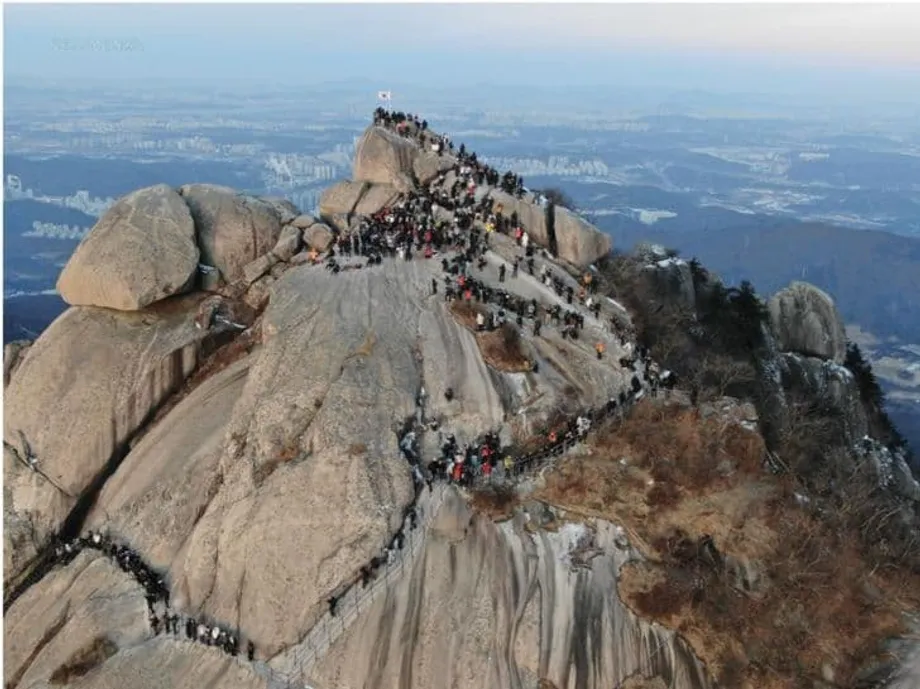
Bukhansan National Park, within Seoul's metropolitan area, recorded 57,315 foreign visitors. Its position near the capital shows that a park can appeal to international travelers while remaining close to the urban destinations already on their itineraries.
Gyeongju National Park drew 102,166 visitors. Unlike parks centered mainly on wilderness, it focuses on the historical heritage of the ancient Silla Kingdom. Its inclusion among the leading destinations illustrates how national park travel in Korea can bring together natural surroundings and cultural history.
Coastal Parks Attract Large Crowds
Dadohaehaesang National Park ranked second with 141,190 foreign visitors. Korea's largest protected area spans coastal regions and approximately 1,700 islands in South Jeolla Province, giving it a very different character from the mountain parks.
Its marine environment and scenic coastal views appeal to travelers interested in island hopping, coastal photography and observing diverse marine ecosystems. The visitor figures put the southern coast alongside Jeju and mountain destinations as an important part of international park tourism.
Taeanhaean National Park and Hallyeohaesang National Park followed closely, each attracting around 130,000 international visitors. Taeanhaean, on Korea's western coast, features calm beaches, tidal flats and diverse marine life. These environments make it particularly attractive for tourism focused on nature.
Hallyeohaesang stretches across the southern coast, combining rich marine ecosystems with distinctive rock formations and historical significance. Together, the coastal parks show that Korea's national park appeal extends well beyond hiking to mountain summits.
The rankings also point to different kinds of visitor needs. Travelers heading for mountain trails may need hiking equipment, while people visiting coastal parks may be planning journeys between islands or spending time photographing shorelines. The KNPS service plans respond to a growing audience whose interests vary by destination.
China Leads a Broad Mix of Visitor Markets
Chinese nationals formed the largest national group, accounting for approximately 250,000 visitors, or 21.9 percent of the international tourist total. Taiwan followed with about 130,000 visitors, the Philippines with 90,000 and Indonesia with 80,000.
Visitors from Chinese-speaking regions and Southeast Asian countries collectively represented a particularly large share of visitation. Their prominence connects national park tourism with the wider recovery in travel to Korea from nearby Asian markets.
The United States contributed 60,000 visitors, while Japan accounted for 50,000. France, Thailand, Germany and India also contributed growing numbers of tourists, although their volumes were smaller than those of the six leading markets.
The mix includes travelers from neighboring countries, Southeast Asia, Europe and North America. Korea's parks are attracting regional tourists as well as people making longer journeys to experience the country's natural environments.
The 21.9 percent figure for Chinese visitors refers to the international tourist group, rather than the combined total that also includes foreign residents. Keeping those categories separate helps explain how the nationality figures fit into the broader 2.05 million count.
Autumn Is the Busiest Season
Autumn was the most popular season for foreign visitors. Fall foliage and mild temperatures created favorable conditions for hiking and exploring outdoors, drawing travelers to parks when seasonal colors became part of the attraction.
Spring ranked second, likely helped by cherry blossoms and comfortable weather. Summer still attracted substantial numbers despite higher temperatures, while winter had the fewest visits.
The seasonal pattern suggests that many international travelers, particularly those from tropical or temperate climates, avoid Korea's colder months. It also helps explain why accommodation demand near major parks is especially strong during the autumn foliage season.
Park destinations offer different experiences, but weather and seasonal scenery influence when travelers choose to go. For administrators, knowing the busiest periods helps connect visitor services, safety preparations and infrastructure planning with the times when demand is greatest.
Mobile Roaming Data Changes the Count
The KNPS used mobile roaming data from international arrivals to estimate how many people were present within national park boundaries in 2025. The approach marks a shift from relying on manual headcounts at park entry points.
Roaming allows a mobile phone to connect to a network while its user is abroad. Analyzing the resulting mobile signals gives park administrators information about visitor volume and movement patterns within a defined area.
The method measures presence inside park boundaries rather than simply recording people as they pass an entrance. That provides a more comprehensive picture of how visitors use different areas and gives administrators greater precision than traditional counting methods allowed.
The information can support resource allocation, safety planning and infrastructure development based on actual patterns of use. It can also help identify where international tourists concentrate, how long they remain in particular areas and which trails or attractions draw interest from different nationalities.
The approach reflects a wider trend in tourism management toward using digital footprints to understand travel patterns that manual surveys cannot capture as easily. For foreign visitors, mobile data provides a way to study those patterns without interrupting their activities.
Joo's statement connects the new measurement system directly to the agency's service plans. Knowing more accurately who visits, when they arrive and where they go gives the KNPS a basis for adapting information and programs to different international audiences.
Airlines Add Services as Demand Grows
Korean Air, Asiana Airlines and Jeju Air have expanded routes and increased flight frequencies to accommodate growing demand from China, Japan, Taiwan, the United States and Southeast Asian countries. The growth in park visitation is part of economic activity extending beyond the parks themselves.
Korean Air introduced additional services from Beijing, Shanghai and Tokyo. Asiana expanded routes to New York and Los Angeles, while Jeju Air increased budget connections from Taipei and Manila specifically targeting tourists interested in nature.
These services connect the nationalities appearing in the park visitor figures with the transport networks bringing travelers into Korea. Chinese, Taiwanese, Japanese, American and Southeast Asian visitors all feature in the tourism picture, although their numbers and travel habits vary.
Travelers from the United States tend to stay longer than regional visitors, often combining a trip to South Korea with visits to other Asian destinations. Longer stays result in higher spending per visitor than among other nationalities.
American tourists frequently identify Korean entertainment and cuisine as their main reasons for visiting. Those cultural interests can become a starting point for exploring natural attractions, bringing mountain and coastal destinations into trips initially inspired by food or entertainment.
Hotels and Local Businesses Share the Growth
Marriott properties, particularly the Jeju Shinhwa World location, reported high occupancy during peak seasons. Lotte Hotel Jeju and Hyatt Centric Jeju experienced unprecedented bookings, with many reservations made months ahead of autumn foliage viewing.
Demand also increased for standard hotels and Airbnb properties near major parks. Visitors seeking accommodation close to trailheads and natural attractions are spreading the benefits beyond luxury hotels.
Restaurants, transport services and gear shops in surrounding communities benefit when international visitors need meals, transfers and equipment rentals. A park visit can therefore generate spending at several points, from the journey to the destination through to accommodation and daily activities.
Jeju Island and the southern coast have seen particularly concentrated international tourism. The influx has created localized economic booms that support regional development initiatives.
Joo's aim of building parks that grow together with local communities reflects this connection. The landscapes attract travelers, while nearby businesses provide many of the services that make their visits possible.
New Information, Equipment and Guided Programs
The KNPS plans to expand online outreach through YouTube Shorts in English. The short videos will showcase park features and provide practical visitor information, reaching potential tourists while they are planning their trips.
A rental equipment program will address practical difficulties for international travelers. Hiking boots and trekking poles can take up valuable suitcase space or exceed airline luggage allowances, even though they are essential for safely navigating Korea's steep mountain trails.
Making this equipment available at park locations removes a barrier to spontaneous outdoor exploration. Travelers who did not pack for a hiking trip would have access to items needed for the terrain.
An artificial intelligence guidance system is planned through mobile applications. It will provide real time trail updates, weather alerts and botanical information in English, Chinese, Japanese and other languages. Botanical information explains the plants visitors encounter.
The KNPS will also launch programs led by rangers specifically for foreign visitors. These guided experiences will teach participants about Korea's natural heritage while supporting safety on challenging terrain.
The programs move beyond simply allowing people to visit toward guided experiences that build understanding of conservation efforts and biodiversity, the variety of living things found in an environment. The agency has not given launch dates for the planned services.
More accurate visitor data and expanded services are intended to support continued international tourism growth while preserving the environments that attract people in the first place. The plans link practical needs, such as equipment and weather information, with opportunities to learn about the parks and their surrounding communities.
Key Points
- Korea's national parks recorded 2.05 million foreign visitors in 2025: 1.13 million overseas tourists and approximately 920,000 foreign residents.
- Hallasan led with 271,443 visitors, followed by Dadohaehaesang with 141,190. Taeanhaean and Hallyeohaesang each attracted around 130,000.
- Seoraksan recorded 111,731 visitors, Gyeongju 102,166 and Bukhansan 57,315.
- Chinese nationals were the largest group, with approximately 250,000 visitors and 21.9 percent of the international tourist total.
- Autumn was the busiest season, followed by spring and summer. Winter recorded the fewest visits.
- The KNPS used mobile roaming data to estimate visitors within park boundaries and understand their movement patterns.
- Airlines expanded services, while hotels and businesses near parks benefited from growing demand.
- Planned services include videos in English, hiking equipment rentals, multilingual guidance using artificial intelligence and programs led by rangers for foreign visitors.