A border viewpoint draws crowds after artillery photographs spread
Aegibong Peace Ecological Park in South Korea recorded 13,243 visitors from October 26 to November 4 after photographs of North Korean artillery across the border attracted attention. Gimpo City said on November 8 that attendance was 7.5% higher than the 12,321 visitors recorded during the same period a year earlier.
Contents
- A border viewpoint draws crowds after artillery photographs spread
- What the visitor figures show
- What was seen across the water?
- How the attention developed
- Why longer stays affect admission
- A real viewpoint and a fabricated cafe image
- Residents live with the view after tourists leave
- What Gimpo wants visitors to take away
- Key Points
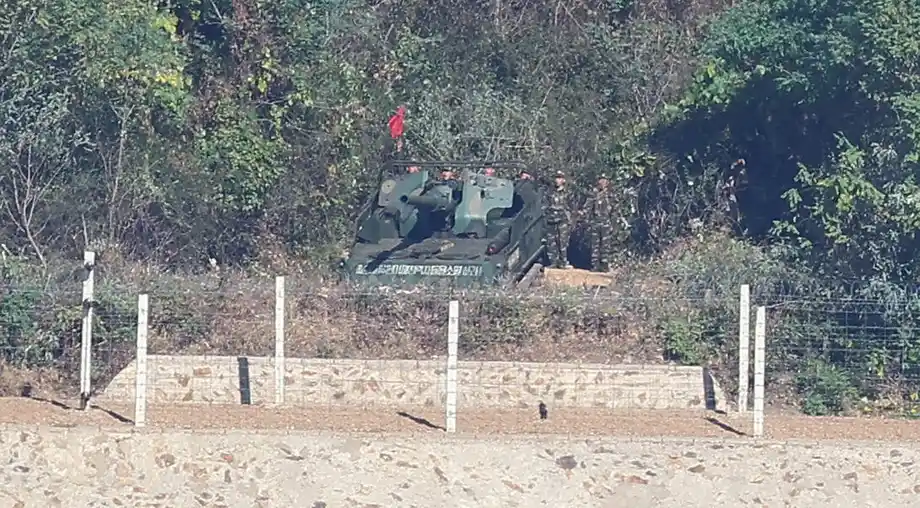
The weapon was photographed on the North Korean coast in Kaepung County, about 1.5 kilometres in a straight line from the park's observation point. Images showing the artillery and military personnel circulated on October 26, encouraging people to visit the park in Wolgot township, Gimpo, in Gyeonggi Province.
Gimpo has since reduced reservations as visitors stay longer and space becomes harder to manage. From November 4, reservations were limited to 200 people per hour, divided equally between individual visitors and people visiting in groups. The park also limits the number of people inside at any one time to about 500.
North Korean troops have now covered the artillery with camouflage netting, making it difficult to identify even through telescopes, according to the city. Visitors drawn by photographs of the weapon therefore face a different view from the one that first attracted attention.
Nearby residents have expressed discomfort at seeing a weapon across the water become a sightseeing attraction. Their concerns, the city's crowd controls and misleading images circulating online have turned a rise in attendance into a broader story about how people experience the same border differently.
What the visitor figures show
Gimpo's figures amount to 922 additional visitors over ten days. Across that entire period, attendance averaged about 1,324 people a day, compared with roughly 1,232 during the equivalent period a year earlier. Those averages are calculated from the city's totals.
Weekdays accounted for much of the increase. Daily attendance on weekdays was around 1,000 to 1,200, and some days recorded increases of as much as 35% compared with the corresponding days a year earlier. The 35% figure describes the largest daily increase, while 7.5% describes growth across the full ten days.
Weekend attendance moved in the opposite direction. About 4,200 people visited during the weekend period identified in the attendance figures, nearly 10% fewer than during the comparison weekend a year earlier. Gimpo attributed the decline to restrictions on additional admissions.
The combination is possible because attendance depends on both demand and available space. More people may want to enter, yet fewer can be admitted when those already inside stay longer. At Aegibong, longer visits reduced how quickly places became available for the next arrivals.
What was seen across the water?
The artillery was positioned along the North Korean coast opposite Aegibong, on the western section of the inter Korean frontier. Photographs showed a weapon that appeared to face south, with North Korean military personnel nearby.
The equipment was described as an older self-propelled artillery weapon, estimated to be of 122 millimetre calibre. Self-propelled artillery carries a gun on a vehicle, allowing it to move without being towed by another vehicle. Calibre refers to the internal width of the gun barrel.
South Korea's Ministry of National Defense assessed on October 29 that leaving the artillery exposed was effectively a display of military force. The explanation was that artillery would ordinarily be concealed for tactical reasons rather than left openly visible.
Gimpo later said camouflage netting had made the equipment difficult to identify. The precise model and the date when the netting was placed over it were not given. For people visiting now, the practical point is straightforward: the coast can be viewed through telescopes, but the artillery itself may be hard to distinguish.
How the attention developed
Public interest, the military assessment and the changes to park admissions unfolded over less than two weeks. The main dates trace how photographs of a weapon across the water were followed by a measurable change in visits.
- October 26: Photographs of North Korean artillery opposite Aegibong circulated widely.
- October 29: South Korea's Ministry of National Defense assessed the exposed artillery as a display of military force.
- October 26 to November 4: The park recorded 13,243 visitors, up from 12,321 during the same period a year earlier.
- November 4: Gimpo reduced hourly reservations to 200 people, with 100 places for individuals and 100 for group visitors.
- November 8: Gimpo released the attendance figures and explained the pressure on admissions.
Authorities responded to the growing interest by managing how many people could enter and remain inside. The park continued receiving visitors while operating within its limits on space and safety.
Why longer stays affect admission
Aegibong's two limits serve different purposes. The hourly reservation limit controls the number booked to arrive during each period. The limit of about 500 people controls how many can be inside the park simultaneously.
Visitors who remain for several hours overlap with people arriving later. When the park reaches its occupancy limit, additional entry can be delayed or restricted, even though the next reservation period has begun. A place becomes available only after someone leaves.
Gimpo had been reducing advance reservations in stages as attendance and the length of visits increased. The November 4 arrangement reserved half the hourly places for individual bookings and half for visitors arriving in groups.
The Marine Corps' 2nd Division, which has responsibility for the area, was also reported to have requested controls on visitor numbers because of safety and security conditions. Park admission therefore involves coordination in an active border area as well as the ordinary task of preventing overcrowding.
For visitors, the concrete change is fewer reservation places and the possibility of waiting when the park is full. The weekend decline in admissions shows how those limits can affect the number of people who actually get through the entrance.
A real viewpoint and a fabricated cafe image
Aegibong stands near the Jogang area, where the Han and Imjin rivers meet. Its Jogang Observatory offers views towards North Korean territory, while the Peace Ecological Exhibition Hall presents the history of division and the ecological value of the Han River estuary.
The roughly 1.5 kilometre distance to the artillery position helps explain why photographs taken from the observation area attracted attention. Telescopes allow visitors to examine the opposite coastline more closely, although camouflage now makes identifying the weapon difficult.
A different image circulating online showed what appeared to be a large North Korean artillery weapon immediately outside the window of the Starbucks cafe at the observation facility. That picture was identified as a composite, described as having been made using artificial intelligence or other image manipulation.
The fabricated cafe scene placed the weapon visually much closer than its actual position across the water. Visitors were being drawn to a real border viewpoint by genuine photographs of military equipment, while an altered image presented a much more dramatic scene.
The park's exhibition spaces also give visitors something beyond the distant military position to consider. Its displays connect the view across the estuary with the history of division and the natural environment shared by the river system.
Residents live with the view after tourists leave
A resident of Wolgot township, identified only as A, described anxiety about artillery apparently facing towards the South. The resident said people nearby lived with fear of possible shelling and felt distressed that outsiders treated a matter tied to their survival as something to look at.
The resident also referred to threats involving North Korean broadcasts directed towards the South and expressed hope that tensions between the two Koreas would ease quickly. These concerns place the visitor increase alongside the daily experiences of people who remain in the area.
A tourist can finish a visit and return home. Residents continue living near the military positions that visitors have come to observe. The same distant weapon can therefore be an unusual sight for one person and a continuing source of anxiety for another.
Online wordplay helped spread interest in the artillery, turning it into a nickname and a new reason to visit Aegibong. Local concerns centre on something more immediate: how military activity across the water affects the sense of safety in surrounding communities.
What Gimpo wants visitors to take away
A Gimpo City official said the park was intended to encourage reflection on division and peace, explaining the purpose behind a facility that combines a border observation point with historical and ecological exhibits.
Aegibong Peace Ecological Park was created to reflect on the reality of division and reaffirm the importance of peace.
The same official said the city hoped visits would help people understand the experiences of those living near the border.
We hope visitors will gain an understanding of the inter-Korean tensions and the difficulties faced by residents in border areas.
Gimpo's immediate response has been practical: reduce reservations, keep the number inside within the occupancy limit and manage longer stays. Its stated aim is also to connect curiosity about the North with an understanding of the communities around the park.
Aegibong's attendance figures capture both sides of that challenge. The artillery photographs brought more people to a place built for observing and reflecting on division. Managing those visits now means accounting for limited space, equipment that is harder to see and residents for whom the border is part of everyday life.
Key Points
- Aegibong recorded 13,243 visitors from October 26 to November 4, an increase of 922 people, or 7.5%, from a year earlier.
- Photographs showed North Korean artillery about 1.5 kilometres from the observation point.
- Some weekdays recorded attendance increases of up to 35%, while weekend admissions fell nearly 10% amid entry restrictions.
- From November 4, hourly reservations were reduced to 200 people. About 500 people can remain inside simultaneously.
- Gimpo said camouflage netting now makes the artillery difficult to identify.
- An image showing artillery close outside the park cafe was a composite.
- Residents expressed anxiety about military activity, while Gimpo urged visitors to consider peace and the difficulties of life near the border.