A crowded launch and a disputed change to a familiar scene
The Legend of Zelda: Ocarina of Time arrived on Nintendo Switch 2 on November 5, 2026, with midnight queues from New York to London and a controversy over how its villain meets defeat. In London, a social media post put the crowd outside Argos on Tottenham Court Road at 110 people. Online, footage shared by user Marie Rose Phantom appeared to show Ganondorf's familiar moment of coughing up blood replaced by a speech delivered on his knees.
Contents
- A crowded launch and a disputed change to a familiar scene
- Midnight queues stretch across several cities
- What the Ganondorf footage shows
- How the scene has changed since 1998
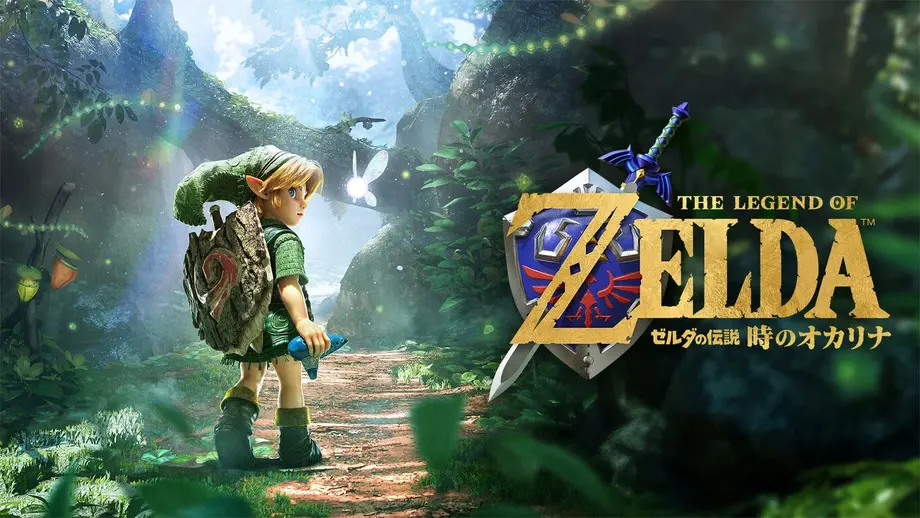
- A full remake with more dialogue and a new visual approach
- More room for rupees and new ways to play music
- New clues and a place to challenge defeated enemies
- Adventure records move onto the phone
- Prices, purchase deadlines and anniversary extras
- A launch shaped by additions and editing disputes
- Key Points
Nintendo's official release announcement confirms the worldwide launch date and describes the game as a full remake of the 1998 Nintendo 64 adventure, with new graphics and substantial improvements to ease of play. Its arrival comes 28 years after the original, during celebrations for the Zelda series' 40th anniversary.
The launch brings together two different expectations. Returning players want to see how closely Nintendo has preserved scenes they remember, while newcomers are getting revised controls, extra story material and new ways to explore Hyrule. The reported Ganondorf edit has become an early focus of that debate, even as the remake adds dialogue, activities and practical improvements elsewhere.
Nintendo has not commented on the reported scene change, and the claim remains unverified beyond the shared footage. The remake's listed ESRB classification is Everyone 10+, with Animated Blood and Fantasy Violence descriptors.
Midnight queues stretch across several cities
Photos and videos posted on the evening of November 4 showed people lining up outside shops in several countries. Nintendo held its own event at its Manhattan store, while crowds also gathered at Best Buy and GameStop locations. A midnight launch in Toronto was documented as well.
Bellevue, Washington, supplied one striking comparison: a social media user claimed the queue at a local Best Buy was longer than the line for the Switch 2 console launch itself. That comparison came from an individual post. The London figure of 110 people likewise came from a post shared from the scene.
Some shoppers were also hoping to obtain Zelda themed Switch 2 hardware, described in launch accounts as difficult to find. Nintendo's Japanese announcement scheduled its anniversary console and accessories for October 29, a week before the game. The hardware release and the software launch therefore fell on different dates.
The queues show why this release carries weight beyond a routine remake. Buyers were turning up for both a familiar adventure and anniversary merchandise, with the special console becoming another sought after part of the launch.
What the Ganondorf footage shows
The disputed sequence occurs when Ganondorf is defeated, so its details reveal part of the game's ending. In the original Nintendo 64 release, the villain coughed up red blood. The footage circulating from the Switch 2 remake instead shows him kneeling and speaking to Link about his defeat.
Marie Rose Phantom, the social media user who shared the footage, described the apparent omission in a post:
they've completely omitted Ganondorf coughing up blood from the remake.
The reported replacement changes the action within the scene: Ganondorf speaks where the older version showed a physical reaction to his defeat. For players who know the original, that makes the difference more noticeable than a change in the colour of the blood.
The ESRB descriptors remain relevant to what buyers see on the game's label. Everyone 10+ is an age recommendation, while Animated Blood and Fantasy Violence identify types of content in the game. Those labels describe the release as a whole; Nintendo has offered no explanation connecting them to this particular scene.
How the scene has changed since 1998
Ganondorf's defeat has been revised before. The original red blood became green in version 1.2 of the Nintendo 64 cartridge, a revision described as bringing the game into line with its ESRB rating. The green version then appeared in Ocarina of Time 3D on Nintendo 3DS in 2011.
The history gives returning players several versions to compare. The reported Switch 2 change goes further than recolouring the blood because the coughing action itself is absent from the footage.
- 1998: Ocarina of Time launched on Nintendo 64 with red blood in Ganondorf's defeat scene.
- 1998: The revised version 1.2 cartridge changed the blood to green.
- 2011: Ocarina of Time 3D retained green blood on Nintendo 3DS.
- September 8, 2026: Nintendo presented the Switch 2 remake during its Zelda 40th anniversary Direct.
- October 29, 2026: Nintendo scheduled its Zelda anniversary console and accessories for release in Japan.
- November 5, 2026: The Switch 2 remake launched worldwide, accompanied by the footage of the altered scene.
The earlier cartridge revision also removed chanting from one dungeon, a change described as making the area less frightening. In 1998, distributing a revised cartridge meant manufacturing and selling another physical version. The different editions became part of the game's release history rather than changes delivered through a downloadable update.
A full remake with more dialogue and a new visual approach
Nintendo has presented the Switch 2 game as a full remake rather than a straightforward transfer of the old software. Producer Eiji Aonuma appeared in gameplay footage explaining differences from the Nintendo 64 version. Before release, he also discussed the remake's puppet show visual style.
The larger transformation extends to the story's presentation. The remake includes fully voiced cinematic scenes, refreshed music, extra dialogue and additions to episodes involving the sages. Boss introductions and defeat sequences have also been reworked.
Link's central journey remains an adventure across Hyrule with the fairy Navi. Starting in Kokiri Forest, he learns from the Great Deku Tree that he must help save the land and confront Ganondorf. Progress depends on moving between Link's childhood and adulthood, because each age allows different actions and equipment.
The added dialogue gives familiar characters more room to express their thoughts and explains parts of their relationships in greater detail. Alongside the disputed omission, those additions show the scale of Nintendo's revision: the remake changes how the adventure is told as well as how it looks.
More room for rupees and new ways to play music
Several changes affect ordinary play rather than major story scenes. Link's starting wallet now holds 200 rupees instead of 99. Rupees are Hyrule's currency, used to buy supplies and other items. The extra 101 rupees of capacity mean the starting wallet can hold slightly more than twice as much money.
The remake also adds one more empty bottle, providing another container for useful supplies. Aiming features have been added to the Fairy Slingshot and Fairy Bow, and maps display more information. The Stone of Agony, which helps locate Gold Skulltulas, gains a flashing indicator.
Ocarina music remains part of solving the adventure. Link learns melodies that produce useful effects, and players can still perform them using buttons. The Switch 2 microphone adds another option: humming or playing an instrument into it to perform the melodies.
These changes reach different parts of the same experience. A larger wallet reduces pressure on money storage, clearer aiming helps with ranged tools, and the microphone offers a different way to engage with the instrument named in the title.
New clues and a place to challenge defeated enemies
Hyrule now contains scattered discoveries called Fairy Thoughts, which Navi can read to reveal advice and secrets. They appear across fields, dungeons, towns and underground spaces reached by opening holes with bombs. Their faint glow makes them easier to spot at night.
The Mask of Truth has an expanded role too. Alongside obtaining secrets from Gossip Stones, players can use it when speaking to residents to hear their inner thoughts. The addition gives exploration a new source of character information, including details unfamiliar to players of the original.
A museum style location called Banmaden adds another reason to revisit completed battles. It displays statues of defeated monsters and lets players inspect information about them. Players can also challenge bosses and intermediate bosses again in timed encounters or attempt a succession of boss fights.
Access becomes available after Link learns the Prelude of Light from Sheik. Beds with green coverings, which also restore health, provide entry points around the world. The result is a dedicated place to practise combat without waiting to encounter an enemy again during the story.
Adventure records move onto the phone
Nintendo's ZELDA NOTES service will support Ocarina of Time through the Nintendo Switch App for smartphones. Its daily record feature lets players review that day's activity in chronological order, giving them a record of where their session took them.
Rumor quests use pictures displayed on the phone as clues to locations inside the game. Players can search Hyrule for the matching place, turning the connection between the phone and console into another exploration activity.
The game itself also includes a feature called Toki no Kiseki, which lets players review their adventure like a story and check their next objective. That can help someone returning after a break recover the thread of the journey before continuing.
The two services have different jobs. The in game record helps players follow their progress and objectives, while the phone service adds a daily history and searches based on photographs. Together, they give the remake more ways to keep track of a long adventure.
Prices, purchase deadlines and anniversary extras
In Japan, the packaged game costs 8,980 yen and the download costs 7,980 yen, a difference of 1,000 yen. Nintendo's Japanese announcement lists different early purchase bonuses for the two formats.
The physical edition's bonus contains five art cards in A5 size, a paper stand and original stickers, available while supplies last. Nintendo says these items may also be sold separately later. The download bonus consists of anniversary wallpapers for smartphones and computers.
For the digital promotion, buyers must purchase the game or redeem a download code by 11:59 p.m. on November 23, 2026. Nintendo says wallpaper distribution begins progressively from early November through Nintendo Account notifications, with email notices for eligible accounts.
The Japanese anniversary hardware range includes a Switch 2 console decorated with Triforce imagery and small Link and Zelda designs, a Pro Controller with a display stand, and a carrying case with a screen protector. Nintendo labels the console as a Japanese language model for domestic use.
Child Link and Child Zelda amiibo figures are scheduled for 2027. Using them in the remake will unlock special masks. Nintendo has also made the game's title music available through Nintendo Music as part of the anniversary activity.
A launch shaped by additions and editing disputes
The Ganondorf discussion follows another content dispute on Nintendo hardware in 2026. The Nintendo Switch version of Dispatch, the adventure game from AdHoc Studio, removed scenes featuring full frontal nudity and drew objections from players. Its gameplay and narrative were largely retained.
Ocarina of Time presents a different kind of change: a familiar animated defeat scene appears to have been restaged within a much broader remake. Fans comparing editions now have new dialogue, extra activities and practical improvements to consider alongside the blood scene.
Nintendo's confirmed plans extend beyond launch day, with the Japanese digital bonus deadline on November 23 and two amiibo releases in 2027. For players buying now, the immediate choice is a remake that offers substantially revised presentation and more tools for exploring Hyrule, while one of its most discussed scene changes still awaits an official explanation.
Key Points
- Ocarina of Time launched worldwide on Nintendo Switch 2 on November 5, 2026.
- Midnight queues were documented in several cities, with a social media post counting 110 people outside a London Argos.
- Shared footage appears to replace Ganondorf's blood coughing scene with a kneeling speech.
- The original red blood became green in the 1998 cartridge revision and remained green in the 2011 Nintendo 3DS version.
- The remake adds voiced scenes, expanded dialogue, a larger starting wallet, exploration clues and repeat combat challenges.
- Nintendo confirms ZELDA NOTES support, a Japanese digital bonus deadline of November 23 and new amiibo figures in 2027.