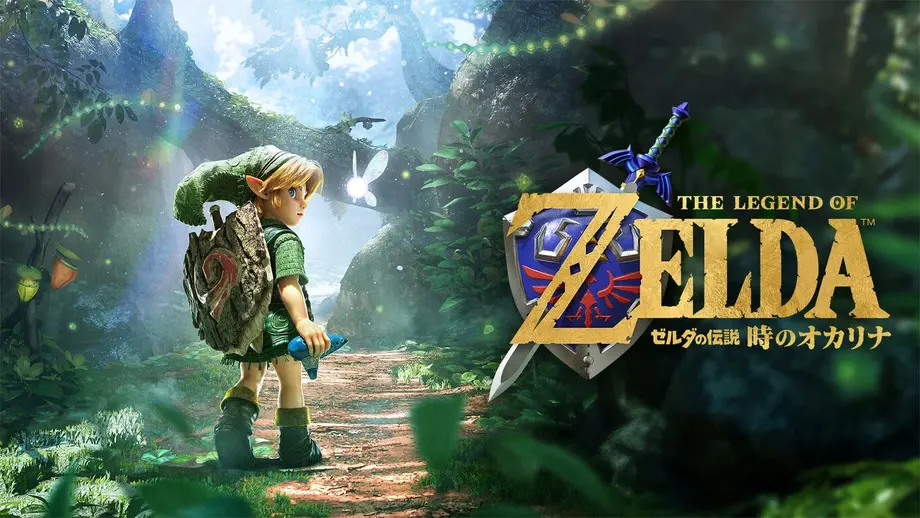
A return to Hyrule, rebuilt after 28 years
Nintendo released its full remake of The Legend of Zelda: Ocarina of Time for Nintendo Switch 2 on November 5, 2026, bringing new graphics, orchestral music, manual jumping and a smartphone companion service to the adventure first released on Nintendo 64 in 1998. A launch update, version 1.1.1, adds support for ZELDA NOTES and fixes several problems affecting play.
Contents
- A return to Hyrule, rebuilt after 28 years
- What players can buy and when
- Why Link must live through two eras
- New controls change the familiar journey
- The team chose discovery over shortcuts
- A new look, with selective voice acting
- Humming becomes another way to play
- New challenges and a clearer record of progress
- What the launch update adds to phones
- Music and early reviews accompany the release
- Key Points
The Japanese price is 7,980 yen for the download and 8,980 yen for the packaged edition. In South Korea, Nintendo lists the download at 79,800 won and the packaged edition at 88,000 won. The remake is exclusive to Switch 2, although compatible controllers from the original Switch can be connected to the newer console.
Nintendo rebuilt the game from scratch rather than transferring the original program and data into a new graphics package. Its developers nevertheless kept the central adventure: Link travels between childhood and adulthood, seeing how Hyrule changes across seven years and using the abilities available in each period to solve problems.
The most revealing development decision concerns something the team removed. Extra warp points were tested to shorten journeys, then discarded because they reduced discoveries along the way. Alongside that restraint, the remake introduces freely controlled camera movement, a jump button, sprinting and a quicker way to change equipment.
The result is a remake with two connected aims: make a familiar adventure easier to control, while keeping its carefully arranged routes, puzzles and discoveries. New boss rematches, a story log and extensive phone features add activities around that original structure.
What players can buy and when
November 5 is the release date in both Japan and South Korea. The Korean edition supports Korean text, carries a local age rating of 12 and is designed for one player. It supports TV, tabletop and handheld modes, allowing the same adventure to be played on a television or directly on the console.
Supported controllers include Joy-Con 2 and the Nintendo Switch 2 Pro Controller, along with the original Switch Joy-Con and Pro Controller when connected to Switch 2. A review describes the game's storage requirement as less than 25 GB, a useful detail for buyers planning their downloads.
Nintendo's launch campaign unfolded over nearly two months:
- September 8: The remake was announced during the Zelda 40th anniversary Nintendo Direct, and its title music became available through Nintendo Music.
- October 23: Four new gameplay videos showed locations and dungeon scenes.
- October 29: Three commercials featuring Snow Man member Ren Meguro presented the beginning of the adventure, puzzle solving and battles.
- November 2 and 3: Nintendo published its four chapter Ask the Developer interview about the remake.
- November 5: The game launched, version 1.1.1 enabled ZELDA NOTES support, and Nintendo Music expanded its selection to eight tracks.
- November 8, at 11:59 p.m.: The Korean download promotion closes for eligible purchases and download code redemptions.
The Korean digital promotion provides wallpaper with a Zelda 40th anniversary design. Packaged purchase bonuses vary by seller and last while stocks remain. Nintendo's official Korean store lists five A5 art cards, a paper stand and stickers; other participating retailers offer items including an eco bag, acrylic stand, software sleeve or metal coin.
Why Link must live through two eras
Link begins as a boy living in Kokiri Forest. The Great Deku Tree, the forest's guardian, tells him that he is destined to save Hyrule. Accompanied by the fairy Navi, he leaves the forest and becomes caught in the struggle against Ganondorf's ambitions.
Seven years separate Link's childhood and adult adventures. A place encountered early in the story can have a different appearance, different inhabitants or a different solution to its problems when he returns as an adult. Items and abilities also vary between the two ages, making travel through time part of solving the adventure rather than simply a change of scenery.
The ocarina connects music to progress. Melodies learned during the journey produce useful effects, including opening routes and helping Link move through the story. Players must remember both where a tool belongs and when it can be used.
Nintendo has retained the game's arrangement of distinct areas. Moving between them still involves a map transition, rather than an uninterrupted journey across one continuous landscape. For the developers, arriving in a new area is a deliberate moment of discovery.
New controls change the familiar journey
Link can now jump when the player presses a button. In the Nintendo 64 version, approaching certain edges triggered an automatic jump. The remake replaces that system with active control, giving players more choice over movement and making some obstacles easier to negotiate.
Jump attacks accommodate two habits. Players can use the familiar action from the original game or jump first and then press the attack button while in the air, a sequence closer to recent Zelda games. Sprinting is available by holding a button, while free camera control lets players inspect Hyrule from angles the original presentation rarely allowed.
A quick item menu reduces the need to repeatedly open the main equipment screen. In practical terms, it becomes easier to change tactics during combat, switching between weapons, tools and magic instead of relying on whichever items were already equipped.
Review accounts describe smoother combat and easier exploration, with some tradeoffs. Switching between targeted enemies can still feel awkward, and the freedom to jump can reduce the threat posed by hazards such as moving blade traps. The new controls change how players handle individual encounters even where the route through a dungeon remains familiar.
The Water Temple also receives adjustments. One review identifies fewer keys, while another describes the dungeon as more tolerable. These changes address the work of navigating and keeping track of progress within a location that still relies on interconnected puzzles.
The team chose discovery over shortcuts
Nintendo's Entertainment Planning and Development Production Group No. 3 led the remake. Series producer Eiji Aonuma and co-producer Hidemaro Fujibayashi stepped back from directing daily development, leaving a newer group of leads to rebuild the adventure.
Director Wu Xuewei worked alongside art director Shinoda, sound director Ohashi and program director Taguchi. The director, art director and sound director belong to Production Group No. 3 and had worked on Breath of the Wild and Tears of the Kingdom. Taguchi belongs to the programming management group.
Aonuma described the project as a chance for developers familiar mainly with newer Zelda games to understand the older game's construction and the choices behind it. Fujibayashi identified the Nintendo 64 original as a turning point for the series. The commitment to changing the appearance while retaining the experience came from the newer development members.
The team repeatedly compared newly implemented actions with the original game. Removing the experimental warp points followed the same reasoning: a faster trip could also mean fewer opportunities to notice something interesting. The remake keeps a more contained, deliberately arranged world than the broad freedom associated with recent Zelda adventures.
A new look, with selective voice acting
Nintendo's artists used puppet theatre and practical special effects as early reference points. The aim was to place colourful, stylised characters naturally within a world that feels physically convincing. Expanded animation, revised dialogue and longer scenes give familiar encounters more detail.
Voice coverage needs clarification. Launch descriptions variously refer to voice acting in cutscenes or full voice acting, while a review of the finished game says the vast majority of dialogue remains unspoken. Players should expect voiced material alongside substantial text dialogue.
Character changes extend beyond appearance. Review descriptions identify a more well intentioned portrayal of Mido, less repetitive guidance from Kaepora Gaebora and fewer interruptions from Navi. Longer opening scenes also alter the pace at which the adventure begins.
A reader poll collecting 238 votes asked specifically about the new visuals. The most enthusiastic option received 53.4%, another 23.5% accepted the design, and 23.1% said it was not the direction they had wanted. Together, the two favourable responses account for 76.9% of votes, compared with 23.1% for the disappointed response.
Reviews show a similar mix of appreciation and reservation. Detailed environments and new orchestral arrangements drew praise, while some character faces and the combination of ornate textures with cartoon proportions proved less convincing to individual reviewers.
Humming becomes another way to play
The Switch 2 microphone gives the ocarina a new input method. Players can hum a melody or play it on an instrument toward the microphone, prompting Link to perform it in the game. Traditional button input remains available, so microphone use is optional.
The feature links a familiar puzzle mechanic with a physical action outside the console. A player who remembers a tune can try singing it rather than reproducing it solely through button presses. The development interview discusses the voice recognition work behind that interaction.
Nintendo is also selling a playable Ocarina of Time instrument through its Japanese stores, including locations in Tokyo, Osaka, Kyoto and Fukuoka. HORI has an electronic version operated with buttons. Both can be played toward the console microphone to trigger the corresponding performance.
ZELDA NOTES adds another musical option on a phone. Its virtual ocarina supports free performance, guided playing and automatic playback of acquired sheet music. Users can create their own scores and share them as QR codes, extending music making beyond the melodies needed to complete the adventure.
New challenges and a clearer record of progress
A new facility called Manmaden opens as the adventure progresses. Presented like a museum, it contains statues of defeated monsters and information about their characteristics. It also lets players challenge powerful enemies again in timed rematches.
The rematches give combat a repeatable goal beyond finishing the story. Players can return when they want to test their skills, while ZELDA NOTES records completion times, awards titles and displays leading times from around the world.
Exploration brings another addition: messages described as the thoughts of fairies, scattered across Hyrule. Navi can read them when Link finds them, revealing secrets left in the world.
The new Threads of Time feature records the adventure in a story format and helps players identify their next objective. For someone returning after several days away, it provides a way to recover the thread of the journey without having to remember every previous conversation.
Some familiar rewards now require more money. Great Fairy upgrades can cost as much as 500 rupees, according to a review, while wallets hold twice their previous capacity. Rupees are Hyrule's currency, so the larger wallet and new upgrade charges make collecting money a more active part of planning purchases.
What the launch update adds to phones
Version 1.1.1 enables ZELDA NOTES through the Nintendo Switch App. After updating, players receive setup guidance when starting the game. Nintendo describes 11 companion functions, combining navigation, records, music and optional challenges.
The photo location activity asks players to find a place in Hyrule using an image shown on their phone. Rupees can buy hints, and successful discoveries earn points that can be exchanged for ocarina sheet music. The activity creates a connection between noticing landmarks during exploration and collecting more music to play.
A map follows the game in real time and helps track treasure chests and Gold Skulltulas. Players can hide undiscovered objects to preserve surprises and check completion rates by area. Daily records arrange events chronologically, including automatically captured images and statistics such as enemies defeated.
Other functions include cumulative play statistics, comparisons with players around the world, an album with stamps and frames, and an expanded story tapestry whose illustrations open relevant scenes. An amiibo stamp system awards an extra use after five stamps are collected.
A quiz contains more than 2,000 questions, including questions based on photographs. One attempt is available each day, with further attempts obtainable using rupees sent from an in game shop. These phone activities sit alongside a main adventure that remains designed for one player.
Music and early reviews accompany the release
Nintendo Music now carries an eight track playlist lasting 29 minutes. It includes the title theme and music for Kokiri Forest, Hyrule Field, Castle Town, Kakariko Village, Goron City, Zora's Domain and Gerudo Valley.
The title track had been released on September 8, so the launch expands the selection from one track to eight. Listening requires a paid Nintendo Switch Online membership. Music from the Nintendo 64 original and Ocarina of Time 3D is also available, allowing listeners to compare arrangements across three versions.
Nintendo Switch Online is also distributing character icon parts through its platinum point rewards. Link, Zelda and Ganondorf are among the characters featured in a rotation running for four weeks.
Early review scores are strong, including a 9.25 assessment and a reported Metascore of 96 at launch. The recurring judgment is more specific than the numbers: reviewers praise the craftsmanship, music and improved controls while describing an adventure that remains exceptionally familiar.
That balance defines the release. Returning players receive a reconstruction of places and encounters they remember, with fewer interruptions and more control. New players encounter the same journey through two eras, supported by clearer records, optional phone tools and movement closer to contemporary Zelda games.
Key Points
- Ocarina of Time launched for Nintendo Switch 2 on November 5, 2026, as a full remake of the 1998 adventure.
- Japanese prices are 7,980 yen digitally and 8,980 yen for the packaged edition; Korean prices are 79,800 won and 88,000 won.
- New controls include manual jumping, sprinting, free camera movement and a quick item menu.
- Microphone input lets players hum or play ocarina melodies, while button controls remain available.
- New additions include timed boss rematches, fairy messages and the Threads of Time progress record.
- Update 1.1.1 enables 11 ZELDA NOTES functions, including maps, photo challenges, musical tools and a quiz with more than 2,000 questions.
- The Korean digital wallpaper promotion ends November 8 at 11:59 p.m.