An invented aerial view points to a wider production shift
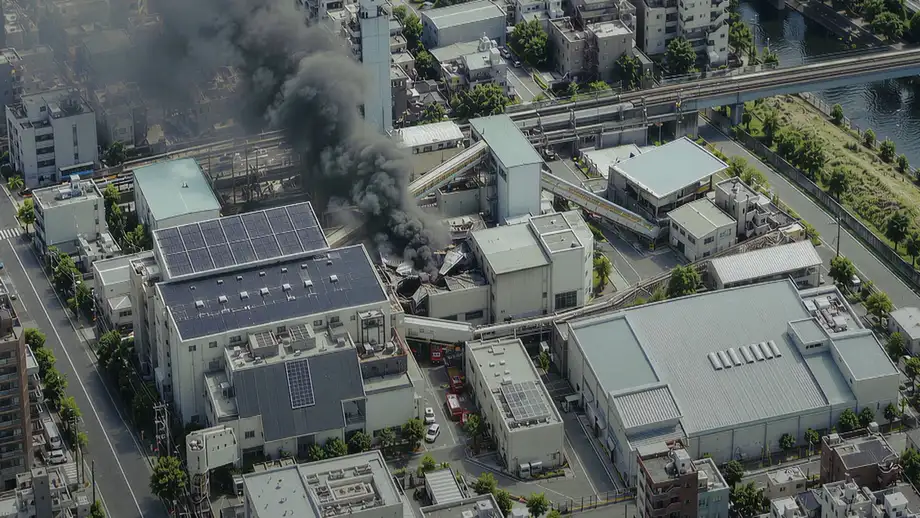
The aerial landscape in an explosion scene in Emergency Room 24 Hours was fictional: generative AI created the scenery, and the production team added smoke. Fuji Television used the opening episode of the medical drama's sixth series, which began in October 2026, to put a new production system into practice.
Contents
- An invented aerial view points to a wider production shift
- Who is building AI Sandbox?
- How a scene moves from an idea to the screen
- What changed in Emergency Room 24 Hours?
- What the 70 to 80 percent figure measures
- Why safety and planning are part of the project
- At least one focused production each quarter
- Expansion beyond Fuji's drama studios
- The Bottom Line
On November 5, 2026, the Japanese broadcaster announced plans to build a system allowing every drama it produces to use AI where appropriate by October 2027. Its testing ground is AI Sandbox, an experimentation space operating since September at Wangan Studio in Aomi, in Tokyo's Koto ward.
Fuji says tests have reduced the work required for some video production processes by as much as 70 to 80 percent compared with conventional methods. The company is pursuing three connected goals: making difficult scenes possible, reducing production workloads and improving safety.
The scale extends beyond a single medical series. Fuji produces 16 serial dramas annually for terrestrial television's Golden and Prime viewing hours, between 7 p.m. and 11 p.m. Multiple dramas have already begun using generative AI, with Emergency Room 24 Hours providing the most detailed example disclosed.
Who is building AI Sandbox?
Fuji established an AI Center within its Digital Strategy Office during an organisational change in July 2026. AI Sandbox operates under that centre, bringing together people who normally handle different parts of television production.
The project includes Fuji's Studio 1, which houses its drama and film production operation, its Tech Art Design Department, and outside company ANDENT. ANDENT's AI development unit, stu, serves as a development partner. Its AI supervisors and designers work alongside directors, producers and technical staff.
That arrangement places AI specialists inside the process of making actual programmes. Directors bring their intended scenes, production staff consider how to realise them, and technical teams assess which combination of tools can deliver the required images.
How a scene moves from an idea to the screen
AI Sandbox starts work before filming. Teams share scripts and target images, then use generative AI to turn a director's concept into pictures or video that colleagues can discuss. Generative AI is software that creates new material, such as images or moving footage, from instructions and other inputs.
A shared visual plan gives the production and technical teams something concrete to examine. They can decide which parts of a scene to film, which to create digitally and how those elements should fit together before cameras begin recording.
Fuji describes a choice among live action, visual effects, computer graphics and generative AI. Visual effects, often shortened to VFX, combine or alter images to create a finished shot. Computer graphics, or CG, create digital objects and environments. A single scene can use several of these methods.
Shinya Masaki, AI Sandbox's technical lead and an assistant director of Fuji's Tech Art Design Department, explained how the team makes those decisions. In comments translated from Japanese, he said:
Rather than making everything with AI, we combine it with conventional VFX and other techniques, and think together with production staff about the best method for the work.
Fuji says the quality of the finished drama comes first. AI therefore enters at two points: helping staff agree on what they want to show and, where suitable, helping produce the images viewers eventually see.
What changed in Emergency Room 24 Hours?
Emergency Room 24 Hours returned in October 2026 for its sixth series, 13 years after the fifth series aired in 2013. The medical drama, which began in 1999, follows doctors and nurses working in emergency care.
For the first episode's explosion scene, the team generated an imaginary aerial landscape and composited smoke over it. Compositing means combining separate visual elements into one image. The resulting shot could depict an accident site without requiring the entire view to be captured at a real location.
The production also uses AI for detailed image processing in medical scenes and for accident settings that would be difficult to reproduce through filming alone. Before shooting, the director's intended images are shared with production and technical staff so they can plan the mix of live action and image processing.
Ryotaro Adachi, the producer of Emergency Room 24 Hours, said this was the first time the AI Sandbox team had participated in the series. He described the results in disaster scenes and scenes set overseas. In comments translated from Japanese, he said:
Particularly in disaster scenes and scenes set overseas, we are achieving image quality beyond what we imagined.
Adachi also described the value of discussing how to realise a scene before filming. His account connects the visual results to an earlier change in working practice: producers and technicians consider the intended image together from the preparation stage.
What the 70 to 80 percent figure measures
Fuji's largest numerical claim concerns labour input in selected video production processes. In those tested tasks, the company says generative AI reduced the amount of work by up to 70 to 80 percent compared with conventional methods.
To make that percentage easier to picture, a task requiring 100 units of work under a conventional method would require 20 to 30 units after a reduction of that size. This is an illustration of the percentage; Fuji has not published a task measured in those units.
The figure measures specific processes. A full drama budget covers many other activities, including performances, locations, filming and editing, while the published result concerns work within selected video tasks. Fuji has not disclosed the underlying hours, the number of tests or a complete financial breakdown.
For production teams, the practical opportunity is to spend less effort on certain difficult images while retaining a choice of methods. Masaki said another purpose is to store the experience and technical knowledge gained inside the company, so later productions can draw on it.
Why safety and planning are part of the project
Daisuke Nagashima, a department head at Fuji's Studio 1 Drama and Film Production Center responsible for strategy, business development and production promotion, identified location, weather, legal requirements and safety as constraints on filming.
A scene may be desirable for a story yet difficult to arrange at the required place or time. AI Sandbox gives staff another way to plan such sequences, including deciding how much must be filmed physically and how much can be produced through image processing.
Nagashima described the wider purpose as changing the workflow for serial drama production. In comments translated from Japanese, he said:
This initiative adds AI as a new option and updates the entire workflow for producing serial dramas.
His explanation also links early image sharing with the pressures of a television schedule. When staff can discuss a concrete version of a difficult shot before filming, decisions about locations, technical work and visual effects can begin earlier.
At least one focused production each quarter
Fuji's rollout begins with at least one drama designated for concentrated AI work in every broadcast quarter, starting with the October 2026 season. Those productions will give AI Sandbox recurring opportunities to test methods during the making of actual programmes.
Four broadcast quarters mean a minimum of four such designations over a full year. Alongside Fuji's current output of 16 terrestrial dramas annually in the main evening viewing hours, that provides a sense of the programme's scale: four is one quarter of 16.
The broader October 2027 target is to equip all Fuji productions with access to appropriate AI methods. Decisions would still be made according to the needs of each drama and scene, using the mix of filming and digital techniques the staff judge suitable.
Fuji's sequence of organisational changes, production tests and expansion targets is:
- July 2026: Fuji establishes the AI Center within its Digital Strategy Office.
- September 2026: AI Sandbox begins operating at Wangan Studio.
- October 2026: The quarterly programme of AI focused dramas begins, including the sixth series of Emergency Room 24 Hours.
- November 5, 2026: Fuji announces the wider initiative and its production targets.
- October 2027: Fuji aims to have a system enabling appropriate AI use across all dramas it produces.
- Fiscal 2029: Fuji Media Holdings aims to possess AI capabilities comparable with leading domestic vendors.
Expansion beyond Fuji's drama studios
Fuji intends to extend the initiative to video related companies within Fuji Media Holdings from around October 2027. By fiscal 2029, the group aims to hold AI capabilities at the level of leading Japanese vendors.
The immediate work centres on building experience through production: choosing methods, solving visual problems and sharing what staff learn. Expansion across the group would carry that knowledge beyond Fuji's own drama teams into other businesses involved in making video.
ANDENT's participation connects the internal programme with outside AI development skills. Its stu unit supplies supervisors and designers who work with the people responsible for the story, the shoot and the finished images. Fuji's plan combines that partnership with a stated goal of accumulating knowledge within the broadcaster.
Japanese drama production is also seeing AI use elsewhere. TBS has used Google's Veo 3 in VIVANT, providing another example of generative video entering television drama. Fuji's initiative adds a dedicated workspace, recurring production assignments and dated expansion goals to that wider adoption.
The Bottom Line
- Fuji announced its AI Sandbox expansion plan on November 5, 2026, following the workspace's September launch at Wangan Studio in Tokyo.
- Emergency Room 24 Hours used an AI generated aerial landscape with added smoke for an explosion scene in its sixth series.
- Fuji says selected video production tasks required up to 70 to 80 percent less work in its tests.
- The broadcaster plans at least one drama focused on AI use per quarter, starting with the October 2026 season.
- October 2027 is the target for a system supporting appropriate AI use across all Fuji produced dramas.
- Expansion to Fuji Media Holdings' video businesses is planned, with a group capability target set for fiscal 2029.