Japan weighs who should pay more for medical care
Japan's government plans to set out a reform roadmap by the end of the year for the share of medical bills paid directly by older patients, while also discussing whether the definition of an older adult should remain fixed at 65. The review comes as medical spending on people aged 75 and above has reached 19.6 trillion yen, accounting for about 41% of national medical expenditure.
Contents
- Japan weighs who should pay more for medical care
- What the government is reviewing
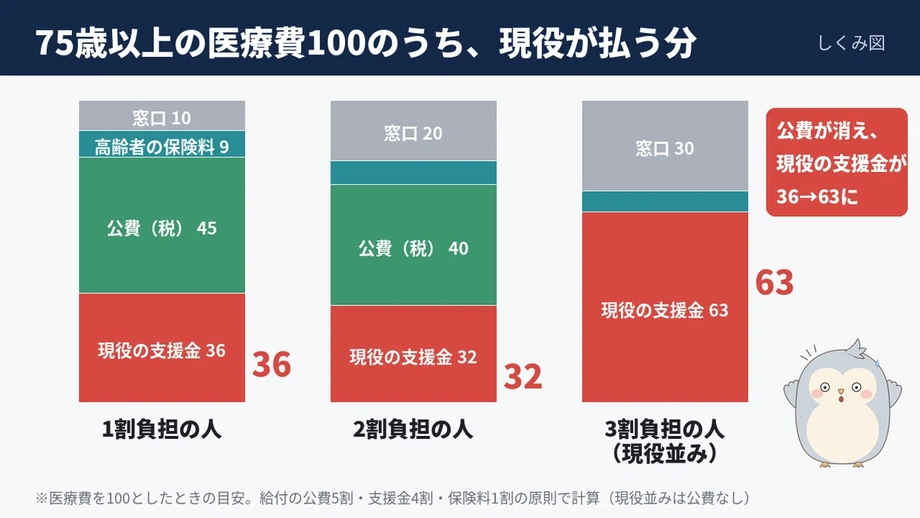
- How the existing 10%, 20% and 30% shares work
- Which households qualify for the 20% category?
- A temporary protection ended in September 2025
- Why working households are part of the debate
- Medical spending has shifted towards people aged 75 and above
- Why employment and assets enter the discussion
- Key Points
The government confirmed its plans on the 5th. The Liberal Democratic Party and Nippon Ishin, also known as the Japan Innovation Party, are discussing changes to the income thresholds that determine which older patients pay 30% of their covered medical costs, the same share generally paid by people of working age.
At a meeting of the Council for the Design of a Society with a Declining Birthrate, the government presented figures showing that more than half of people aged 65 to 69 are employed. Committee members argued that health and employment conditions should inform discussions about older age, rather than applying a single age boundary to everyone.
The debate brings together two pressures felt in households: medical bills paid when receiving treatment and insurance premiums deducted from earnings. Raising the first for some older patients is intended to help contain the second for workers. The decisions will determine how much different households contribute and how much protection remains for people who need frequent care.
What the government is reviewing
The proposed roadmap concerns payments made at hospitals, clinics and pharmacies. These payments, called copayments, are the patient's share of a covered medical bill. Insurance pays the remainder, using money collected through premiums and public funding.
The party discussions focus on the income boundaries for the 30% payment category. Changing those boundaries could bring more older patients into that category. No replacement thresholds, implementation date or new age definition have been announced.
The age discussion and the payment discussion address different parts of the system. Age helps determine which arrangements apply to a person, while income can determine how much that person pays. A roadmap would set out the intended changes and their timetable; patients would need the resulting rules to know how their own bills would change.
How the existing 10%, 20% and 30% shares work
The Ministry of Health, Labour and Welfare's copayment reform guidance explains the system introduced under the 2021 amendment to the Health Insurance Act, Act No. 66. From October 1, 2022, eligible people in the medical insurance system principally serving those aged 75 and above began paying 20%, up from 10%.
People already classified as having income comparable to working generations continued paying 30%. Other insured people outside the new 20% category continued paying 10%. The ministry estimated that about 20% of everyone insured under this older adult medical system would fall into the 20% category.
The difference is straightforward before spending caps apply. For covered treatment costing 10,000 yen, a patient paying 10% contributes 1,000 yen, someone paying 20% contributes 2,000 yen, and someone paying 30% contributes 3,000 yen. The treatment costs the same amount, but the division between the patient and insurance changes.
The system principally covers people aged 75 and older. People aged 65 to 74 can also qualify if the responsible insurance body recognises that they have certain disabilities. This makes the government's broader discussion about the age of 65 relevant to a wider group than those already enrolled in this particular medical scheme.
Which households qualify for the 20% category?
The ministry uses two income tests for the 20% category, excluding people already required to pay 30%. Taxable income must be at least 280,000 yen, and pension receipts plus other qualifying income must meet a further household threshold.
That second threshold is 2 million yen for a household with one insured person, or a combined 3.2 million yen for a household with multiple insured people. The assessment is made at household level under the scheme's rules.
Taxable income is the amount left after applicable deductions, so it can be much lower than the money a person receives during the year. The pension and other income test is a separate calculation. The ministry also says survivors' pensions and disability pensions are excluded from pension receipts for this assessment.
These details matter because a headline income figure alone may give a household an incomplete picture of its payment category. Any change to the thresholds would need to specify which income measure applies and how households with more than one insured person are assessed.
A temporary protection ended in September 2025
The 2022 reform included a measure to soften the immediate increase for patients moving from 10% to 20%. For three years, the additional monthly outpatient payment attributable to that change was limited to 3,000 yen. That temporary protection ended on September 30, 2025.
The ministry says the high medical expense benefit system continues to limit outpatient payments for the relevant 20% category to 18,000 yen a month and 144,000 yen a year. These limits protect patients whose repeated visits or treatments would otherwise produce larger bills.
The temporary measure and the continuing caps serve different purposes. The temporary measure limited the increase caused by the new percentage. The continuing caps limit eligible spending itself. Its expiry therefore changes what some patients pay even while the underlying copayment rate remains 20%.
The main dated steps are:
- 2021: Act No. 66 amended the Health Insurance Act and related laws.
- October 1, 2022: The 20% copayment began for eligible people in the older adult medical system.
- September 30, 2025: The temporary 3,000 yen limit on additional monthly outpatient payments ended.
- By the end of the year: The government intends to set out the newly announced reform roadmap.
Why working households are part of the debate
The health ministry says working generations finance about 40% of spending in the older adult medical system after patient copayments are excluded. As the number and medical needs of older patients grow, the amount required from those contributors also comes under pressure.
Annual figures for corporate health insurance associations put payments supporting older people's medical care at a record 3.8591 trillion yen, up 5.7%. These associations cover about 30 million people, principally employees of large companies and their families, across roughly 1,400 funds.
The average premium rate in those figures was 9.31%, with a forecast increase to 9.34% for the following year. Employers and employees generally divide the contribution equally. A rising rate can therefore increase both the deduction from a worker's pay and the employer's labour costs.
Wage growth helped the funds collect an additional 106.9 billion yen in premium revenue during the reported year. Their combined current balance reached a surplus of 14.5 billion yen, following a deficit of 136.5 billion yen in 2023. Even with that improvement, 660 of the roughly 1,400 associations recorded deficits, or about 47% using those figures.
For workers, the connection is concrete: higher wages can increase take home income, while higher insurance contributions absorb part of that gain. For insurers, stronger wage revenue provides money to meet bills, but rising transfers for older patients continue to consume resources.
Medical spending has shifted towards people aged 75 and above
Health ministry expenditure figures put national medical spending at about 48 trillion yen in the annual period cited, an increase of 1.5% and a fourth consecutive record. Spending on people aged 75 and above exceeded 40% of the total for the first time.
Expenditure for that age group rose from 12.7 trillion yen in 2010 to 19.6 trillion yen in the later figures. That is an increase of 6.9 trillion yen, or about 54%. Its share of national medical spending rose from 34% to 41%, a gain of seven percentage points.
A separate official benchmark is provided by the health ministry's FY2023 medical expenditure overview, dated October 10, 2025. Table 1 puts national medical expenditure for fiscal 2023 at 48.0915 trillion yen, up 3.0% from the previous fiscal year. Table 5 gives spending on people aged 75 and above as 19.1503 trillion yen, or 39.8% of the total, and spending on those aged 65 and above as 28.8806 trillion yen, or 60.1%. These are not the same figures as the 19.6 trillion yen and 41% cited above. Table 2 separately records 17.2072 trillion yen in benefits under the medical system principally serving people aged 75 and above, a different measure from total medical spending on that age group.
The ministry identifies the ageing of the baby boom generation born from 1947 to 1949 as a reason for growing costs. Members of that large generation began turning 75 in 2022, moving into the age group principally served by the older adult medical system.
The financing challenge involves both a larger bill and a changing distribution of that bill. With a greater share of medical spending going to people aged 75 and above, decisions about their copayments affect a substantial part of national healthcare funding.
Why employment and assets enter the discussion
The finding that more than half of people aged 65 to 69 work gives the council a concrete reason to reconsider a uniform age definition. Someone who remains employed may have earnings and continue contributing through employment, while another person of the same age may depend mainly on a pension.
Committee members called for attention to health as well as employment. Those factors bear directly on a person's circumstances: being able to work, having sufficient income and needing regular treatment can vary widely among people born in the same year.
An earlier reform roadmap also envisages higher insurance premiums for people with high incomes and assets regardless of age, with implementation extending through 2028. That places financial resources alongside age in the wider discussion about contributions.
Premiums and copayments reach households in different ways. Premiums are regular contributions to insurance. Copayments arise when someone uses medical services. A person with frequent appointments may feel a higher copayment repeatedly, while a premium change affects regular household spending even during months without treatment.
The government's immediate task is to turn those broad principles into specific rules. The choices about income thresholds, payment percentages and protections for repeated treatment will determine how the proposed redistribution of costs works in daily life.
Key Points
- Japan plans a roadmap by the end of the year reviewing older patients' medical payments and will discuss the definition of older age.
- The Liberal Democratic Party and Nippon Ishin are discussing income thresholds for the 30% copayment category.
- Eligible people principally aged 75 and above have paid 20% since October 2022, while other categories pay 10% or 30%.
- A temporary limit on additional outpatient payments ended on September 30, 2025; continuing spending caps remain for the relevant category.
- Medical spending on people aged 75 and above rose from 12.7 trillion yen in 2010 to 19.6 trillion yen in the later annual figures.
- The separate fiscal 2023 official tables put national medical expenditure at 48.0915 trillion yen and spending on people aged 75 and above at 19.1503 trillion yen, or 39.8%.
- More than half of people aged 65 to 69 are employed, a finding central to the discussion about age and contributions.