A record reached before the year ends
South Korea estimated that it passed 20 million foreign visitors on November 12, 2026, reaching the milestone for the first time as tourism spending grew faster than arrivals and more travelers entered through airports outside the capital region.
Contents
- A record reached before the year ends
- How arrivals reached a new high
- Korean culture draws interest beyond music
- Spending grows faster than visitor numbers
- Duty free shopping loses ground to other purchases
- Food, beauty and medical care gain importance
- Regional gateways grow, but Seoul keeps most spending
- Busan shows how a regional destination can grow
- Why the tourism balance is still in deficit
- Preparing for 30 million visitors
- Key Points
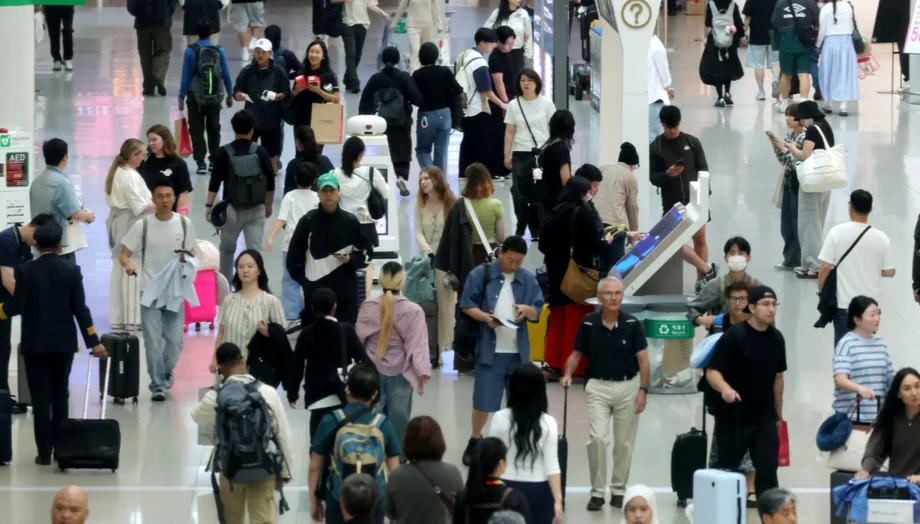
The Ministry of Culture, Sports and Tourism based its announcement on a provisional 19.97 million arrivals through November 11 and an average of about 64,000 arrivals a day. Second Vice Minister Kim Dae-hyun welcomed the visitor marking the milestone at Incheon International Airport, the main international gateway to Seoul.
The achievement comes 14 years after South Korea first exceeded 10 million annual foreign visitors in 2012, when it recorded 11.14 million. With several weeks remaining in 2026, every additional arrival will extend the annual record.
Foreign visitors also spent 15.9416 trillion won by card in the tourism sector from January through September, up 47.7 percent from 10.794 trillion won during the same period in 2025. Arrivals over those nine months increased 21.5 percent to 17.11 million.
South Korea now faces a more demanding task than bringing people through its borders: turning that growth into longer stays, stronger local businesses and income for destinations beyond Seoul. The latest figures show progress, particularly in Busan, alongside a heavy concentration of spending in the capital.
How arrivals reached a new high
South Korea welcomed 17.5 million foreign visitors in 2019, before COVID-19 disrupted international travel. Arrivals recovered to 16.37 million in 2024 and reached a record 18.94 million in 2025. The November milestone puts 2026 above both the previous record and the level before the pandemic.
The ministry said on October 27 that arrivals had already overtaken the previous annual high. At that point, it forecast that the total could reach 23 million by December 31 if growth continued.
The main steps in the country's tourism recovery and latest expansion were:
- 2012: Annual foreign arrivals first exceeded 10 million, reaching 11.14 million.
- 2019: South Korea received 17.5 million foreign visitors before the pandemic.
- 2025: Arrivals reached a new annual record of 18.94 million.
- January through September 2026: Arrivals totaled 17.11 million, up 21.5 percent from a year earlier.
- November 11, 2026: Provisional arrivals reached 19.97 million.
- November 12, 2026: The ministry estimated that arrivals had passed 20 million.
China remained the largest source of visitors through September, contributing about 5.47 million arrivals, up 29.2 percent. Japan accounted for 3.12 million and Taiwan for 1.86 million, with growth of 16.9 percent and 32.4 percent respectively.
Travel demand also extended beyond nearby markets. Arrivals from the Americas reached 1.62 million, up 12 percent, while European arrivals increased 20 percent to 1.19 million. Hong Kong contributed about 550,000 visitors.
Korean culture draws interest beyond music
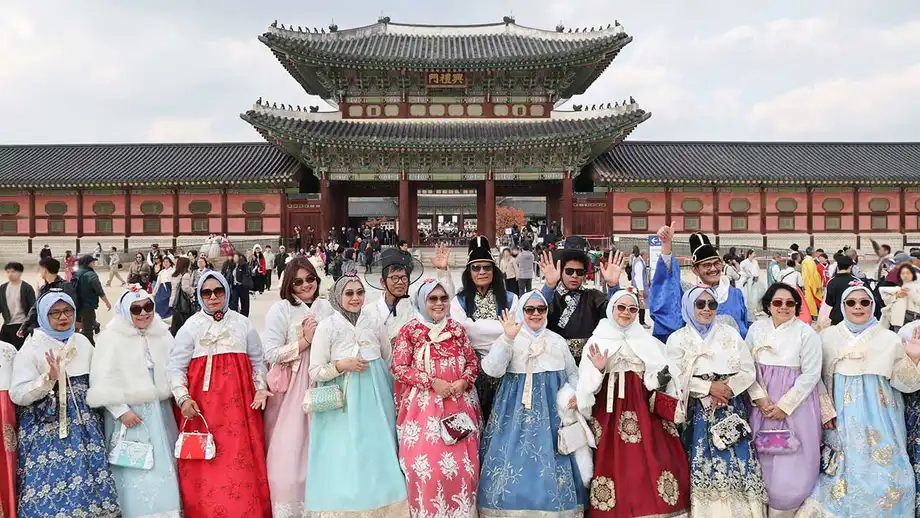
The culture ministry credited the record to the international spread of Korean culture, cooperation across government and the hospitality shown to visitors. Its explanation places food and beauty alongside music and television as reasons people become interested in South Korea.
The 2026 Overseas Hallyu Survey, conducted with the Korean Foundation for International Cultural Exchange, covered 27,400 people in 30 countries and regions who had encountered Korean cultural content. Hallyu means the Korean Wave, the international popularity of Korean entertainment and culture.
Respondents were surveyed in November and December 2025. Fifty-five percent said Korean food was popular in their countries, compared with 54 percent for music, 53 percent for beauty, 51 percent for television dramas and 49 percent for films.
Sixty-five percent said Korean culture had positively influenced purchases of Korean products and services, up from 58 percent two years earlier. The findings give tourism businesses several routes to attracting customers, from meals and shopping to beauty treatments and experiences connected with entertainment.
Spending grows faster than visitor numbers
Tourism sector card spending rose by about 5.15 trillion won in the first nine months of 2026. Its 47.7 percent growth rate was more than twice the 21.5 percent increase in arrivals, indicating that the expansion involved spending as well as visitor volume.
Yanolja Research put tourism receipts for January through September at $21.18 billion, up 31.8 percent from a year earlier. Receipts averaged $1,237.80 per visitor, an increase of 8.5 percent from 2025 and 3.7 percent above 2019.
Tourism receipts measure money earned from international visitors, while the ministry's won figure tracks card purchases in the tourism sector. Each measure captures a different part of tourism activity, which explains why the totals and growth rates vary.
The receipts figure also brings an older ambition back into view. In 2012, the government set goals of 20 million foreign visitors and $30 billion in tourism revenue. The visitor threshold has now been reached, while receipts stood at $21.89 billion for all of 2025 and $21.18 billion through September 2026.
Duty free shopping loses ground to other purchases
Foreign visitors are spreading their spending across ordinary shopping districts, restaurants and services. Duty free stores, once closely associated with large purchases by Chinese tour groups, have experienced a different trajectory from the wider tourism recovery.
Yanolja Research calculated that foreign customers spent $5.03 billion at duty free stores from January through September, down 61.1 percent from $12.93 billion during the same period in 2019. Customer numbers fell from about 14.72 million to 10.60 million, while spending per customer dropped from roughly $879 to $475.
Shopping surveys show a similar shift in where visitors go. The share using airport duty free shops fell from 33.5 percent in 2019 to 12.7 percent in 2025. The share visiting large shopping malls rose from 16.1 percent to 39.1 percent. Among foreign tourists who shopped in 2025, 50.9 percent visited street shops.
Seoul's commercial neighborhoods are capturing substantial spending. Foreign visitor card purchases in Myeongdong reached 1.7356 trillion won through September. In Seongsu, they totaled 263.8 billion won, more than twice the amount recorded a year earlier.
Food, beauty and medical care gain importance
Food has become a much more common part of the visitor experience. The share of foreign tourists participating in culinary tourism rose from 48.4 percent in 2012 to 81.6 percent in 2025. That includes travel activities built around eating and discovering local food.
Medical services are another fast growing source of spending. Foreign visitors spent about 1.84 trillion won on medical care from January through September 2026, up 57.9 percent from a year earlier and about 6.8 times the amount in the same period of 2019.
South Korea recorded 2,011,822 foreign patients in 2025, with dermatology and plastic surgery accounting for 74.1 percent. Beauty and wellness also increased their share of card spending associated with Hallyu, rising from 9.1 percent in 2019 to 20.9 percent in 2026.
Seoul captures much of that activity. Its share of foreign patients rose from 62.3 percent in 2012 to 87.2 percent in 2025. Daegu, by comparison, recorded 19,243 foreign patients in 2025, down from 31,183 in 2019. Medical tourism is expanding nationally while becoming more concentrated geographically.
Regional gateways grow, but Seoul keeps most spending
Airports outside the capital region handled 3.24 million foreign arrivals through September, up 37.4 percent and accounting for 19 percent of all arrivals. Those gateways include Gimhae, Jeju, Cheongju and Daegu.
The ministry put arrivals through regional seaports at 1.58 million, up 14.5 percent and representing 9.2 percent of arrivals; Yanolja Research gave a higher regional seaport total of 1.72 million for the same nine months. Ports serving visitors include Busan, Jeju, Seogwipo, Yeosu and Gunsan.
Regional airport growth outpaced the 17.3 percent increase at airports serving Greater Seoul. Yanolja Research also calculated that regional airports handled 21.6 percent of all international air arrivals, compared with 18.7 percent in 2019. That share uses air passengers as its base, while the ministry's 19 percent figure uses all arrivals.
Seoul nevertheless accounted for 70.9 percent of foreign visitors' offline card spending through September, totaling about 8.84 trillion won. Gangnam-gu, Jung-gu and Mapo-gu together accounted for 64.4 percent of total foreign visitor card spending. More regional entry points are bringing travelers into the country, while much of their spending remains concentrated in a few urban districts.
Busan shows how a regional destination can grow
Busan welcomed 3.93 million foreign tourists in the first nine months of 2026, according to the Busan Metropolitan Government. The southeastern port city had already surpassed its total of 3.64 million for all of 2025 and was approaching its annual target of 4 million.
The city's visitor growth of 47 percent was more than twice the national rate of 21.5 percent. Foreign card spending in Busan exceeded 1.01 trillion won through September, up 51.9 percent from a year earlier.
Direct access has played a substantial role. Nearly 63 percent of foreign visitors to Busan in September arrived through Gimhae International Airport or the Port of Busan, compared with 50.4 percent in January. The port recorded 96,493 direct arrivals in September, while Gimhae handled 218,049, up 48.1 percent.
Busan also attracted a wider mix of visitors. American arrivals rose 77.2 percent through September to 324,816, French arrivals doubled to 43,165, and Australian arrivals increased nearly 48 percent. Mayor Chun Jae-soo said the city would improve tourism infrastructure to encourage longer stays and return visits.
Why the tourism balance is still in deficit
South Korea's tourism deficit narrowed 70.9 percent to $2.21 billion in the first nine months, from $7.59 billion a year earlier, according to Yanolja Research. Foreign visitor receipts reached $21.18 billion, while South Korean travelers spent $23.39 billion abroad.
A tourism deficit means residents spend more overseas than foreign visitors spend in their country. Higher inbound spending can narrow that gap even when outbound travel remains strong. About 95 percent of the $5.38 billion improvement came from increased inbound receipts.
The monthly position weakened later in the year. Korea Tourism Organization figures showed a September deficit of $498 million, up from $399.4 million in August. South Korea returned to deficit in July after four monthly surpluses, including a June surplus of $596.6 million, the largest since October 2008.
Outbound tourism spending rose to $2.96 billion in September, while average spending per departing traveler reached $1,304. At the same time, inbound receipts growth slowed to 24.3 percent in the third quarter. For cities and businesses, the practical priorities are retaining visitors longer and earning more from each stay.
Lee Hoon, a tourism professor at Hanyang University, called for a broader approach to measuring progress:
Visitor numbers are certainly important, but qualitative growth is also crucial. Korea needs a comprehensive strategy to increase how long tourists stay, how much they spend and how satisfied they are with their visits.
Preparing for 30 million visitors
The government is now aiming for 30 million annual foreign visitors and preparing for an eventual 40 million. No deadline was given for either target. Moving from 20 million to 30 million would require another 50 percent increase in arrivals.
At the 11th National Tourism Strategy Meeting on February 25, the government proposed expanding international flights at regional airports, improving immigration procedures and strengthening penalties for excessive pricing. Cruise measures included faster screening for ships calling at several Korean ports and more immigration screening aboard large vessels.
Transport proposals also included more domestic flight connections to regional airports and extended airport bus services late at night to the Chungcheong and Gangwon regions. Those changes would help visitors arriving at Incheon continue to destinations elsewhere.
Repeat visitors offer another opportunity. In 2025, 56.6 percent of foreign tourists had visited South Korea before. Yet participation in traditional cultural experiences was 4.8 percent among people making their fourth or later visit, compared with 24.2 percent among first visitors.
Shim Chang-seop, a tourism management professor at Gachon University, argued that policy should track whether tourism income reaches local businesses and creates jobs:
Tourism policy should also be evaluated based not on visitor numbers, but on how much tourism revenue returns to regional economies, including through time spent in local areas, spending, and job creation.
The ministry plans airport welcome events, meetings with tourism businesses and promotions connected with the Korea Grand Sale through December. The next numerical test is its forecast of as many as 23 million arrivals by the end of 2026. The economic test is how widely the benefits reach.
Key Points
- South Korea estimated that foreign arrivals passed 20 million on November 12, 2026, its first time reaching that level.
- Tourism sector card spending rose 47.7 percent through September, compared with 21.5 percent growth in arrivals.
- Food, beauty, medical care and neighborhood shopping are gaining importance as duty free spending falls below 2019 levels.
- Regional airport arrivals increased 37.4 percent, but Seoul retained 70.9 percent of foreign visitors' offline card spending.
- Busan welcomed 3.93 million foreign visitors through September, surpassing its total for all of 2025.
- The tourism deficit narrowed to $2.21 billion through September. The government is targeting 30 million annual visitors and preparing for 40 million.