Hospital opening held back by failures across the lift system
All 28 lifts in Queen Mary Hospital's new Clinical Block 1 had problems of varying severity, a Hong Kong government investigation has found, exposing failures in construction, professional supervision and government acceptance checks. The findings were submitted to the Legislative Council on November 12, 2026, ahead of a special Development Panel meeting on November 13.
Contents
- Hospital opening held back by failures across the lift system
- What went wrong inside the shafts?
- Contractors and consultants face scrutiny
- A completion certificate issued before permits were ready
- How three inspection stages missed operational problems
- Different accountability measures for government staff
- Repairs advance, but access remains restricted
- Warning signs stretched across more than two years
- Wider checks and a review due by December
- Key Points
The 125 page report identifies four main engineering causes of frequent breakdowns: lift shafts with incorrect dimensions or alignment, guide rails that were not vertical, poorly balanced lift cars and inadequate installation workmanship. The Development Bureau has also referred suspected unlawful conduct to law enforcement agencies and is starting procedures that could lead to penalties against contractors and consultants.
The consequences extend beyond unreliable journeys between floors. Clinical services in the new building have been delayed, and the Hospital Authority says full services will begin only when all 28 lifts operate normally. The building forms part of a redevelopment costing HK$13.5 billion and spanning 10 years.
By November 10, repairs had been completed on 18 lifts, with seven accepted and opened for use by staff and the public according to hospital needs. The remaining repairs are expected to finish during the fourth quarter of 2026. Completing repairs and obtaining acceptance are separate steps, so the number repaired is larger than the number returned to use.
The inquiry also found that warning signs stretched back to May 2024. The Development Bureau said the existing supervision arrangements should have allowed the defects to be identified and corrected early, but the problems received insufficient attention and follow up during construction.
What went wrong inside the shafts?
The lift shafts, the vertical spaces through which lift cars travel, had deviations in both their dimensions and vertical alignment. In places, the clearance between the shaft wall and the lift car was insufficient, making safety devices more likely to activate and interrupt operation.
The guide rails had alignment problems at different floors. These rails guide a lift car along its intended path. If they are not properly aligned, the car's movement can become less stable or smooth.
The lift cars also had an uneven centre of gravity, meaning their weight was not balanced as intended. The investigation found this left the cars less than fully vertical. Poor installation workmanship compounded the problems.
The report separates these four physical causes from five broader failures in how the project was managed: inaccurate construction and weak follow up; omissions in inspection plans; inadequate supervision and acceptance; negligence when issuing a completion certificate; and weaknesses in the arrangements and working practices for granting lift use permits.
Contractors and consultants face scrutiny
Able Engineering, identified in the report as 安保工程有限公司, was responsible for the building under a design and build contract. This put responsibility for both design and construction with the main contractor. The bureau found that Able failed to supervise its project team adequately and responded carelessly after learning that shaft dimensions and alignment were wrong.
The investigation also found that Able chipped away concrete inside the shafts without submitting a repair proposal or obtaining authorisation from the Architectural Services Department.
Anlev Elevator Limited, the lift subcontractor and registered lift contractor, failed to install guide rails and lift cars according to the design specifications. The report said its workmanship affected stability during operation. A registered lift engineer employed by Anlev also failed to conduct a thorough examination before issuing safety certificates.
The findings reach beyond the firms carrying out construction. An authorised person appointed by architectural consultant Simon Kwan & Associates relied on shaft photographs supplied by the contractor before issuing a report on the associated building works, without establishing the actual conditions inside the shafts.
Two building services consultancies, identified as 澧信 and 湯瑪士, approved an inspection, testing and approval plan that omitted checks on shaft dimensions and vertical alignment. Resident engineers from Mott MacDonald Hong Kong and 澧信 were also criticised for inadequate independent supervision of shaft construction, acceptance and lift installation.
These omissions left several opportunities to catch the same problem unused. The dimensions could have been checked through the inspection plan, the construction could have been challenged by resident professionals, and the actual shaft conditions could have been examined before professional reports were signed.
A completion certificate issued before permits were ready
The Architectural Services Department's project team issued a completion certificate in January 2025 while some lifts still lacked use permits. Its internal instructions required staff to check an essential works checklist before issuing that certificate, including whether the necessary lift permits had been obtained.
The Development Bureau said the team did not rigorously follow that process and described the performance of the officers concerned as poor. It also found inadequate scrutiny of inspection plans, insufficient alertness to possible lift defects and ineffective follow up after problems became known.
The report considered the department's existing supervision and acceptance instructions adequate and clear. The failure lay in how staff applied them to this project, allowing multiple chances to resolve the defects to pass.
A building completion certificate and a lift use permit serve different purposes. The first records completion under the construction process; the second authorises a lift to operate under the lift regulatory system. The department's checklist was intended to ensure that essential approvals were in place before the project received its completion certificate.
How three inspection stages missed operational problems
Development Secretary Bernadette Linn described the statutory inspection system in a November 4 written Legislative Council reply to lawmaker Holden Chow. Under the Lifts and Escalators Ordinance, Chapter 618, each new lift or lift undergoing major alterations must pass three stages before a use or resumption permit is issued.
- The registered lift contractor carries out its own inspection.
- A registered lift engineer conducts a thorough examination.
- The Electrical and Mechanical Services Department conducts inspections at the site and tests safety components.
The department's tests cover equipment such as speed governors, door locks, devices that protect against unintended movement, buffers and safety circuits. These components help control dangerous movement and protect passengers when something goes wrong.
The investigation found that checks on stability and ride smoothness relied too heavily on certification by professionals outside government, without sufficient government spot checks. Inspectors concentrated on safety components while examining some aspects of reliable and smooth operation only to a limited extent.
The bureau said the Queen Mary Hospital case and a separate incident involving missing lift door frames showed weaknesses in the use permit system. It called for a comprehensive review of the practical arrangements for issuing permits and reform of the process.
Different accountability measures for government staff
The Development Bureau has asked the Director of Architectural Services to deal with the officers involved under the Civil Service Regulations. The director is discussing arrangements for disciplinary proceedings with the Civil Service Bureau.
The findings concerning Electrical and Mechanical Services Department staff were different. The bureau said they had followed the statutory procedures and requirements when handling permit applications for the 28 lifts, and it found no obvious dereliction of duty. Some officers nevertheless failed to investigate and pursue irregularities thoroughly.
After preliminary consultation with the Civil Service Bureau, the proposed response for those officers is advisory letters setting out required improvements, with the shortcomings also reflected in performance appraisals.
Contractors and consultants could face suspension from tendering, downgrading or removal from government lists, depending on the seriousness of their failures. Officials have also reserved the right to seek compensation from contractors. The law enforcement referral has not been accompanied by details of the suspected offences or the agencies involved, and final sanctions and a full service opening date have yet to be announced.
Repairs advance, but access remains restricted
The bureau's latest repair total is 18 of 28 lifts, or about 64 percent. Seven had passed acceptance and reopened by November 10. An earlier update described 24 lifts as faulty and four as working normally; the completed investigation found problems of varying severity in all 28.
An earlier operational count recorded 11 lifts in use, comprising seven reopened lifts and the four previously described as working normally. The contractor paid for operators on newly commissioned lifts to improve communication with passengers.
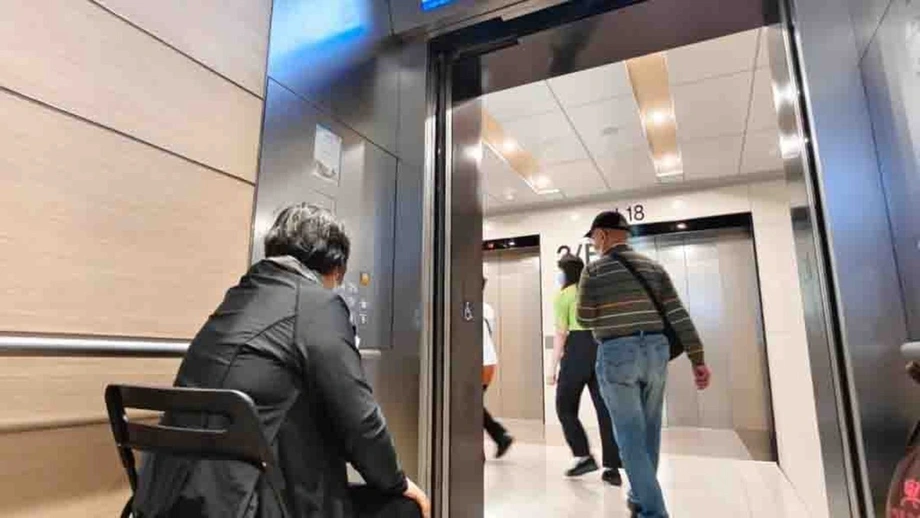
Conditions recorded on November 12 showed that access still depended on which lift a person needed. Seven lifts in the public area, L16 to L22, were operating, but five were temporarily reserved for staff and only L21 and L22 were open to visitors.
Public lifts L23 and L24 and at least one goods lift remained behind barriers. Six lifts intended for patients were in various states, including suspension, maintenance, cleaning or temporary staff use.
The building had begun opening in phases in November 2025. Nonclinical facilities, including a restaurant, convenience store and laboratories, were in use while the start of clinical services was delayed. The Hospital Authority is preparing service moves and the building's commissioning with the Architectural Services Department and the Electrical and Mechanical Services Trading Fund.
Warning signs stretched across more than two years
The chronology shows a long interval between the first identified concerns and the latest repair programme. The Architectural Services Department had identified problems by May 2024, while the Electrical and Mechanical Services Department became aware of the matter in February 2025.
- May 2024: Problems were identified by the Architectural Services Department.
- January 2025: A completion certificate was issued while some lifts lacked use permits.
- February 2025: The Electrical and Mechanical Services Department became aware of the problems.
- July 2025: A technician was trapped in a lift shaft and later died in hospital.
- November 2025: The new building began opening in phases.
- September 2026: The Development Bureau began its independent investigation.
- November 10, 2026: Repairs were complete on 18 lifts, with seven accepted and reopened.
- November 12 and 13, 2026: The findings were submitted to lawmakers, ahead of the scheduled special panel meeting.
The Electrical and Mechanical Services Department recorded seven lift failure reports involving Anlev at the building between July 2025 and June 2026. These included component faults that trapped passengers. The record of interruptions helps explain why reliable operation of the entire lift system is a condition for bringing the building fully into service.
Wider checks and a review due by December
The Architectural Services Department has strengthened lift inspection procedures, increased testing frequency at construction sites and improved its digital works supervision system. Together with the Hospital Authority, it has also tightened checks on shaft survey data submitted by contractors and lift subcontractors.
The two bodies inspected and reviewed shaft construction and lift installation across all ongoing government building and hospital projects under their respective responsibilities. Linn's November 4 reply said they had found no similar problems in those projects.
The Electrical and Mechanical Services Department has expanded its checks at sites to include random examinations of stability, reliability, ride smoothness and fire resisting door assemblies. Its wider review covers installation, major alterations, inspection and maintenance requirements, site supervision, registration, regulation and approvals.
Linn, the Secretary for Development, gave the timetable in her written reply:
The relevant review is expected to be completed by the end of this year.
The immediate deadlines are therefore the November 13 legislative discussion, the target of finishing remaining repairs during the fourth quarter, and completion of the regulatory review by the end of December 2026. For hospital users, the practical milestone is acceptance and dependable operation of every lift, followed by the start of full services in the new block.
Key Points
- The investigation found problems of varying severity in all 28 lifts at Queen Mary Hospital's new Clinical Block 1.
- Four engineering causes involved shaft alignment and dimensions, guide rails, lift car balance and installation workmanship.
- Repairs were complete on 18 lifts by November 10, with seven accepted and reopened.
- Architectural Services Department staff face disciplinary procedures; advisory letters are proposed for relevant Electrical and Mechanical Services Department officers.
- Contractors and consultants face possible penalties, and suspected unlawful conduct has been referred for investigation.
- Full clinical services depend on all 28 lifts operating normally. Remaining repairs and a wider regulatory review are targeted for completion before the end of 2026.