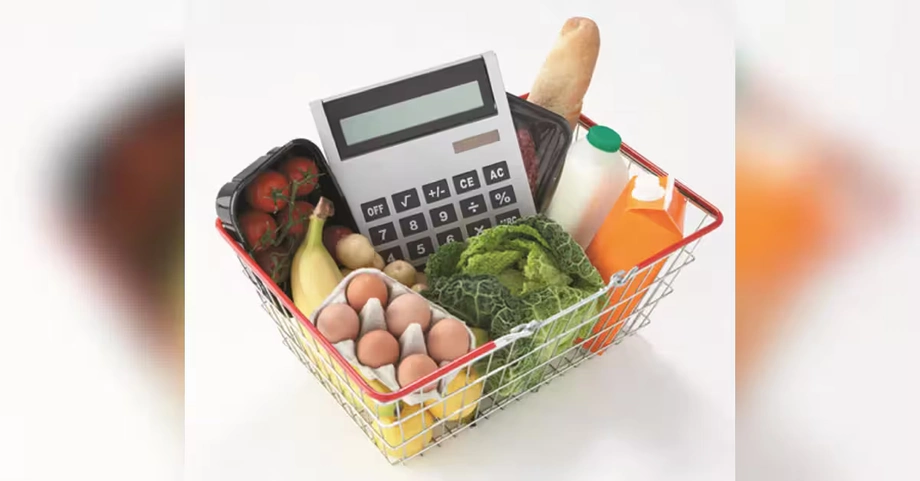
Food prices push inflation above the RBI ceiling
India's retail inflation rose to 6.09% in October 2026, passing the Reserve Bank of India's 6% upper tolerance limit as food inflation reached 8.94% and onion prices more than doubled from a year earlier. The figures, released by the Ministry of Statistics and Programme Implementation on November 12, put household purchasing power and borrowing costs at the centre of the RBI's next policy meeting on December 2-4.
Contents
- Food prices push inflation above the RBI ceiling
- What changed in the price index?
- Onions lead a sharp rise in food costs
- Some vegetables became cheaper
- Why rural households face more pressure
- Where inflation was highest
- Pressure spreads beyond the food basket
- December brings another interest rate decision
- A revised index meets currency and growth risks
- Key Points
The Consumer Price Index, or CPI, showed annual inflation increasing from 5.54% in September. That rise of 0.55 percentage points, equivalent to 55 basis points, followed an October interest rate increase that took the RBI's policy repo rate to 5.50%.
Rural households faced the heavier pressure. Their inflation rate reached 6.63%, compared with 5.41% in urban areas, while rural food inflation climbed to 9.09%. Across the country, inflation accelerated in 11 of the CPI basket's 12 major divisions, extending the pressure beyond vegetables to transport, restaurants and accommodation.
The RBI targets inflation of 4%, with a tolerance band stretching from 2% to 6%. October's reading was 0.09 percentage points above the ceiling and 2.09 percentage points above the target. Economists now expect the central bank to consider another rate increase, even as higher borrowing costs add to the strain on households and businesses.
What changed in the price index?
The CPI tracks changes in the prices of a basket of goods and services bought by households. Its annual inflation rate compares the cost of that basket with its cost a year earlier. A rate of 6.09% means the measured basket cost about 6% more, although each family's experience depends on what it buys.
Prices also increased between September and October. The index rose 0.51%, from 109.49 to 110.05. This monthly movement captures a fresh increase in prices alongside the effect of comparing them with a relatively low level a year earlier.
That comparison effect, often called the base effect, helps explain why annual inflation can accelerate even when the latest monthly increase looks modest. A low starting point makes the percentage rise over the following year larger.
October's figure was provisional, while September's 5.54% reading was final. A poll of 15 economists had expected inflation of 6%, placing the outcome slightly above that forecast.
Onions lead a sharp rise in food costs
Food inflation rose by 1.20 percentage points in a month, from 7.74% in September to 8.94% in October. The increase continued a climb visible through the middle of the year, making food the main force behind the latest acceleration.
- June 2026: Food inflation stood at 5.32%.
- July: It increased to 5.52%.
- August: It reached 5.97%.
- September: It climbed to 7.74%.
- October: It rose to 8.94%, while headline inflation reached 6.09%.
- December 2-4: The RBI's Monetary Policy Committee is scheduled to meet again.
Onion inflation reached 116.22%, up from 108.13% in September. In simple terms, the measured onion price was more than twice its level a year earlier. Garlic inflation increased to 60.74% from 54.62%, while lemon inflation rose to 47.30% from 36.41%.
Ginger remained expensive compared with a year earlier, although its inflation rate eased from 62.85% to 48.32%. Slower inflation means prices are rising less quickly; prices fall only when the rate turns negative.
The RBI's assessment linked food supply pressure partly to depleted stored onion stocks and uneven rainfall affecting arrivals of the fresh kharif crop. Kharif crops are generally planted during the monsoon season, making the timing and distribution of rain important for both production and deliveries to markets.
Bank of Baroda chief economist Madan Sabnavis also pointed to lower cultivation areas for rice, maize, oilseeds, cotton and sugarcane, and the possibility of lower pulses production, particularly tur. Harvest results will help determine whether fresh supplies ease the pressure in coming months.
Some vegetables became cheaper
Potatoes offered some relief, with prices falling 14.24% from a year earlier, compared with an 11.52% decline in September. Cauliflower prices fell 10.57%, a larger drop than September's 2.88%.
Coconut prices declined 5.60%. Brinjal and cabbage also moved into falling annual prices, recording declines of 3.34% and 1.92%, respectively. These movements show why a shopper could encounter cheaper vegetables in one part of the market while paying much more for onions, garlic or lemons elsewhere.
The national food and beverages division recorded inflation of 8.51%, compared with 8.94% for the Consumer Food Price Index. The measures cover different groupings, so their readings need not match. Both showed food costs rising faster than the headline CPI.
Households have limited room to avoid essential food purchases. When those costs rise, families must find more money for the same ingredients, change what they buy or reduce spending elsewhere. The effect is greater where food takes a larger share of the household budget.
Why rural households face more pressure
Rural inflation increased from 6.08% in September to 6.63% in October, while urban inflation rose from 4.88% to 5.41%. The October gap was 1.22 percentage points. Food inflation was also higher in villages, at 9.09%, than in urban areas, at 8.68%.
Ranen Banerjee, partner and leader of economic advisory at PwC India, linked the breach of the RBI ceiling to food costs and the larger share of rural household spending devoted to food.
"The higher weight of food in the consumption basket of rural households has led to this higher inflation number," Banerjee said.
State figures show that the rural and urban divide varied widely. Uttar Pradesh recorded rural inflation of 7.20% and urban inflation of 4.88%, a gap of 2.32 percentage points. Maharashtra's rates were 6.86% and 5.20%, respectively.
Delhi recorded lower rates of 5.24% in rural areas and 3.77% in urban areas. Even there, the rural figure exceeded the urban reading by 1.47 percentage points, showing that the gap extended beyond states with the highest headline inflation.
Where inflation was highest
Tamil Nadu recorded the highest headline inflation among states with populations above five million, at 7.29%. Telangana followed at 7.26%, Andhra Pradesh at 7.25%, Madhya Pradesh at 7.19% and Odisha at 7.17%.
The five readings were close together, separated by just 0.12 percentage points. Each was more than one percentage point above the RBI's national upper tolerance limit, illustrating how much stronger price pressure was in these states than the national average suggested.
Andhra Pradesh recorded rural inflation of 7.81% and urban inflation of 6.37%. Karnataka's corresponding figures were 7.54% and 6.60%, while Kerala recorded 7.01% and 5.58%.
These differences matter for everyday budgets. A national average combines many local markets and spending patterns. Families buying different products in different states can therefore face price increases well above or below the headline rate.
Pressure spreads beyond the food basket
Restaurants and accommodation services recorded inflation of 10.06%, up from 9.36% in September. The rural reading was 10.24%, compared with 9.90% in urban areas. Transport inflation increased from 5.01% to 5.84% amid higher fuel costs.
Housing inflation edged up from 2.74% to 2.90%. Although much lower than food or restaurant inflation, its increase added another source of pressure across the CPI basket.
Personal care, social protection and miscellaneous goods and services was the exception to the broad acceleration. Inflation in that division slowed from 13.75% to 10.14%, remaining high despite the decline. Rural inflation in the group was 10.84%, compared with 9.24% in urban areas.
Silver jewellery inflation eased sharply, from 87.82% in September to 52.39% in October. It still ranked among the five items with the highest annual inflation, alongside onions, garlic, ginger and lemons.
Radhika Rao, senior economist and executive director at DBS Bank, described food as the main driver while pointing to wider monthly price pressure.
"India's headline inflation tested the upper end of the RBI's tolerance band in October to a two-year high, with a sharp food-driven upmove accompanied by signs of broadening out of price pressures on a sequential basis," Rao said.
December brings another interest rate decision
The RBI raised the repo rate by 25 basis points in October and shifted its policy stance to calibrated tightening, signalling a measured approach to restraining inflation. The repo rate is the rate at which the central bank lends short term funds to banks. Changes can feed through to loan and deposit rates.
Sabnavis and Banerjee expected the committee to consider an increase of 25 to 50 basis points in December. Starting from 5.50%, those moves would take the rate to 5.75% or 6.00%. The committee has yet to decide.
Rao expected a second successive rate increase. ICRA chief economist Aditi Nayar forecast average inflation of 6.2% in the October to December quarter, slightly above the RBI's 6% projection, and expected November's reading to be similar to October's.
Nayar connected that inflation outlook with expectations of firm economic growth:
"This, along with expectations of a healthy GDP growth print for Q2 FY2027, suggests that a further 25 bps rate hike in December appears almost certain," she said.
The RBI had raised its inflation forecast for the financial year ending March 2027 to 5.2%, from 5% in August. It projected 6% for the December quarter and 5.7% for the March quarter. Governor Sanjay Malhotra said in October that headline inflation was expected to average nearly 5.8% over the next three quarters.
Borrowing conditions had already tightened before the inflation release. After the banking cash surplus shrank from Rs 11 trillion in early September to Rs 462 billion on October 26, overnight borrowing costs moved above the 5.5% repo rate. Another policy increase would come on top of that pressure.
A revised index meets currency and growth risks
India introduced its new CPI series in January 2026, using 2024 as the base year and spending patterns from the 2023-24 Household Consumption Expenditure Survey. October was the first reading above 6% since that series began.
The revised basket gives housing a larger weight and food a smaller share. The share assigned to core items, generally understood as goods and services outside food and fuel, increased by about 10 percentage points. Comparisons across the change require the corresponding historical series because both the basket and its weights changed.
NSO field staff collect prices through visits on a weekly roster covering 1,407 urban markets, including online markets, and 1,465 villages across states and union territories. The ministry recorded a 100% response rate for both rural and urban markets in October.
The RBI must also weigh oil prices, currency movements and economic activity. A weaker rupee makes purchases priced in dollars more expensive in rupee terms, while higher crude oil prices can raise fuel and transport costs. The fall in foreign reserves to $717.06 billion in the week ended October 30 accompanied efforts to support the currency.
West Asia's war added uncertainty around energy costs and growth. India's economy nevertheless expanded 7.8% in the June quarter of the financial year. The RBI projected annual growth of 7.1%, up from 6.7% in August. The World Bank also projected 7.1%, while Moody's Ratings and the Asian Development Bank projected 7%.
Higher interest rates can cool spending and borrowing, but fresh crop supplies are central to easing the immediate food squeeze. The December meeting will bring those pressures together: expensive essentials, broader price increases, tighter finance and an economy still recording firm growth.
Key Points
- Retail inflation rose to 6.09% in October 2026 from 5.54% in September, exceeding the RBI's 6% ceiling.
- Food inflation reached 8.94%, with onion prices up 116.22% from a year earlier.
- Rural inflation was 6.63%, compared with 5.41% in urban areas.
- Tamil Nadu had the highest inflation among states with populations above five million, at 7.29%.
- Inflation accelerated in 11 of 12 major CPI divisions, while several vegetables became cheaper.
- The RBI's repo rate stands at 5.50%. Its next policy meeting is scheduled for December 2-4.