Global Aviation Gridlock
The United States and Israel’s military campaign against Iran, which began on February 28, has triggered unprecedented disruption across global aviation networks, forcing the cancellation of over 5,000 flights within the first 48 hours alone. Major Middle Eastern aviation hubs including Dubai, Abu Dhabi, and Doha have faced severe operational restrictions or complete closures as Iranian missile and drone attacks threaten civilian airspace safety. The European Union Aviation Safety Agency has banned European operators from flying over the entire region, including Saudi Arabia and Oman, compelling carriers to reroute aircraft north over the Caucasus or west over East Africa, adding hours to journey times between Europe and Asia.
The crisis has highlighted the fragility of global aviation’s dependence on a limited number of mega-hubs. Indian budget carrier IndiGo now faces particularly arduous journeys, with Mumbai to England services extending up to two hours longer due to requirements to fly over East Africa rather than the Arabian Peninsula. These detours result from European safety restrictions that prevent European-leased aircraft from operating over contested airspace, forcing complex operational adjustments that increase fuel consumption and crew costs.
The immediate impact on traveler confidence has been severe. Luxury travel firm Lightfoot Travel reported a 50% drop in total bookings during the first week of hostilities, with reservations for Middle Eastern destinations vanishing almost overnight. Tens of thousands of travelers found themselves stranded, with some requiring desert road trips to Muscat to find alternative flights home. Even as the United Arab Emirates partially reopened its airspace eleven days into the conflict, operations remained far below normal capacity. Emirates operated less than 60% of its usual schedule, while Qatar Airways and Etihad Airways managed just 11% and 17% respectively.
Safety concerns continue to dominate operational decisions despite resumed services. Iranian drones have forced flights into Dubai to enter holding patterns for extended periods, with one incident injuring four people when unmanned aerial vehicles fell near Dubai International Airport, the world’s second busiest international passenger hub. British Airways has suspended Middle East services until late March, with Abu Dhabi flights cancelled indefinitely, while KLM halted Dubai operations through March 28.
Economic Shockwaves Across Tourism
The aviation crisis has translated into staggering financial losses for the global travel industry. The World Travel and Tourism Council estimates international visitor spending in the Middle East has dropped by at least $600 million daily since the conflict began, totaling approximately $20 million per hour in lost revenue. Oxford Economics projects inbound arrivals to the Middle East could decline between 11% and 27% year-over-year in 2026, depending on conflict duration, translating to losses of 23 million to 38 million international visitors and $34 billion to $56 billion in spending.
Energy markets have exacerbated the operational challenges facing airlines. Brent crude prices surged to approximately $90 per barrel, representing a 50% increase since the start of 2026, while jet fuel costs have effectively doubled for many carriers. These input cost increases are being passed directly to consumers through fuel surcharges and elevated base fares. Thai Airways has announced 10% to 15% price increases citing overwhelming demand and rising fuel costs, while industry analysts warn that sustained high prices could dampen discretionary travel demand significantly.
The supply chain disruptions extend beyond energy into critical manufacturing inputs. Qatar, the world’s second-largest helium producer supplying approximately one-third of global demand, halted production at its Ras Laffan facility following suspected Iranian strikes. This suspension threatens semiconductor industries in Taiwan, South Korea, and Japan, which rely on helium for chip manufacturing. Similarly, petrochemical disruptions affect plastics and resins used in electronics packaging, with the Philippines particularly exposed given that electronics account for more than half of national exports.
The economic contagion extends beyond immediate tourism losses. The Strait of Hormuz, which handles roughly one-fifth of global seaborne oil and liquefied natural gas supplies, has experienced severe shipping disruptions. This energy crisis creates stagflationary pressures across Asia, where around 80% of oil imports transit through the strait. Small island developing states face compound vulnerabilities, with Pacific nations relying on imports for 5% to 15% of GDP in energy costs alone while depending heavily on international tourism for employment and income.
Malaysia’s Defensive Market Position
While neighboring destinations face severe headwinds, Malaysia appears relatively insulated from the worst impacts of the aviation crisis. European visitors comprise less than 15% of total tourist arrivals, limiting direct exposure to disruptions affecting Europe-bound routes. Strong demand from East Asia, India, and intra-Southeast Asian markets is expected to cushion potential shortfalls from European travel declines, providing a diversified revenue base that more specialized destinations lack.
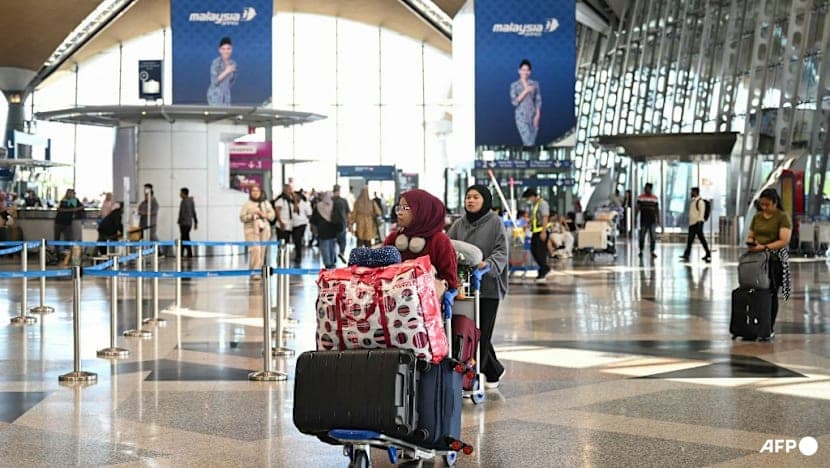
Malaysia benefits from specific demographic advantages during this crisis. The nation maintains a reputation as a safe and welcoming destination for Muslim travelers, sustaining confidence among Middle Eastern visitors who represent a high-value niche market. These travelers typically stay longer and spend more on family holidays, shopping, and medical tourism. Approximately 200 outbound flights from Kuala Lumpur International Airport to Middle Eastern destinations have been cancelled since the war began, yet industry leaders remain optimistic about achieving the 45 million tourist arrival target for 2026.
Nigel Wong, president of the Malaysian Association of Tour and Travel Agents, emphasizes the strategic positioning that protects Malaysia from the worst disruptions.
We are in a sweet spot at the moment, very much like Singapore. Malaysia is very strategically positioned in terms of being a hub for air travel.
Wong notes that the country’s tourism infrastructure continues expanding despite global headwinds. The Visit Malaysia 2026 campaign has launched promotional initiatives and upgraded facilities to strengthen appeal. New direct international routes are increasing not only to Kuala Lumpur but also to secondary cities such as Penang and Kota Kinabalu, particularly from Chinese markets. Although the ringgit has appreciated approximately 10% against the US dollar over the past year, Malaysia maintains competitive pricing compared with regional peers.
Wong cautions against complacency despite current advantages. While Visit Malaysia 2026 received strong initial momentum, ongoing infrastructure improvements including heritage conservation and urban amenity upgrades must continue regardless of external pressures. The expansion of direct routes helps diversify the tourism base beyond the capital, while Malaysia’s halal tourism credentials attract high-value visitors from Gulf countries during peak seasons including summer holidays and school breaks.
Regional Disparities in Exposure
The crisis has exposed significant vulnerabilities in destinations heavily dependent on long-haul tourism. Thailand and Indonesia, particularly the resort island of Bali, face acute risks from prolonged disruption. Tourism accounts for approximately 12% of Thailand’s GDP and 9.4% of Cambodia’s, making these economies especially sensitive to flight accessibility changes. The Thai Hotels Association warns that the kingdom could lose more than 40 billion baht in tourism revenue under worst-case scenarios assuming eight weeks of airspace closure.
Thailand’s tourism ministry has modeled three scenarios for revenue impact. An eight-week airspace closure could reduce foreign arrivals by nearly 600,000 visitors, costing approximately 40.9 billion baht. Even a four-week closure scenario projects 334,000 fewer arrivals and 21.5 billion baht in losses. The ministry specifically notes that European markets face additional pressure from higher inflation rates at home, reducing travel spending power regardless of flight availability.
European markets, while representing smaller volume for Malaysia, hold outsized importance for regional competitors. European travelers traditionally visit Bali, Phuket, and Bangkok in large numbers, with many routes dependent on Gulf carrier connections through Dubai, Doha, or Abu Dhabi. The absence of non-stop flights between Europe and these destinations creates particular vulnerability. Aviation analyst Brendan Sobie notes that travelers to Bali and Cambodia have no direct flight options, making these markets heavily impacted by the trickle-down effects of hub disruptions.
The concentration of long-haul connectivity through Gulf hubs creates structural vulnerabilities that Malaysia largely avoids. Thai travel agents report that long-haul markets, which contributed 10 million visitors in 2025, face potential 50% declines this year. Weekly arrival data from early March shows European and Middle Eastern markets dropping 18% immediately following the conflict escalation, with significant decreases among German, Russian, British, French, and Israeli travelers. The Association of Thai Travel Agents forecasts potential declines of up to 50% for the entire year if conditions persist.
Strategic Hub Opportunities Emerge
The disruption to traditional Gulf transit routes has created unexpected opportunities for Southeast Asian aviation hubs. As airlines reassess the risks of transiting through Middle Eastern airports, Malaysia, Thailand, Singapore, and Hong Kong could position themselves as alternative stopover points for Europe-bound travelers. Aviation authorities recognize that capturing this traffic requires sustained infrastructure investment and operational reliability.
Norazman Mahmud, CEO of the Civil Aviation Authority of Malaysia, sees the crisis as a chance for regional aviation growth.
What is happening in the Middle East is a good opportunity for our region to become the next hub, a safer, more stable hub to get to Europe rather than stopping in the Middle East.
Malaysia Airlines has already announced plans to increase frequency to European destinations, including additional flights to London and Paris, responding to passenger preferences for direct connections that avoid potential conflict zones. This operational shift aligns with broader industry trends favoring point-to-point travel over hub-and-spoke models through volatile regions. The expansion comes as part of broader infrastructure improvements that enhance long-term competitiveness as an alternative hub.
The Southern Cross Route revival illustrates changing traveler behavior dramatically. United Airlines reported booking over 1,000 passengers daily from Australia and New Zealand to Europe via the United States this week, compared with less than one per day last year. This mid-20th century routing, which connects Oceania to Europe through American cities like Los Angeles and San Francisco, offers an alternative that avoids both Middle Eastern and Russian airspace restrictions. While capacity adjustments and longer flight times will keep airfares elevated in the near term, the potential to permanently reroute a portion of global transit traffic away from volatile regions offers significant long-term economic benefits for Southeast Asian aviation centers.
Market Volatility and Sector Impacts
Financial markets have reacted sharply to the conflict’s operational disruptions, with airline stocks experiencing significant selloffs across the region. Malaysia’s AirAsia X saw shares drop 28% since hostilities began, falling to their lowest level since September 2025. The decline triggered automatic trading suspensions and reflected investor concerns about jet fuel cost sensitivity. Analysts estimate that every one dollar increase in jet fuel costs could reduce AirAsia X’s bottom line by approximately 80 million ringgit, or 5.3% of earnings. Less affected were Singapore Airlines, which fell nearly 7%, and Cathay Pacific, which declined 8%.
Conversely, oil and gas sectors have emerged as clear beneficiaries of the crisis. Malaysia’s Bursa Malaysia Energy Index climbed over 4% in the immediate aftermath, as Brent crude price surges improved earnings outlooks for upstream producers. PETRONAS reported a 21% year-on-year decline in core earnings for fiscal year 2025 due to lower realized energy prices, making the current geopolitical risk premium particularly significant for national finances. Companies including Dialog Group, Hibiscus Petroleum, and Dagang NeXchange have attracted increased investor interest due to their exposure to higher realized energy prices.
Banking and real estate investment trust sectors demonstrate defensive characteristics during the uncertainty. Malaysian financial institutions maintain Common Equity Tier 1 ratios of 14.5%, providing substantial capital buffers against market volatility. Analysts favor domestically focused banks and utilities such as Tenaga Nasional due to their stable earnings visibility and limited direct exposure to Middle Eastern volatility. The domestic tourism sector also shows resilience, with research houses suggesting that Chinese and Indian tourists who intended to visit Middle Eastern destinations may reroute to Malaysia, creating substitution demand that could offset weakness in Western arrival numbers.
Recovery Scenarios and Long-term Outlook
Analysts have developed multiple scenarios for tourism recovery depending on conflict duration. Oxford Economics models suggest an early resolution within one to three weeks could limit Middle East visitor declines to 11% annually, while a protracted conflict lasting months could result in 27% losses. The World Travel and Tourism Council remains optimistic about rapid sector recovery, citing historical patterns where security-related incidents often see the fastest rebound periods, sometimes as quickly as two months when governments and industry coordinate effectively to restore confidence.
Tourism industry veterans emphasize the sector’s historical capacity for rapid recovery. Gloria Guevara of the World Travel and Tourism Council notes that security-related incidents often see the fastest rebound times when governments coordinate effectively with industry. Lightfoot Travel’s Lucy Jackson Walsh predicts potential revenge travel patterns similar to post-pandemic surges, where pent-up demand releases immediately following conflict resolution. However, aviation consultant Jonathan Hinkles suggests that while Gulf transit traffic will recover quickly due to price competition and connectivity advantages, leisure tourism to Middle Eastern destinations faces longer rehabilitation periods.
Malaysia’s tourism authorities emphasize the importance of maintaining infrastructure investments and promotional momentum regardless of immediate pressures. While Visit Malaysia 2026 received strong initial support, industry leaders stress the need for forward planning to capture post-crisis demand. The combination of halal tourism credentials, expanding direct flight networks, and political neutrality positions Malaysia to potentially emerge stronger from the regional disruption, provided the conflict does not extend into the peak European travel season between April and August. Travelers value the connectivity that allows one-stop access to virtually any global destination, creating powerful incentives for market return once safety stabilizes.
The Essentials
- The Iran war has cancelled over 5,000 flights and disrupted Middle Eastern aviation hubs including Dubai, Doha, and Abu Dhabi, causing $600 million in daily tourism losses
- Malaysia faces limited exposure due to European visitors comprising under 15% of arrivals, with strong Asian and Muslim tourism markets providing resilience
- Thailand and Indonesia face greater vulnerability due to heavy reliance on long-haul European tourists and Gulf carrier transit routes, with potential losses exceeding 40 billion baht
- Southeast Asian hubs including Malaysia see strategic opportunities to capture transit traffic seeking alternatives to Middle Eastern connections
- Jet fuel costs have doubled and airfares are rising 10% to 15%, threatening discretionary travel demand across the region
- Airline stocks have declined sharply, with AirAsia X down 28%, while oil and gas sectors benefit from crude price surges
- Oxford Economics projects Middle East tourism could decline 11% to 27% in 2026 depending on conflict duration, with recovery potentially taking two months to two years