A Spring of Dissent in Tokyo
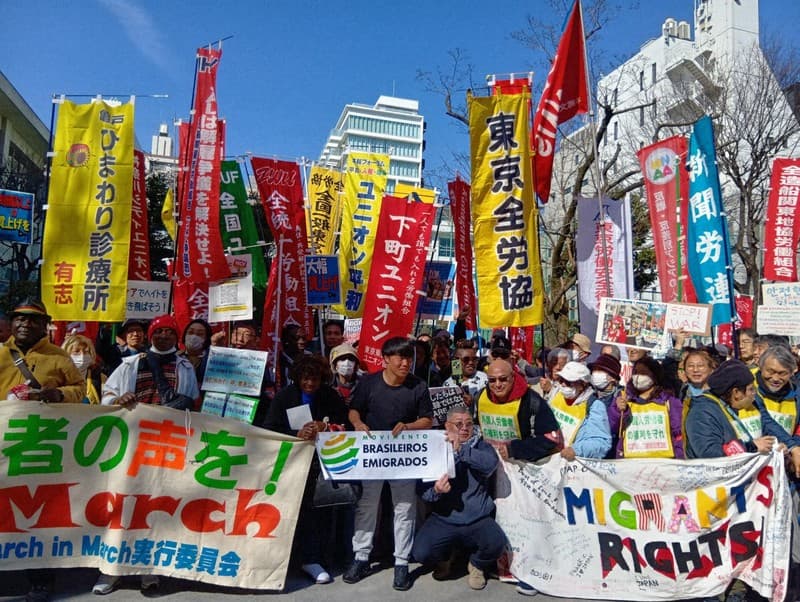
On a crisp mid March afternoon in 2026, the streets around Ueno Park in Tokyo’s Taito Ward filled with the rhythmic pulse of samba drums and the determined voices of 350 demonstrators calling for dignity, respect, and legal protection for foreign workers in Japan. The “March in March 2026” protest, held on March 15, represented not just an annual tradition of labor activism but an urgent response to what organizers describe as a rapidly deteriorating climate of social acceptance in Japanese society. The demonstration unfolded against the backdrop of an unusually active month of civil disobedience in the capital, with citizens mobilizing around issues ranging from constitutional pacifism to gender equality and international conflict. While the foreign workers’ march drew hundreds rather than thousands, participants and observers alike noted its critical significance in documenting the lived experiences of Japan’s increasingly essential migrant labor force at a moment of heightened political tension and social division.
The protest route wound through one of Tokyo’s most historic districts, passing near Ueno Station where commuters paused to watch the colorful procession led by a samba group. Participants carried placards that spoke to both their vulnerability and their indispensable role in maintaining daily life in the world’s largest metropolitan area. “I am making your convenience store’s bento,” read one sign. Another declared, “I’m the one ironing clothes at the dry cleaners.” These messages served as pointed reminders that the hands preparing food and cleaning garments often belong to workers who remain politically marginalized despite their economic centrality. The demonstration marked the latest iteration of a struggle that began in 1993, yet organizers insisted that current conditions demanded renewed vigilance and expanded solidarity networks capable of responding to emerging threats.
Yumiko Nakajima, who chairs the National Union of General Workers Tokyo Nambu, has monitored these changes throughout her thirty year career advocating for laborers from overseas. Speaking with the Mainichi Shimbun, she identified the July 2025 House of Councillors election as a turning point after which her organization began receiving increased reports of discriminatory incidents. The political rhetoric deployed during that campaign created measurable shifts in public behavior, transforming previously manageable tensions into what she considers a genuine crisis of social cohesion. Her testimony provides essential context for understanding why this year’s march attracted greater participation than the previous year’s event, despite the persistent risks that visible activism poses for foreign residents navigating uncertain visa statuses.
Growing Fears After Election Rhetoric
Nakajima traced the recent surge in anxiety among foreign residents directly to political developments surrounding the July 2025 House of Councillors election. During that campaign period, candidates and media commentators deployed rhetoric targeting non-Japanese residents, creating what Nakajima describes as a measurable shift in public atmosphere. Since those elections, her union has documented a sharp increase in consultations from foreign members reporting hostile encounters during commutes and discriminatory treatment in workplaces. These reports include sensing cold stares on trains and facing exclusionary practices in professional settings that had previously welcomed their contributions.
“I have worked on issues surrounding foreign workers for 30 years, but I feel a growing sense of crisis over the spread of hate. Union members tell us about sensing cold stares on the train and being treated in a discriminatory way at work. These are not isolated incidents but part of a pattern.”
The House of Councillors, the upper house of Japan’s National Diet, holds significant influence over legislation affecting immigration and labor policy. The 2025 election occurred during a period of intense debate regarding Japan’s reliance on foreign workers to address severe labor shortages in sectors ranging from elder care to construction. Rather than focusing policy discussion on integration and rights protection, campaign rhetoric reportedly veered toward questions of national identity and security, creating what civil society groups characterize as a permissive environment for xenophobic expression. The resulting climate has left many documented workers, who pay taxes and contribute to social insurance programs, feeling suddenly unwelcome in communities where they have resided for years.
Three Decades of the Spring Labor Offensive
The “March in March” demonstration traces its origins to 1993, when labor unions and citizens’ groups initiated what was then called the “foreign workers’ spring labor offensive.” This timing connected the action to Japan’s traditional shunto spring wage negotiations, positioning foreign laborers within the broader architecture of Japanese labor rights rather than as a separate category of temporary help. Over the subsequent three decades, the annual gathering evolved from a union centric affair into a broader social movement calling for what organizers term “mutual coexistence” in an increasingly multiethnic society.
The 2026 edition reflected this evolution through its diverse coalition of participants. While union members formed the organizational backbone, the march drew support from anti-discrimination networks, immigration lawyers, and community organizers who have documented the specific vulnerabilities of Japan’s foreign worker populations. These include technical intern trainees under a program frequently criticized for enabling labor exploitation, as well as specified skilled workers admitted under visa categories created in 2019 to address demographic decline. The demonstration’s framing as a declaration of “We are here!” signaled an intention to move beyond defensive advocacy toward affirmative claims of belonging and social contribution.
One male participant, who declined to give his name for fear of professional retaliation, articulated the fundamental argument underlying the demonstration’s messaging. “We work in this country, pay taxes and contribute to society,” he stated. “Migration is not a crime, and living isn’t a crime either.” This sentiment reflects the precarious position of many foreign residents in Japan, who navigate complex visa requirements while performing essential labor that native workers increasingly refuse. The organizing committee has indicated plans to expand these messages through the “No to hate!” nationwide campaign, seeking to build coalitions across regional lines and ethnic communities.
Tokyo’s Month of Mobilization
The foreign workers’ march occurred within a concentrated burst of civic activism that transformed Tokyo into a stage for competing visions of the nation’s future. Just four days earlier, on March 11, nearly 10,000 people gathered outside the National Diet Building to protest the military policies of Prime Minister Sanae Takaichi’s government. That demonstration, organized by opposition parties and peace groups, focused specifically on the recent deployment of long range missile launchers in Kumamoto Prefecture and proposed revisions to constitutional restrictions on lethal arms exports. Demonstrators collectively read aloud Article 9 of the Japanese Constitution, which renounces war and the maintenance of military force, while holding placards declaring “No to war!” and “Stop trampling on the Constitution!” The visual impact of thousands of citizens reciting pacifist principles outside the seat of government provided a stark contrast to the administration’s military expansion agenda.
The scale of the March 11 protest, which drew approximately 8,000 in person participants and another 1,000 joining through online platforms, suggested a significant reawakening of Japan’s pacifist civil society after years of relative quiet regarding constitutional revision. Taku Yamazoe, policy chief of the Japanese Communist Party, addressed the crowd regarding what he described as Japan’s dangerous alignment with United States hegemonic policies in the region. “If the spirit of the Constitution were truly upheld, Japan should not pursue diplomacy based on preparations for war, but instead promote diplomacy aimed at resolving issues through dialogue,” Yamazoe stated. Observers noted that the demonstration attracted substantially larger numbers of young participants than previous rallies opposing military expansion, suggesting generational concern regarding the nation’s military trajectory and constitutional identity.
This wave of contention had begun even earlier in the month, creating an atmosphere where various marginalized groups felt empowered to voice long suppressed grievances. On March 8, International Women’s Day, approximately 800 people participated in the Women’s March Tokyo in Shibuya Ward, parading around the famous scramble crossing with placards opposing sexual violence and discrimination based on gender. Now in its ninth iteration since beginning in 2017, the march specifically addressed what organizers called “engineered divisions surrounding race and gender” in the current political climate. A representative from the organizing committee stressed that “solidarity, not exclusion, is necessary” for achieving meaningful gender equality, drawing explicit connections between misogynistic political rhetoric and xenophobic nationalist discourse as complementary tools of social division.
The month’s activism extended to explosive international issues as well, with Iranian residents of Tokyo gathering on March 2 outside their nation’s embassy in Minato Ward. These demonstrators welcomed recent military strikes against Iran as potential catalysts for fundamental political change, waving flags associated with the monarchy that ruled before the 1979 revolution and chanting slogans demanding freedom from clerical rule. The rally occurred shortly after reports circulated regarding the death of Supreme Leader Ali Khamenei, reflecting the complex position of diaspora communities navigating conflicts between homeland politics and host country residence. Conversely, other Tokyo activists gathered at Shinjuku Station on the same day to protest those same military actions, carrying signs reading “Hands off Iran” and warning against wider Middle East escalation that could draw Japan into conflict.
Visions of a Multicultural Future
The concentration of demonstrations throughout early March 2026 suggests a Japanese civil society increasingly willing to confront fundamental questions of national identity, security policy, and social inclusion. For the foreign workers’ movement specifically, the current moment presents both dangers and opportunities. The hostile rhetoric that emerged during the 2025 electoral cycle has generated tangible harm, yet it has also activated solidarity networks that had remained dormant. The increased participation in this year’s march, up from 2025 attendance figures, indicates that awareness of these issues is spreading beyond the immigrant communities directly affected.
The organizing committee’s emphasis on workplace realities, including the production of convenience store meals and dry cleaning services, reflects a strategic decision to render visible labor that typically remains hidden behind counters and in back rooms. By making explicit the connection between foreign workers and the daily conveniences enjoyed by Japanese consumers, activists hope to counter dehumanizing narratives that portray immigrants as threats or burdens. The samba group leading the procession added festive energy to this serious messaging, embodying the cultural contributions that diverse communities bring to urban life.
Looking ahead, the “No to hate!” campaign represents an attempt to institutionalize the momentum generated by the March demonstration into continuous advocacy. Organizers hope to establish regional chapters capable of responding rapidly to discriminatory incidents while building the political power necessary to influence immigration and labor policy debates. The challenge will involve maintaining coalition cohesion across the various visa categories and national origins that comprise Japan’s foreign workforce, from temporary trainees to permanent residents with deep roots in local communities.
The Essentials
- 350 people participated in the “March in March 2026” demonstration for foreign workers’ rights in Tokyo’s Ueno Park on March 15, 2026, an increase from the previous year’s attendance.
- The protest responded to rising xenophobic rhetoric that intensified during the July 2025 House of Councillors election, with organizers reporting increased incidents of discrimination on trains and in workplaces.
- The march originated in 1993 as the “foreign workers’ spring labor offensive” and has evolved into an annual call for “mutual coexistence” in Japanese society.
- Demonstrators carried signs highlighting their contributions to daily life, including messages such as “I am making your convenience store’s bento” and “I’m the one ironing clothes at the dry cleaners.”
- The protest occurred during an active month of civil society mobilization in Tokyo, which included a 10,000 person rally against Prime Minister Takaichi’s military policies on March 11 and an International Women’s Day march on March 8.
- Organizers plan to expand efforts through the “No to hate!” nationwide campaign, aiming to build a multiethnic and multicultural society that protects the rights of all residents regardless of nationality.