Two Warehouses Anchor a New British Shopping Rival
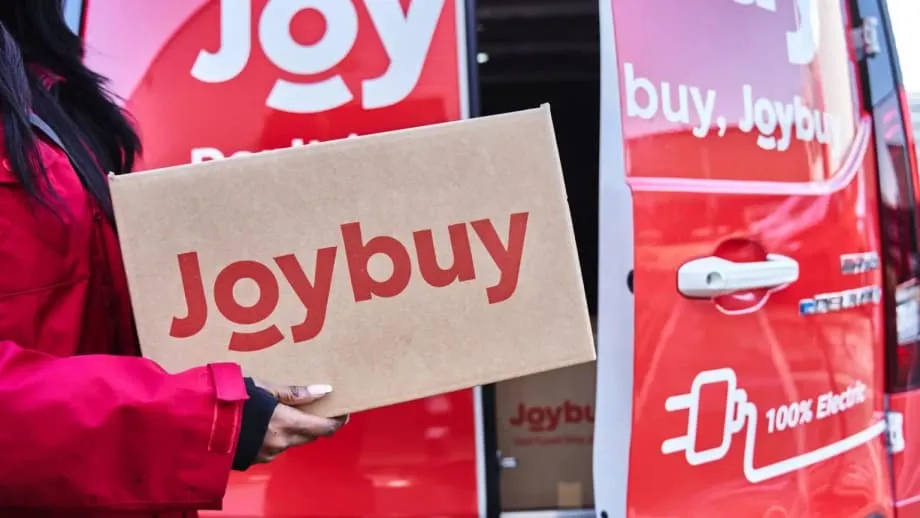
JD.com has launched Joybuy in Britain with two warehouses in Milton Keynes and Luton, 1,000 staff and a delivery promise built around two daily deadlines. Orders placed before 11 a.m. can arrive by 11 p.m. that day, while orders placed before 11 p.m. arrive the following day.
Contents
- Two Warehouses Anchor a New British Shopping Rival
- How the Double 11 Delivery Promise Works
- A Delivery Network Under Its Own Control
- Why Owning the Stock Matters
- What the Prices and Memberships Show
- From Abandoned British Deals to a European Launch
- Six Countries Share the Expansion
- Beyond Electronics: The Shopping Experience
- The Investment Test Behind the Launch
- Building a Name in a Mature Market
- The Bottom Line
As of March 17, 2026, the service reaches approximately 17 million people across 4.5 million households in Greater London, Birmingham, Leicester, Nottingham, Oxford and Cambridge. Delivery is free on orders above £29. The company plans to extend coverage to more towns and cities.
The Beijing company, China's largest retailer by revenue, generates more than £30 billion in annual revenue and trades on stock exchanges in the United States and Hong Kong. Its British launch brings Apple devices, household goods and groceries into a market where Amazon already has an extensive delivery network and deeply established shopping habits.
Joybuy is competing on more than delivery speed. Its JoyPlus membership costs £3.99 a month, compared with £8.99 for Amazon Prime, and removes the minimum spending requirement for free delivery. The challenge is to turn introductory prices and fast deliveries into repeat purchases.
Matthew Nobbs, managing director of Joybuy UK, said the company had spent time refining its website and app through beta testing, a period when a service is tried before its full launch. He described the British operation as a lasting commitment:
We are here for a long time, as our CEO has said. We have spent a lot of time working and honing to get our web and app proposition right, making it work in beta testing over the time. We have to make sure the customer experience is really great.
How the Double 11 Delivery Promise Works
Joybuy calls its delivery schedule "Double 11": the morning cutoff is 11 a.m., with delivery by 11 p.m., and the evening cutoff is 11 p.m., with arrival the next day. The promise gives shoppers a specific timetable for purchases ranging from electronics to grocery staples.
The fastest service currently concentrates on major urban areas. Customers outside those areas, including rural shoppers, face standard delivery times. Expansion is planned, but no dates have been given for individual additional towns or cities.
British customers also have alternatives to waiting at home. Joybuy's strategy includes more than 11,000 pickup points across the country, including over 400 automated locker locations. Staffed collection locations provide another way to receive parcels.
The combination of home delivery and collection matters because speed alone does not settle every shopping decision. A parcel arriving quickly is most useful when the customer can receive it. Collection points give Joybuy another route to customers whose daily schedules make a doorstep delivery inconvenient.
A Delivery Network Under Its Own Control
JD.com operates more than 60 warehouses and depots across Europe. Its two main British facilities in Milton Keynes and Luton have a combined floor area exceeding 90,000 square metres, forming the base of its UK operation.
JoyExpress, the company's dedicated delivery service, connects warehouse operations with the final journey to the customer's door. Its fleet includes vans, trucks and electric bicycles, with delivery workers using branded uniforms and vehicles.
JD.com's approach is described as vertically integrated. In simple terms, the company manages several connected stages of the purchase itself, from storing goods to preparing orders and delivering them. That gives it direct control over the steps needed to meet its delivery deadlines.
Axel Eggenwirth, Senior Director of Last Mile Europe at JD Logistics, described JoyExpress as "a new delivery and logistics choice" for European consumers. The last mile is the final part of a parcel's journey, from a local delivery facility to its recipient. He said:
With JoyExpress, Joybuy customers will have access to a cutting-edge, world-class fulfilment team for all their delivery needs. JoyExpress will help deliver Joybuy's seamless, trusted, and joyful shopping experience to customers in Europe.
Large home appliances come with a broader service. Joybuy offers delivery, installation, disconnection of the old appliance and recycling in a single visit. For a customer replacing a washing machine or another large unit, that combines several tasks into one appointment.
Why Owning the Stock Matters
Joybuy operates primarily as a retailer that buys its own stock. It purchases products directly from manufacturers and brands, stores them in its warehouses and sells them to customers. This differs from a marketplace, where outside merchants list and sell their goods through a platform.
Temu and Shein have attracted British shoppers with heavily discounted products shipped from overseas warehouses. Joybuy's proposition instead centres on branded stock held locally and delivered through a network the company manages.
Nobbs described the model and its relationship to customs exemptions:
We're a first party retailer, we're completely different to every other retailer based on our customer proposition. So we don't do any de minimis business. We're a retailer, first, and foremost for brands, and that's our core.
De minimis refers to customs duty exemptions for goods below a specified value. Such exemptions can help businesses shipping inexpensive goods across borders keep prices low. Nobbs said Joybuy's core business rests on selling brands as a retailer.
Joybuy has dedicated brand stores for L'Oreal Paris, Braun, DeLonghi, BRITA, The Pink Stuff, DJI and Bodum. Its wider range includes Apple, Samsung, Sony, Philips, PlayStation, LEGO and Xiaomi.
The company says products undergo quality inspections at its own facilities. Buying and handling the inventory itself gives Joybuy greater control over what reaches customers and reduces the risk of counterfeit goods, a problem that has affected some marketplace platforms.
What the Prices and Memberships Show
Amazon enters this contest with more than 30 fulfilment centres across Britain and a commanding market position supported by Prime. Joybuy is trying to attract customers with a lower monthly delivery subscription and selected prices below established rivals.
JoyPlus costs £3.99 a month, or £2.99 for students, and includes unlimited free delivery with no minimum spend, alongside exclusive offers involving purchases across borders. Amazon Prime costs £8.99 a month. The standard JoyPlus fee is therefore £5 lower each month, using the stated subscription prices.
Early product comparisons show how Joybuy is positioning itself. Apple AirPods with USB-C charging were listed at £94, against £119 at Argos and £99 at Amazon. A Nintendo Switch 2 bundle with Mario Kart World cost £399, roughly £10 below major rivals. An Oral-B Vitality Pro electric toothbrush was priced at £14.99, compared with £21 at Amazon.
Those examples put Joybuy between two competitive approaches: the deeply discounted overseas shopping associated with Temu, and Amazon's combination of familiar brands, delivery infrastructure and membership. Joybuy cannot match Temu's lowest prices on every product, but it offers faster delivery and removes the uncertainty associated with shipping purchases from overseas.
Clive Black, head of consumer research at UK investment bank Shore Capital, said Amazon has the resources to react if the newcomer wins customers with a better proposition:
If they bring something new, different and better, then Amazon's got something to think about. But Amazon isn't passive, it does have the capability to respond.
For Joybuy, the competitive test extends beyond an opening discount. British shoppers must find enough value in the products, delivery and service to change routines built around existing retailers.
From Abandoned British Deals to a European Launch
JD.com's launch follows two years of unsuccessful attempts to buy established British retail businesses. An acquisition could have supplied an immediate physical presence, existing customers and an established collection network.
In 2024, JD.com walked away from negotiations to acquire Currys, Britain's largest electronics retailer. It also abandoned discussions to buy Argos from supermarket group Sainsbury's. The timing of the Argos withdrawal is given as both later in 2024 and in 2025.
Argos would have brought experience in catalogue retailing and a large network for collecting purchases. With those routes closed, JD.com built its own British platform, making the UK launch an online operation rather than an entry through acquired shops.
JD.com has also strengthened its continental position through the €2.2 billion acquisition of Ceconomy, the German parent of electronics chains MediaMarkt and Saturn. That business provides established retail relationships, supply chain expertise and a customer base in continental Europe.
The main milestones are:
- 2022: Founder Liu Qiangdong stepped down as chief executive while remaining executive chairman.
- 2024: JD.com withdrew from negotiations to acquire Currys.
- 2024 or 2025: The abandoned Argos discussions are dated to both years.
- By March 17, 2026: Joybuy had launched across six European markets, including Britain.
- May 7, 2026: JD.com's next earnings report is scheduled.
Six Countries Share the Expansion
Britain is one part of a simultaneous Joybuy launch in Germany, France, the Netherlands, Belgium and Luxembourg. More than 15 million households across the six markets have access to delivery on the day of ordering from launch.
The European figure measures households, while the British reach is approximately 17 million people in 4.5 million households. Keeping those units separate makes the scale easier to understand: people count individual residents, while households count the homes in which they live.
JD.com's existing European warehouse network and its Ceconomy acquisition support the expansion. The company plans to enlarge its warehousing footprint step by step as demand grows, rather than treating the opening network as its final size.
A shared network also creates opportunities to buy goods in larger quantities across several countries. Larger combined purchases could help Joybuy secure lower prices for electronics and consumer products than competitors buying for a single national market.
Chinese retailers are seeking new revenue in Europe and North America as the domestic market becomes increasingly crowded and consumer demand in China remains weak. Joybuy's launch forms part of that international push.
Liu Qiangdong, JD.com's founder and executive chairman, is often described as "China's Jeff Bezos" and is believed to be directing the international expansion from London. His continued role connects the overseas strategy with the company's leadership, despite his departure from the chief executive position in 2022.
Beyond Electronics: The Shopping Experience
Joybuy's range stretches beyond technology and large appliances to beauty and personal care, household essentials, baby products and groceries. Food brands include Heinz and Cadbury, putting everyday purchases alongside more expensive electronics.
The platform uses daily "Lightning Offers", with deals available for a limited time across different categories. Those promotions aim to bring shoppers back regularly, rather than making Joybuy a destination used only for occasional large purchases.
Selected product pages include 3D views. Some electronics also use haptic feedback on mobile devices, meaning a physical response such as a vibration. These features form part of the website and app experience refined during testing.
Customer service is available around the clock through telephone, live chat and email, with human agents rather than automated systems. Payments include debit and credit cards, Apple Pay, Google Pay and PayPal, giving British shoppers familiar ways to complete their purchases.
Early customer feedback was positive: Joybuy had a Trustpilot score of 4.7 out of 5 from more than 4,600 reviews as of March 2026. Maintaining service quality as order numbers grow will be part of the operational challenge accompanying expansion.
The Investment Test Behind the Launch
JD.com's stock attracted more trading activity on the launch date. Trading volume rose 51.62% to $0.39 billion, while the share price increased 0.60% to approximately $28.49. The much larger change in trading activity than in price shows that investor attention did not translate into a similarly large price rise.
The shares trade at a price to earnings ratio of roughly 15, with a dividend yield near 3.4%. The first measure compares the share price with earnings attributable to each share; the second expresses dividend payments as a percentage of the share price.
Analyst recommendations include six buy ratings, two hold ratings and one sell rating. That balance is generally positive, although the European expansion requires substantial investment before the new operation can establish its contribution to the business.
JD.com's next earnings report, scheduled for May 7, 2026, is expected to provide the first concrete financial view of Joybuy's European launch. Areas of interest include customer acquisition costs, delivery performance and early revenue contributions.
Customer acquisition costs are the money a company spends to attract new buyers. Those costs could rise if Joybuy needs extensive paid advertising to persuade British shoppers to move away from Amazon. Launch discounts could also reduce profit margins before larger sales volumes and fuller use of the delivery network improve operating economics.
Building a Name in a Mature Market
Britain's online shopping market already has established retailers, loyal customers and familiar expectations for returns under UK consumer protection laws. Joybuy must win recognition while meeting those expectations consistently.
Ed Sander, a technology analyst at Tech Buzz China, noted that Ceconomy gives JD.com an existing customer base in continental Europe. In Britain, Joybuy has to build recognition from scratch.
Delivery coverage creates another practical limit. The Double 11 promise reaches major urban centres, while rural customers receive standard delivery schedules. Expansion could widen the audience for its fastest service, but the initial proposition is strongest for customers within the covered areas.
JD.com's listings in the United States and Hong Kong bring financial disclosure requirements. Its British operation must also navigate domestic consumer protection rules, data protection laws and procedures for handling VAT, the tax applied to purchases. Mistakes could increase costs and slow customer adoption compared with competitors operating with fewer physical assets.
The 1,000 staff already hired for the British launch, together with plans for further recruitment in logistics and operations, show the scale of the commitment. Joybuy's combination of local stock, lower membership fees and fast delivery gives it a concrete proposition. Its business challenge is to sustain that service while paying for the network and winning repeat customers.
The Bottom Line
- Joybuy has launched in Britain as part of a simultaneous expansion into six European markets.
- Its fastest British delivery service reaches approximately 17 million people across 4.5 million households.
- Orders placed before 11 a.m. can arrive by 11 p.m.; orders placed before 11 p.m. arrive the following day.
- Delivery is free above £29, while JoyPlus costs £3.99 monthly, or £2.99 for students, with no minimum spend for free delivery.
- Milton Keynes and Luton warehouses provide more than 90,000 square metres of space, supported by JoyExpress and a wider European network.
- JD.com buys and holds inventory itself, with branded electronics, groceries, beauty products and household goods among its ranges.
- The UK operation has hired 1,000 staff and must build customer recognition after abandoned attempts to acquire Currys and Argos.
- JD.com's next earnings report is scheduled for May 7, 2026.