The Starting Gun: Hong Kong Races Ahead with July Clearing System Launch
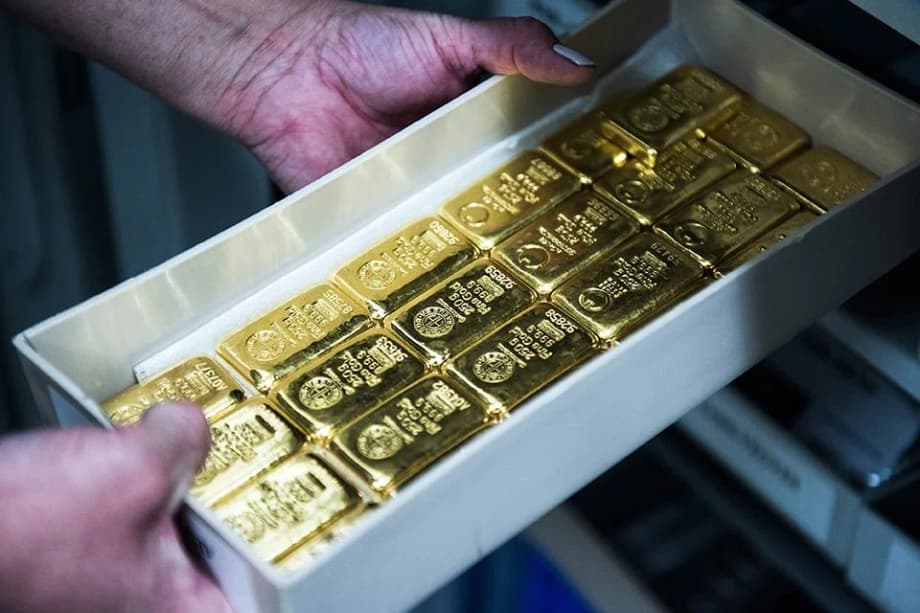
Hong Kong is poised to secure a commanding first mover advantage in the intense competition to become Asia’s premier bullion trading centre. The city expects to launch a government run gold clearing system by July, a move that represents a foundational step toward building the liquidity necessary to influence regional pricing. This concrete timeline places Hong Kong several strides ahead of Singapore, which has announced similar ambitions but has yet to commit publicly to a specific debut date for its own clearing mechanism.
- The Starting Gun: Hong Kong Races Ahead with July Clearing System Launch
- Laying the Groundwork: Vaults, Refineries, and Rising Pay Packages
- Global Banks and the Futures Frontier
- Singapore Responds: The Storage Fortress of Asia
- Singapore’s Official Strategy: Four Pillars and a Patient Timeline
- Challenging London: The Geopolitical Dimension of Gold
- Two Hubs, Two Futures: Trading Powerhouse Meets Custodial Giant
- Key Points
A clearing system acts as a financial intermediary that guarantees the settlement of trades, effectively removing the risk that one party fails to deliver after a deal is struck. By centralizing this function under a government entity, Hong Kong aims to reduce counterparty risk and standardize transaction rules, making the city a safer and more predictable place to move large quantities of bullion.
The planned system arrives at a calculated moment. A seasonal lull in gold demand over the summer months is expected to leave ample room for participants to accumulate metal stockpiles, allowing the new infrastructure to be tested without the pressure of peak market frenzy. The mechanism will also draw strength from the vast volumes of gold that already flow through Hong Kong to satisfy demand from mainland China, the world’s largest consumer of the precious metal.
Industry observers have taken note of the urgency coming from Hong Kong authorities. Adrian Ash, head of research at BullionVault, an online precious metals trading and storage platform, offered a candid assessment of the dynamic.
“If Hong Kong and Singapore are in a race to build clearing, it looks like Hong Kong authorities are very eager to win.”
That eagerness reflects a broader strategic imperative. Both cities have spent recent months advancing plans to capitalize on robust global demand and to chip away at London’s long held dominance as the global centre of bullion trade. While gold’s prolonged rally may have stalled somewhat following the outbreak of war in the Middle East, many banks maintain a bullish outlook on the extended horizon for a metal that investors covet as an alternative store of wealth when geopolitical uncertainty rises.
The rivalry between the two Asian financial centres has intensified as both governments recognize that control over commodity pricing mechanisms carries strategic weight that extends far beyond immediate trading profits. Precious metals function simultaneously as industrial commodities, investment vehicles, and monetary reserves, making them a unique pillar in any financial ecosystem. For Hong Kong, the clearing system is not merely a technical upgrade but a foundational step toward creating a comprehensive gold trading environment.
Laying the Groundwork: Vaults, Refineries, and Rising Pay Packages
Behind the clearing system lies a rapidly expanding physical infrastructure designed to transform Hong Kong into a complete bullion hub. SF Holding, China’s largest express delivery firm, plans to open a vault near the city’s airport this year, adding critical storage capacity to support increased trade flows. In another significant vote of confidence, Point Gold International, a major Chinese refiner, said it is investing US$150 million to expand its Hong Kong offices and add a production facility scheduled to begin operations this year.
The city already hosts an established lineup of refiners that includes Heraeus and Metalor Precious Metals Hong Kong, among others. This industrial base stands in sharp contrast to Singapore, which currently operates only a single refinery producing bullion with the industry standard London Good Delivery accreditation. Bernard Sin, regional director for Greater China at trader and refiner MKS PAMP SA, which has recently expanded its own Hong Kong operations, stressed the city’s comprehensive supply chain.
“Hong Kong has refineries, jewellery manufacturers, factories, mining companies. It’s a gateway to North Asia: mainland China, Japan, Korea.”
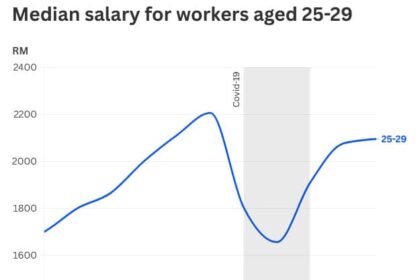
The competition for talent has grown fierce as the sector expands. Precious metals traders are commanding bigger pay packages, and established banks are competing aggressively with fintech firms and securities houses to hire experienced professionals. The labour market pressure signals genuine confidence that trading volumes will justify the investment in human capital. Digital newcomers such as Matrixdock are also looking to hire in the region, while Chinese brokerages including HGNH International Futures are setting up dedicated precious metals trading teams in Hong Kong.
The Hong Kong government currently maintains roughly 150 tonnes of storage capacity at the airport, though the full extent of commercial vaulting space across the city remains undisclosed. This opacity leaves some uncertainty about total physical capacity, though industry participants express little doubt that private operators will expand rapidly if clearing volumes justify the capital expenditure.
Global Banks and the Futures Frontier
For any clearing system to thrive, the involvement of the world’s major bullion banks is essential. Both Hong Kong and Singapore have made significant strides in this direction. JPMorgan Chase, UBS Group, and Citigroup are actively supporting plans in both cities, while local banks participate in their respective home markets. In Hong Kong, Chinese lenders have either grown their bullion desks or are in the process of adding to them, reflecting a state supported push to deepen market liquidity.
Yet hardware and banking participation alone do not guarantee price setting power. A mature financial centre also requires a robust futures market where participants can hedge price risk, establish real time benchmarks, and attract speculative capital. Hong Kong’s large and active equity market, combined with recent efforts to strengthen reciprocal financial flows with mainland China, gives the special administrative region a distinct edge in developing the futures products that are essential for genuine regional price influence. Futures markets create additional liquidity by allowing miners, jewellers, and institutional investors to lock in prices months in advance, reducing their exposure to volatile spot market swings.
The importance of futures extends beyond simple speculation. For a jeweller in Shenzhen or a mining executive in Perth, the ability to lock in a selling price six months forward provides stability that supports business planning. Without liquid futures, the spot market alone becomes a risky arena dominated by short term flows. By building these derivative capabilities alongside its clearing system, Hong Kong hopes to attract the institutional capital that creates deep, resilient markets.
Singapore Responds: The Storage Fortress of Asia
While Hong Kong pushes ahead with trading and clearing infrastructure, Singapore is building a reputation as Asia’s custodial vault. The city state can currently store at least 2,200 tonnes of gold across two privately operated, heavily secured facilities. The Reserve holds approximately 500 tonnes, while Le Freeport, a repository sometimes known as Asia’s Fort Knox, houses at least 1,700 tonnes. Lincoln Ng, chief executive officer at Le Freeport, reported that demand for gold storage has climbed steadily in recent years.
“The basement vaulting space, typically the preferred location for bullion storage due to enhanced security and higher load bearing capacity, is near full utilisation.”
That near capacity situation underscores Singapore’s immediate strength: it is already a trusted destination for physical wealth preservation. Investors increasingly view Singapore as a preferred location for storing assets, a sentiment rooted in political stability, a robust financial system, and strong rule of law. This appeal has proven particularly potent for gold owners wary of political influence over Hong Kong. In recent months, Singapore has even taken custody of some gold moved out of Dubai as a result of regional military conflict, with official data showing record imports from the United Arab Emirates during March and April.
Singapore’s Official Strategy: Four Pillars and a Patient Timeline
The Monetary Authority of Singapore has not stood idle. In January 2026, the central bank established a Gold Market Development Working Group alongside the Singapore Bullion Market Association. The initiative focuses on four core pillars: broadening gold related capital market products, establishing a trusted clearing and settlement system, strengthening vaulting and logistics standards, and exploring storage services for foreign central banks and sovereign entities.
The MAS working group must still resolve critical technical standards. Large bars of roughly 12.4 kilograms represent the preferred institutional standard in London, while the one kilogram kilobar dominates Asian retail and wholesale markets. Any clearing system hoping to bridge these pools must accommodate both formats seamlessly, ensuring that international banks and local refiners can settle trades without costly conversion friction.
Chee Hong Tat, deputy chairman of the MAS and also National Development Minister, likened the project to planting trees rather than betting on short term price movements.
“Over time, if you make the right investments in the right areas, you grow the ecosystem, the trees will then grow and bear fruit.”
Chee acknowledged Hong Kong’s recent cooperation pact with the Shanghai Gold Exchange but dismissed the idea that only one city could prevail. He noted that market segments are not completely identical, leaving room for both cities to coexist and grow their respective services. His comments echoed sentiments from Singapore’s Prime Minister Lawrence Wong, who during a recent official visit to Hong Kong expressed belief that collaboration between the two Asian financial centres would support growth and resilience for both.
The Singaporean approach deliberately uses the city state’s reputation for neutrality and regulatory excellence. Safety and security are primary considerations for central banks evaluating custodial locations, and Singapore sees these attributes as natural competitive advantages. The MAS plans to share more details on key initiatives over the course of the year, though no firm timeline for clearing system trials has been announced publicly.
Challenging London: The Geopolitical Dimension of Gold
London’s centuries old role as the global gold hub rests on enormous stocks of bullion, much of it owned by central banks around the world. Hong Kong and Singapore remain far behind in this regard, yet both are actively courting official sector business. China has prioritized countries participating in its Belt and Road Initiative, offering sovereign nations the option to store gold in mainland China while presenting Hong Kong as a more flexible offshore venue able to move metal in and out of the mainland with relative ease.
Cambodia was among the first nations to accept China’s offer to hold bullion on the mainland, while the South African Reserve Bank has indicated it would consider storing reserves in any optimal location. These early signals suggest a gradual shift in how central banks think about geographic diversification of reserves. For decades, sovereign institutions have kept at least some bullion in London for ease of management, where liquidity is generated through trading and lending activities. Fragmenting that concentration could reshape global settlement flows.
Geopolitical turbulence has added fresh urgency to these structural shifts. When conflict disrupts traditional supply routes or triggers sanctions that complicate settlement through Western banks, market participants begin searching for alternative nodes that can operate under different legal and political umbrellas. Gold, historically the asset of last resort during wartime and inflation, naturally flows toward jurisdictions that offer both physical security and operational autonomy.
Adrian Ash at BullionVault noted that market participants have discussed China challenging London’s dominance for well over a decade.
“Clearing is a vital step towards building the bullion banking services which the No. 1 mining and consumer nation still lacks.”
The development of Hong Kong based infrastructure could eventually provide Asian central banks with alternative channels for reserve management that reduce dependence on Western custodial services. Hong Kong’s legal framework, anchored in common law, offers contractual certainty and dispute resolution mechanisms familiar to international traders, while the Hong Kong dollar’s peg to the US dollar eliminates exchange rate risks for global participants.
Two Hubs, Two Futures: Trading Powerhouse Meets Custodial Giant
Industry veterans increasingly believe that rather than producing a single victor, the competition may see Hong Kong and Singapore carve out distinct commercial niches. Doris Bao, founder of China based consultancy Gold Harvest Management, predicted a natural division of labour.
“Singapore is likely to focus on storage, whereas Hong Kong will promote trading and refining, supported by logistics.”
This bifurcation plays to each city’s current strengths. Singapore’s existing vaults already command respect among wealth owners seeking political neutrality and discretion. Hong Kong, meanwhile, benefits from its position as the uncontested gateway to North Asia, with direct pipelines to mainland China, Japan, and Korea. Its ecosystem spans refineries, jewellery manufacturers, factories, and mining company offices, creating an integrated environment that Singapore cannot easily replicate.
Hong Kong’s broader financial ascent adds further momentum. The city recently overtook Switzerland as the world’s top booking centre for cross border wealth, managing roughly $2.95 trillion in offshore assets according to a 2026 study. That status as a wealth magnet reinforces the natural connection between private banking and precious metals investment. Still, Singapore retains formidable attractions in political neutrality and regulatory independence, qualities that continue to draw capital from investors wary of geopolitical turbulence.
Both cities are projected to continue growing as cross border booking centres at roughly 9% annually through 2030, outpacing the 6% expected average for Switzerland over the same period. While those figures reflect total wealth management rather than bullion specifically, they illustrate the gravitational shift of global capital toward Asian hubs. For gold traders, the same client proximity that drives private banking growth could easily translate into stronger demand for precious metals custody and trading services.
Ultimately, the contest is not merely about vaults and trading desks. Control over benchmark pricing for critical materials provides strategic weight in international relations, where economic tools serve geopolitical objectives. Precious metals occupy a unique position because they function simultaneously as industrial commodities, investment vehicles, and monetary reserves. As central banks diversify their holdings and seek greater monetary independence, the rise of a credible Asian gold architecture could gradually dilute the centuries old gravitational pull of London.
Key Points
- Hong Kong plans to launch a state operated gold clearing system by July, securing an early advantage over Singapore.
- Singapore is expanding storage capacity and refining its financial infrastructure, but has not publicly committed to a clearing timeline.
- Major international banks including JPMorgan Chase, UBS, and Citigroup are supporting development plans in both cities.
- Hong Kong benefits from proximity to mainland China, the world’s largest gold consumer, and a supply chain integrating refiners, manufacturers, and logistics providers.
- Singapore currently offers significantly larger private vault capacity, storing at least 2,200 tonnes across heavily secured facilities.
- Industry analysts predict Hong Kong will specialise in trading and refining, while Singapore focuses on custody and storage.
- Both cities aim to reduce global dependence on London as the dominant centre for bullion pricing and settlement.