A Sea of Scarlet Arrives Early
A vibrant carpet of crimson has spread across western Tokyo. Approximately 1.8 million red Shirley poppies are now in full bloom at Showa Kinen Park, creating a sweeping floral display that arrived about a week ahead of schedule. The early explosion of color, which typically marks the transition from spring to early summer, came after a string of unusually warm days in April pushed the flowers toward an earlier peak than gardeners and regular visitors anticipated.
Known locally as hinageshi or gubijinso, these delicate blooms blanket roughly one hectare of Flower Hill, joined by billowing clouds of white kasumiso blossoms that sway in the gentle breeze. The contrast between the fiery red poppies and the soft white flowers under clear blue skies has drawn local families, photographers, and nature enthusiasts to the park in large numbers since the blossoms opened. The air above Flower Hill carries a light floral scent that mixes with fresh cut grass from the surrounding lawns.
Park officials expect the blossoms to remain at their peak through mid May, giving visitors a limited window to experience one of the most dramatic seasonal displays in western Tokyo. For those seeking relief from the crowded concrete corridors of central Tokyo, the scene offers a striking reminder of the natural cycles that continue just beyond the city center. The sight has become an annual ritual for many residents, who return each year to watch the hill transform into a red tapestry. The flowers are currently at their most brilliant, with petals fully open to the sun across the gently sloping terrain.
Understanding the Shirley Poppy
Shirley poppies belong to the poppy family and represent a cultivated variety of Papaver rhoeas, a species closely related to the common corn poppy. In Japan, the flowers carry several names, including hinageshi and gubijinso, reflecting their long history in East Asian horticulture and cultural memory. Unlike the iconic cherry blossoms that dominate Japanese spring imagery, these poppies bring a different aesthetic, one defined by bold color and meadow like abundance rather than sparse, delicate branches.
The specific variety planted at Showa Kinen Park produces vivid red petals that catch sunlight and create a shimmering effect across the hillside. Each flower is relatively small on its own, but the collective impact of nearly two million blossoms creates an immersive environment where visitors can walk along paths that cut directly through the living carpet. The inclusion of white kasumiso adds texture and visual relief to the composition, preventing the red from overwhelming the senses and giving photographers a natural color palette to work with.
These annual plantings are not accidental. Park gardeners prepare the hill each year to ensure a dense, uniform bloom that reaches peak color during the first half of May. The 2026 display follows this tradition, though the accelerated timeline caused by April warmth has required flexibility from both staff and visitors hoping to catch the flowers at their absolute best.
A Park Built on History
Showa Kinen Park occupies a unique place in the Tokyo recreational landscape. Located in the western cities of Tachikawa and Akishima, the park sits on the former site of a military airfield, a legacy that left behind unusually flat and expansive terrain by Japanese urban standards. This historical footprint allows the park to offer open spaces that feel far removed from the dense, vertical environments of Shinjuku or Shibuya. Where other parks force visitors into narrow pathways between trees, Showa Kinen invites them to spread out across wide lawns and broad garden beds.
Accessibility adds to the appeal. Visitors can reach the park via the JR Chuo, Nambu, or Ome Lines, making it a practical destination for residents across the metropolitan area. While Ueno Park and Meguro River draw massive crowds during cherry blossom season, Showa Kinen Park attracts those looking for breathing room. The wide lawns and spacious flower beds accommodate large numbers of guests without the claustrophobic press of bodies found at more famous spring viewing spots. For parents with young children or photographers with tripods, this breathing room transforms a pleasant outing into a relaxed experience.
Flower Hill, or Hana no oka in Japanese, sits on the northern side of the grounds and serves as the primary stage for the poppy spectacle. The one hectare plot is large enough to create a sense of immersion while remaining intimate enough for children to run between the rows and for photographers to find angles without disturbing other guests. The gently sloping terrain also means that even casual strollers can enjoy panoramic views of the red field without strenuous hiking.
The Spring Flower Relay
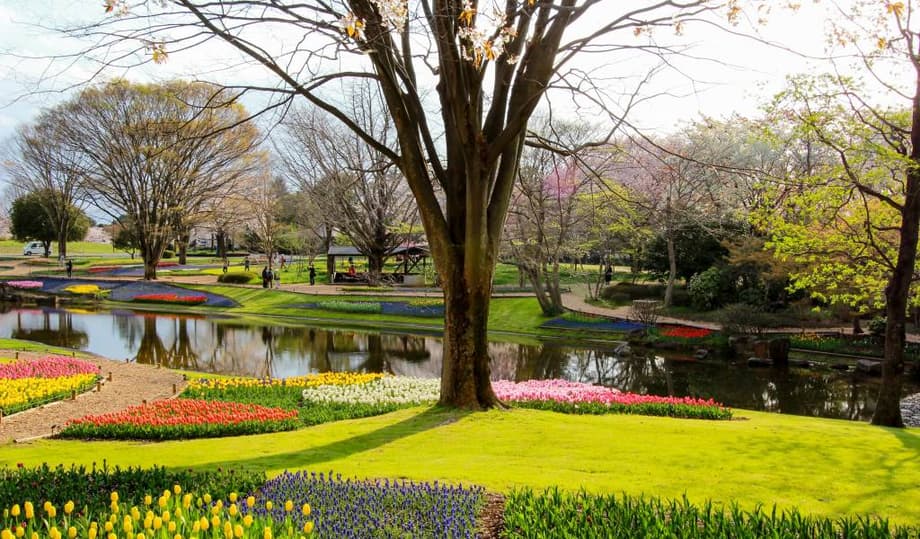
The poppy bloom represents the grand finale of a months long floral relay that begins in late March. The 2026 Flower Festival, running from March 26 through May 24, sequences different species so that something is always reaching peak color regardless of when visitors arrive. This botanical baton pass begins with rapeseed blossoms and tulips, transitions through nemophila and cherry trees, and culminates in the poppy fields that now dominate Flower Hill. Visitors who arrived in late March found rapeseed and early tulips, while those coming in mid April encountered nemophila fields that seemed to extend to the horizon.
Earlier in the season, approximately 250,000 tulip bulbs across 260 varieties filled designated garden beds with structured geometric color. As those faded, nemophila created a blue sea effect that offered a cool visual counterpoint to the warming weather. Around 1,500 cherry trees also contributed their brief but beloved pink canopy, though sakura blossoms are famously unpredictable and easy to miss without precise timing. This relay format has proven especially valuable in 2026, as variable weather patterns have compressed or extended individual blooming periods in unpredictable ways.
The poppies solve that problem. Their blooming window spans several weeks, giving travelers a much wider margin for error than cherry blossoms allow. By the time the red Shirley poppies reach full color, they effectively reset the clock for anyone who missed earlier phases of the festival. The result is a park that feels perpetually in season, with each flower type claiming its moment before yielding the stage to the next. Latecomers in past years have been surprised to find that May offers some of the most reliable and vivid flower viewing of the entire spring cycle.
Events and Visitor Experiences
Beyond the flowers themselves, the park has organized a series of events designed to amplify the visual drama. On select dates in April and May, including May 16, staff release thousands of soap bubbles across the fields, creating a surreal landscape where spheres of iridescent film drift above the red petals. These scheduled releases turn an already photogenic setting into something genuinely fantastical, particularly for young children encountering the scene for the first time. The bubble events create memories that last far longer than the brief flowering season.
Photography infrastructure plays a major role in the appeal of the park. Each flower field features purpose built photo spots that rotate according to the blooming schedule. Past installations have included train tracks, doors, swings, benches, and even a miniature house, all positioned to frame visitors within the blossoms. For dedicated shutterbugs, the park occasionally opens certain areas early or restricts morning entry to create crowd free shooting opportunities, though some of these special sessions require advance reservations and modest fees. The empty garden photography sessions have become particularly popular among social media content creators.
Food vendors complement the visual feast with spring themed menus that include donuts, specialty coffees, ground pork cutlets, and shrimp and avocado bagels. The Japan Air Self Defense Force Central Band has also performed outdoor concerts on the grounds, linking the military aviation heritage of the park with its current identity as a cultural gathering place. These additions mean that even visitors who arrive indifferent to flowers can find entertainment and sustenance throughout the day. Local food trucks often park near the main entrance, offering grilled meats and chilled drinks that prove popular under the strengthening May sun.
Voices from the Garden
For many Tokyo residents, the poppy bloom is an annual tradition rather than a single event. A company employee from Suginami Ward visited Flower Hill with his family during the opening days of the 2026 peak. He explained that the trip is a regular ritual for his household, one that allows his children to burn energy in open air while he and his spouse enjoy the seasonal colors.
We always come here to play with our two children. Today we came to the flower field after hearing the blossoms were at their best.
His young son offered a simpler but equally enthusiastic review of the landscape.
It was so pretty!
Veteran visitors also bring specific artistic goals to the hillside. A woman from Shinjuku Ward who returns every season arrived with her camera ready to capture the flowers in a particular light. She offered her own assessment of the current season after setting up her equipment near the paths.
The poppies this year are wonderful, and I want to enjoy photographing them in the backlight.
These personal reactions underscore a broader truth about the park. While the scale of the planting, 1.8 million flowers, sounds abstract on paper, the experience of standing inside a living red carpet creates an emotional impact that transcends statistics. The combination of natural beauty, family traditions, and individual creative pursuits turns a simple municipal garden into a shared cultural space. Other guests can be seen lying on blankets at the edge of the field, reading books or sharing picnics while the red blossoms rustle in the wind behind them. The hillside functions as a democratic space where amateur photographers and casual observers enjoy equal access to the same stunning views.
Planning Your Visit
Those planning to visit Showa Kinen Park during the poppy peak should note a few practical details. Admission costs 450 yen for high school students and older, with a reduced rate of 210 yen for visitors aged 65 and over. These modest fees grant access to the entire park, including Flower Hill and the surrounding gardens, making it one of the better value excursions in the Tokyo metropolitan area.
The best viewing window for the 2026 Shirley poppies extends through mid May, though exact timing depends on weather conditions. Because the blooms arrived early this year, anyone delaying their visit risks missing the full effect. Morning light generally offers the most flattering illumination for photography, while weekday afternoons tend to draw smaller crowds than weekends. Visitors should wear comfortable walking shoes, as the park grounds are extensive and the best vantage points require some strolling across grassy terrain.
Getting to the park is straightforward. Multiple JR Lines, including the Chuo, Nambu, and Ome services, stop near the Tachikawa area, from which the park entrance is a short walk or bus ride. Visitors coming from central Tokyo should expect a journey of roughly 30 to 45 minutes, a small investment of time for access to one of the largest cultivated flower displays in the region. The park is also accessible for wheelchair users and strollers, with paved paths cutting through most major garden areas. Parking is available for those arriving by car, though public transportation remains the most reliable option during peak bloom weekends when lots fill quickly. Bringing water and sun protection is advisable, as the open former airfield offers limited shade over the flower hills.
The Bottom Line
- Approximately 1.8 million red Shirley poppies are in full bloom at Showa Kinen Park in western Tokyo, about one week earlier than usual because of warm April weather.
- The flowers cover roughly one hectare of Flower Hill alongside white kasumiso, with peak viewing expected to continue through mid May 2026.
- Showa Kinen Park straddles Tachikawa and Akishima and is accessible via the JR Chuo, Nambu, and Ome Lines.
- The poppy bloom serves as the highlight of the Spring Flower Festival, a months long floral relay that includes tulips, nemophila, and cherry blossoms.
- Admission is 450 yen for adults and 210 yen for seniors, with special photography events and soap bubble releases scheduled throughout the season.