A Growing Wave of Returns
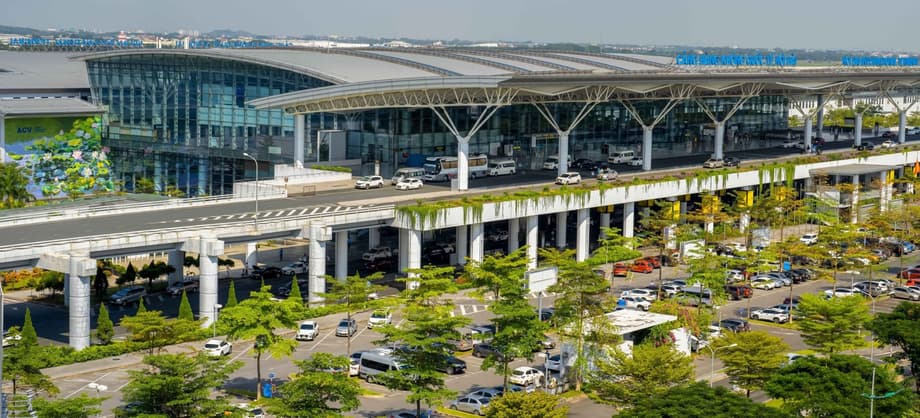
On May 13, 2026, officers from the Ho Chi Minh City Police immigration division joined other Vietnamese authorities at Noi Bai International Airport in Hanoi to receive 33 citizens deported from the United States. The operation was one of several recent handovers that have brought hundreds of Vietnamese nationals back to the country during the first five months of the year. According to figures from the Immigration Department under the Ministry of Public Security, localities across Vietnam received 138 deportees during the first quarter of 2026 alone. The United States accounted for 77 of those cases, Cambodia for 58, and Canada for 4. Municipal police in Ho Chi Minh City reported that cumulative arrivals from both the United States and Cambodia have risen into the hundreds since January, signaling an acceleration in enforcement actions abroad.
The rising numbers reflect tightened immigration controls in destination countries alongside a parallel crisis in Cambodia, where a massive crackdown on industrial scale cyber fraud operations has expelled foreign workers by the tens of thousands. Vietnamese authorities have responded by transforming airport receptions into comprehensive intake operations that include medical screening, legal documentation, and social welfare support. Officers now process each case individually to determine whether the person was deported for an immigration violation, a criminal matter, or because they were a trafficking victim forced into illegal labor.
Authorities describe the current situation as unusually complex because it involves two distinct populations requiring different forms of state assistance. Returnees from the United States typically face removal because of visa overstays, criminal convictions, or failure to meet residency requirements. Those arriving from Cambodia, however, often include trafficking victims rescued from forced labor in online fraud compounds along the border. Both groups require immediate assistance, but their legal statuses and social needs differ sharply upon arrival. The dual nature of the influx has prompted the Ministry of Public Security to coordinate closely with municipal health and social welfare departments to ensure that reception protocols match the specific circumstances of each returning citizen.
The US Deportation Pipeline and Congressional Relief Efforts
Behind the airport arrivals lies a longstanding United States policy that places thousands of Southeast Asian refugees at risk of removal. The United States currently holds more than 15,000 refugees from Vietnam, Laos, and Cambodia under final orders of removal. These orders are administrative decisions by immigration courts that authorize the government to deport individuals who lack lawful status or who have committed certain crimes. Many of those affected arrived in the United States decades ago as children of families displaced by the Indochina wars.
In February 2026, United States lawmakers introduced the Southeast Asian Deportation Relief Act, known as SEADRA, to address the issue. If passed, the legislation would cancel removal orders for Cambodian, Hmong, Lao, and Vietnamese refugees who arrived before 2008. It would grant permanent work authorization, replace regular office visits with Immigration and Customs Enforcement with virtual monitoring, and create legal pathways for deportees already sent overseas to return and reunite with families. The bill would specifically benefit refugees who have spent nearly fifty years in the United States and have raised families there. Supporters argue that deporting these individuals amounts to double punishment, since they have already served sentences for past criminal convictions and in many cases were not properly informed of the immigration consequences when they accepted plea deals decades ago.
The need for such legislation has gained urgency as United States enforcement tactics expand beyond traditional bilateral removals. Over the past year, American authorities have negotiated agreements with dozens of nations to accept deportees who have no connection to those countries. Several Southeast Asian nationals have been sent to third country facilities under these arrangements, raising alarm among immigrant rights advocates. One Cambodian refugee who arrived in the United States as a toddler spent more than five months imprisoned in Eswatini after American officials refused to send him directly to Cambodia. He described being shackled during a 21 hour flight, then held in a high security prison with limited access to legal counsel. Another group of detainees, including individuals from Vietnam and Laos, were sent to South Sudan. The United States has acknowledged these transfers as part of a broader strategy to enforce removal orders, but details remain opaque.
Legal advocacy groups in the United States have criticized the expansion of third country removals, arguing that the practice severs family ties and places refugees in legal limbo without clear protections. The Cambodian foreign ministry has previously indicated that it accepts deportees directly from the United States, making transfers to African nations unnecessary in some cases. For Vietnamese nationals, the risk of third country transfer remains a growing concern as diplomatic agreements continue to multiply.
The Cyber Scam Crackdown in Cambodia and Trafficking Victims
While American deportations often involve immigration violations or old criminal convictions, the flow of returnees from Cambodia is driven by a different crisis. Since mid-2025, Cambodian authorities have launched sweeping raids against online scam compounds that targeted victims across Asia and beyond. The crackdown intensified after the January arrest and extradition to China of tycoon Chen Zhi, a central figure in the fraud industry. Government figures indicate that between January and early February 2026, more than 110,000 foreign nationals were deported from Cambodia, while another 210,000 left voluntarily. The United States Treasury has also sanctioned Cambodian Senator Kok An and associates for alleged involvement in scam operations.
Within these massive figures, many Vietnamese nationals were not voluntary illegal workers but human trafficking victims. Recruits were typically lured through social media advertisements promising legitimate office or customer service jobs with salaries far above domestic wages. Upon arrival in border towns such as Sihanoukville, Bavet, and Poipet, their passports were confiscated and they were forced to run online fraud schemes targeting Vietnamese and international victims. Vietnamese police have conducted repeated raids on cross border smuggling routes and extracted citizens from these compounds over the past year.
Moeun Tola, executive director of the Cambodian labor rights group CENTRAL, observed that enforcement actions have focused on lower ranking workers rather than the organizers profiting from the schemes.
If you ask whether it is over, I would say it is not. Only some individuals have been arrested, while those named in sanctions do not appear in the government arrest reports. Without holding the masterminds accountable, these online scam networks cannot be destroyed.
In Ho Chi Minh City, a separate reception on May 12 involved four Vietnamese citizens deported from Cambodia. Immigration officers discovered that one of them, Trinh Quang Khai, born in 1994, was wanted for intentionally inflicting bodily harm. He was transferred to city police for prosecution, while one companion received an administrative penalty for illegal exit, and the remaining two were processed for reintegration.
From Airport Handover to Social Services
Ho Chi Minh City Police have redefined their role in receiving deportees, moving beyond paperwork to direct social intervention. Officers now contact relatives, guide returnees through residency registration, and reissue identification documents that may have been lost or confiscated abroad. Medical teams stand ready to assist vulnerable individuals. During the May 13 reception from the United States, one deportee with a history of epilepsy required emergency hospitalization after authorities identified poor health conditions during intake. City police medical personnel transferred the individual immediately, stabilizing the condition before family members could be located.
For those without family sponsors, stable housing, or financial resources, the municipal police coordinate with ward level administrations and the municipal Department of Health to place individuals in social welfare centers across the city. Officials described the measure as a humanitarian effort reflecting a policy that no one is left behind. Authorities have also called on relatives of deportees who have not yet reestablished contact to reach out to local police or immigration divisions to begin sponsorship procedures. Dedicated telephone lines and office hours have been set up so that family members can verify whether a relative is among recent arrivals. This effort aims to reduce the number of people who remain in temporary shelters because their relatives do not know they have returned.
The Immigration Management Division emphasized that all reception activities comply with Vietnamese government policy on human rights, including freedom of movement and lawful immigration. Many returnees have expressed a desire to secure stable employment and rebuild their lives, according to municipal officials. Local hospitals have agreed to provide emergency treatment regardless of whether deportees have immediate proof of insurance or residence. One recent case involved a deportee who collapsed shortly after landing and was rushed to a municipal hospital for emergency stabilization. The prompt response was praised by health officials as an example of the city emergency preparedness protocols extending to returning citizens.
Legal Roots and Long Distance Displacement
The current wave of deportations cannot be separated from historical patterns of displacement. Extensive United States military operations in Cambodia, Laos, and Vietnam during the Indochina wars displaced millions of people, many of whom were later resettled in American cities with limited support. The 1996 Illegal Immigration Reform and Immigrant Responsibility Act expanded the list of crimes that trigger deportation, applying new standards retroactively to refugees who had already served sentences for past offenses. Since then, old convictions that once carried no risk of removal have become grounds for detention and expulsion.
Under the current United States administration, enforcement has grown more aggressive, including the practice of removing individuals to third countries where they hold no citizenship or residency. The United States has signed deportation agreements with at least 27 nations, often in Africa and Latin America, to house migrants in hotels, shelters, or prisons. Critics note that these agreements lack clear legal frameworks and expose deportees to arbitrary detention, while supporters argue the tactic provides leverage to enforce immigration laws. The practice of transferring deportees to nations such as Eswatini, Rwanda, and South Sudan has drawn sharp criticism from human rights observers. They point out that these agreements often lack safeguards and can leave deportees imprisoned without charges for months. The financial cost is also considerable. One congressional report estimated that certain third country transfers cost more than four hundred thousand dollars per detainee, raising concerns about both efficiency and humanity.
The Southeast Asian Deportation Relief Act represents the latest legislative attempt to interrupt this cycle. Its proponents argue that refugees who have lived in the United States for decades, raised children there, and integrated into communities should not face double punishment for old convictions, particularly when many were never properly informed of the immigration consequences when they signed plea agreements years ago. The legislation also highlights a broader question about national responsibility for people resettled after wars that the United States helped create.
Official Warnings and Calls for Prevention
Vietnamese authorities are urging citizens to avoid the networks that feed these deportation pipelines. The Immigration Department under the Ministry of Public Security has advised anyone planning to study, work, or travel abroad to research destination country laws carefully and to complete all legal exit and entry procedures. Officials warned that illegal migration networks and fraudulent documents expose individuals to arrest, deportation, and long-term or permanent entry bans that can ruin future opportunities. Beyond legal consequences, migrants who use unauthorized channels face a high risk of exploitation. The Cambodian scam compound crisis demonstrates that fraudulent recruitment networks operate across borders and prey on economic desperation. Vietnamese authorities have pledged to continue dismantling these smuggling routes while expanding public awareness campaigns about safe and legal labor migration.
Ho Chi Minh City Police have specifically warned residents to remain vigilant against social media advertisements promising light office work or high salaries in Cambodia, as these have served as the primary bait for traffickers operating along the border between Vietnam and Cambodia. City police continue to screen each returnee to separate victims from perpetrators, ensuring that those who were trafficked receive protection while those who violated laws face appropriate legal action. The careful balance reflects a broader government effort to manage migration humanely while upholding the rule of law.
Key Points
- Vietnam received hundreds of deportees during the first five months of 2026, with the United States and Cambodia as the primary sources.
- Ho Chi Minh City Police have expanded reception protocols to include medical care, temporary housing, identity document reissuance, and family reunification.
- A United States congressional bill called SEADRA seeks to cancel removal orders for Southeast Asian refugees who arrived before 2008 and to create pathways for deportees to return.
- Cambodian crackdowns on cyber scam compounds have led to the deportation of over 110,000 foreign nationals since early 2026, including Vietnamese trafficking victims forced into online fraud.
- The United States has broadened deportation policies to include third country removals, sending some Southeast Asian nationals to nations where they have no ties or legal status.
- Vietnamese officials are warning citizens against illegal migration networks and fraudulent job offers abroad.

![[Event Report]Disaster × Diversity Seminar:A Human Rights Approach to ...](https://asiadaily.org/wp-content/uploads/2026/05/img_mpr5nbgtq6iuwixgrif-150x150.jpg)