A Historic Moment for Maritime Decarbonization
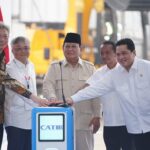
On April 23, workers at the Port of Ulsan in South Korea completed a procedure that maritime historians may one day view as the dawn of a new era in commercial shipping. With urgent voices crackling over radios at the dock, teams successfully transferred approximately 600 tonnes of green ammonia from shore-based storage tanks into the fuel systems of a waiting vessel. This operation marked the first commercial port-to-ship ammonia refuelling in history, establishing a critical proof-of-concept for an industry struggling to eliminate its carbon footprint.
The fuel loaded that day had traveled thousands of kilometers from the Inner Mongolia Autonomous Region in China, where renewable wind and solar power drove the production process at an Envision Energy facility. By the time it reached the Port of Ulsan, the ammonia had already made history as the first bulk import of green ammonia to South Korea. Its final transformation into ship fuel represented the closing of a loop that industry observers have long theorized but never executed at commercial scale.
Ulsan Port Authority holds the distinction of being the only green ship fuel supply port designated in the Republic of Korea, making it the logical stage for this technological drama. The successful operation provides tangible evidence that ammonia, long discussed as a theoretical solution for maritime decarbonization, can function within existing commercial port infrastructure. For an industry responsible for approximately 3% of global greenhouse gas emissions, the milestone offers a concrete pathway toward the goal of the International Maritime Organization to achieve carbon neutrality by 2050.
The achievement arrives as shipping companies worldwide face increasing regulatory pressure to abandon heavy fuel oils. Recent emissions levies now apply to most vessels docking in European Union ports, and despite delays to global carbon pricing frameworks, the direction of international regulation points unequivocally toward zero carbon operations. Against this backdrop, the April 23 refuelling serves as both a technical validation and a commercial signal that alternative fuels can enter the market at scale.
From Desert Winds to Maritime Fuel
The green ammonia journey began at the Envision Energy Chefeng facility in Inner Mongolia, where a 320,000-tonne-per-year production complex converts renewable electricity into hydrogen through water electrolysis, then combines it with nitrogen via the Haber-Bosch synthesis process. This approach creates ammonia without any associated carbon dioxide emissions, distinguishing it from the conventional grey ammonia produced using natural gas. In March, Lotte Fine Chemical, which operates the largest ammonia terminal in Asia near Ulsan, imported this carbon-free cargo into South Korea, creating the first link in what industry leaders hope will become a robust global clean ammonia supply chain.
On April 23, that same cargo moved from a dome-shaped storage tank situated approximately 900 meters from the dock, through a white pipeline system, and into a loading arm resembling a robotic apparatus. Workers monitored every connection point with extreme precision, as the liquid ammonia required maintenance at minus 33 degrees Celsius to remain in liquid form under atmospheric pressure. While these temperature demands prove less stringent than those for liquid hydrogen, which must reach minus 253 degrees Celsius, the toxic nature of ammonia necessitated elaborate safety protocols throughout the transfer operation.
The physical infrastructure involved in this operation represents years of planning and investment. Lotte Fine Chemical completed registration as the first ammonia ship fuel supplier in South Korea in 2025, preparing the terminal infrastructure specifically to handle marine fuel applications. The company has positioned itself to capture a significant share of the domestic bunkering market, which analysts project could reach 3 trillion won by 2050 as the nation transitions toward zero carbon shipping fuels.
Engineering Solutions for Toxic Fuel
Ammonia presents unique engineering and safety challenges that distinguish it from conventional marine fuels. In liquid form, it offers approximately 1.7 times higher storage density than liquefied hydrogen at equivalent volumes, making it suitable for large scale transport and long distance voyages. However, the substance proves toxic to both humans and aquatic life, requiring sophisticated handling systems and redundant safety measures during bunkering operations.
During the Ulsan refuelling, workers repeatedly inspected connection points and monitored safety conditions throughout the transfer. Absorption equipment at the spill control tower stood ready to operate alongside wastewater treatment facilities, while a fire truck remained on standby throughout the procedure. An ammonia gas detector provided real time leak monitoring, complemented by an ammonia purge recovery unit designed to capture any potential emissions before they could enter the atmosphere or water. Fortunately, the operation proceeded without incident, validating the safety protocols developed specifically for this new fuel type.
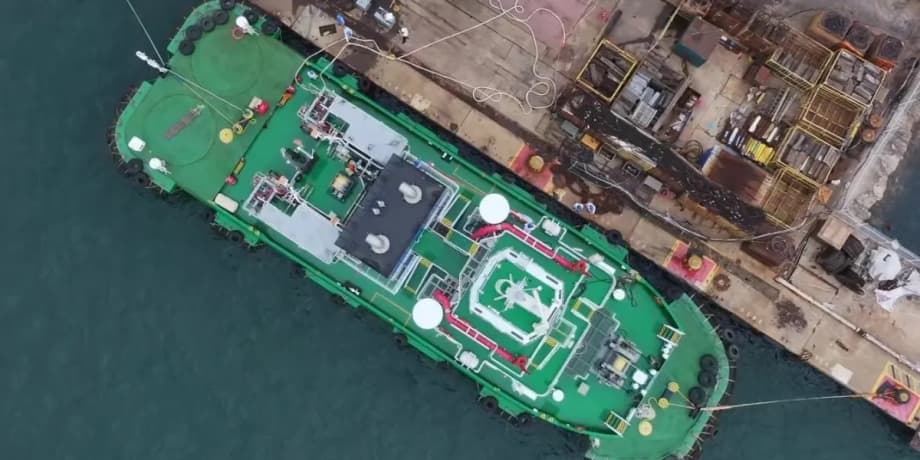
The vessel receiving the fuel represents the cutting edge of maritime engineering. Named Antwerpen, the ship measures 190 meters in length and 30.4 meters in width, with a cargo capacity of 46,000 cubic meters. Constructed by HD Hyundai Heavy Industries at its Ulsan shipyard, the vessel features a high pressure ammonia injection engine capable of running on up to 95% ammonia blended with conventional fuel. A selective catalytic reduction system minimizes nitrogen oxide emissions, addressing one of the primary environmental concerns associated with ammonia combustion.
A sister vessel named Arlon, built to identical specifications, is scheduled to join the fleet in the coming months. Both ships will operate under the management of Exmar LPG France, a subsidiary of the Belgian shipping group Exmar, and will transport liquefied gas cargoes including ammonia and liquefied petroleum gas while running on their innovative dual fuel systems.
Market Validation and Investor Response
The successful refuelling triggered immediate enthusiasm in financial markets. On April 24, Lotte Fine Chemical shares surged more than 13% in early trading on the Korea Composite Stock Price Index, reaching a one year high of 64,400 won before settling at 63,600 won. Investors recognized that the company had successfully commercialized the entire supply chain required for ammonia marine fuel, from import logistics through terminal storage to final ship delivery.
The stock movement reflects broader market recognition that ammonia could capture a significant portion of the future marine fuel market. The International Energy Agency projects that ammonia could account for 8% of marine fuel demand by 2030, rising to 46% by 2050. These projections suggest that companies establishing early infrastructure advantages, such as Lotte Fine Chemical with its Ulsan terminal operations, stand to benefit from a fundamental shift in how the world powers its maritime commerce.
Seok-Min Hwang, managing director of the ammonia business division at Lotte Fine Chemical, stressed the strategic importance of the Ulsan facility in future operations:
If ship based fuel supply is introduced in the future to meet demand, the Port of Ulsan will play a more active role as a hub for eco friendly ship fuels such as ammonia fuel.
This vision aligns with the stated goal of the company to become the dominant player in the ammonia bunkering sector of South Korea, using its position as the first mover in a market that could eventually replace substantial portions of the current fossil fuel based shipping economy.
National Strategy and Port Development
The Ulsan refuelling represents merely the most visible component of the comprehensive approach of South Korea to maritime decarbonization. In 2025, national authorities designated Ulsan as a regulatory free special zone specifically for ammonia bunkering, enabling accelerated development of safety standards and operational protocols without the usual bureaucratic constraints that might delay innovation. This designation allows port authorities to test new procedures and equipment in a controlled environment, establishing templates that other ports can later adopt.
Concurrently, the nation is pursuing similar initiatives at other strategic locations along its coastlines. Hyundai Motor Group recently entered a multilateral memorandum of understanding with Pyeongtaek City and various port authorities to develop hydrogen port initiatives, including specific plans for ammonia bunkering facilities and alternative maritime power systems. This broader strategy aligns with both the Hydrogen Port policy of the Ministry of Oceans and Fisheries and the Hydrogen City policy of the Ministry of Land, Infrastructure and Transport, creating a coordinated national framework for clean energy transition.
Ken Ramirez, Head of Global Energy and Hydrogen Business Division at Hyundai Motor Group, commented on the collaborative nature of these efforts:
Hyundai is honored to jointly drive this important collaboration as a public private partnership aimed at delivering real world hydrogen applications to achieve the goals of both the Ministry of Oceans and Fisheries Hydrogen Port policy and the Ministry of Land, Infrastructure and Transport Hydrogen City policy. It represents the first domestic initiative to establish a broad hydrogen ecosystem for port decarbonization, using the advanced infrastructure of Pyeongtaek Port.
These initiatives suggest that South Korea intends to position multiple ports as regional hubs for alternative marine fuels, reducing dependence on any single location while building redundancy into its clean energy supply networks.
Global Race for Zero Emission Infrastructure
The achievement of South Korea arrives as the international maritime community accelerates efforts to meet ambitious decarbonization targets established under the Mission Innovation Zero Emission Shipping initiative. This international coalition has established goals of seeing 600 large vessels running on zero emission fuel by 2030, with 20 key ports across three continents offering corresponding bunkering infrastructure. The April 23 operation at Ulsan represents the first concrete realization of this vision, demonstrating that the complete supply chain from renewable production through commercial bunkering can function in the real world.
Other nations are developing comparable capabilities at varying stages of readiness. Singapore is collaborating with Vopak and Air Liquide to establish ammonia import and cracking facilities on Jurong Island, intended to support the National Hydrogen Strategy of the city state. In Japan, IHI Corporation is investigating supply hubs in Hokkaido and Fukushima, partnering with regional power companies and chemical manufacturers to study ammonia supply chains based in Tomakomai and Soma cities. The North Sea Port in Europe is preparing to offer ammonia refuelling alongside hydrogen, methanol, and LNG, though these facilities remain in development rather than active commercial service.
Research published in the Journal of Physics Energy provides context for the scale of transformation required. A spatial modeling framework developed by academic researchers suggests that decarbonizing shipping through green ammonia will require investments approaching USD 2 trillion globally by 2050, with half of that needed in low and middle income countries. The study predicts that Australia, Chile, and Western Africa will emerge as major production hubs due to solar resources and land availability, while Asian ports like Ulsan will serve as critical demand centers and bunkering locations.
Hyejeong Kim, Director General for Shipping and Logistics at the Ministry of Oceans and Fisheries, expressed hope that the Korean operation would stimulate broader adoption across the industry:
We hope the fuelling would serve as a catalyst for introducing clean fuels into ports and demonstrate the viability of these technologies for commercial maritime operations worldwide.
The transition faces significant obstacles, including energy losses during ammonia production and the need to establish entirely new safety protocols for toxic fuel handling. However, with the first commercial refuelling now complete, the theoretical framework for zero carbon shipping has gained its first practical foothold in the commercial maritime world.
The Essentials
- The Port of Ulsan in South Korea completed the first commercial port-to-ship green ammonia refuelling on April 23, transferring 600 tonnes to an ammonia powered vessel.
- The green ammonia was produced in Inner Mongolia, China by Envision Energy using renewable wind and solar power, then imported by Lotte Fine Chemical in March.
- The receiving vessel, built by HD Hyundai Heavy Industries, is one of two ammonia dual fuel gas carriers named Antwerpen and Arlon with 46,000 cubic meter capacity.
- Lotte Fine Chemical, operating the largest ammonia terminal in Asia, saw its stock price jump 13% following the announcement of the successful operation.
- The milestone supports the goal of the International Maritime Organization to achieve carbon neutrality in shipping by 2050, with the IEA projecting ammonia could supply 46% of marine fuel demand by that date.
- Ulsan Port serves as the designated green ship fuel supply hub of South Korea and a regulatory free special zone for ammonia bunkering development.
- The operation required maintaining ammonia at minus 33 degrees Celsius with extensive safety protocols including real time leak detection and emergency response systems.