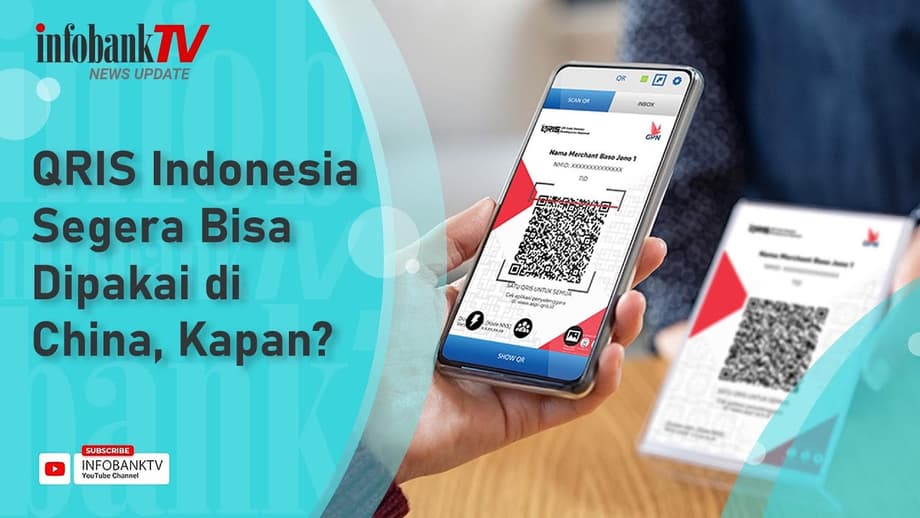
Indonesia-China Digital Payment Bridge Set for April Launch
Bank Indonesia is preparing to activate a landmark cross-border payment system with China on April 30, 2026, enabling seamless digital transactions between the two countries using local currencies. The initiative represents one of the most significant steps in Indonesia’s strategy to reduce dependence on the United States dollar while strengthening bilateral economic ties with its largest trading partner.
The Quick Response Code Indonesian Standard, known as QRIS, will officially connect with China’s payment infrastructure following a successful trial period that processed 1.64 million transactions valued at Rp 556 billion, equivalent to approximately $32 million. Bank Indonesia Deputy Governor Filianingsih Hendarta confirmed the launch timeline during a virtual press conference following the central bank’s April 2026 Board of Governors meeting.
Hopefully, on April 30, 2026, we will be able to officially launch it. Even during the trial phase alone, transaction volume reached 1.64 million transactions with a value of Rp 556 billion ($32 million).
Hendarta emphasized that both technical and commercial preparations have been finalized for full implementation. The system involves participation from 24 Indonesian institutions, including 16 banks and eight non-bank entities, alongside 19 participating institutions from China.
How Cross-Border QRIS Integration Works
QRIS serves as Indonesia’s standardized national QR code payment system, launched in 2019 to unify various mobile payment platforms under a single interoperable framework. The cross-border expansion allows Indonesian travelers to make payments using their domestic mobile banking applications when visiting China, while Chinese tourists can similarly use their preferred payment apps at over 40 million QRIS-enabled merchants across Indonesia.
The technical architecture relies on a partnership between the Indonesian Payment System Association (ASPI) and UnionPay International, China’s global payment network. Four major Indonesian switch network providers, Rintis, ALTO, Artajasa, and Jalin, have signed cooperation agreements with UnionPay to process transaction routing and settlement. Ant International and Alipay also participate in the system, creating multiple pathways for payment processing between the two countries.
Under the arrangement, transactions settle in local currencies, meaning Indonesian payments in China convert directly to Chinese yuan, while Chinese payments in Indonesia settle in Indonesian rupiah. This local currency transaction framework eliminates the need for US dollar intermediation in bilateral retail payments, reducing conversion costs and exchange rate risks for consumers and merchants.
Local Currency Settlement Strategy
The launch aligns with Indonesia’s broader de-dollarization agenda aimed at supporting rupiah exchange rate stability and reducing exposure to US dollar volatility. Bank Indonesia Governor Perry Warjiyo has consistently emphasized that expanding QRIS cross-border functionality forms part of a comprehensive strategy to internationalize the rupiah while deepening regional financial integration.
The local currency settlement mechanism represents a shift away from traditional international payment systems that typically require dollar conversion. When an Indonesian tourist purchases goods in Shanghai using a mobile banking app, the transaction converts rupiah directly to yuan through the linked banking networks, bypassing the need for dollar-based clearing. Similarly, Chinese visitors to Bali or Jakarta can pay merchants directly in rupiah equivalents without holding foreign currency cash or using international credit cards that process through dollar-denominated networks.
This arrangement supports Indonesia’s Local Currency Transaction framework, which Bank Indonesia has actively promoted with major trading partners. The central bank has previously implemented similar local currency arrangements with several countries, but the China integration carries particular significance given the scale of bilateral trade, which exceeds $100 billion annually.
Impact on Trade and Tourism
Beyond currency strategy, the payment linkage promises tangible benefits for micro, small, and medium enterprises, which form the backbone of Indonesia’s economy. The country’s 40 million QRIS-enabled merchants, ranging from street vendors to retail chains, will gain direct access to Chinese consumer spending without investing in separate payment terminals or foreign currency accounts.
Tourism represents another significant beneficiary. Approximately 500,000 tourists travel between Indonesia and China annually, with numbers expected to grow as travel patterns normalize. The system eliminates the friction of currency exchange for travelers, allowing Indonesian visitors to Beijing or Shanghai to pay for meals, transportation, and shopping using familiar mobile applications. Chinese tourists in Indonesia can scan the same QR codes used by local residents, streamlining the travel experience while ensuring transaction security.
Bank Indonesia officials note that the payment integration will particularly benefit cross-border e-commerce and service transactions, enabling smoother settlements for digital goods and freelance services between the two economies.
Expanding the Digital Payment Ecosystem
The China launch follows a systematic expansion of QRIS cross-border capabilities that has already established connections with Japan, South Korea, Malaysia, Thailand, and Singapore. The Japan integration launched on August 17, 2025, coinciding with Indonesia’s 80th Independence Day celebrations, while the South Korea connection preceded the China rollout.
Bank Indonesia is simultaneously preparing the next generation of BI-FAST, the country’s real-time payment system, to support broader regional connectivity. The upgraded system will incorporate cross-border capabilities through the Nexus scheme, a multilateral initiative connecting payment systems across Malaysia, Singapore, Thailand, the Philippines, and India. This architecture aims to create a seamless payment network spanning Southeast and South Asia, further reducing reliance on traditional correspondent banking channels dominated by dollar clearing.
UnionPay International has indicated ambitions to extend similar QR payment linkages to 19 countries and regions outside mainland China, suggesting Indonesia’s integration may serve as a template for broader Asian payment interoperability.
Technical Implementation and Security
The April 30 launch follows extensive sandbox testing that began in September 2025 under a Government-to-Government cooperation model. During this pilot phase, selected users successfully conducted transactions using Indonesian mobile payment applications in China and Chinese payment apps, including UnionPay and Alipay, at Indonesian merchant locations.
The technical infrastructure involves complex coordination between central banks, switch operators, commercial banks, and fintech providers. On the Indonesian side, the 16 participating banks and eight non-bank institutions have completed system integration to ensure real-time transaction processing and settlement. Chinese participation includes major state banks and payment technology companies that have adapted their systems to recognize and process QRIS codes.
Security protocols address fraud prevention and cyber risk management, with both countries implementing standards to protect consumer data and transaction integrity across borders. The system employs standardized technical, business, and governance frameworks designed to handle transaction surges while maintaining reliability.
Bank Indonesia reports that domestic digital payment growth continues to accelerate, with total transaction volume reaching 14.82 billion in the first quarter of 2026, representing a 37.69% increase year-on-year. QRIS transactions specifically surged 116.43% during the same period, driven by expanding merchant acceptance and user adoption.
The Essentials
- Bank Indonesia will officially launch cross-border QRIS payments with China on April 30, 2026, following successful trial transactions totaling Rp 556 billion.
- The system enables direct local currency settlement between Indonesian rupiah and Chinese yuan, reducing dependence on US dollar intermediation.
- Twenty-four Indonesian institutions and 19 Chinese participants have completed technical and commercial preparations for the launch.
- Indonesian travelers can use mobile banking apps in China, while Chinese visitors gain access to over 40 million QRIS merchants in Indonesia.
- The initiative represents part of Indonesia’s broader de-dollarization strategy and follows similar QRIS rollouts in Japan, South Korea, Malaysia, Thailand, and Singapore.
- Bank Indonesia is preparing next-generation BI-FAST infrastructure to support expanded regional payment connectivity through the Nexus multilateral scheme.