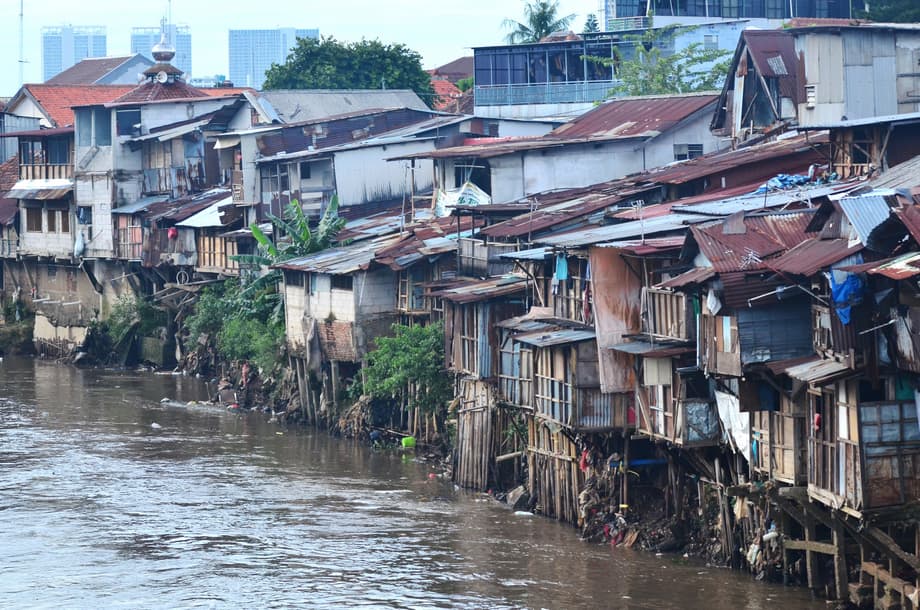
An Ecological Emergency Unfolds in the Capital
Jakarta is facing an ecological crisis that threatens both its aquatic ecosystems and critical flood control infrastructure. In response, Governor Pramono Anung has ordered an unprecedented coordinated operation to remove invasive armored catfish, locally known as sapu-sapu or “janitor fish,” from waterways across Indonesia’s capital city. The campaign represents one of the most aggressive municipal efforts to combat invasive species in Southeast Asia, involving hundreds of personnel working simultaneously across all five of Jakarta’s administrative cities.
The operation commenced on Friday with military-like precision, deploying firefighters, disaster mitigation officers, local officials, and volunteers to ten distinct locations throughout the metropolis. These suckermouth catfish (scientifically classified as Hypostomus plecostomus and belonging to the family Loricariidae) have proliferated exponentially in Jakarta’s rivers and canals, creating a multi-faceted threat that extends beyond environmental concerns into public safety territory.
The fish, commonly dubbed “janitor fish” for their ability to consume algae and detritus in aquariums, originally entered Indonesian waters through the global pet trade. Native to river systems across Brazil, Venezuela, and the Rio de la Plata basin in South America, these armored catfish arrived in Jakarta via the aquarium industry, where hobbyists valued them as natural tank cleaners that reduce maintenance requirements. The ecological problem begins when pet owners release these fish into natural waterways, either deliberately when the animals outgrow their tanks or accidentally through flooding events.
Environmental experts have issued stark warnings about the destabilizing effects these invaders exert on freshwater ecosystems. As opportunistic omnivores capable of growing up to 50 centimeters in length and surviving for 10 to 15 years, the fish consume algae, aquatic plants, invertebrates, and critically, the eggs of native species. Their armored bodies and burrowing behaviors add physical destruction to their biological predation, undermining riverbanks and embankments that serve as crucial flood barriers in this low-lying coastal city. The nocturnal habits of these creatures further complicate removal efforts, as they remain hidden during daylight hours when collection teams operate.
The ecological disruption extends beyond direct predation. By consuming algae and detritus that would normally support native invertebrate populations, the janitor fish essentially strip the food web of its foundation layers. This bottom-up disruption cascades through the ecosystem, reducing food availability for larger native fish that serve as dietary staples for local human populations. The loss of native biodiversity also reduces the ecological resilience of Jakarta’s waterways, making them more susceptible to pollution and less capable of natural self-purification.
Citywide Mobilization Targets Critical Waterways
In East Jakarta, Mayor Munjirin personally led approximately 150 personnel in an extensive netting operation along the Ciliwung River in Kramat Jati. The team worked methodically through the waterway, collecting specimens ranging from mature adults to recently laid eggs. Within hours, authorities had gathered approximately 200 kilograms of fish from this single location, with additional collections from nine other district sites still being tallied. The coordinated effort extended across ten distinct locations in East Jakarta alone, with one site designated per district to maximize geographical coverage.
The disposal method reveals the remarkable resilience of these invasive creatures. Officials transported the captured fish to designated burial sites near the riverbanks, ensuring complete interment rather than simple removal. This precaution proves necessary because the species possesses an extraordinary ability to survive extended periods outside water, a biological trait that makes standard disposal methods insufficient. Dead fish are buried to ensure they do not survive and re-enter the ecosystem, as the species is known for its resilience and ability to live for extended periods even outside water.
Hasudungan A. Sidabalok, head of Jakarta’s Food Security, Maritime and Agriculture Agency, noted that previous control efforts had targeted the Ciliwung River specifically, with captured fish transported to a fisheries inspection and processing facility in Ciganjur for proper disposal. However, earlier efforts proved insufficient against the species’ rapid reproduction and longevity, prompting the current escalation.
Munjirin explained the operational scope during the Friday deployment, indicating that this represents the beginning of a sustained campaign rather than a singular event.
Following the governor’s instruction, we are conducting operations across 10 locations in East Jakarta, one in each district.
City officials have committed to repeating these operations regularly, establishing a rhythm of removal designed to gradually deplete the breeding population while preventing re-establishment from remaining specimens or new releases.
Cash Incentives Drive Community Participation
West Jakarta Mayor Iin Mutmainnah introduced an innovative economic incentive to accelerate removal efforts and encourage broad community engagement. Participating teams and individual collectors now receive Rp 25,000 (approximately $1.50) for every kilogram of janitor fish captured, with additional rewards allocated to the most productive teams. This compensation structure transforms an ecological necessity into an economic opportunity for local residents.
The incentive program produced immediate results in the Cengkareng district, where joint teams swept through river channels using specialized nets. Within less than two hours, crews had collected approximately 20 kilograms of fish measuring between 20 and 30 centimeters. The combination of municipal resources and citizen participation creates a force multiplier effect that authorities hope will overwhelm the reproductive capacity of the invasive population.
Similar operations unfolded simultaneously in Central Jakarta, including waterways near Plaza Indonesia, as well as in Kelapa Gading and Setu Babakan. Governor Pramono emphasized that this coordination across all five administrative cities (North, South, East, West, and Central Jakarta) demonstrates the administration’s commitment to comprehensive environmental restoration. The simultaneous timing across multiple districts prevented fish from simply migrating from cleaned areas to untouched sections during the operation.
Structural Damage Threatens Flood Defenses
The janitor fish pose a unique engineering threat distinct from typical invasive species concerns. Their nesting behavior involves extensive burrowing into mud and sediment along riverbanks to create protected egg-laying sites. This burrowing activity compromises the structural integrity of earthen embankments that serve as critical flood control infrastructure throughout Jakarta, a city perennially vulnerable to seasonal flooding and increasingly severe climate-related water events.
Governor Pramono articulated the specific dangers during a special coordination meeting held earlier in the week, where he convened all Jakarta mayors except those from the Thousand Islands district to strategize the crackdown. His warnings highlighted the intersection of ecological and infrastructure concerns.
This fish comes from South America, is very resilient, and has become a predator for local fish. It consumes their food supply and damages embankments by burrowing.
By weakening riverbanks and embankments, the fish exacerbate erosion while simultaneously reducing the capacity of these barriers to contain high water volumes during monsoon seasons. The combination of biological invasion and infrastructure degradation creates a compounding risk factor for urban flooding, threatening residential neighborhoods, commercial districts, and transportation networks.
Texas in the United States faces similar challenges with this same species, which has established invasive populations there and prompted comparable control efforts. The global nature of this problem underscores the difficulty of managing species that have successfully colonized multiple continents through aquarium trade pathways. In both regions, the fish’s armored bodies make them difficult prey for native species that might otherwise control population growth through natural predation.
Beyond Burial: Exploring Economic Utilization
While current protocols involve burying captured fish to ensure permanent removal, scientific research suggests alternative pathways that could create economic value from this environmental scourge. A 2023 study published on ResearchGate investigated the extraction of acid-soluble collagen from suckermouth catfish skin, revealing promising industrial applications that could transform the removal campaign from a pure cost center into a potential revenue generator.
Researchers found that the skin of these invasive catfish yields approximately 10% collagen by wet weight, producing an off-white substance with properties comparable to established commercial sources. The extraction process involves acid-soluble methods that yield a product with a strong acetic acid odor but functional properties for industrial use. Testing revealed hydroxyproline content of 1.6%, a key indicator of collagen quality for industrial use. The viscosity measurements of 0.6 millipascal-seconds and pH levels of 5.51 fall within acceptable parameters for pharmaceutical applications.
Most critically, heavy metal testing showed concentrations within safe limits for cosmetic and medical use, addressing primary safety concerns for industrial applications. The extracted collagen demonstrated acceptable heavy metal content levels for pharmaceutical and cosmetic applications, with measurements comparable to previous studies using various species of fish.
The study authors concluded that creating industrial demand for these fish could indirectly serve to control their population by increasing economic incentives for extensive removal. Rather than simply burying tons of protein-rich biomass, Jakarta could potentially establish processing facilities similar to the Ciganjur center mentioned by officials, but equipped to transform the catch into valuable collagen for the beauty and medical industries. This approach would align with the cash-for-catch incentives already deployed in West Jakarta, potentially increasing the per-kilogram value beyond the current Rp 25,000 rate while simultaneously solving the disposal problem through productive utilization.
Sustained Campaign Sets Regional Precedent
Authorities have explicitly framed this operation as merely the opening phase of a long-term management strategy. The regular monitoring and removal cycles announced by officials reflect an understanding that single-event eradication proves impossible with established invasive populations of this magnitude. Instead, Jakarta appears committed to a war of attrition, systematically reducing breeding stocks while intercepting new releases.
City officials have positioned Jakarta’s response as a potential model for other Indonesian regions facing similar invasive species challenges. The coordinated multi-agency approach, combining environmental authorities with disaster mitigation teams and local governance structures, offers a template for integrated pest management in aquatic environments. Authorities hope Jakarta’s response can serve as a model for other regions facing similar challenges, demonstrating how municipal governments can mobilize resources across multiple districts simultaneously.
The operation also highlights the critical importance of public education regarding responsible aquarium stewardship. While the current removal efforts address the immediate population explosion, preventing future introductions requires changing the behavior of pet owners who may not understand the ecological consequences of releasing aquarium fish into natural waterways. The fish can grow up to 50 centimeters in length and live for 10 to 15 years, making them unsuitable for standard home aquariums once mature, which drives many owners to release them.
Governor Pramono’s administration has indicated that environmental clean-up efforts will continue expanding beyond the janitor fish campaign, with river health improvement serving as a cornerstone of the capital’s broader sustainability agenda. The simultaneous operations across Kelapa Gading, Setu Babakan, Cengkareng, and the Ciliwung River demonstrate the geographical breadth of both the problem and the proposed solution.
Key Points
- Governor Pramono Anung ordered simultaneous removal operations across all five of Jakarta’s administrative cities targeting invasive janitor fish (sapu-sapu).
- East Jakarta teams collected approximately 200 kilograms from the Ciliwung River alone, while West Jakarta offers Rp 25,000 ($1.50) per kilogram as incentives for community participation.
- The armored catfish, scientifically known as Hypostomus plecostomus and native to South America, can grow to 50 centimeters and live 10 to 15 years while devastating local ecosystems.
- Fish damage riverbanks through burrowing behavior, worsening erosion and threatening flood control infrastructure critical to the low-lying capital.
- Captured fish are buried near riverbanks to prevent survival, as the species can endure extended periods outside water and reinvade waterways if not properly disposed.
- Scientific research indicates potential for extracting pharmaceutical-grade collagen from the fish, offering economic utilization alternatives to burial.
- City officials describe the operation as the beginning of sustained regular monitoring and removal efforts to prevent further ecological damage.
- The invasion originated from aquarium releases, highlighting the need for public education on responsible pet ownership to prevent future ecological disruptions.