The Fraud Unveiled
Indonesian authorities have arrested 11 people, including government customs officials and business executives, in a wide-ranging investigation into palm oil fraud that has exposed critical weaknesses in international biofuel supply chains. The probe, conducted by Indonesia’s attorney general’s office, alleges that local companies conspired with officials to disguise palm oil as a waste byproduct called palm oil mill effluent, or POME, allowing them to evade higher taxes and defraud the state of millions of dollars.
The investigation has drawn in major European energy corporations, with documents revealing that Italian oil giant Eni and Finnish sustainable aviation fuel producer Neste received multiple shipments from the Indonesian firms now implicated in the scheme. There is no suggestion that Eni, Neste, or any other European buyers had knowledge of or involvement in the alleged fraud. Both companies have stated they removed palm oil from their supply chains years ago because of environmental concerns, yet the shipments they received between 2023 and 2024 raise troubling questions about verification systems meant to prevent exactly this kind of deception.
How the Deception Worked
To understand the alleged fraud, it helps to know the difference between the two products. Palm oil is the primary vegetable oil extracted from the fruit of oil palm trees, widely used in food, cosmetics, and increasingly as a biofuel feedstock. POME, or palm oil mill effluent, is the liquid waste generated during the milling and refining process, traditionally considered a byproduct requiring treatment and disposal. Under Indonesian tax regulations, palm oil exports carry significantly higher duties than POME, which is classified as a waste material with lower value. By allegedly mislabelling palm oil as POME, exporters could pay substantially lower taxes while still selling a valuable commodity to international biofuel producers.
The Indonesian probe contends that companies bribed customs officials to facilitate this mislabelling between 2022 and 2024. For the Indonesian government, the scheme represents millions of dollars in lost revenue at a time when the country is seeking to maximize returns from its natural resources. For European buyers, the stakes involve complex sustainability commitments. The European Union plans to ban palm oil in biofuels from 2030 because of its documented links to deforestation and habitat destruction. POME, as a certified waste product, faces fewer restrictions under EU renewable energy regulations, making it an attractive alternative for companies seeking to meet aggressive decarbonization targets without using controversial raw materials subject to prohibition.
The Companies and Individuals Implicated
Last month, Indonesian authorities detained 11 individuals, including directors of three key companies and several customs officials. Using trade data, shareholder agreements, and customs documents obtained through freedom of information requests, investigators from AFP and SourceMaterial identified three of the arrested executives.
Among them is Tony, who like many Indonesians uses a single name, and who serves as director of Tanimas Edible Oil while also holding shares in Green Product International. Authorities identify him in official documents only by the initials TNY. Green Product International served as the leading Indonesian supplier of palm oil products to Eni between 2023 and 2025, sending 21 consignments, with the most recent arriving in October. The company also dispatched at least 27 cargoes to Neste during the same period.
Two other arrested directors include Van Ricardo of Surya Inti Primakarya and Erwin of Bumi Mulia Makmur. Both men signed off on shipments to Eni between 2022 and 2024. All three executives remain in custody according to the attorney general’s office. Green Product International did not respond to requests for comment, while calls to Surya Inti Primakarya and Bumi Mulia Makmur went unanswered.
European Buyers Respond
Both Eni and Neste have moved quickly to distance themselves from the implicated suppliers. Eni stated that it maintains a zero-tolerance policy for regulatory breaches and had no direct contracts with the accused companies. Instead, the Italian energy major received shipments through an accredited supplier, Enviq, which immediately suspended all operations with the companies involved after the investigation became public. Enviq did not respond to requests for comment.
Neste, which has positioned itself as a leader in sustainable aviation fuel, said it instructed its supplier to exclude the implicated companies from its supply chain the day after Indonesian authorities announced the arrests. The Finnish company emphasized that it takes fraud risks seriously and has developed robust testing methods. According to Neste, periodic sampling of deliveries from Green Product International between 2023 and 2025 showed results consistent with palm-derived waste and residues, not the typical profile of crude palm oil.
Beyond Eni and Neste, trade records indicate that Green Product International supplied Swiss trader Kolmar, Spanish oil major Repsol, and American agricultural giant Cargill. None of these companies provided statements for publication regarding the allegations.
Broken Certification Systems
The case has exposed glaring holes in the third party certification systems that European regulators and companies rely upon to prevent fraud. Eni noted that its shipments were handled by a company certified by the International Sustainability and Carbon Certification, or ISCC, an EU-recognized verifier of palm oil imports for biofuels. The ISCC system is designed to track products from origin to destination, ensuring that what arrives at European ports matches the documentation and sustainability criteria promised.
Yet the ISCC spokesperson acknowledged that one supplier targeted in the investigation, Surya Inti Primakarya, is currently excluded from recertification, while another, Bumi Mulia Makmur, was previously excluded for unspecified violations. Strikingly, Green Product International, the company that sent dozens of shipments to major European energy firms including Eni and Neste, still holds a valid ISCC certificate according to the organization’s online registry. The ISCC did not respond when asked whether this accreditation would be reexamined in light of the criminal investigation and ongoing detention of the company’s shareholder.
Independent experts say the certification gap points to fundamental verification failures. James Cogan, head of public policy at ClonBio, an Irish biofuel maker that sources exclusively from within the European Union to avoid such risks, has called for radical transparency.
I would challenge any POME or POME-based biofuels processor to publish their volumes, sources and paperwork, to allow public and independent scrutiny.
Cogan’s statement reflects growing concern among industry insiders that verification has become so problematic that buyers and regulators should view any POME shipment with suspicion. Some independent analyses suggest the total volume of POME being used in the EU and Britain actually exceeds the estimated available global supply, suggesting widespread mislabelling across the sector, though industry trade groups have disputed these calculations as inaccurate.
Environmental Devastation in Sumatra
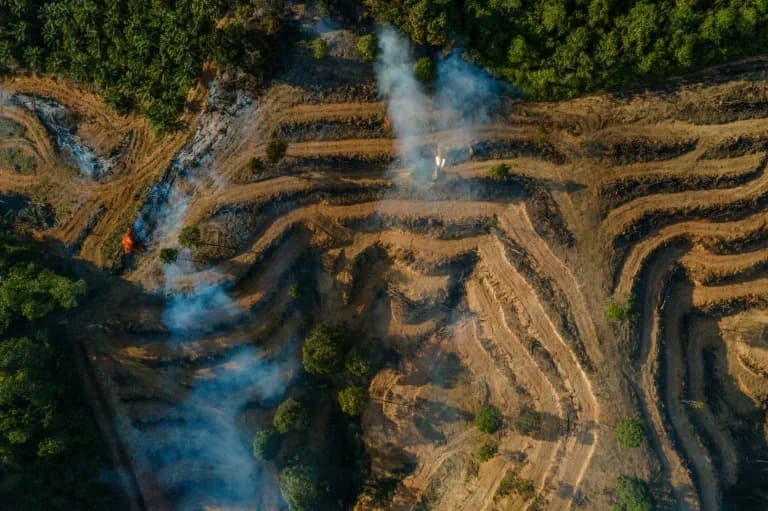
The alleged fraud carries heavy environmental consequences that extend far beyond lost tax revenue. Green Product International operates from the northern end of Sumatra, an island containing some of the world’s most critically endangered forests and the only remaining habitat where Sumatran orangutans, rhinos, Asian elephants, and tigers still coexist in the wild. The Tripa peatland, once celebrated as the orangutan capital of the world, has suffered catastrophic losses, shrinking by 86 percent since the turn of the millennium as agricultural interests raze the forest to establish palm plantations.
The toll on wildlife has been catastrophic. Ian Singleton, conservation manager at Orangutan Haven in North Sumatra, has documented the collapse of orangutan populations in the region.
It’s devastating. Once you chop the forest down, the orangutans have nowhere to live.
According to Singleton, the local orangutan population has plummeted from approximately 60,000 individuals in the 1980s to roughly 30 survivors today, pushed to the brink of local extinction by habitat destruction driven largely by palm oil expansion.
Investigative documents reveal troubling connections between the arrested executives and environmental destruction. Tony and another Green Product International director also serve as directors of Inno-Wangsa Oils & Fats, a regional company that purchased palm oil from suppliers previously fined for burning forests in the Tripa peatland. Government records show these suppliers received fines in 2014 and 2018 for illegal forest burning, yet continued operating. Satellite imagery reviewed by SourceMaterial indicates that deforestation at one of these supplier sites ranked among the highest rates recorded anywhere in Indonesia during the past year, suggesting that penalties have done little to deter environmental crimes.
We were really proud of getting those convictions. But on the ground it didn’t really make a lot of difference.
Singleton’s assessment highlights the gap between legal enforcement and actual conservation outcomes in the region.
Regulatory Responses Across Europe
The verification failures exposed by the Indonesian investigation have prompted some European governments to take unilateral action ahead of the full European Union ban. Ireland has already ended all financial incentives for POME use in biofuels, determining that the verification issues make the feedstock too risky to support with public funds. Germany will implement a similar moratorium next year, effectively closing two significant European markets to POME imports regardless of certification status.
Environmental campaigners argue the current certification system cannot reliably distinguish between legitimate waste products and mislabelled palm oil, rendering European climate goals vulnerable to fraud. Cian Delaney, biofuels campaigner at Transport and Environment, an environmental NGO based in Brussels, stated that the EU made the correct decision in 2019 to phase out palm oil biofuels because of documented deforestation links. However, he warned that gaps in the regulatory framework continue to allow bad actors to exploit the system.
Verification and certification of these imports is clearly failing. European Union climate policy that is supposed to promote green fuels is being cheated.
The allegations threaten to undermine confidence in sustainable aviation fuel markets just as airlines face mounting pressure from regulators and consumers to reduce carbon emissions. Brussels has mandated that European airports must ensure at least 70 percent of aviation fuel is sustainable by 2050, creating massive demand for biofuels that companies like Eni and Neste hope to supply. Eni recently signed a five-year deal to provide Ryanair with up to 100,000 tonnes of sustainable aviation fuel, while Neste extended a multi-year agreement with United Airlines in October and supplies major international airports including Schiphol in Amsterdam and Los Angeles International. If deforestation-linked palm oil enters these supply chains disguised as waste, the climate benefits claimed for biofuels may be completely undermined, Delaney warned.
The Bottom Line
- Indonesian authorities arrested 11 people, including customs officials and three company directors, for allegedly mislabelling palm oil as POME to evade taxes between 2022 and 2024.
- European energy giants Eni and Neste received multiple POME-labelled shipments from the Indonesian firms, though both companies deny knowledge of the fraud and have cut ties with the suppliers.
- The International Sustainability and Carbon Certification system has come under scrutiny, as one implicated company still holds valid certification despite the criminal investigation.
- Environmental groups warn that the fraud undermines EU climate goals, as palm oil production drives deforestation in Sumatra, threatening critical habitats for endangered orangutans and other species.
- Ireland and Germany have already restricted POME incentives, while the full European Union ban on palm oil in biofuels takes effect in 2030.