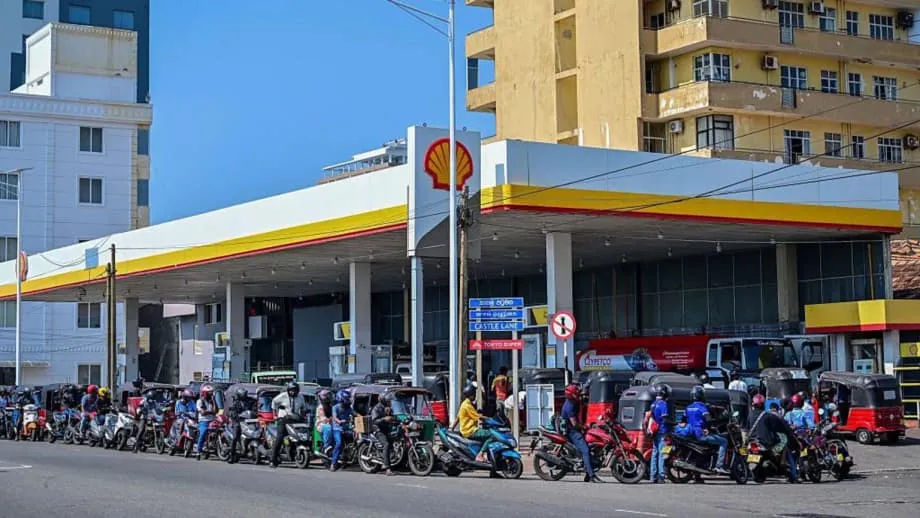
A weekly shutdown to stretch fuel supplies
Sri Lanka will close state institutions, schools and universities every Wednesday from March 18 to conserve fuel as the conflict involving the United States, Israel and Iran disrupts energy supplies across Asia. The decision effectively introduces a working week of four days for much of the public sector in a country of 22 million people.
Contents
- A weekly shutdown to stretch fuel supplies
- How the Hormuz disruption reaches Sri Lanka
- Fuel passes return as queues grow
- Shipments, storage and urgent supply talks
- Why the memory of 2022 matters
- Protecting hospitals also means protecting access
- Asian governments cut journeys and fuel use
- Larger economies turn to reserves and price controls
- Pressure spreads from fuel demand to overseas workers
- The Bottom Line
President Anura Kumara Dissanayake announced the measure after an emergency meeting with senior officials on Monday. Global oil prices had surged past $100 a barrel, while the Strait of Hormuz, a critical passage for oil shipments, faced effective closure. The government is trying to reduce consumption before a prolonged disruption exhausts its supplies.
Dissanayake described the approach as preparation for a crisis whose severity is still uncertain:
We must prepare for the worst, but hope for the best,
Government offices, educational institutions and the judiciary will observe the additional holiday. Hospitals, ports, water supplies, customs and immigration will remain operational. Officials chose Wednesday instead of Friday to avoid closing government offices for three consecutive days, which could paralyze administrative work.
Prabath Chandrakeerthi, Commissioner General of Essential Services, said the government also expects private employers to follow the arrangement. Explaining which institutions would be covered, he said:
It would be applicable to schools, universities and the judiciary,
The immediate aim is to reduce fuel burned during daily journeys to work and school while keeping critical infrastructure running normally. The government has also suspended public ceremonies and encouraged working from home where possible. For workers whose earnings depend on showing up each day, however, fewer journeys and reduced working hours can also mean less income.
How the Hormuz disruption reaches Sri Lanka
The immediate trigger lies about 3,000 kilometers away in the Strait of Hormuz, the narrow waterway between Iran and Oman. Approximately 20 million barrels of oil pass through it each day. Its importance comes from the volume of fuel that must travel through a small stretch of sea before reaching customers elsewhere.
The United States and Israel began bombarding Iran on February 28. Tehran retaliated with strikes across the Middle East and effectively closed the strait to unauthorized shipping. Nearly 90% of the oil and gas moving through the passage last year was destined for Asian markets, making Asia the world's largest region importing oil.
Sri Lanka's measures are part of a broader response to that disruption. Governments are trying to stretch existing stocks, secure replacement shipments and reduce the number of journeys requiring fuel. Oil prices are now hovering around $100 a barrel, adding a financial strain to the difficulty of obtaining supplies.
The key events leading to the Wednesday closure are:
- February 28: The United States and Israel began bombarding Iran, followed by Iranian retaliation across the Middle East and restrictions on shipping through Hormuz.
- Monday, before publication on March 17: Dissanayake held an emergency meeting with senior officials and announced the additional weekly holiday.
- March 18: The Wednesday holiday is scheduled to begin for state institutions, schools, universities and the judiciary.
Sri Lankan officials estimate that current fuel reserves can cover national demand for about six weeks. Conservation is therefore intended to buy time for further deliveries. The holiday tackles commuting demand, while a restored fuel rationing system limits how much individual vehicles can purchase.
Fuel passes return as queues grow
Sri Lanka has reinstated its National Fuel Pass system, which allocates fuel according to vehicle type. Private cars are limited to 15 litres a week and motorcycles to five litres. Public transport operators receive larger allocations so they can continue carrying passengers.
Drivers have queued at petrol stations in Colombo and other cities as they try to obtain fuel before restrictions tighten. Some motorists say 15 litres cannot cover their weekly journeys. Motorcyclists have questioned a five litre allowance for vehicles whose tanks hold eight litres.
Mohammed Aslem, a driver of a three wheeler in Colombo, described the rush to stations as panic driven by the war rather than an immediate absence of fuel:
There is fuel. People are panicking because of the war and they are themselves creating these lines,
Aslem said the large numbers arriving at once were contributing to the queues:
So, people are just flocking to the stations, but there is enough fuel in Sri Lanka.
Police have ordered petrol stations to stop dispensing fuel into cans and warned that people hoarding supplies could face legal action. The restrictions seek to preserve fuel for routine transport rather than allow large quantities to be stored by individual buyers.
The National Fuel Pass was first introduced in 2022, when Sri Lanka ran out of foreign reserves and could no longer pay for essential imports, including fuel. Its return has revived memories of that collapse. Official assurances about existing supplies have had to compete with public fears shaped by the earlier shortage.
Shipments, storage and urgent supply talks
Sri Lankan officials are discussing alternative fuel supplies with India and Russia. The aim is to establish steady deliveries that bypass the disrupted Hormuz route and keep the country supplied after its existing reserves are consumed.
S. Rajakaruna, chairman of the state run Ceylon Petroleum Corporation (CPC), has sought to reassure the public by confirming shipments through the end of April. His quoted assurance gave an earlier delivery horizon, the end of the current month, while also describing the limits of domestic storage:
Sri Lanka does not have enough storage facilities to store fuel beyond the next few weeks, but there are sufficient confirmed shipments till the end of this month,
The six week estimate concerns how long officials expect current reserves to cover demand. Rajakaruna's statement also shows why continued deliveries matter: Sri Lanka has limited room to store additional fuel and must keep supplies moving into the country.
The CPC has increased distribution, releasing more than five million litres despite public holidays. That effort addresses immediate demand at stations while diplomatic discussions focus on securing later shipments. The government is pursuing conservation and replacement supplies at the same time.
Neither the India nor Russia discussions came with an announced agreement or delivery date. For now, the practical response combines rationing, fewer commuting journeys and distribution from existing stocks, with officials pointing to confirmed shipments as reassurance against an abrupt shortage.
Why the memory of 2022 matters
Sri Lanka's previous economic collapse shows how a fuel shortage can spread well beyond petrol stations. In 2022, depleted foreign reserves left the country unable to import essential goods. Similar rationing measures accompanied months of protests that eventually forced President Gotabaya Rajapaksa to resign in July that year.
Fuel shortages made transport unavailable or too expensive for many people, preventing them from reaching healthcare. Ambulances waited for hours in fuel queues. Healthcare workers reported drawing blood without gloves, while patients needing medical supplies were told to buy them from private pharmacies, which many could not afford.
Padam, a member of the Malaiyaha Tamil community working in tea estates, described the difficulty of reaching treatment during that shortage to Amnesty International researchers:
Before the crisis, I used my personal vehicle. Due to the fuel shortage, this became more challenging. If we use public transport, it is fully crowded nowadays and people like my mother cannot travel in the public transport because she is very old. If we have fever, we are not able to see a doctor. We are using a Panadol for our illness.
Padam's account connects transport costs with decisions about whether to seek medical care. Older relatives could not manage crowded public transport, and illness was treated at home instead. The Malaiyaha Tamil community and plantation workers remain particularly exposed because of their geographic isolation and limited access to services.
The World Food Programme estimated that more than 6.2 million people, nearly 28% of Sri Lanka's population, faced moderate acute food insecurity during the 2022 crisis. That means they struggled to obtain enough food. Food inflation reached 90.9%, while the prices of lentils and sugar rose by 183.9% and 151.1%, respectively.
Sri Lanka defaulted on $46 billion in foreign debt and remains under a $2.9 billion International Monetary Fund bailout program requiring strict fiscal discipline. The country is confronting the new fuel shock while still operating within those financial constraints.
Protecting hospitals also means protecting access
Hospitals are exempt from the Wednesday closure, but the experience of 2022 shows that keeping a facility open is only part of maintaining healthcare. Patients need affordable transport to reach it, staff need to get to work, and ambulances need fuel to carry people requiring urgent treatment.
Amnesty International has warned that economic reforms and responses to crises must include human rights impact assessments. Such assessments examine how decisions affect people's ability to obtain essentials such as food and medical care, including those who face the greatest difficulty paying for them.
Sanhita Ambast, Amnesty International's Researcher on Economic, Social and Cultural Rights, described the consequences of the earlier economic crisis:
The economic crisis has led to devastating consequences for the people of Sri Lanka, many of whom are unable to ensure their children have enough food or to access healthcare for sick relatives,
Ambast said the government's response should put those needs at its center:
In order to convert this near breakdown into a breakthrough, the Sri Lankan authorities must ensure that human rights are placed at the heart of their responses to the crisis.
The current exemptions attempt to protect essential services. Human rights advocates nevertheless worry that a prolonged disruption could reproduce the hardship of 2022. People earning wages by the day and those in insecure employment face immediate risks from lost working hours and difficulty traveling, even when hospitals and other essential facilities remain operational.
Asian governments cut journeys and fuel use
Bangladesh has imposed daily fuel sales limits after panic buying emptied stations. Its national oil company restricted motorcyclists to two litres per tank, and drivers in Dhaka faced waits of about an hour. The country of 170 million people imports 95% of its oil and gas needs.
Bangladesh has also brought forward Ramadan holidays at universities and introduced planned blackouts nationwide. Ahmad Rush, a petrol station operator in Dhaka, estimated that customer numbers had almost doubled. Describing the pressure on his station, he said:
We opened at 7:30 this morning and were able to refuel 300 vehicles in three and a half hours,
Thailand is asking people to replace formal suits with shirts that have short sleeves, reducing the need for air conditioning. It is also exploring purchases of Russian oil. Myanmar has restricted private vehicles to alternate days according to their license plate numbers, effectively reducing traffic by half.
The Philippines has mandated working weeks of four days for government offices and banned public sector travel considered nonessential. President Ferdinand Marcos Jr announced cash assistance of 3,000 to 5,000 pesos ($50 to $84) for tricycle drivers, farmers and fishermen. Vietnam is encouraging cycling, carpooling and public transport while restricting personal vehicle use.
Pakistan increased petrol and diesel prices by 55 rupees ($0.28) per litre, its largest increase on record. Schools have closed for two weeks, and universities have moved classes online. Prime Minister Shehbaz Sharif announced a 50% reduction in government departments' fuel allowances and said 60% of official vehicles would be removed from the roads.
These measures target different parts of energy demand, from commuting and government fleets to cooling buildings. Each country is adapting its response to its exposure to imported energy and its capacity to support people facing higher costs.
Larger economies turn to reserves and price controls
Japan has pledged to release a record 80 million barrels from national reserves, equivalent to roughly 45 days of supply. It has also asked Australia to increase output of liquefied natural gas. Prime Minister Sanae Takaichi has promised action to keep gasoline prices from reaching intolerable levels, potentially funded by drawing on reserves.
South Korea has capped domestic fuel prices for the first time in nearly three decades and is shifting electricity generation toward nuclear and coal. President Lee Jae Myung announced plans to raise nuclear plant utilization to 80% and temporarily lift restrictions on electricity generation using coal.
Lee also announced a market stabilization program worth 100 trillion won ($96 billion). Explaining South Korea's exposure to the disruption, he said:
This is a significant burden on our economy, which is highly dependent on global trade and energy imports from the Middle East,
China has blocked exports of refined fuels, including gasoline, diesel and jet fuel, to protect domestic supplies. India faces one of its worst gas shortages in decades and has redirected liquefied petroleum gas from industry to households so families can obtain cooking fuel.
India has secured limited passage through the Hormuz blockade for some vessels. Indian companies have raised liquefied petroleum gas prices by 7%, the first increase in about a year. The combination of shipping access and priority for households is intended to preserve cooking supplies during the disruption.
Indonesia plans to raise fuel subsidy spending to 381.3 trillion rupiah ($32 billion). It may also bring forward implementation of B50 biodiesel, a blend containing 50% palm oil, to reduce dependence on petroleum. Malaysia, a net energy exporter, has sufficient petroleum supplies through at least May and plans special cabinet meetings to review its fiscal position.
Pressure spreads from fuel demand to overseas workers
Trinh Nguyen, a senior economist at Natixis, described the regional squeeze in a post on the social media platform X:
Demand destruction happening. First, Pakistan and Bangladesh. Next, Southeast Asia,
Demand destruction means consumption falls because prices or shortages make usual activity too costly or difficult. School closures, smaller fuel allocations and fewer vehicles on the road show how governments are reducing use while also trying to obtain alternative supplies, including from Southeast Asian countries.
Nepal depends entirely on imports for its fuel needs and has raised petrol and diesel prices sharply. It has also announced chartered flights to evacuate workers stranded in Dubai as regional tensions grow. About 700,000 Nepali workers live in the United Arab Emirates.
Concern for those workers increased after a Nepali security guard died in a drone attack at Zayed International Airport, described in the account as being in Dubai. Nepal's response illustrates another part of the crisis: alongside higher energy costs at home, governments must address the safety of citizens living and working in the affected region.
Sri Lanka's Wednesday holiday is therefore one part of a wider Asian response. Its immediate priorities are to limit fuel use, keep essential services operating and secure continuing deliveries. The experience of 2022 makes access to food, healthcare and income central to how those measures affect daily life.
The Bottom Line
- Sri Lanka's Wednesday holiday begins March 18 for state institutions, schools, universities and the judiciary, creating a working week of four days.
- Hospitals, ports, water supplies, customs and immigration will remain operational. Officials expect private employers to follow the holiday arrangement.
- The National Fuel Pass limits private cars to 15 litres a week and motorcycles to five litres, with higher allocations for public transport.
- Nearly 90% of oil and gas passing through Hormuz last year was destined for Asia. The disruption followed the US and Israeli bombardment of Iran beginning February 28.
- Officials estimate fuel reserves can cover about six weeks and are discussing alternative supplies with India and Russia.
- Asian responses include rationing in Bangladesh, shorter government working weeks in the Philippines, reserve releases in Japan and fuel price caps in South Korea.
- Sri Lanka's 2022 collapse left more than 6.2 million people facing moderate acute food insecurity and disrupted access to healthcare, making protection of essential needs a central concern.