The Carbon Intensity Compromise
At the heart of the new five year plan sits a single percentage that has drawn criticism from climate analysts worldwide. Beijing committed to reducing carbon dioxide emissions per unit of GDP by 17 percent between 2026 and 2030, a modest step back from the previous plan’s 18 percent target. This slight reduction masks a more significant shift in China’s climate calculus.
The target leaves room for China’s absolute emissions to climb between 3 and 6 percent over the next five years, assuming the economy grows at the projected 4.5 to 5 percent annual rate. This trajectory falls short of President Xi Jinping’s 2021 pledge to cut carbon intensity by 65 percent below 2005 levels by 2030, a commitment made under the Paris Agreement.
Complicating assessments further, Chinese authorities revised the methodology for calculating carbon intensity just before releasing the plan. The new definition incorporates industrial process emissions from cement and chemicals alongside traditional energy sector outputs. This statistical adjustment allowed Beijing to claim a 17.7 percent reduction during the previous plan period, even though earlier data had suggested only 12.4 percent.
Lauri Myllyvirta, lead analyst at the Centre for Research on Energy and Clean Air, explained that under the original methodology, China would have needed a 23 percent intensity reduction to meet its international commitments. Instead, the new framework permits continued emissions growth.
Simply put, over the past 20, 10 or even five years, China has faced a conflict between development and emissions: too strict emission cuts would harm economic growth. The carbon intensity target was a compromise.
Li Shuo, director of the China Climate Hub at the Asia Society Policy Institute, offered this assessment of Beijing’s balancing act between economic expansion and environmental protection.
Energy Security as Strategic Priority
Behind the softer climate targets lies a more urgent motivation reshaping China’s energy policy: reducing dependence on imported fossil fuels. The country imports approximately 70 percent of its crude oil, with significant portions flowing from Iran and Venezuela, regions recently subject to heightened geopolitical tensions and sanctions pressure.
Recent disruptions in global oil markets, including conflicts affecting shipping routes through the Strait of Hormuz, have exposed vulnerabilities in China’s energy supply chain. The five year plan explicitly addresses these risks by accelerating the transition toward electrification and domestic renewable generation.
Yao Zhe, global policy advisor at Greenpeace East Asia, connected the plan’s emphasis on green fuels directly to these security concerns. She noted that given turbulence in global oil markets, the emphasis on green fuels signals China’s intention to further reduce dependency on imported oil.
Tim Buckley, director of Climate Energy Finance, observed that countries including China logically focus on energy independence when traditional supply chains face disruption. This security imperative explains why the plan maintains coal capacity despite climate concerns, using domestic fossil reserves as a stabilizer while scaling up renewables.
The document formalizes a major policy evolution known as the dual control transition, shifting from regulating energy consumption volume and intensity to controlling both carbon emission intensity and total carbon amounts. While the framework mentions absolute emissions caps, implementation remains delayed, with binding limits likely emerging only for specific sectors covered by the national carbon market starting in 2027.
Renewable Expansion at Unprecedented Scale
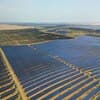
Despite relaxed emission targets, China intends to maintain its rapid deployment of clean energy infrastructure. In 2025 alone, the country installed 446 gigawatts of renewable capacity, exceeding the rest of the world’s combined additions. The new plan calls for doubling non fossil energy capacity to 3,600 gigawatts by 2035.
Specific benchmarks include expanding offshore wind capacity beyond 100 gigawatts by 2030, increasing nuclear power to 110 gigawatts, and constructing 100 gigawatts of pumped hydro storage. State Grid Corporation announced plans to invest 4 trillion yuan during the plan period, building ultra high voltage transmission lines capable of moving 420 gigawatts of electricity from western generation hubs to eastern demand centers.
The plan maps out an integrated network connecting desert solar installations in the north with manufacturing centers on the coast, while establishing mutual assistance schemes between provincial grids. This infrastructure addresses the primary challenge facing renewable heavy systems: maintaining stability when generation fluctuates with weather patterns.
However, Jorrit Gosens, an energy transition researcher at the Australian National University, noted that the annual installation target of roughly 180 gigawatts for solar and wind represents about half the rate China achieved over the past three years. This suggests Beijing views these sectors as mature industries requiring consolidation rather than further stimulus.
Li Shuo confirmed this interpretation, stating that these sectors are already overheating with overinvestment or excess capacity. Development continues, but no extra policy support is proposed, as these industries have matured.
Coal’s Lingering Dominance
The plan’s treatment of coal reveals the tension between climate ambition and energy security. While promising to promote the peaking of coal and oil consumption, the document retreats from President Xi’s earlier pledge to gradually reduce coal use during this period. It offers neither binding caps on total consumption nor a definitive timeline for when power sector emissions must peak.
China consumed 3.17 billion tonnes of coal in 2025. The plan proposes replacing merely 30 million tonnes annually with cleaner alternatives, a reduction of less than 1 percent. Meanwhile, authorities approved new coal fired power capacity at the highest rate in nearly a decade, with approximately 330 gigawatts of projects currently in development.
The plan supports converting coal to liquid fuels and chemicals, a highly emissions intensive process intended to reduce oil import dependence. Dr Gosens identified this coal to chemicals sector as a major concern, noting that it represents a very dirty, though relatively small, portion of the economy that will likely remain a key source of demand for coal mining.
Officials increasingly view coal fired plants as providing grid stability rather than baseload power. The plan emphasizes retrofitting existing facilities with biomass or green ammonia co firing capabilities, potentially allowing these plants to operate flexibly during peak demand periods rather than running continuously.
Frontier Technologies and Industrial Transformation
Beyond established solar and wind industries, the plan targets emerging technologies including green hydrogen, nuclear fusion, and concentrated solar power. It specifically promotes extending the green hydrogen supply chain into ammonia, methanol, and sustainable aviation fuels for hard to electrify transportation and industrial sectors.
The initiative establishes approximately 100 zero carbon industrial parks and 10,000 kilometers of zero carbon transport corridors. These zones integrate direct renewable electricity with green hydrogen production to power energy intensive manufacturing. All new fixed asset investment projects must now undergo strict energy conservation and carbon emission assessments before receiving approval.
Electric vehicle adoption continues accelerating, with battery electric vehicles and plug in hybrids capturing over 50 percent of new car sales in 2025. The International Energy Agency projects this share could reach 80 percent by 2030, potentially causing oil demand to decline faster than anticipated despite continued petrochemical growth.
China maintains its position as the dominant global supplier of clean technology, manufacturing 80 percent of the world’s solar components and 70 percent of lithium ion batteries and wind turbines. This industrial scale has driven global solar costs down more than 80 percent and wind costs down 60 percent over the past decade, according to official media.
Whilst we have seen a phenomenal change in the potential energy system because of China’s existing massive investment in research and development, manufacturing, capacity building, technology improvement, I think we haven’t seen anything yet.
Tim Buckley predicted that Australia and other importing nations would see new renewable technologies emerge from Chinese laboratories during this plan period.
Economic Restructuring and Growth Patterns
The five year plan arrives as China confronts structural economic challenges, including a deflating property sector, aging demographics, and capped domestic consumption. The GDP growth target of 4.5 to 5 percent represents the lowest benchmark in 35 years, reflecting a shift from quantity to quality in development metrics.
Clean energy sectors now constitute 11.4 percent of China’s economy, having driven more than a third of GDP growth in 2025. Without this expansion, China would have missed its growth targets entirely, demonstrating how the green transition has become central to economic strategy rather than merely an environmental add on.
However, rising electricity demand complicates decarbonization efforts. Power consumption has grown faster than GDP for five consecutive years, surpassing 10 trillion kilowatt hours in 2025. Over 10 percent of recent demand growth came from unexpected sources including artificial intelligence data centers and manufacturing facilities for solar panels, batteries, and electric vehicles.
Teng Fei, deputy director of the Institute of Energy, Environment and Economy at Tsinghua University, warned that if electricity demand continues growing at 5 percent annually while renewable generation expands at current rates, approximately 200 billion kilowatt hours of additional supply would still require fossil fuel generation. Controlling demand growth below 4 percent annually, he argued, proves as important as expanding clean supply.
Global Implications and Trade Dynamics
China’s energy strategy carries disproportionate weight in global climate efforts, accounting for roughly 30 percent of worldwide greenhouse gas emissions. The country supplies approximately 70 percent of global wind equipment and 80 percent of photovoltaic components, giving it effective control over the supply chains necessary for other nations’ decarbonization.
This dominance creates a dilemma for Western policymakers attempting to balance decarbonization timelines with desires to reduce dependence on Chinese manufacturing. Analysis from the Institute for Global Decarbonization Progress suggests that attempting to decouple from Chinese clean tech supply chains while meeting climate targets rests on questionable economic assumptions given China’s unmatched scale and integration.
The plan explicitly positions China as a provider of global public goods through affordable clean energy technologies, particularly for developing nations through South South cooperation frameworks. This diplomatic framing accompanies continued expansion of the Belt and Road Initiative’s green development corridors.
Christoph Nedopil Wang, a green energy expert at the University of Queensland, suggested that nations like Australia could benefit from China’s low cost technology exports if trade barriers remain manageable. He noted that positioning economies to weather oil supply shocks through electrification reduces vulnerability regardless of geopolitical fluctuations.
What Comes Next
The five year plan establishes high level policy direction, but detailed implementation will arrive through sector specific plans expected in 2027. These documents will address the energy sector, electricity grids, renewable deployment, nuclear development, and carbon emissions management with concrete targets and investment allocations.
Analysts remain divided on whether China’s emissions have already peaked. Data from the Centre for Research on Energy and Clean Air indicates energy related carbon dioxide emissions have remained flat or falling for 21 months since March 2024, suggesting structural plateauing driven by reduced construction activity and renewable integration. However, the absence of absolute emission caps through 2030 creates uncertainty about whether Beijing might allow a rebound in early years to establish a higher baseline before deeper cuts.
The plan promises to implement absolute emissions caps for specific industrial sectors covered by the national carbon market starting in 2027, with broader economy wide limits potentially following later. Until these mechanisms activate, China continues walking a tightrope between maintaining economic growth, ensuring energy security, and positioning itself as the primary supplier of the global energy transition.
Whether the world’s largest emitter can bend its emissions curve downward while sustaining industrial dominance remains the defining question for global climate policy this decade. The coming years will reveal whether Beijing’s bet on clean technology over hard emissions caps can deliver the structural reductions necessary to meet international climate goals.
Key Points
- China’s 15th five year plan (2026-2030) targets a 17% reduction in carbon intensity, allowing total emissions to rise 3-6% while falling short of Paris Agreement commitments
- The country plans to double non fossil energy capacity to 3,600GW by 2035, requiring approximately 200GW of new wind and solar installations annually
- Energy security concerns, driven by reliance on imported oil and geopolitical tensions in the Middle East, shape the strategy alongside climate goals
- The plan promotes peaking coal and oil consumption rather than reducing fossil fuels, with no binding caps on total emissions or clear timeline for power sector peaks
- New initiatives include 100 zero carbon industrial parks, 100GW of offshore wind by 2030, 110GW of nuclear power, and expansion into green hydrogen and nuclear fusion
- China maintains dominance over global clean technology supply chains, manufacturing 80% of solar panels and 70% of batteries and wind turbines
- GDP growth target set at 4.5-5%, the lowest in decades, as clean energy sectors now comprise over 11% of the national economy