When One Child Makes a Class
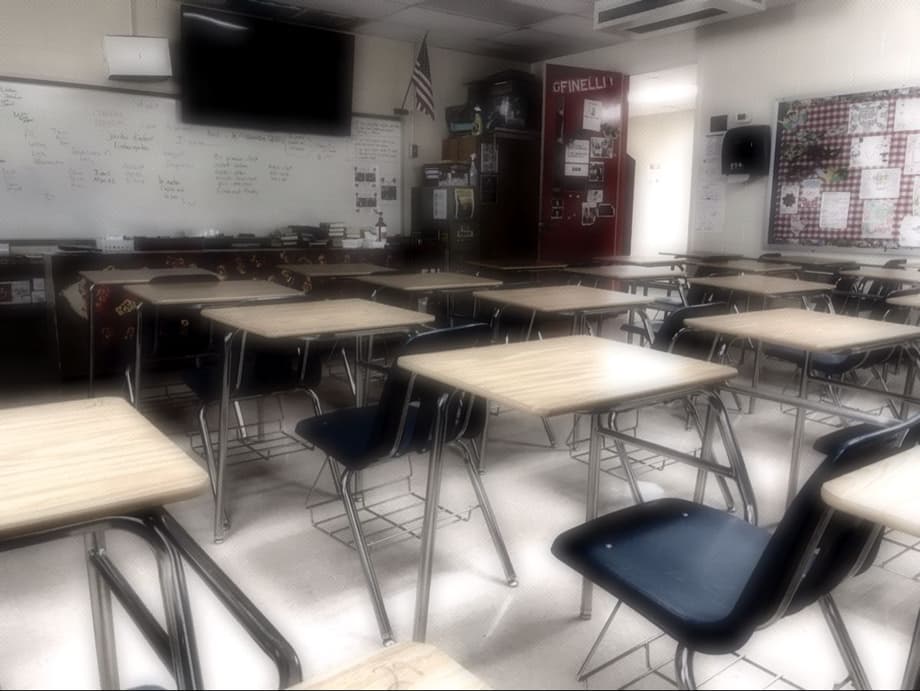
On March 3, the first day of the South Korean school year, 7-year-old Kang walked into an elementary school in Pyeongchang, a rural county in Gangwon Province, and took his seat alone. He was the only child to start first grade that day. The ceremony, normally a bustling rite of passage filled with dozens of nervous children and proud parents, instead featured a single student representing an entire generation.
Kang’s school, which now holds just 18 students total, has been forced to combine two grades into one classroom to remain viable. To survive, it runs specialized programs including camping trips, water sports, skiing excursions, and reading marathons designed to attract families from urban centers. Seven additional students arrived this year through Gangwon Province’s rural study-abroad program, allowing the institution to maintain five separate classes. Without this intervention, a school official told reporters, the catchment area might have had no elementary students at all.
This scene, once unthinkable in a nation that values education as fiercely as South Korea, has become increasingly common. Across Gangwon Province alone, 20 elementary schools enrolled zero first-graders this year while 21 others held entrance ceremonies for just one child. The province lost 121 elementary classes compared to the previous year. Nationally, 210 elementary schools failed to enroll a single new student in 2026, representing an 81% increase from 116 such schools just five years ago.
The Scale of a National Contraction
The empty-classroom crisis has moved beyond isolated rural incidents to threaten the very structure of South Korean education. According to Ministry of Education data, more than 4,000 elementary, middle, and high schools have permanently shut their doors nationwide as student populations shrink. Elementary schools account for the vast majority of these closures at 3,674, compared with 264 middle schools and 70 high schools.
The mathematics behind this collapse are stark. South Korea’s total fertility rate hit a record low of 0.72 in 2023 before inching up marginally to 0.75 in 2024 and 0.8 in 2025. To maintain a stable population, a country requires a fertility rate of approximately 2.1 children per woman. South Korea has remained far below that threshold for years, now possessing the lowest birth rate in the world.
Over the past five years alone, 158 schools have closed, with an additional 107 projected to shut down within the next five years. The pace of closures suggests that enrollment decline will accelerate in provincial regions rather than in the capital area, though Seoul is no longer immune. North Jeolla Province leads projected future shutdowns with 16 schools, followed by South Jeolla Province with 15, Gyeonggi Province with 12, and South Chungcheong Province with 11.
Most rural farmers are now elderly, and villages across the countryside are largely devoid of children, making it nearly impossible for small schools to find students locally. Gangwon Province has acknowledged that growing the school-age population is effectively unrealistic. Officials are instead pushing for smaller class sizes calibrated to what they call “social needs,” aiming to raise education quality with fewer students. Yet as enrollment drops, so do teacher quotas and hiring budgets, making even that modest goal difficult to achieve.
The Crisis Reaches the Capital
For years, Seoul served as a bulwark against rural decline, with families migrating from the countryside to the capital seeking better opportunities. That pattern has shifted. A normally operating school in Seoul’s Gangseo District had no first-graders for the first time this year, breaking a barrier that previously only affected campuses closed for reconstruction. In Gwangju, two schools with histories exceeding a century, Jungang Elementary and Samdo Elementary, also enrolled no new students.
Since 2015, Seoul has seen nine schools close their doors due to student shortages. Hwayang Elementary in Gwangjin-gu, which opened in 1983 with 18 classes, illustrates the dramatic decline. Its student population shrank from 420 in 2008 to 183 in 2013, then to 151 in 2018. By 2023, the number had dropped to just 84 students, with only seven new first graders. The school closed its doors in February 2024.
Gongjin Middle School in Gangseo-gu had only 47 students enrolled when it shut down in 2020. All eight schools that closed in Seoul had fewer than 100 students at the time of closure. A report released by the Seoul Metropolitan Office of Education projects that the number of small schools, those with fewer than 100 students and no more than five classes, will grow to 127 by 2029, a 1.6-fold increase from 80 this year.
Where children’s laughter once filled the air at Hwayang Elementary, now only the rustling of trees and occasional birdsong break the stillness. Elderly residents with canes now walk the empty grounds for afternoon exercise. Near the school gate, what was once a playground filled with swings and slides has transformed into a parking lot for neighborhood residents. Ryu Myung-jin, a 73-year-old who lives five minutes away, has become a frequent visitor. “Since it is a school, there are a lot of trees. I usually come here after lunch to walk around for exercise,” she explained. “The benches and wide stairs make it easy to find a place to sit.”
From Classrooms to Cafes and Museums
Not all closed schools are left to decay. Some have started new chapters with specialized educational missions or community purposes. Yeomgang Elementary, which shuttered in March 2020, remained idle until becoming the new home of Yeomyung School, the first state-accredited school for North Korean defectors. Opened in 2004 by churches and advocacy groups, the alternative school provides education to young people who resettled in the South after escaping the North.
Currently, 16 teachers educate 84 students between the ages of 14 and 33 in the former elementary building. It is the only known case in Seoul where a closed school has been transformed into an educational facility. Principal Cho Myung-sook emphasizes the value of school facilities equipped with outdoor playgrounds and tracks. “Students here never had the chance to attend school in the North, and many grew up without proper care from parents or other adults. For them, school is more than just a place to learn. It is a safe space where they feel supported, which helps them adjust to Korean society,” she explained.
“Back at the old building, the kids did not really have space to run around or play sports together. But here, just being able to play outside has made a big difference. I have seen fewer conflicts between them, and they just seem more emotionally stable. Having a playground gives them a real sense of belonging, which motivates them to learn.”
Cho argues that using closed school buildings as educational facilities for marginalized groups such as students with disabilities or those from multicultural backgrounds could help promote social inclusion. “The world we live in is made up of all kinds of people, and we do not get to choose who we live next to. Education is really about helping people connect and understand each other. If we can turn forgotten schools into places for students who have been left behind, that is when education truly makes a difference.”
In rural areas, small schools are often more easily repurposed into cultural facilities. The Ami Art Museum in Dangjin, South Chungcheong Province, used to be Yudong Elementary School. Opened in 2011, it now hosts seasonal exhibitions of paintings and installations in collaboration with emerging local artists. Cafe Owal School, nestled in a mountain village in Chuncheon, Gangwon Province, was formerly Gadeok Branch School, which closed in 1982. Now operating as a cafe, restaurant, and guesthouse, it has become a popular destination for those seeking wellness experiences.
Regulatory Obstacles and Urban Decay
Despite these success stories, hundreds of former school sites remain unused. Of the 4,008 closed schools nationwide, 376 remain abandoned. Among them, 266 have been left idle for more than a decade, while 82 have sat unused for over 30 years. The reasons for this stagnation are deeply embedded in South Korean property regulations.
Schools owned by the state or local governments can only be sold or leased to public or private institutions for public purposes, such as education, social welfare, culture, public sports, or support for returning farmers and foreign nationals who move to rural areas. They cannot be rented to ordinary for-profit businesses like cafes or lodgings, creating a significant barrier to commercial repurposing.
Chungil Girls’ High School in Yuseong-gu, Daejeon has remained defunct for almost two decades since its closure in 2005. The school site was purchased by a development group for residential construction, but the project was suspended due to its close proximity, around 200 meters, to Daejeon Prison, which would have served as a deterrent for potential home buyers. With shattered windows, vine-covered walls, and collapsed roof tiles, the once-bustling school’s classrooms have become popular filming locations for local horror-themed YouTubers.
Officials fear that long-abandoned school sites may accelerate urban decline in their districts. “Abandoned schools that have been left unused for extended periods often become spots for troubled youth or shelters for homeless individuals and even criminals,” an official from the Yuseong-gu Office explained.
Experts point to various regulatory obstacles as key factors behind the delay in utilizing the sites. “In Seoul, for example, former school sites are subject to restrictions on floor area ratios and building coverage ratios for 10 years after closure. A preliminary feasibility study, a government-led assessment of a project’s economic viability and public value, can also take at least two years to complete,” said Ma Kang-rae, a professor of urban planning and real estate at Chung-Ang University. “There is a growing need to revise existing regulations and develop more viable approaches to making use of abandoned school facilities.”
A Regional Phenomenon
South Korea’s demographic crisis is not unique in East Asia. Taiwan faces a nearly identical predicament, with a fertility rate of 0.865 in 2023, far below the 2.1 replacement rate. Between 2011 and 2021, the number of students in Taiwan’s primary and junior high schools dropped from 2.3 million to below 1.8 million. Authorities fear looming economic crises caused by a growing elderly population without enough working taxpayers to support them.
In Taiwan, private schools are going first, with dozens facing closure and 15 colleges and universities having shut since 2014. Four of Taiwan’s 103 private universities have been ordered to close, with educators expecting another 40 to 50 to follow by 2028. The government, like those in South Korea, China, and Japan, has tried various financial incentives and regulatory changes to encourage people to have more children, but people continue to resist, citing the pressure of traditional gender roles, rising costs of living, and the difficulty of balancing careers.
The phenomenon extends beyond Asia. In London, primary school classes are emptying out almost twice as fast as in any other part of England. Since 2018, primary schools in the capital have lost 8.1% of their pupils, making up the equivalent of 2,060 classes. England’s primary schools had over 611,000 empty places last year, enough to fill 23,000 classrooms, marking the highest vacancy rate since records began.
These parallel trends suggest a global demographic shift affecting developed nations, where urbanization, rising costs of living, and changing family structures are converging to reduce birth rates below sustainable levels.
Political Stakes and Educational Cutbacks
The crisis carries significant political weight for South Korea’s new administration. President Lee Jae-myung, who won a snap election following the impeachment of former President Yoon Suk-yeol, faces the challenge of addressing both empty classrooms and teachers quitting in droves, while attempting to reverse the world’s lowest fertility rate. He has promised a fiscal stimulus package to boost growth and alleviate rising costs of living to “prevent people’s livelihoods from further worsening.”
The impact of falling enrollment is already being felt in teaching positions. The Ministry of Education announced that teaching positions for the 2025 academic year would be cut by 2,232 nationwide. Elementary school posts will be reduced by 1,289, while middle school teaching positions will fall by 1,700. In response, provincial and metropolitan education offices have introduced temporary measures, including reducing class sizes at some schools to about 10 to 15 students and increasing the number of classes to absorb excess capacity.
Lawmaker Jin Sun-mee, who revealed the closure statistics, has called for a long-term plan to repurpose unused facilities as assets for local communities rather than allowing them to become liabilities. The challenge lies in balancing immediate educational needs with long-term demographic realities, ensuring that resources are not wasted on maintaining infrastructure for students who may never arrive while preserving opportunities for communities in decline.
For Kang and his single-student first grade class in Pyeongchang, the future remains uncertain. His school continues to fight for survival through innovative programs and inter-provincial exchanges, but it faces an arithmetic that grows more challenging each year. As South Korea grapples with a fundamental restructuring of its education system, the image of one child representing an entire grade serves as a stark reminder of the demographic winter that has settled over the peninsula.
Key Points
- Over 4,000 schools have closed permanently across South Korea due to declining student populations, with 210 elementary schools enrolling zero new students in 2026
- South Korea’s fertility rate of 0.8 remains the lowest in the world, far below the 2.1 replacement rate needed to maintain population stability
- The crisis has spread from rural provinces like Gangwon to major cities including Seoul, where nine schools have closed since 2015
- Of 4,008 closed schools nationwide, 376 remain unused, with 266 abandoned for over a decade due to regulatory restrictions on repurposing
- Some facilities have found new life as schools for North Korean defectors, art museums, or cafes, but strict regulations limit conversion to for-profit use
- Teaching positions are being cut by over 2,200 nationwide as enrollment declines, even as officials attempt to reduce class sizes to maintain quality
- Similar empty classroom crises are affecting Taiwan, Japan, China, and even London, indicating a broader demographic shift in developed nations
- New President Lee Jae-myung faces the dual challenge of managing educational infrastructure collapse while attempting to reverse fertility trends through economic stimulus