
A New Era of Centralized Leadership
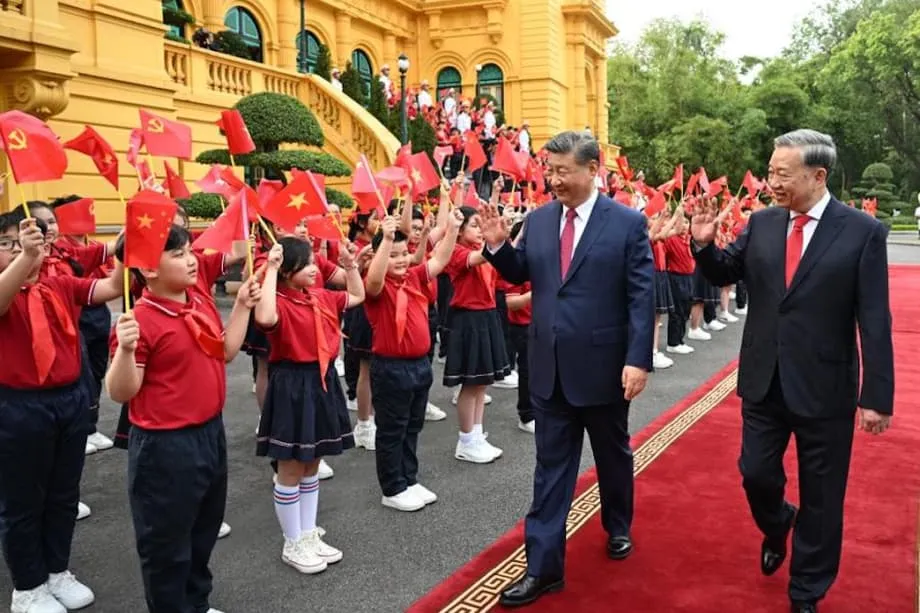
Vietnamese Communist Party General Secretary To Lam departed Hanoi on April 14 for a four-day state visit to China, his first overseas trip since consolidating unprecedented control over both the party and the state presidency. The journey to Beijing establishes a pattern that Vietnamese leaders have long employed: secure strategic depth with China first, then demonstrate balance with Washington later. This choreography reflects a dramatic transformation in Vietnam's political architecture, one that aligns Hanoi's power structure more closely with Beijing's model of consolidated authority.
Contents
At the upcoming Communist Party Congress, To Lam seeks to permanently merge the roles of party chief and president, a combination that would mirror Chinese President Xi Jinping's dual position and mark a decisive break from Vietnam's traditional collective leadership. Sources indicate that military leaders, who currently hold the presidency, are negotiating safeguards to maintain autonomy over senior officer promotions in exchange for surrendering the ceremonial post. This potential unification would grant Lam authority unmatched since the post-war era, streamlining diplomatic protocol while removing internal checks that have long shaped Vietnamese decision-making.
The consolidation removes friction that complicated previous high-level engagements. When former General Secretary Nguyen Phu Trong visited the White House in 2015, American officials improvised around his lack of state title. To Lam now meets foreign leaders as both head of party and head of state, engaging Xi Jinping and US President Donald Trump on equal institutional terms. Yet the symmetry in protocol masks growing asymmetry in substance. Early signals suggest that Beijing's engagement produces institutional frameworks and concrete commitments, while Washington's remains transactional and subject to domestic political volatility.
Unprecedented Security Integration
On March 16, Vietnam and China inaugurated a ministerial mechanism unprecedented in Hanoi's bilateral relationships. The "3+3" strategic dialogue brings together foreign affairs, defense, and public security ministers from both countries in a format that embeds security cooperation directly into the relationship's institutional architecture. The mechanism includes coordination on countering "color revolution" threats, signaling deep alignment on regime security matters between the two communist neighbors.
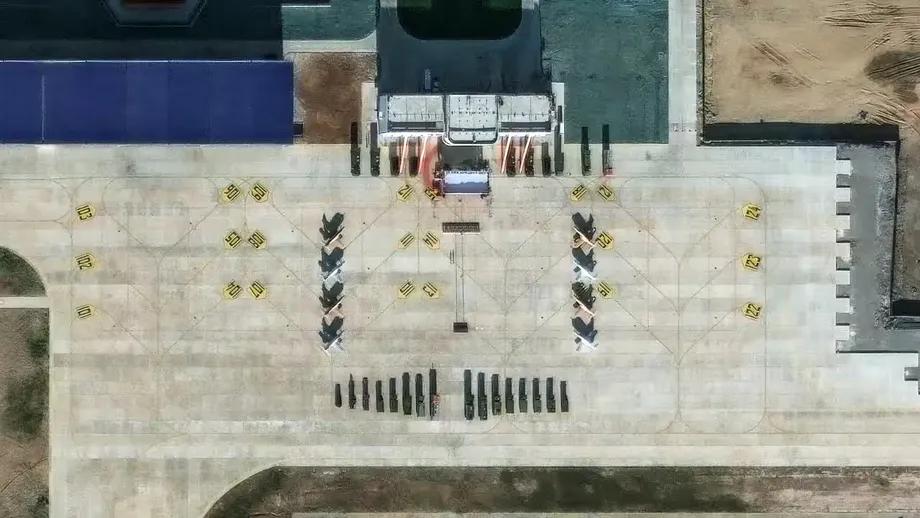
This institutional bond builds upon tangible military cooperation that would have seemed impossible decades ago. In July 2025, Vietnamese and Chinese soldiers conducted "Hand-in-Hand 2025," their first joint army exercise since the 1979 border war. Staged in Guangxi Zhuang Autonomous Region, the same area that served as a staging ground for the Chinese invasion 46 years ago, the drill involved 140 Vietnamese troops operating Chinese drones, light weapons, and vehicles. The location itself conveyed a message of reconciliation that has generated domestic unease among Vietnamese nationalists who view the gesture as potentially erasing historical memory.
The modest scale of the exercise, limited to border patrol scenarios, reflects careful calibration by Hanoi. Vietnamese security thinking, codified in the 2003 National Security Strategy, employs concepts of "partners" and "objects of struggle" rather than binary friend-or-foe categories. For Vietnam, China serves as a partner in regime security while remaining an object of struggle regarding maritime sovereignty. This duality underpins what analysts term security hybridization, where national security and regime security often pull in opposite directions with different partners.
Beyond military drills, deeper integration occurs in surveillance and social control. Vietnamese security officials regularly visit China to study censorship techniques and political control methods. Vietnam's 2018 Cybersecurity Law mirrors Chinese legislation, requiring foreign tech companies to store data domestically while granting authorities sweeping censorship powers. High-level delegations from Vietnam's Ministry of Public Security and Central Internal Affairs Commission make reciprocal visits to Beijing, creating an authoritarian learning network that represents far deeper integration than occasional military exercises.
Economic Entanglement and Strategic Vulnerability
Bilateral trade between Vietnam and China reached a record $256.4 billion in 2025, a 25 percent increase year on year, cementing Beijing's position as Vietnam's largest trading partner for over two decades. China also ranks as the second-largest source of foreign investment, with registered capital reaching $5.96 billion in 2025. This economic integration brings tangible benefits while creating structural vulnerabilities that complicate Vietnam's strategic autonomy.
Deputy Prime Minister Bui Thanh Son has urged early completion of three railway projects linking the two countries, along with preferential loans and technology transfer. Vietnam seeks increased energy supply from China and expanded cross-border economic zones. Chinese investment has shifted toward high-tech manufacturing, electric vehicles, and digital economy sectors, with major firms like BYD and Alibaba establishing significant presences. Vietnam welcomed 5.28 million Chinese visitors in 2025, accounting for roughly a quarter of total international arrivals.
Yet deeper economic dependency carries compounding risks. Vietnam recorded a historic $178 billion trade surplus with the United States in 2025, making it a target for Washington's scrutiny over transshipment practices where Chinese goods route through Vietnam to evade American tariffs. In March 2026, the US Trade Representative launched Section 301 investigations targeting Vietnam over structural excess manufacturing capacity. The closer Vietnam appears as a node in Chinese supply chains, the more vulnerable it becomes to American trade punishment.
Moreover, Japanese, South Korean, European, and American firms invest in Vietnam precisely because they perceive it as distinct from China. Should that perception erode, the investment rationale weakens regardless of Washington's tariff policies. The 2018 mass protests against proposed 99-year land leases in special economic zones, fueled by fears of Chinese economic domination, demonstrated that anti-China sentiment remains a potent political constraint that no Vietnamese leader can ignore.
The South China Sea and the Limits of Alignment
Despite deepening cooperation, the South China Sea dispute casts the longest shadow over Vietnam-China relations. Beijing's nine-dash line encompasses 80 percent of the disputed waters, including large swaths of Vietnam's exclusive economic zone. Chinese Coast Guard vessels regularly harass Vietnamese fishing boats and survey ships, with enforcement authorities attacking Vietnamese fishermen as recently as October 2024. China's militarization of artificial islands and declaration of the South China Sea as a "core interest" directly threatens Vietnam's economic lifelines.
This structural conflict places a hard ceiling on military cooperation. Vietnam cannot participate in exercises that might legitimize Chinese maritime positions without undermining its own claims and alarming fellow ASEAN claimants. The 2014 oil rig confrontation, when China deployed drilling equipment into Vietnamese-claimed waters near the Paracel Islands, remains fresh in Vietnamese memory. International pressure contributed to the rig's withdrawal then, but the more Vietnam's alternatives narrow, the harder it becomes to generate such pressure when the next test comes.
Vietnam's response combines firm resistance with measured restraint. Hanoi has upgraded its navy and coast guard while refraining from publicizing every encroachment, preferring a "shadowing and tracking" strategy. Vietnam maintains joint patrols with China in the Gulf of Tonkin while simultaneously conducting coast guard drills with the Philippines and pursuing an Exclusive Economic Zone agreement with Indonesia. This calibrated approach reflects the "cooperation and struggle" framework that Hanoi applies to Beijing, engaging economically while resisting sovereignty violations.
Washington and the Search for Strategic Balance
To Lam's February meeting with President Trump at the White House required three prior attempts to arrange and produced no major breakthrough on the trade imbalance or transshipment issues. The contrast with Beijing's reliability highlights a growing concern: that Beijing's engagement deepens structurally while Washington's remains conditional on volatile domestic politics.
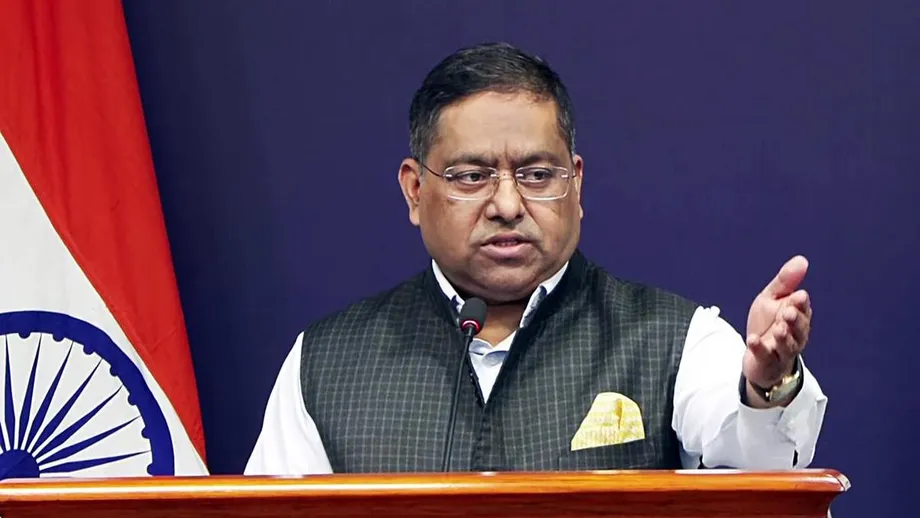
Yet Vietnam pursues diversification with determination. The country has established comprehensive strategic partnerships with 14 nations, up from six at the end of 2024. Japan remains Vietnam's largest official development assistance provider and is expanding into defense transfers and energy cooperation. South Korea recently supplied $250 million worth of K-9 self-propelled howitzers, marking a shift from Vietnam's traditional reliance on Russian weaponry. India is finalizing a $700 million deal for BrahMos missiles that will inevitably raise antennae in Beijing, offering defense diversification as Russian exports falter.
The EU-Vietnam Free Trade Agreement and membership in the Comprehensive and Progressive Agreement for Trans-Pacific Partnership provide institutional trade commitments that run through neither superpower. These agreements give substance to Vietnam's "bamboo diplomacy," the practice of bending with prevailing winds while remaining rooted in strategic independence through the "Four Nos": no military alliances, no foreign bases, no siding with one power against another, and no use or threat of force.
However, recent surveys reveal a troubling gap between perception and reality. The ISEAS State of Southeast Asia 2026 survey found that Vietnamese elites would side with the US over China if forced to choose, making them notable exceptions in a region where majorities now favor Beijing. Yet the Anatomy of Choice Alignment Index, which measures actual policy behavior across 20 indicators, places Vietnam in the China-leaning camp. This divergence suggests that structural tilts toward Beijing are advancing regardless of stated preferences, driven by geographic proximity, party-to-party ideological bonds, and economic integration.
The Essentials
- To Lam seeks to permanently combine Vietnam's party chief and state president roles, mirroring China's Xi Jinping model and consolidating authority unmatched in recent decades
- The "3+3" strategic dialogue mechanism links foreign affairs, defense, and public security ministers, embedding counter-revolution coordination into bilateral institutional architecture
- Vietnam and China held their first joint army drill in July 2025 since the 1979 war, staged symbolically in Guangxi near the former invasion staging area
- Bilateral trade reached $256.4 billion in 2025, though Vietnam risks American trade punishment over transshipment and maintains a $178 billion surplus with Washington
- Vietnam pursues diversification through partnerships with Japan, South Korea, and India, including a $700 million missile deal with New Delhi and K-9 howitzers from Seoul
- Despite deepening ties, South China Sea disputes and domestic anti-China sentiment create structural limits on how far Hanoi can tilt toward Beijing
- The gap between Vietnamese elites' stated preference for Washington and actual policy alignment toward Beijing suggests structural dependencies may overwhelm diplomatic intentions