Three deaths sharpen a foreign policy dilemma
Three Indonesian soldiers killed while serving with United Nations peacekeepers in southern Lebanon have intensified pressure on President Prabowo Subianto to reconsider Indonesia's membership of the Board of Peace (BoP). By April 14, 2026, the dispute had drawn criticism from opposition politicians, members of his governing coalition and religious leaders, while raising concerns about trade relations with Washington.
Contents
- Three deaths sharpen a foreign policy dilemma
- How Indonesia joined the Board of Peace
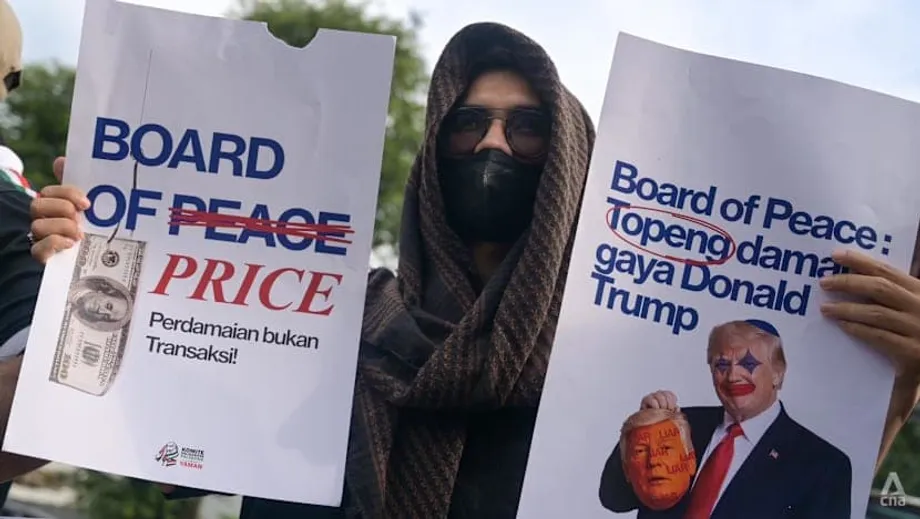
- Public opposition and the sequence of events
- Coalition partners join demands for a review
- Trade commitments complicate withdrawal
- Oil prices bring the crisis home
- Russia emerges as an energy alternative
- Parliament examines the legal basis
- Options between staying and leaving
- Megawati pursues parallel diplomacy with Iran
- Key Points
Major Infantry (Posthumous) Zulmi Aditya Iskandar, Sergeant Major (Posthumous) M. Nur Ichwan and Corporal (Posthumous) Farizal Rhomadhon died in two incidents in late March. Farizal was struck by artillery projectiles in Adchit al-Qusayr on March 29. Zulmi and Nur Ichwan died the following day when their logistics convoy came under attack near Bani Hayyan.
A United Nations investigation determined that a projectile fired from an Israeli tank killed Farizal. An improvised explosive device, likely placed by Hezbollah, killed the other two soldiers. The deaths were the first among UN peacekeepers since the new war between Israel and Hezbollah began on March 2.
Prabowo expressed condolences on his official Instagram account on April 5, posting five photographs of the arrival procession and final tribute. The post attracted more than 134,000 likes and 5,700 comments, many calling for Indonesia to reconsider its foreign commitments. In his statement, the president condemned the violence that killed the soldiers:
We, fellow countrymen and compatriots, strongly condemn every heinous act that disrupts peace and causes the fall of the nation's best soldiers.
The losses have brought a difficult choice into public view. Prabowo faces demands to distance Indonesia from an initiative dominated by US President Donald Trump, while trying to protect economic ties with the United States and manage the costs of a widening Middle East conflict.
How Indonesia joined the Board of Peace
Prabowo joined leaders from 21 countries at a signing ceremony at the World Economic Forum in Davos, Switzerland, on January 22, 2026. They became founding members of the Board of Peace, a Trump initiative originally intended to oversee reconstruction in Gaza after the conflict.
The board's structure gives Trump lifetime chairmanship and unilateral veto power over all decisions. A veto allows him to block a decision even when other members support it. Countries initially receive terms lasting three years, while permanent membership is available to those contributing $1 billion in cash.
Indonesia has publicly said it will not pay that fee. Jakarta has instead limited its role to peacekeeping support within the International Stabilization Force (ISF), where it was appointed deputy commander. The proposed Gaza role and the soldiers' service with the UN in Lebanon involve different operations, although the deaths have intensified the political argument over Indonesia's regional commitments.
Sudarnoto Abdul Hakim, chairman for foreign relations and international cooperation at the Indonesian Ulema Council (MUI), challenged the board's legal structure and the argument that Indonesia had no alternative to joining:
The BoP is a strange and unclear institution. International legal experts consider the BoP's creation to be odd in the context of the formation of world institutions. Among other things, it is not based on the principles of multilateralism. That's why I don't believe the statement that there's 'no choice' regarding joining the BoP. The BoP is a dilemma; Trump will become an authoritarian Chairman.
His criticism centres on multilateralism, the practice of countries making decisions together through shared rules. A body in which one leader can block every decision presents a different balance of power from the collective approach its critics want.
Public opposition and the sequence of events
Research conducted between March 12 and 31 by Indikator Politik Indonesia, the Indonesian Survey Institute (LSI), and Saiful Mujani Research and Consulting (SMRC) found that 50.9 per cent of more than 1,000 respondents opposed Indonesia's participation. Support stood at 33.8 per cent, leaving opposition 17.1 percentage points ahead.
A February survey by Media Survey Nasional (Median), involving 1,200 respondents, had recorded opposition at 50.4 per cent. The later figure was 0.5 percentage points higher, representing a marginal decline in public acceptance of membership.
The March survey period covered responses before and after the soldiers' deaths on March 29 and 30. Assessments accompanying the debate suggested opposition would likely be stronger in a survey conducted after the fatalities. Agung Nurwijoyo, an international relations expert at the University of Indonesia, said the diplomatic benefits Indonesia receives from the board remain unclear.
Teuku Rezasyah, an international relations lecturer at Indonesia's President University, summed up the changing mood:
The Board of Peace has become the Board of Problems.
The controversy developed alongside trade negotiations and a spreading regional war:
- January 22: Prabowo joined the Board of Peace signing ceremony in Davos.
- February 19: Indonesia signed the Agreement on Reciprocal Trade with the United States in Washington.
- February 28: Operation Epic Fury attacks reportedly killed Iran's Supreme Leader Ayatollah Ali Khamenei.
- March 2: The new war between Israel and Hezbollah began.
- March 3: Foreign Minister Sugiono announced that all Board of Peace discussions were on hold pending the situation in Iran.
- March 29 and 30: Three Indonesian UN peacekeepers died in southern Lebanon.
- April 5: Prabowo published his condolences and photographs of the soldiers' final tribute.
- April 6: Parliamentary scrutiny and fuel subsidy assurances became further parts of the debate.
- April 7: The Kremlin said preparations were under way for possible contacts between Prabowo and Russian President Vladimir Putin.
Coalition partners join demands for a review
Golkar, the largest party in Prabowo's ruling coalition, has formally urged the government to reconsider membership. Its deputy chairman, Ahmad Doli Kurnia, issued a statement on April 1 connecting the death of an Indonesian soldier in an Israeli attack with the board's failure to deliver on its stated purpose:
Israel's attack on an Indonesian soldier is a clear disregard for the very notion of 'peace' that is supposed to be a core value of the BoP. We encourage the government to rethink Indonesia's presence in the BoP.
The Islam based Prosperous Justice Party (PKS), another coalition member, called on March 30 for a serious evaluation of Indonesia's position in international peace forums. Those interventions widened the dispute beyond the opposition and made it a concern within the president's own political alliance.
The Indonesian Democratic Party of Struggle (PDI-P), led by former president Megawati Soekarnoputri, has demanded complete withdrawal. Tubagus Hasanuddin, a PDI-P politician on the parliamentary commission overseeing defence and foreign affairs, said withdrawal was necessary to maintain constitutional consistency:
The government should immediately take steps to withdraw. This is important to maintain consistency with the 'free and active' foreign policy principle mandated by our Constitution.
The MUI delivered six points of advice to Prabowo through the Minister of Religion. Its demands included pressing the board to make Israel recognize Palestinian sovereignty, ensuring there is no further colonization of Palestinian land, consistently implementing the two-state solution and supporting Palestinian membership of the board.
The two-state solution would provide separate states for Israelis and Palestinians. The council also warned that sending Indonesian troops should neither harm Palestinians nor benefit Israel behind the scenes of the board. Its position puts the treatment and political participation of Palestinians at the centre of any Indonesian commitment.
Trade commitments complicate withdrawal
Indonesia signed the Agreement on Reciprocal Trade (ART) in Washington on February 19, 2026. Marketed as the start of a Golden Era, the agreement has also attracted criticism that it restricts Jakarta's freedom to make foreign policy decisions.
The Trump administration initially threatened tariffs of up to 32 per cent on Indonesian exports to address a US trade deficit of $23.7 billion. A tariff is a tax on imported goods, which can make products more expensive for buyers and weaken exporters' ability to compete.
The ART eliminated tariffs on more than 99 per cent of American goods entering Indonesia. It also included a binding requirement for Jakarta to import $15 billion of American energy annually, twelve times the previous level. That commitment would shift Indonesia's energy dependence from the Middle East towards the Gulf of Mexico at a time when the Strait of Hormuz faces closure.
Critics see Board of Peace membership as an apparent precondition for favourable trade treatment. Made Supriatma, a visiting fellow at Singapore's ISEAS-Yusof Ishak Institute, said the risk of retaliation from Washington complicates any decision to leave:
Prabowo understands that this Trump-created body has become politically toxic domestically. No other member country has left the BoP. Prabowo doesn't want to be the first to cross Trump, because he knows that Trump will certainly retaliate against any perceived disloyalty.
Rezasyah also pointed to the possibility that the political pressure could last beyond Trump's presidency. He said Trump would be in power until 2028 and that a Republican loyal to him could succeed him. For Prabowo, the calculation therefore extends beyond the immediate public backlash to the durability of Indonesia's relationship with Washington.
Oil prices bring the crisis home
The US and Israeli war on Iran has created direct economic risks for Indonesia. Tehran responded to the attacks by closing the Strait of Hormuz, a narrow shipping route through which much of the world's oil and gas supply passes. The disruption pushed crude prices above $120 a barrel, with warnings that prices could exceed $150 if the conflict continued.
Indonesia's fuel subsidies make this an immediate domestic concern. Subsidies allow consumers to pay less than the full cost of fuel, with the government covering part of the bill. When oil becomes more expensive, maintaining the same retail price places a larger burden on public finances.
Millions of Indonesians rely on subsidized fuel, which is also essential for public transport and moving goods. The last increase in subsidized prices, in 2022, raised diesel from 5,150 to 6,800 rupiah per litre and petrol from 7,650 to 10,000 rupiah per litre. Those increases were about 32 per cent and 31 per cent respectively, and triggered widespread protests, strikes and unrest across the archipelago.
Finance Minister Purbaya Yudhi Sadewa assured parliament on April 6 that prices would remain stable at least until the end of 2026. He said subsidies were secure and there was no need to worry. Several economists nevertheless questioned whether the government could keep financing them if global energy markets remained volatile.
Prabowo's foreign policy choices now carry consequences that can reach household budgets. Trade commitments affect where Indonesia buys energy, while the conflict affects the price it pays and the amount the government must spend to shield consumers.
Russia emerges as an energy alternative
Kremlin spokesperson Dmitry Peskov confirmed on April 7 that Prabowo might soon visit Russia to discuss energy purchases with Putin. Contacts between the leaders were being prepared as countries sought alternatives to supplies dependent on the Strait of Hormuz.
Peskov said a huge number of requests to purchase Russian energy resources had emerged. A visit would be Prabowo's third to Russia since he took office in October 2024, reflecting his policy of assertive non-alignment, or maintaining relationships with different powers to reduce dependence on any one of them.
The possible trip adds another dimension to the US relationship. Indonesia is considering Russian supplies while carrying an agreement requiring substantial annual energy purchases from the United States. Both moves belong to Jakarta's effort to secure supplies during the Middle East crisis.
Parliament examines the legal basis
Indonesia's debate also concerns bebas aktif, the independent and active foreign policy doctrine articulated in 1948 by founding father Mohammad Hatta. It calls for Indonesia to remain free from great power blocs while taking an active role in building a world order based on independence, peace and social justice.
Critics argue that membership of an ad hoc body dominated by one foreign leader conflicts with that tradition. Their objection concerns both the board's decision making structure and Indonesia's ability to act independently when its economic relationship with Washington is at stake.
The constitutional dispute centres on parliamentary ratification of international agreements under the 1945 Constitution. The Board of Peace charter signed at Davos had yet to undergo that process, leaving its domestic legal status contested. Ratification is the formal approval that gives an agreement its place within a country's legal arrangements.
Dave Laksono, a Golkar politician and deputy chairman of the parliamentary defence and security commission, said on April 6 that ratification remained under discussion between the government and the House of Representatives (DPR). Lawmakers were examining the substance and conducting a comprehensive analysis of its political, legal and national security effects.
Dominique Nicky Fahrizal, a researcher at the Centre for Strategic and International Studies (CSIS) Indonesia, warned of a security dilemma, in which action intended to improve security can create insecurity for others. He described Indonesia's position this way:
We are trapped in the geopolitical game of Israel and the US in the Middle East. This Peacekeeping Force attack could serve as a warning regarding Indonesia's exit from the BoP.
Options between staying and leaving
Foreign Minister Sugiono's March 3 announcement placed all Board of Peace discussions on hold pending the situation in Iran. Prabowo also offered to mediate between Washington and Tehran, although assessments of the proposal put its chances of success low.
The Iranian Embassy in Jakarta welcomed the offer. Its ambassador described Indonesia and Iran as influential middle powers capable of promoting peace. Middle powers are countries with enough influence to help shape diplomacy without having the global reach of the largest powers.
Rezasyah suggested that Prabowo consult the seven countries, many of them Islamic nations, that he met when joining the board. Consultation could make a withdrawal appear less unilateral to Washington or make a decision to remain appear more considered to Indonesians.
Other suggested options include postponing the deployment of 8,000 troops to Gaza until tensions ease, or moving from full membership to observer status. No final choice or date for a decision was given by April 14.
Agung Nurwijoyo said opposition to membership reflected Indonesians' sensitivity to global justice rather than a purely technical policy dispute. The government's challenge, in his assessment, was to ensure that practical foreign policy choices were not perceived as a compromise of principle.
Megawati pursues parallel diplomacy with Iran
Megawati Soekarnoputri has pursued what has been described as shadow diplomacy while Prabowo's administration maintains official restraint. After the reported death of Ayatollah Ali Khamenei in the February 28 Operation Epic Fury attacks, the former Indonesian president issued condolences.
Megawati subsequently congratulated his successor, Mojtaba Khamenei, on his March 10 election by Iran's Assembly of Experts. Her gestures invoked the spirit of the 1955 Bandung Conference and served as a channel for domestic Muslim constituencies while the government maintained economic ties with Washington.
This approach combines official economic engagement with the United States and symbolic support for Indonesia's standing in the Islamic world. It also unfolds alongside financial risks connected to dealings with Iran.
Indonesia's banks face growing exposure to secondary sanctions from the US Treasury's Office of Foreign Assets Control (OFAC) over transactions involving Iranian entities. Secondary sanctions can affect institutions outside the United States because of their dealings with sanctioned parties.
The collapse of the Iranian rial and the reimposition of multilateral UN sanctions have effectively severed Tehran's shadow banking networks. Indonesia's Financial Services Authority and Bank Indonesia therefore face the task of ensuring that domestic institutions avoid involvement with blacklisted entities. These financial constraints add another practical consideration to Jakarta's diplomatic balancing.
Key Points
- Three Indonesian UN peacekeepers died in southern Lebanon on March 29 and 30, intensifying pressure to review Board of Peace membership.
- A UN investigation attributed one death to an Israeli tank projectile and two to an explosive device likely placed by Hezbollah.
- March survey research recorded 50.9 per cent opposition to membership and 33.8 per cent support.
- The board gives Trump lifetime chairmanship and veto power; Indonesia says it will not pay $1 billion for permanent membership.
- Coalition parties Golkar and PKS want a reassessment, while PDI-P demands withdrawal and the MUI seeks safeguards for Palestinians.
- The February trade agreement removes Indonesian tariffs on more than 99 per cent of American goods and requires $15 billion in annual US energy imports.
- Oil above $120 a barrel threatens subsidy costs, although the finance minister has promised stable fuel prices through the end of 2026.
- Parliamentary ratification remains under discussion, and possible options include consultation, observer status and delaying 8,000 troops intended for Gaza.
- Prabowo has offered mediation and is considering energy talks with Russia, while Megawati has maintained parallel contacts with Iran.